How to discover and develop “at least a dozen growth cases” in every village. A real-life experience of an activist from Kharkiv region
Architect, researcher, and community activist Oleksandr Stolovyi, from the village of Koziivka in Krasnokutsk community of Kharkiv region gives specific examples of how Ukrainian villages can be developed through small craft businesses
By Dmytro Syniak
The reform of local self-government and territorial organisation of power, based on the principle of decentralisation, has transformed the community leader from a custodian of the “sacred seal” into the chief driving force behind development. This development, in fact, depends directly on the growth of local business. Therefore, community leaders have learnt to seek out investors, draft and submit projects, and so on. In peacetime, these efforts were often successful. But full-scale war has forced community leaders to seek new methods to develop local enterprises. How can this be done if the community is located close to the russian or Belarusian borders? Architect, scholar, and community activist Oleksandr Stolovyi – who describes himself on his WhatsApp profile as an “explorer of the curious” – provides the answer to this question. He lives in the village of Koziivka in Krasnokutsk community of Kharkiv region, just 30 km from the russian border. The practical examples that Mr Stolovyi has implemented in Koziivka formed the basis of his doctoral thesis. Oleksandr Stolovyi spoke to Decentralisation about these examples, as well as how to develop Ukrainian villages in wartime.
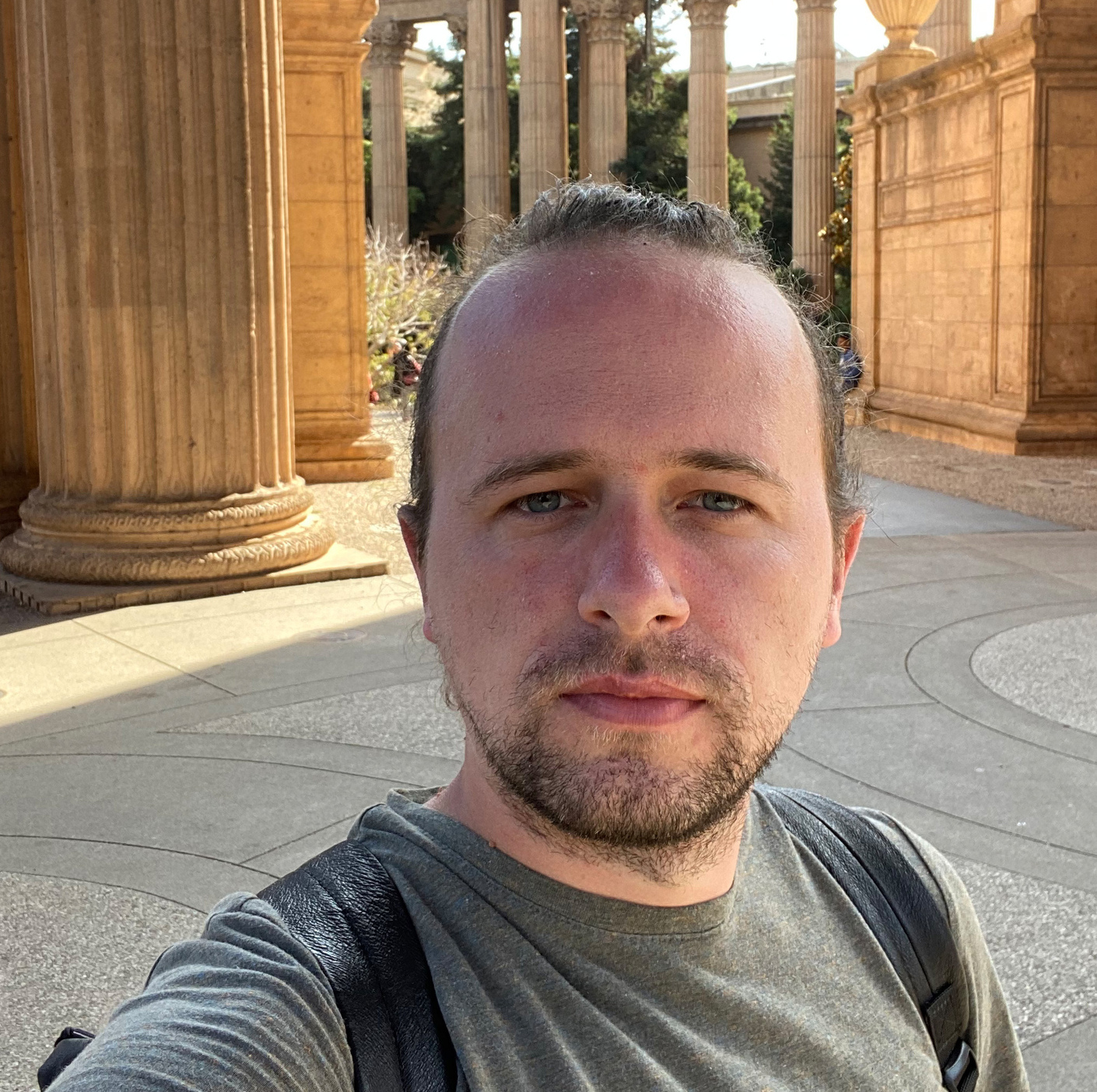
Oleksandr Stolovyi: architect, scholar, public figure, and “explorer of the curious”
On how villages are not cities, and on the harm caused by the Soviet legacy
What is the main theme of your thesis? What exactly do you propose in it?
During the Soviet era, an ideology of development that was alien to Ukrainian rural areas was forcibly imposed upon them. Collective farms were established everywhere, and people were required to go to work there every day, producing different kinds of goods. In reality, however, this was a purely urban, ‘factory-based’ ideology. Even during the era of industrialisation, the Ukrainian villages remained patriarchal and deeply autonomous. This autonomy is still evident there today. Visit any village and ask how it is divided into sections. You will be surprised by how many local place names do not appear on any map. For Ukrainian villages have, in fact, been divided since time immemorial into compact clusters – so-called “kutky” (corners) – each with a population of 100–150 residents. It is around these “kutky” that development should be planned, leaving urban globalism behind. Instead, urban development logic is still imposed on villages…
Really? It seems that now every community decides for itself how to develop!
Correct, but there are state construction and other regulations designed for villages by city dwellers who do not understand the particularities of rural life. They regard villages, quite literally, as “sub-cities” that are trying at all costs to become like these cities. And if so, villages would need, for example, a centralised sewerage system, water supply, and several assembly halls in different institutions. They may not be needed right now, but in the future, when the village grows… But the thing is, the village has no desire whatsoever to become a city. Because if a village turns into a city, its inhabitants lose what matters most to them – contact and interaction with the natural environment. The village then becomes a holiday destination, and the main skill of its inhabitants – to create, roughly speaking, something useful out of nothing – is gradually lost. So, there is a fundamental difference here. However, the village is still subject to regulations which, by the way, are referred to as “urban planning” rather than “rural planning”. An essential part of this documentation is the master plan, which, for example, always sets aside space for the construction of large wastewater treatment plants – the foundation for a centralised sewerage system. But even if grant funding were found to build these facilities, the villagers would never be able to maintain them properly.
What should be done, then? Install cesspits instead of a sewerage system in the 21st century?
Of course not! The technology for private construction has advanced a lot over the last few decades. It is now perfectly capable of meeting the desire for self-sufficiency that is characteristic of Ukrainian villages. In every “kutok” – that is, in every cluster – separate local treatment facilities can be constructed, with the by-products of their processing serving as fertiliser for local vegetable gardens. And that is just one example!
You are working on “developing a regulatory document that would guide the existence and development of villages”. Could you please explain in more detail what this document is? And what model do you think villages should follow in their development?
Indeed, I am currently developing proposals for the Ministry for Communities, Territories and Internally Displaced Persons. One of them is to establish rural construction standards, as the existing ones often restrict the activities of villages. For example, converting an oversized village clinic building is an extremely complicated bureaucratic procedure. It certainly needs to be simpler. But the most important thing is that villages should neither imitate cities nor compete with them. They should offer people a different lifestyle, by their own rules. Because a city is a space of maximum population density, whereas a village is the opposite. And here we should not make the mistake of considering suburban residential areas with private housing to be villages. They only resemble villages in form. In reality, they are more like commuter towns.
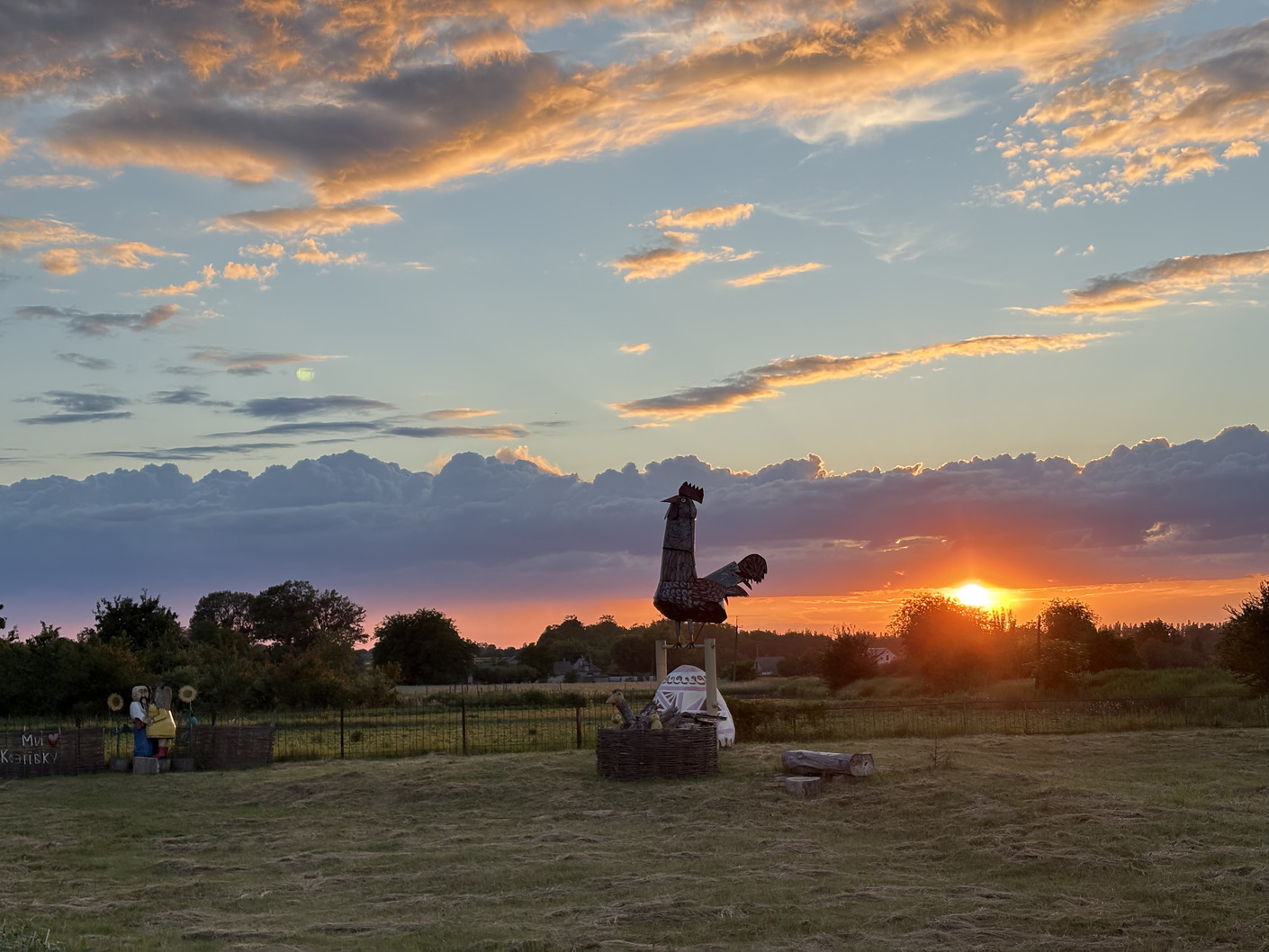
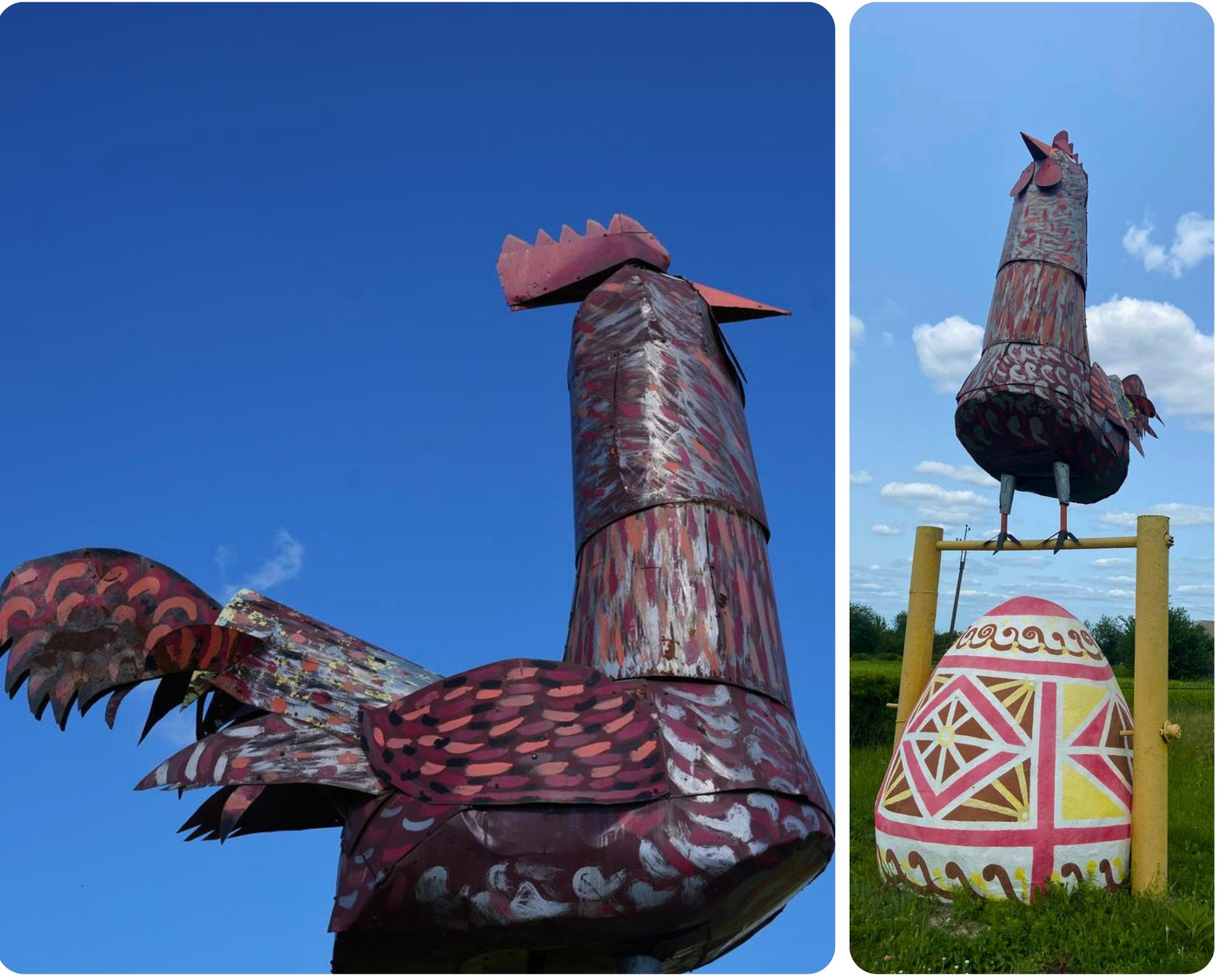
The rooster, the pysanka and the well – one of the architectural symbols of the village of Koziivka, created by Oleksandr Stolovyi
How to make money from whitewashing houses?
The theory is clear. Now let’s talk about the practical aspects. You said that rural clusters, the so-called “kutky”, should be self-sufficient. Does this also apply to entrepreneurship?
It applies to it in the first place! But, once again, this should not be approached using urban standards. Building factories and industrial plants is not natural for a village. Why do people choose to live in villages? Because they want to live “in the countryside”. Hence, rural business should be based on interaction with the natural environment. Only through such interaction can it be most competitive. Because interaction with the natural environment is at its heart and forms its core philosophy. Moreover, by developing this interaction, it is possible to stabilise the population in the village. But it is important to remember that people are not the main focus here, however strange that may sound. People are a by-product. The main focus is on this interaction and the specific characteristics of local business.
What are these characteristics? What do you mean? And why are people just a by-product? Any business development course will teach you that people are the foundation of any business.
Right, because this is also an urban ideology. First, find the right idea; then the right people will come along – and your business will be a success. It works differently in the countryside. To develop a rural business, you simply need to steer the villagers’ interaction with their natural environment in the right direction. You also need to identify what kind of interaction is characteristic of a particular village. In one village, for example, a certain sort of tree grows well, and the people there will start making wooden products of many kinds. In another, flax grows quickly, and the locals know how to weave fabrics from it. In yet another village, there are vast deposits of particularly rich clay – the villagers there amaze with their art of adobe construction using hydraulic pressing. Interestingly, the more modern the interpretation of an old idea, the greater the potential for business success that this local speciality will have. In other words, one simply needs to unlock the potential of some unique local skill. But this is not happening, and these skills are gradually disappearing.
But making “wooden crafts” is one thing; making a living from it is quite another. How can profits be guaranteed?
My experience – (theoretical: ten years; practical: four years) – shows that rural communities (which, by the way, are currently home to around 8 million Ukrainians) have enormous economic potential. If we extrapolate the experience of Koziivka – where I managed to identify as many as 18 growth centres – across the whole of Ukraine, the result is that at least 57,000 small craft businesses could be established in our country. And no foreign investors, factories, or plants are needed. Craft businesses can create unique products that are always in demand. By failing to recognise this, the country is missing out on a huge segment of the creative economy that requires little start-up capital. This is because both the technology and the skilled craftspeople are still here. And most importantly, there is demand for their products!
What is missing for this creative economy to thrive in villages?
Firstly, the visibility of this economy. To ensure the growth of a particular centre, it is often simply a matter of showing that it exists. And people will be attracted to it naturally, because they have it in their blood. Here, for example, is how we plan to do this at our school in Koziivka. In Koziivka, almost everyone knows how to whitewash houses, press berries, and has a dozen other traditional skills, too. I dislike the word “tradition” – it smacks of old-fashionedness. I simply want to emphasise that this is a whole spectrum of local knowledge, skills, and abilities. We want to set up experimental educational and practical classes, which would include a specialised course on “acquiring the practical knowledge of the residents of the Slobozhanshchyna region”. Interestingly, modern parents from Kyiv and other Ukrainian cities, having simply read about my idea on social media, have shown considerable interest in it. Now they keep asking when such classes will begin.
In other words, a rural school should not be the same as one in the city?
Absolutely right! And this is not about competition: what needs to be created is, so to speak, a parallel offering – one that is needed not by the state in general, but by this specific village. That is what I mean by applied learning. In other words, as well as the compulsory core academic curriculum, a rural school should offer specialised courses in “applied local disciplines”. How to carve wood, how to assemble furniture, how to whitewash houses, how to make embroidered shirts… It all depends on what skills are common in that particular community, what its strengths are.
It seems to me that this is more about personal development and shaping a local identity than about business. How can people earn a living from whitewashing houses in today’s world?
Well, for example, I did! (Laughs). By asking this question, you are also thinking in urban terms. According to this approach, profit should be clearly accounted for so that one can say whether something is profitable or not. But this matter needs to be viewed in a much broader context. Local skills, such as painting houses, are part of a certain local identity. One way or another, they will come in handy for those who possess them. These skills were partly the reason I chose my profession. Since childhood, I have been whitewashing houses, and by the time I was in my final years of secondary school, I knew exactly how to turn a wooden frame into a house. Some people will put this skill to use in a different way, but they will certainly put it to use. Because one of the main characteristics of the village is that its community is self-employed. In the village, people may not formally be employed anywhere, yet they remain busy from morning till night.
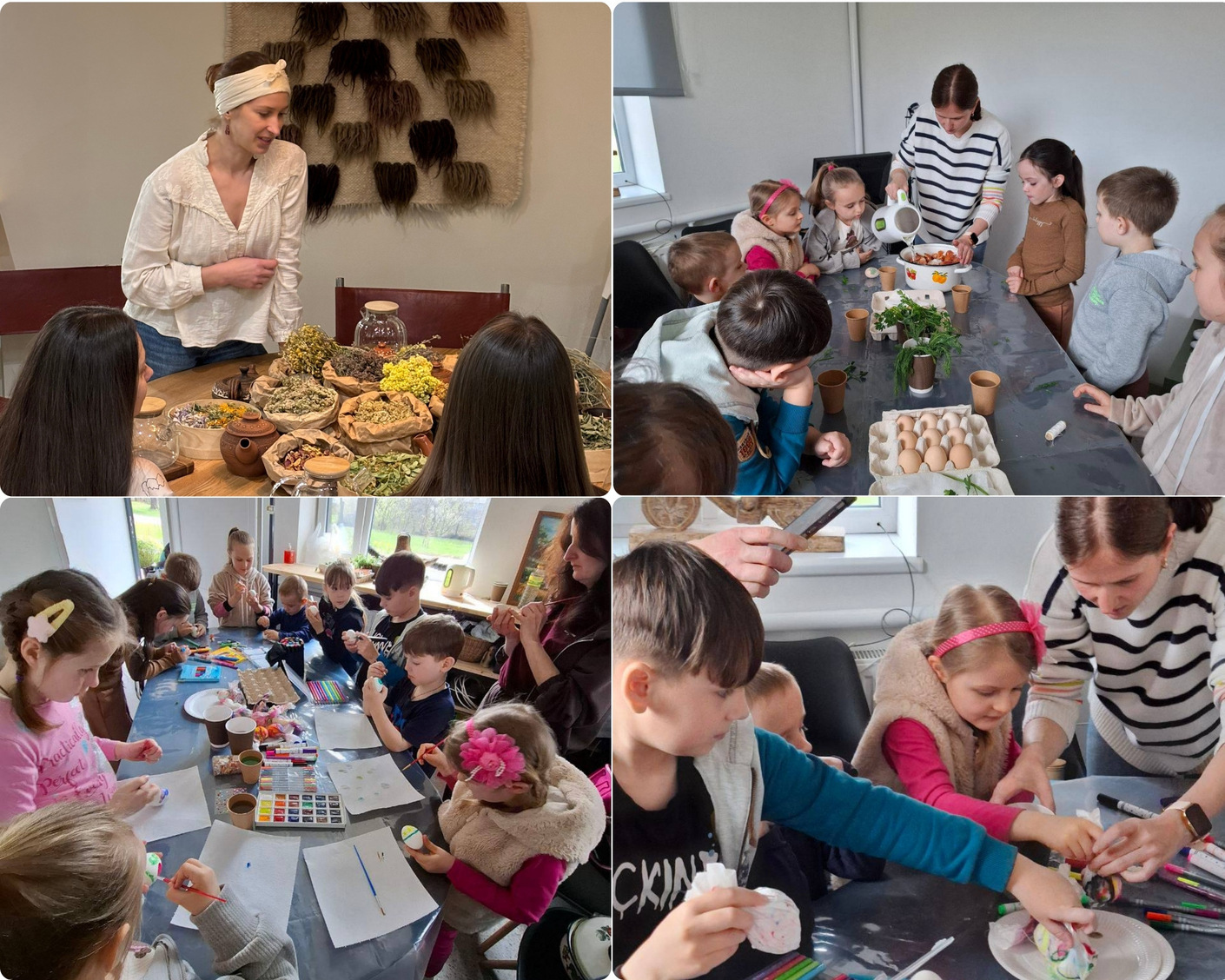
At the Koziivka Space for Creativity, founded by Oleksandr Stolovyi, local craftspeople often organise workshops for children
Case 1. Making beautiful things out of nothing
- Ivan! What on earth did you use to make such a lovely, marvellous door?
- Nothing.
- How’s that possible?
- Well, I took a few wooden boards from over there, and found some hinges over there. I had a bit of paint left over. And the handles… Look, I just bent some rebar, cut it to size, and look how well it turned out! Why pay money when there’s all this stuff lying about in the yard!
- Will you make me one, Ivan?
- Pah! What’s the big deal about making one!? As long as you’ve got two hands, you can do it!
A business-oriented village
Yes, villagers are often busy from morning till night. But nobody usually pays them for that, right?
It only looks that way. For example, I very often hear that someone in a village has made a table or a door “out of nothing”. But nobody stops to think what “out of nothing” actually means. If you look at it from a business perspective, it turns out that the villager has created added value at a cost price close to zero. From a business perspective, this is a goldmine! Note another point as well: a person who always tries to reduce the production cost of a particular product is, in fact, business-minded. Ukrainian villages have always been like this. And for some reason, nobody seems to notice this particular feature. City-dwellers look down on villagers, saying that the countryside is only good for living out one’s days. But the village simply operates differently. You just need to look at it from a different angle and invest in it wisely. And the profits are sure to follow!
Tell us in more detail. What skills are common in your home Krasnokutsk community? And how did you develop them to become a source of income?
In our village, as I said, people have long known how to whitewash houses, as well as how to make so-called “vybiikovi” (block-printed) decorative fabrics, bake a variety of traditional flour-based goods, and ferment sloe, cherry plum, pear, plum, and cornelian cherry… People do this in literally every household. And yet nobody regards this as anything out of the ordinary. I realised just how unique it was when I once treated my colleagues at work in Kyiv to some home-made stewed plums. They were amazed and said they had never eaten anything like it… Every community has its own distinctive skills like this. In some places they breed horses, in others they paint houses, in still others they make pottery, and in others they do white-on-white embroidery… And once you find that unique local feature, that distinctive local resource specific to your region, the rest is just a matter of technique. Because this authenticity is highly prized in today’s global market.
Have you set up a production line for selling stewed plums?
It all turned out to be much more interesting! Hold on, let me tell you about another interesting local resource of ours in this context. Wild blackthorn grows in the valley of our Merla River, and in abundance – literally tonnes of it – and it bears plenty of fruit, which is quite rare. I once happened to find out that in Ireland these fruits are used to make a very expensive whisky. In Koziivka, these fruits are also used to make samohrai (moonshine), but interestingly, they are also combined with crushed plums to create a unique local sweet treat called “kankhvety”. I found one local woman – Olena Tryfonova – helped her with the production, and now she makes her “kankhvety” to sell – at UAH 330 each. They are not sold in bags, but in beautiful ceramic jars made by local potter Yana Shumska. There you have it: a ready-made success story.
Local craftspeople earn some money from this. But what does the community get out of it?
Jobs! And, with the right approach, tax revenue too. Let me give you another example. In Koziivka, there has long been a tradition of painting chests. This was done in many parts of Ukraine until modern wardrobes replaced chests in everyday use. So, we found a brilliant carpenter, Viacheslav Nikitchenko. He now makes authentic Naddniprianshchyna chests for sale. In fact, we focused not so much on the chests themselves (which, in our case, are more the size of a coffee table on wheels) as on the opportunity to paint them. To do this, we provide buyers with stencils, paints, brushes, and everything else they need. Of course, if there is no interest in painting, our Koziivka artist Olena Moiseieva can paint them all herself. But this is our authentic Ukrainian furniture – not Ikea! Customers appreciate its value. Hence, Mr Nikitchenko is currently literally flooded with orders. His customers have to wait between three and five months for their chests.
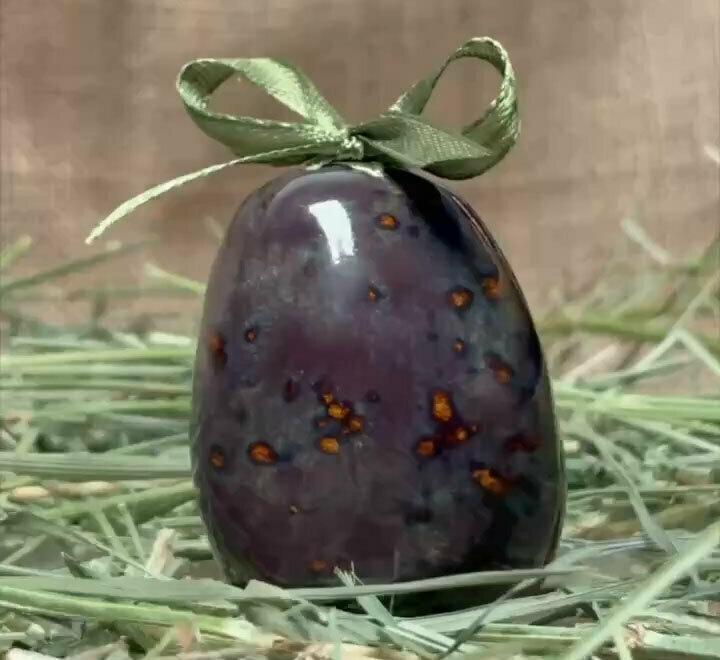
Koziivka’s famous “kankhveta”
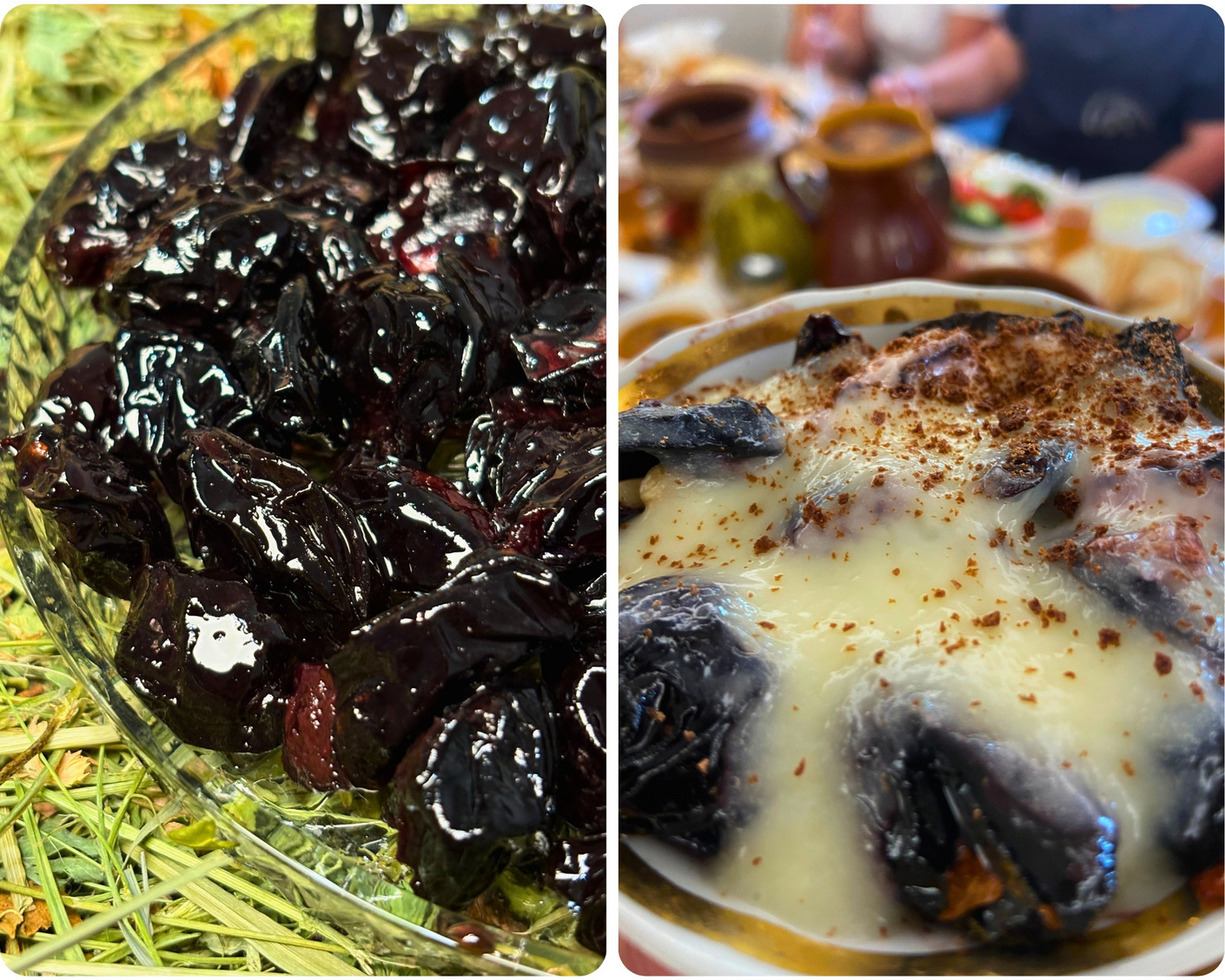
Stewed plums from Koziivka – a local delicacy
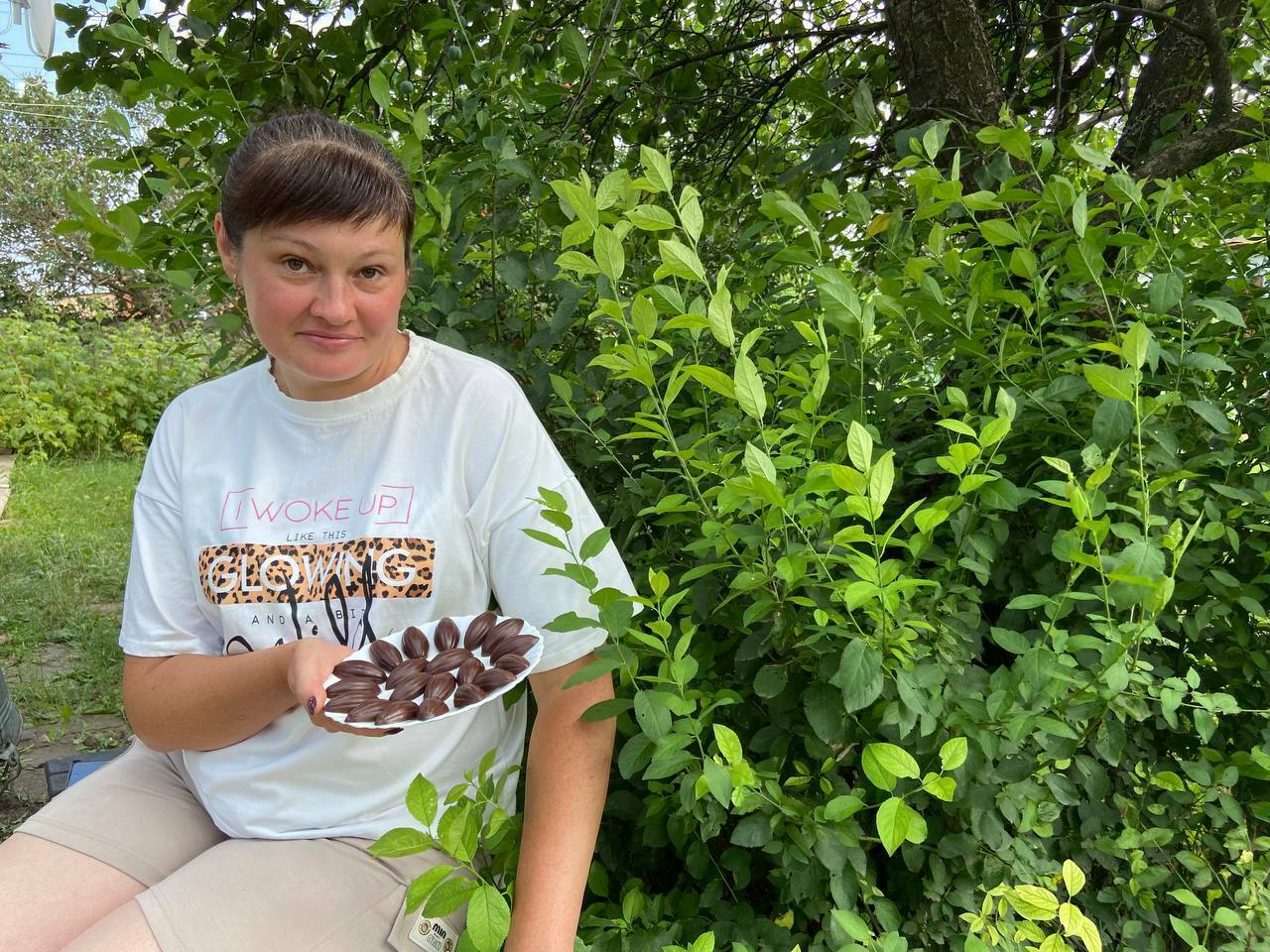
Olena Tryfonova, owner of the “Kankhveta” brand, fills her sweets with stewed plums that have been soaked in a local blackthorn liqueur
Case 2. Lampshades and brooms
- What about your brooms, Mykola?
- They’re no good at all! Do you know how much work it takes to grow good broom-making material? You need the right seeds, the right soil, and all the right conditions! You’ve got to plant them at the right time, grow them, cut them, and dry them… But at DIY Epicentre store, the Chinese brooms aren’t any worse and are much cheaper. And I don’t know what I should do with them now.
- Well, Mykola, maybe you could… Try making something else out of that broom-making material instead of brooms… Like lampshades, for example!
- Ooh, really? Like I'm that stupid! Do you think Epicentre doesn’t sell Chinese lampshades or something? At least the brooms bring me a few kopiikas. But lampshades?
- Myko, why don’t you give it a try? Let’s make a deal: I’ll give you UAH 50,000 for six months, and instead of brooms, you’ll make lampshades. If they sell, you’ll pay me back. If not, then never mind. So, deal?
P. S. Mykola’s lampshades are now selling successfully on Etsy for EUR 500 each.
On the business model that could lead to the emergence of around 57,000 craft businesses in Ukraine
Craftspeople get money and personal fulfilment; the community gets tax revenue and jobs. What do you get? Is investing in rural growth centres charity or business for you?
Business, of course. Basically, I offer every craftsperson: here is a certain amount of money; try doing something different from what you are doing now. Something which, in my opinion, will be in greater demand on the market. If it fails, I will not ask for the money back. But if it succeeds, I will ask for my money back, and on top of that, I will ask for 3 per cent of every subsequent sale.
Do you sign a contract with the craftsmen about this?
You’re joking! Contracts, signatures, legal deadlines – all that puts people off. People in villages are a bit of a different type… They are extremely reluctant to cooperate. As an architect, I was involved in the restoration of the village of Posad-Pokrovske in Chornobaivka community in Kherson region. As an experiment, the Government launched a programme to restore it. But to do this, agreements had to be signed with the owners of the destroyed houses. And what do you think? 80 per cent of the residents, having heard that they would have to sign something, flatly refused to take part in the experiment. ‘Why do we need all this? They’ll just take our houses away,’ they say. As a result, in the first two years, only five out of 800 households signed an agreement. No, if you really want to get anything done in a village, you need to be able to gain people’s trust. And this is no easy task.
3 per cent is symbolic money. Under such conditions, your business is more like charity, isn’t it?
Not at all. The point here is simply to generate enough income to make “Prostir Zatii” – which I set up to promote projects like this and support local craftspeople – self-sustaining. Besides, if I have a lot of projects, that means more money coming in. The Koziivka starosta district has about 2,500 residents. And over the past three years, we have uncovered 18 (!) unique cases in this village that have the potential to be developed into craft businesses. Seven of them are currently in the development phase, whilst four have already been implemented. My small team and I – managers Vira and Liuba – deal with all of this. We want to refine our business model thoroughly and then sell a franchise based on it.
What will those who buy your franchise receive?
Firstly, we will help establish a creative space in their village – just like our “Prostir Zatii” in Koziivka. Someone has to manage the social media profiles of local craftspeople, promote their products, and list them on online marketplaces. The craftsman cannot manage all this on their own. Not that they cannot do it; they are simply more interested in their creative work, and business development has very little to do with that. Our business model does not involve turning the craftsman into a businessman, but rather working with them to create a unique product. Interestingly, when everything is done right, the business will spread like wildfire. Some people will start ordering the craftsman’s products, whilst others will start doing something similar.
Do small craft businesses have the potential to grow? Everything basically depends on a single craftsman’s business…
We plan to expand the painted chest project to a larger scale in the future – with a business plan and substantial investment. But this does not mean turning Mr Viacheslav’s production into a furniture factory. We could simply hire a few assistants for him, organise the supply of raw materials and improve sales. And the cost of each item will rise in line with the growth in demand.
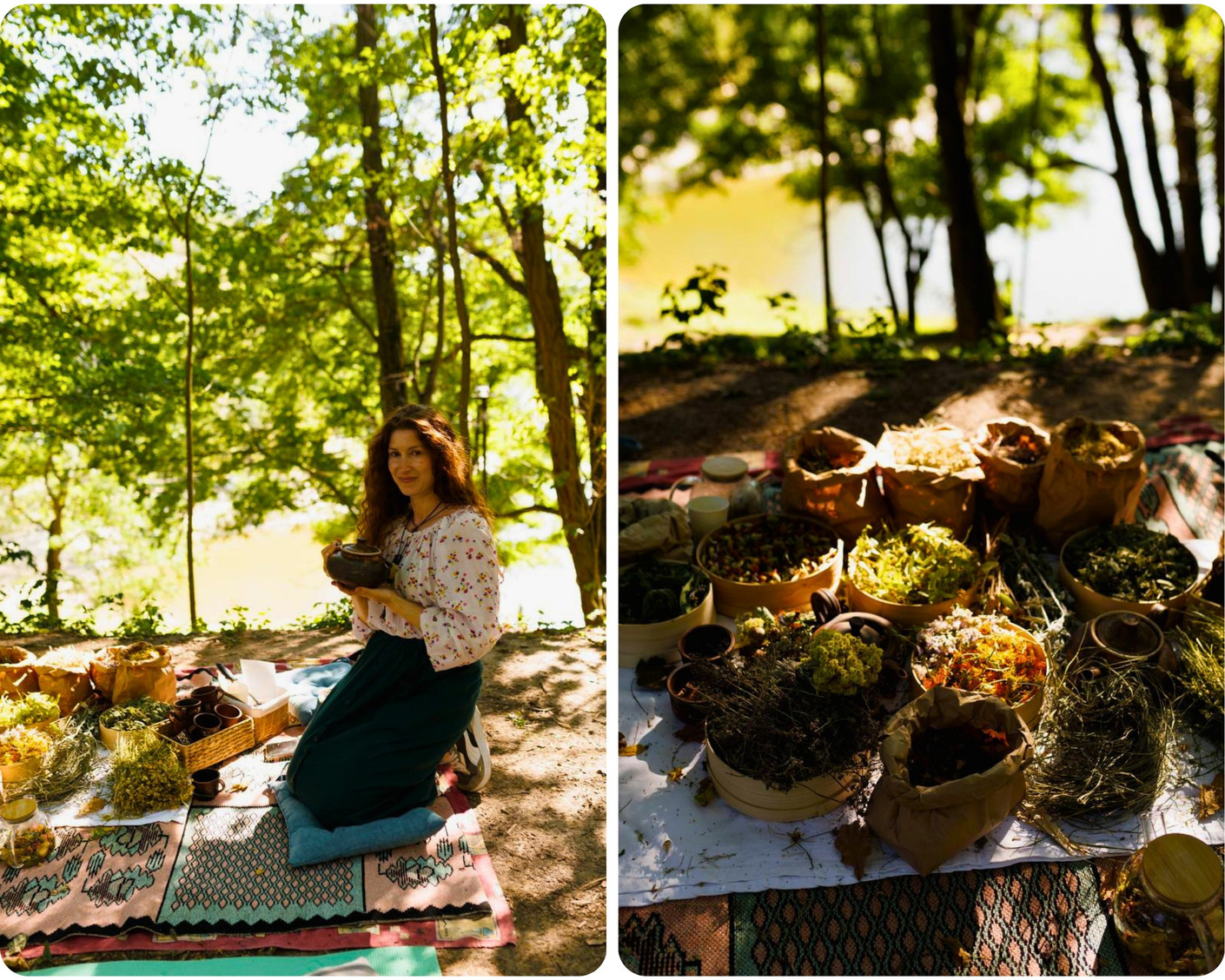
Liuba, the craftswoman, and her “Herbs from the Meadow” – herbal teas sold in the form of bouquets
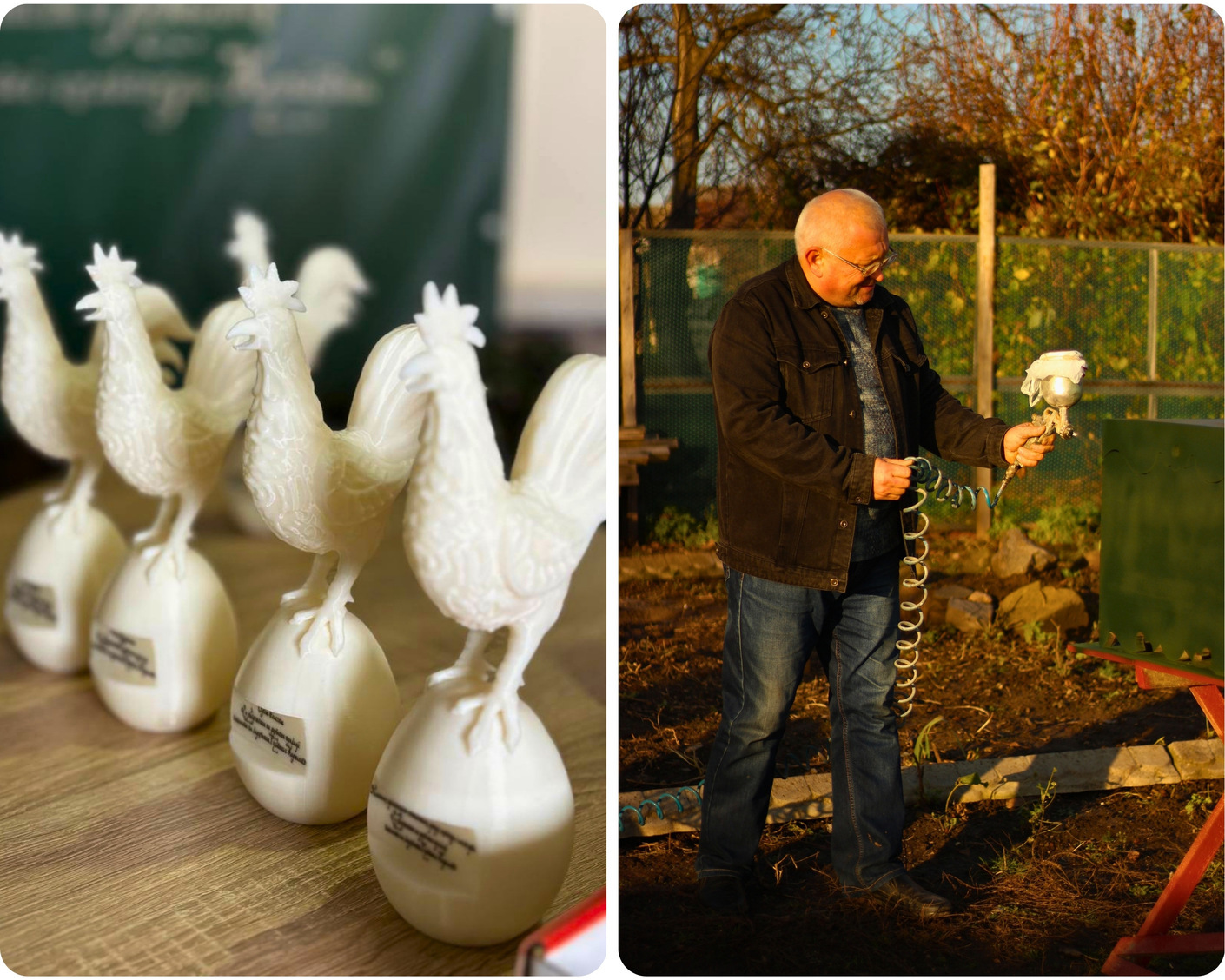
A statuette presented each year in Koziivka to the winners of the annual Hanna Hotvianska Award – in recognition of their contribution to the development of local culture. Hanna Hotvianska is a renowned artist who was born and raised in Koziivka. Her works are held in the collections of numerous museums around the world. The award was initiated by Oleksandr Stolovyi
“Kankhveta”. Written by Oleksandr Stolovyi
One evening, I bumped into Olena on the corner and had a friendly chat with her, just like neighbours do. Word by word and I ended up complaining that I’d been asking Aunt Katia over and over to show me how to make kankhvety properly. But Aunt Katia said, ‘I’d be happy to, but I am too old and my hands have lost their touch.’
So I complained to Olena late in the evening. And she glanced at me slyly, you know, her eyebrows raised in a Roman arch:
- Why are you as quiet as a church mouse? My mum and I make those kankhvety at home too! The stewed ones, the milk ones, and the ones with the filling!
And suddenly I figured it all out: all the stars in the Milky Way had aligned once more above our heads – mine and Olena’s – and to top it all off, the dog in Druha Yaieshnivka started barking.
Then came the busy days of preparation and, most importantly, figuring out how to properly bring out the unique, plum-and-cherry character of this Koziivka “ratsukha with a filling”.
Anyway. We’d like to present you with something new (though it’s actually an old favourite that’s been forgotten for a long time) – our “Kankhveta” product. Each chocolate kankhvetina is carefully nestled inside a pottery pendant, shaped like an Opishnianka. Inside, you’ll find a filling so delicious (be careful, it’ll make your mouth water) that heaven knows how to describe it!
The stewed plums are left to simmer in a local adult beverage from the wild blackthorn for quite some time before being coated in chocolate. Then a filling is added to the plum, which might remind you of amaretto, or perhaps almonds. But this filling is made from a seed from Koziivka, from a berry that currently grows only in our ravines.
This, my friend, is the very best gift you could possibly imagine.
Try it out. You can have a look at the one over there by the hyperlink: https://www.instagram.com/reel/DRpFFPaAvfg/?igsh=ZTRrdHFyZHFtcHNj
How can a community develop its own network of craft businesses?
How can a community support its craftspeople?
You need to start with, so to speak, a retrospective analysis. In other words, you need to find out which traditions each village has nurtured in the past and continues to practise today. This is a sort of cultural inventory. It is also useful to invite people from elsewhere to assist with this, as it is often difficult to see things clearly from within. You might think that something is nothing special “because everyone here knows how to do it”. But this is where you can find something truly valuable, something unique. You might say, ‘Well, we stew plums in every household, or make wine, or bake interesting pastries – what’s so special about that?’ But in fact, this widespread practice is extremely valuable, because it means that the skill has not lost its relevance even today. But I repeat: local people find this hard to grasp. Someone from outside finds it easier…
What should be done once local unique features have been identified?
My advice would be to set up a creative hub which, on the one hand, would bring together local craftspeople and, on the other, would promote them in the market. Such a centre could also help craftspeople with certain administrative matters in the early stages: tax management, bookkeeping and so on. Later on, the staff at the creative space could take over these responsibilities. For example, we run the Instagram profile Koziivski Sviatky, where we share not only information about each craftsperson, but also their current projects, and the items they make.
It seems entirely feasible for communities to explore different grant opportunities to support the development of their own craftspeople.
I try to do things like this, but donors often insist that we adapt to their requirements by altering the product. And that, in my view, is not a good thing. Because the works of local craftspeople should always retain the greatest possible scope for self-expression and a distinct local flavour; otherwise, these works risk losing their deeper meaning. Therefore, my preference is for venture capital investment: it is better to lend someone UAH 50,000 for two years – without all sorts of reports, independent assessments, bookkeeping or audits… Trust people, seek out talent and do not be afraid to give them the opportunity to realise their potential. And they will lead your community to prosperity – without investments running into millions.
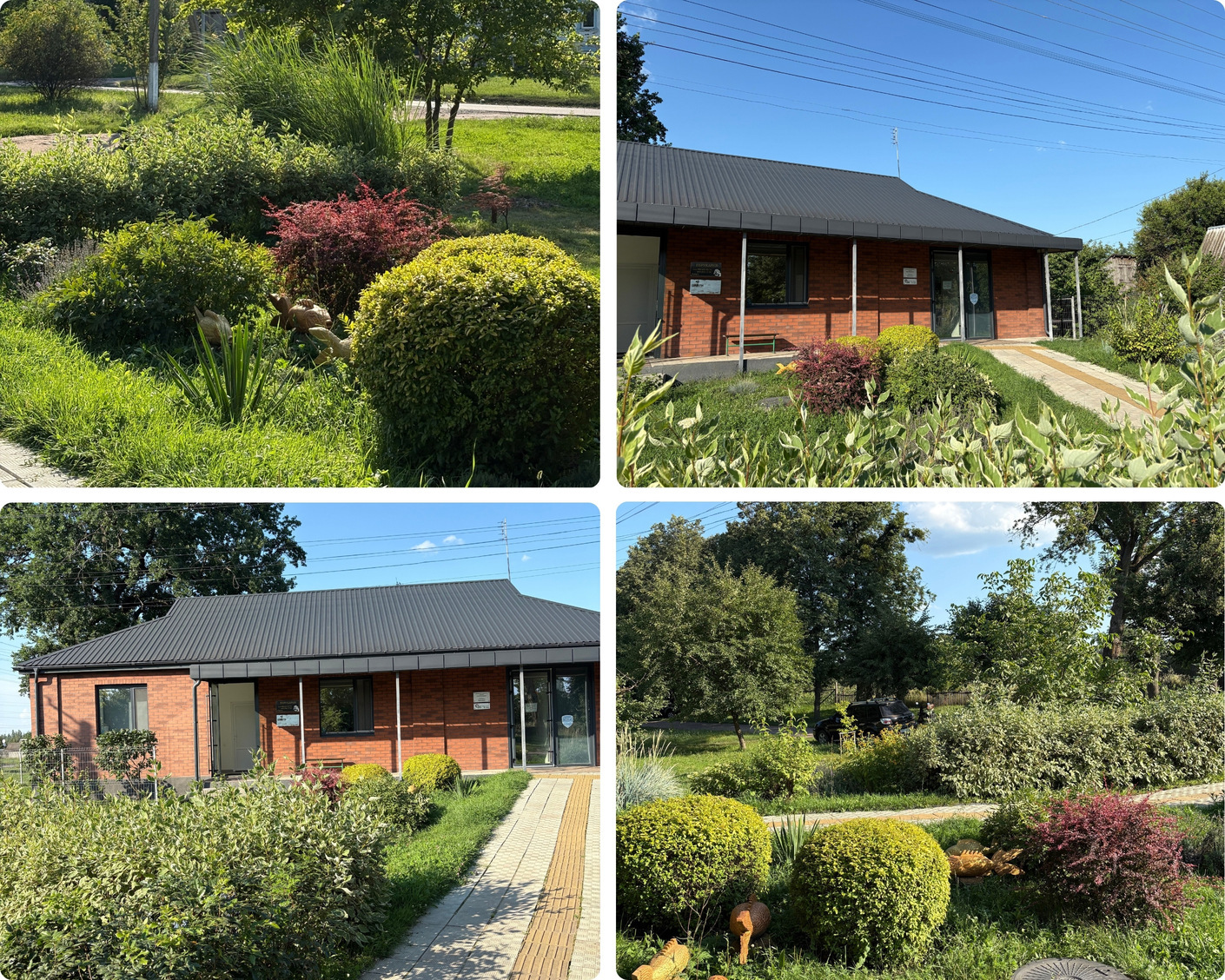
Landscaping around “Prostir Zatii”, designed and implemented by Oleksandr Stolovyi
16 October 2026
Від бюджету до послуг для дітей: про що говорили громади на Львівщині
Від бюджету до послуг для дітей: про що...
У першій частині бюджетної дискусії на Львівщині йшлося про фінансові можливості громад і правила розподілу коштів....
16 October 2026
ПДФО, реверс і потреби громад: Всеукраїнська асоціація ОТГ провела бюджетну дискусію на Львівщині
ПДФО, реверс і потреби громад: Всеукраїнська...
На Львівщині Всеукраїнська асоціація ОТГ провела дискусію щодо проєкту Державного бюджету на 2027 рік. Учасники...
16 October 2026
The Multiannual Financial Framework 2028 –...
With a focus on the expenditure-side files NRPP, the Performance Framework and Global Europe (including the Ukraine...
16 October 2026
До $65 тисяч на соцпослуги: Уряд масштабував програму Малих грантів на всі громади України
До $65 тисяч на соцпослуги: Уряд масштабував...
Кабінет Міністрів України ухвалив рішення, яке кардинально розширює можливості територіальних громад у розвитку...