How to build a five-storey residential building for internally displaced persons from scratch. An interview with the Mayor of Dubno
Vasyl Antoniuk, Mayor of Dubno in Rivne region, on the ambitious projects planned in cooperation with the Nordic Environment Finance Corporation (NEFCO), and on opportunities for the community’s development during the war
By Dmytro Syniak
Like many of his colleagues, Vasyl Antoniuk, Mayor of Dubno in Rivne region, is immersed in the war. Although Dubno is more than 1,200 km from the front line, Mayor Antoniuk experiences the war daily. This is evident not only in the whirring of russian drones and missiles, but also in daily visits to his office by military personnel, diverse requests from hundreds of internally displaced persons, and constant meetings dedicated to supporting the Armed Forces of Ukraine. Despite these military realities, Dubno community has implemented a unique project: the construction of a five-storey block of flats “from scratch” for three hundred displaced persons, with the involvement of the Nordic Environment Finance Corporation (NEFCO). Vasyl Antoniuk explained to Decentralisation how this was made possible.
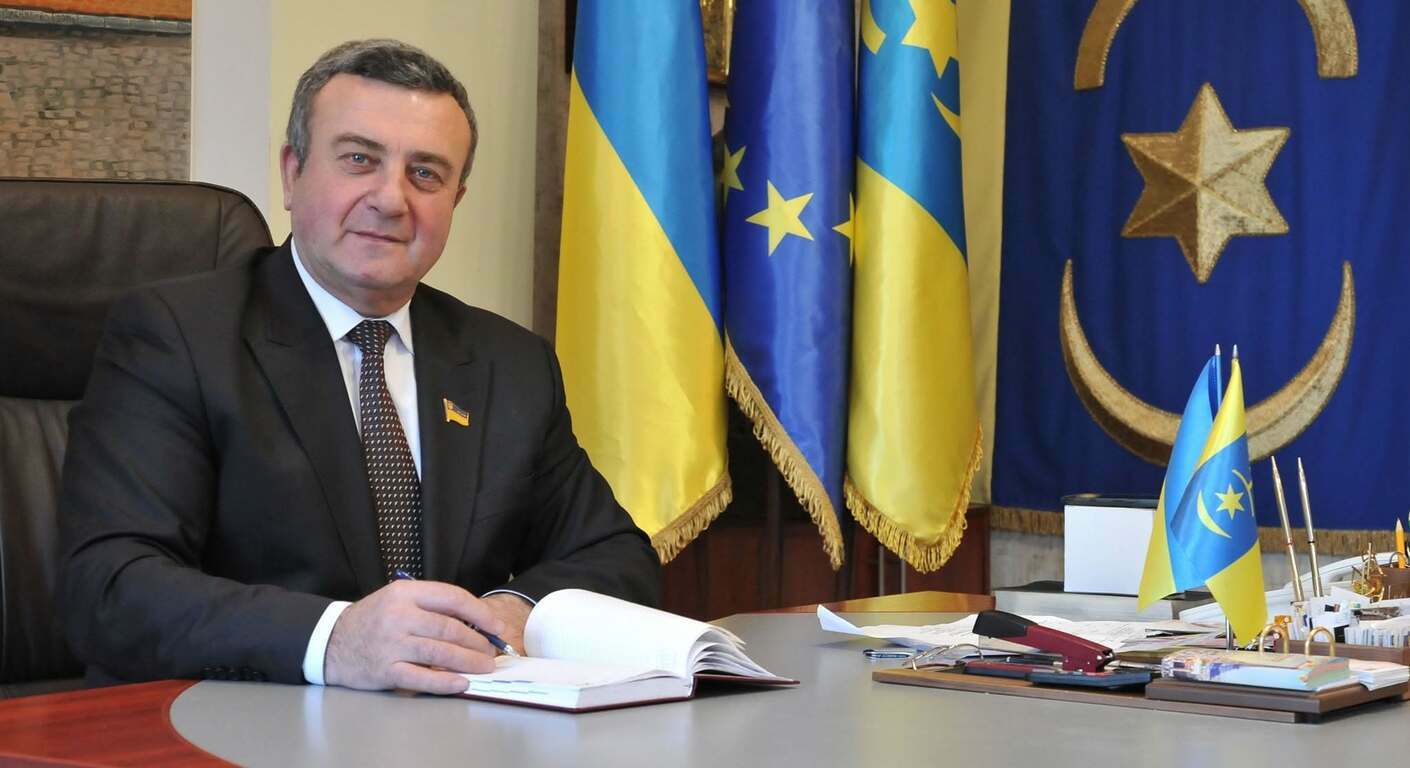
Vasyl Antoniuk, Mayor of Dubno
Dubno miracle
For small cities, building new housing for internally displaced persons “from scratch” using grant funding is rare: most simply renovate old halls of residence. Yet Dubno community, in partnership with the Northern Environmental Finance Corporation (NEFCO), has literally worked a miracle. How did you manage that?
The fact is that we have been involved in European projects for a very long time. Together with the European Union, we have done everything from planning the local economy to re-roofing our buildings. Thanks to this cooperation, some of our premises now have autonomous solid-fuel boiler rooms, some have new heating networks and others have underfloor heating. Some of our buildings have also been fully thermally upgraded… The list is endless! The important thing is that we have earned a good reputation by meeting all the conditions set by the donors. We have been working with NEFCO on several projects since 2010, so we did not encounter any particular difficulties with them this time. We prepared a package of documents for NEFCO, I travelled to Europe for a business trip and signed some papers – and the project got underway.
Please tell us more: what exactly did NEFCO build in your community?
We built this residential building together: the project cost was EUR 5.3 million. In addition, we allocated approximately UAH 30 million from the city budget as a co-financing contribution, in line with the terms of the grant agreement. This includes the cost of works to construct the external heating and water supply networks, the sewage system, and the electricity supply. It also covers the construction of a radiation shelter and the landscaping of the adjacent area. The result is a superb five-storey residential block with 90 flats, comprising 50 one-bedroom, 25 two-bedroom, and 15 three-bedroom flats. All the work was carried out using modern technology, and, what is interesting, the designers incorporated significant capacity into all the utility networks to cater for future needs. There are lifts in both entrances. In short, the building turned out so well that I would propose adopting it as a standard design for the whole of Ukraine.
When will the first residents be able to move into the building? How many will there be in total?
Three hundred and thirty. We will hand over the building in October, and by November, I think people will already be able to live there. By New Year’s Eve, I suppose everyone will have moved in. Officially, there are 1,700 displaced persons in our community, although in reality there are far more. People simply choose not to register and sort out all their problems on their own. But the construction project we are referring to has made such people take a different view of the opportunities offered by official registration. As a result, we have received around 700 applications expressing a desire to stay in our community permanently.
One and a half thousand is quite a lot. Will there be new housing projects for such people?
We are indeed already working in this direction with certain foundations and investors. I can already say that, from 2027, we will launch another construction project for internally displaced persons – also in partnership with NEFCO. We have already set aside 1.5 hectares for this and connected all the utilities to the site. Let me also mention that the plan is not for just one, but four blocks of flats. And not five-storey, but nine-storey ones. After all, our work with NEFCO goes beyond housing: we also have a massive UAH 800 million project to renovate our wastewater treatment plants. It will also be launched next year. That was my dream. I saw facilities like this in Slovakia, the Netherlands, Denmark, and Germany, and thought, ‘If only we had some like that!’ And here they are!
What will the status of the new building be? Will it remain on the community’s balance sheet, or will people be able to privatise their flats?
No, they will not be able to. We provide housing that cannot be privatised, and it will belong exclusively to the community. We want to avoid situations where someone secures a flat for themselves by fair means or foul, then sells it and moves to another community. The rule is this: as long as you live in the flat, it is yours. If you move out, however, the community reserves the right to reallocate it to someone else. The community is not a faceless bureaucracy. We always help people, especially displaced persons who have lost everything. I would like to add that we do not simply hand over “bare walls” to people, as is often the case with builders these days. All flats come fully furnished with household appliances. However, please note that these flats will remain municipal property. The initial tenancy agreement is for ten years, with the option to extend it. We will see how things go.
How did you decide who to give the flats to?
It was a very complex process. The main thing was to establish fair criteria. First of all, priority was given to families with members who served in combat operations – that is, people who defended and continue to defend us.
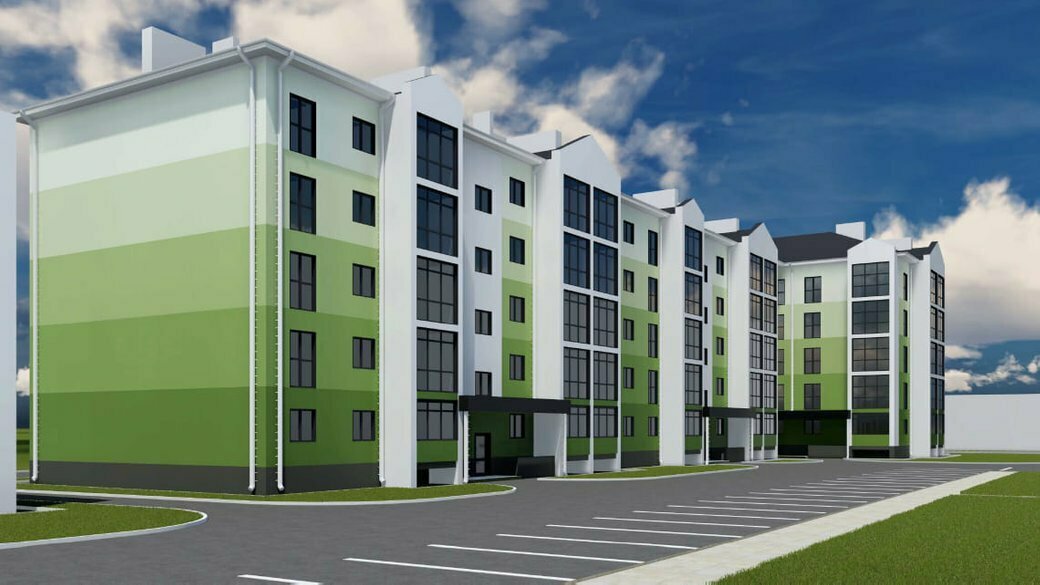
A project for a residential building for internally displaced persons, built in Dubno with funding from NEFCO
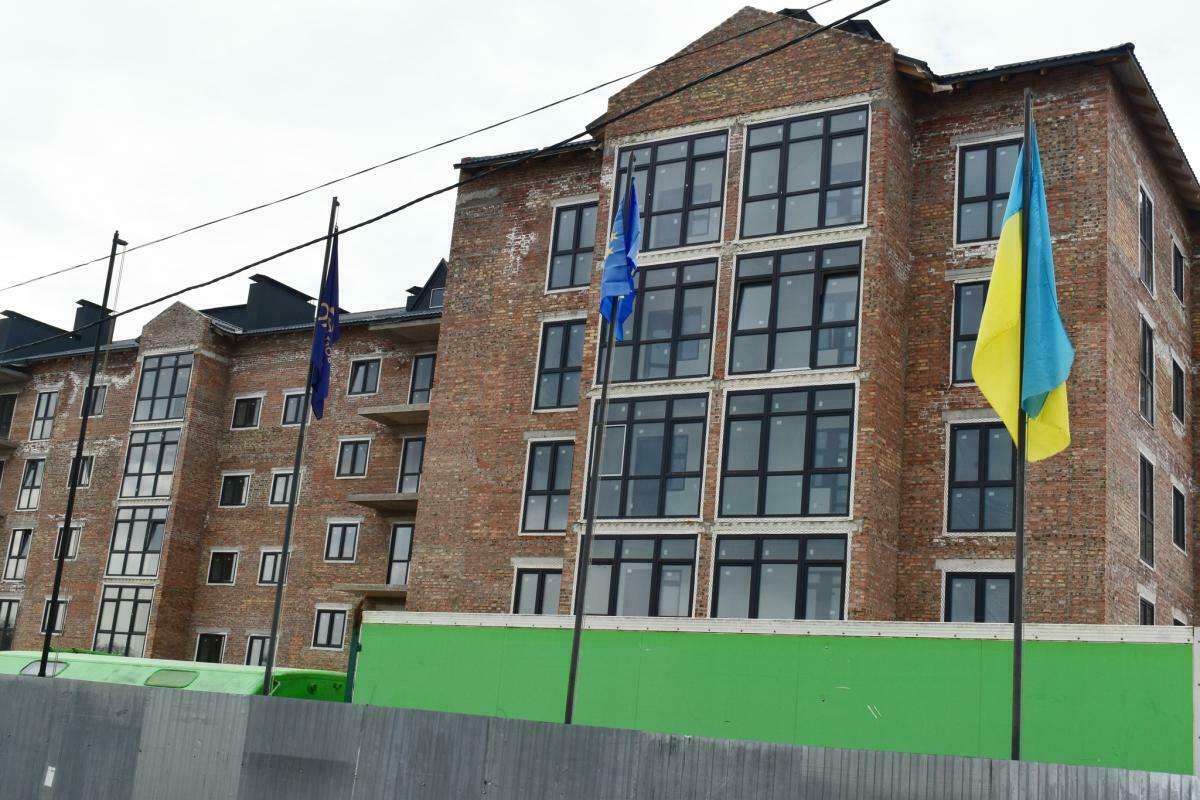
During construction. April 2026
The interview interrupted for good reason
Could you please tell us how cooperation with partners and donors is organised in Dubno community? Does the city council have a separate department responsible for such matters?
Yes, there is a department, but without exaggerating my own role, I would say that I concluded most of the agreements personally. I travelled to Europe and forged partnerships. We have seven active twin cities around the world. By “active”, I mean those that constantly help us. This support was particularly noticeable at the start of the war, when we needed literally everything – from fire engines and ambulances to body armour and night-vision goggles for our military.
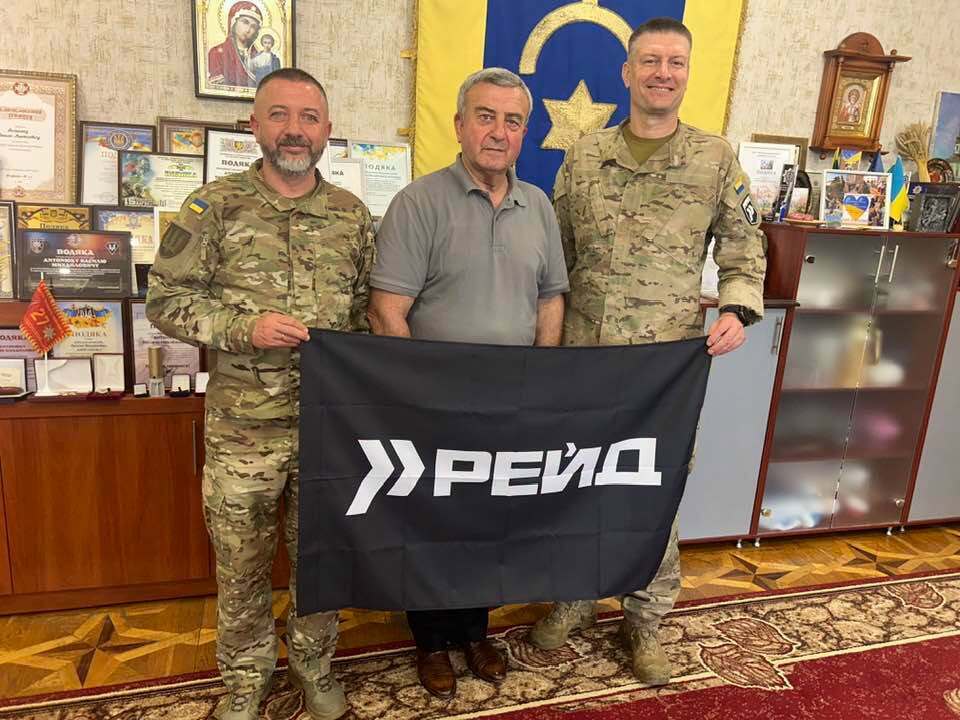
At that moment, the interview had to be interrupted: three men in military uniform entered the mayor’s office. Unfortunately, we cannot reproduce their conversation with Mayor Antoniuk here. However, afterwards, one of the soldiers asked for his words to be quoted.
My name is Serhii, and I am a soldier in the 413th Separate “Raid” Unmanned Systems Regiment. We are currently serving in the Zaporizhzhia sector; before that, we were in the Dnipropetrovsk sector, at Huliaipole, Dobropillia… We mainly carry out “middle deep strikes”. (From the English “middle deep strikes” – meaning fire strikes delivered against the enemy’s mid-depth defences or rear. – Author). In particular, we played an active role in destroying the russian Wildberries and Ozon warehouses. And just a week ago, operators from our regiment destroyed an S-400 system in Gelendzhik in Crimea… I want to thank Dubno community, its local councillors and its mayor, in particular, for the help they have provided us with. We approached many communities in Rivne region, and, you know, Dubno community has helped us perhaps the most. We used the grant it transferred to us to purchase unmanned aerial vehicle systems. Please, take a look!
And Serhii hands the community leader a stack of photographs showing the brand-new drones, which resemble small aeroplanes. On their wings is a “greeting to the russians”: “from Dubno community”.
As soon as the door closes behind the soldiers, the mayor continues.
Almost every day is like this for me! Since 2014, I have been working closely with the military: since then, I have personally visited the east 27 times… When the “military personal income tax” was withdrawn from communities in 2023, it hit us particularly hard – we lost a third (!) of our budget. Despite this, our community actively supports many military units, the number of which has now exceeded 150. Some are directly linked to our city, and some have our young men and women serving in them. Over 4.5 years of full-scale war, we have transferred a total of over UAH 100 million to them!
But is there enough money to pay for this? What is the community’s current budget?
Over UAH 600 million, of which over UAH 390 million are own-source revenues. Of course, the figures were much lower in 2022, but prices were different then too. Nevertheless, we can cautiously speak of the community’s economic growth during the Great War. The fact that we not only gave businesses the opportunity to develop, but also supported and facilitated them in every way possible, has borne fruit. Now we can build housing for internally displaced persons and carry out the reconstruction of social facilities. I am referring, primarily, to our Rehabilitation Centre for Military Personnel – the most modern facility in the whole of Dubno, and a source of pride for us.
I know that Dubno community has a Resilience Centre, which is partly funded by the Polish Fund for International Solidarity. What achievements of this centre can you tell us about?
It works exclusively with veterans, combatants and, to some extent, serving military personnel, providing them with psychological and social support. But recently, our internally displaced persons have been coming there more and more often. Many of them wanted to return home, but are now increasingly considering staying. But how do they move on from there? There is no end to the work for the psychologists here. I would like to highlight one important point: the fact that people come specifically to our Centre, and not elsewhere, certainly speaks volumes about the quality of its services.
Has the relocation of businesses impacted the growth of Dubno community? Are there many such businesses here?
Why complain? As I said, our city is in a great location and has excellent logistics. We are at the intersection of major transport routes. Add to that the good reputation of the city council, and it is clear why Dubno acts as a magnet for entrepreneurs. Every new business sets up here without any problems, and we then we work together for Ukraine and for Victory. It is also worth mentioning that small cities have many advantages over regional centres. Everything is cheaper, there is less competition and it is easier to make a living. After all, it is simply a comfortable place to be.
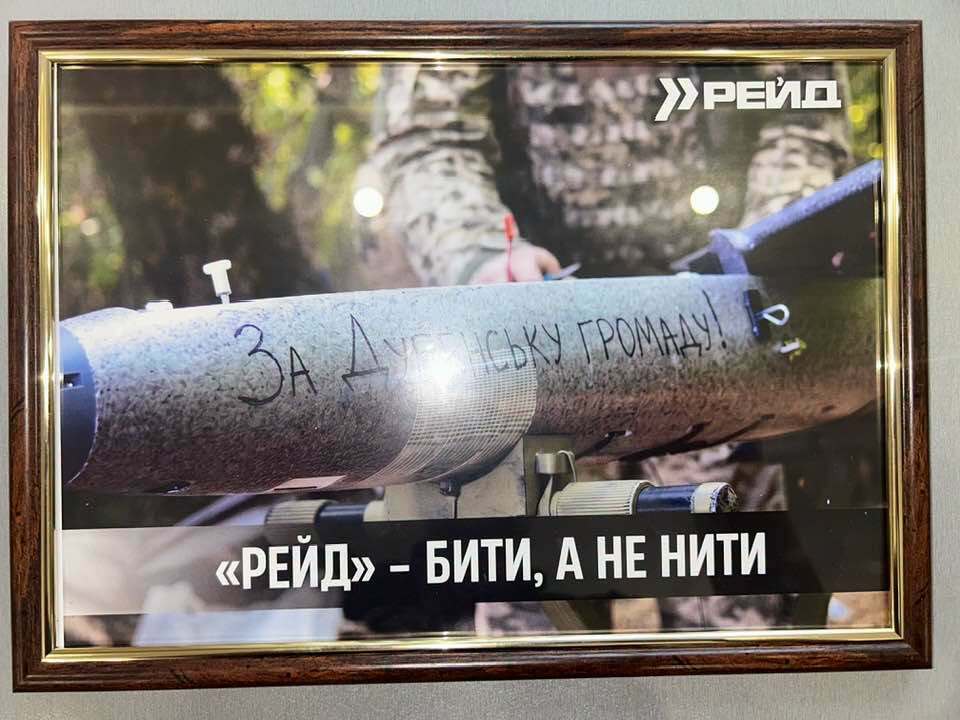
The military personnel fighting on the Zaporizhzhia front visiting the mayor’s office. He was very impressed by the principle they live by: “Fight, don’t whinge!”
“Greetings” to the russians from Dubno community
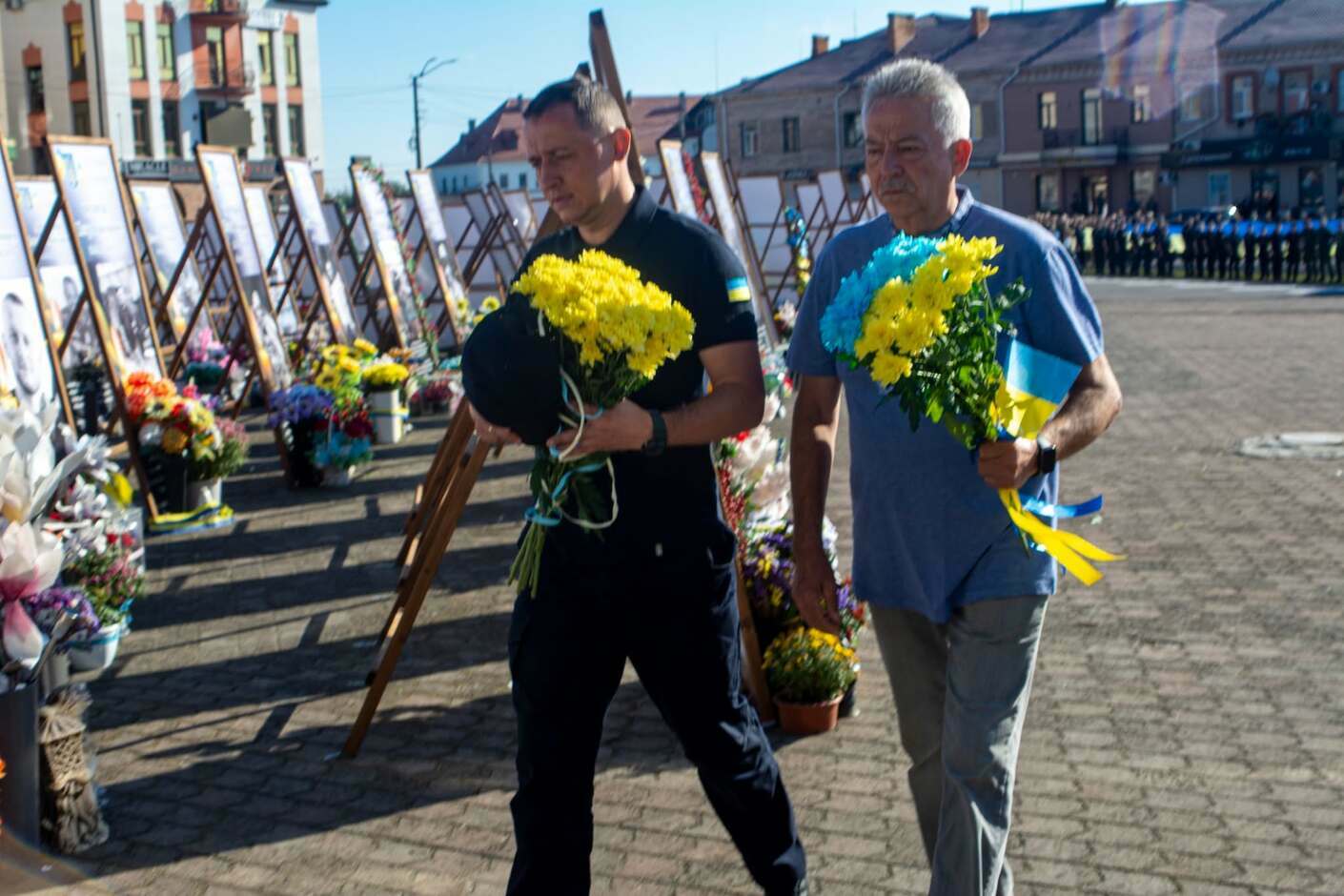
The main square in Dubno, like the main squares in other Ukrainian cities, has long since become a memorial to fallen heroes
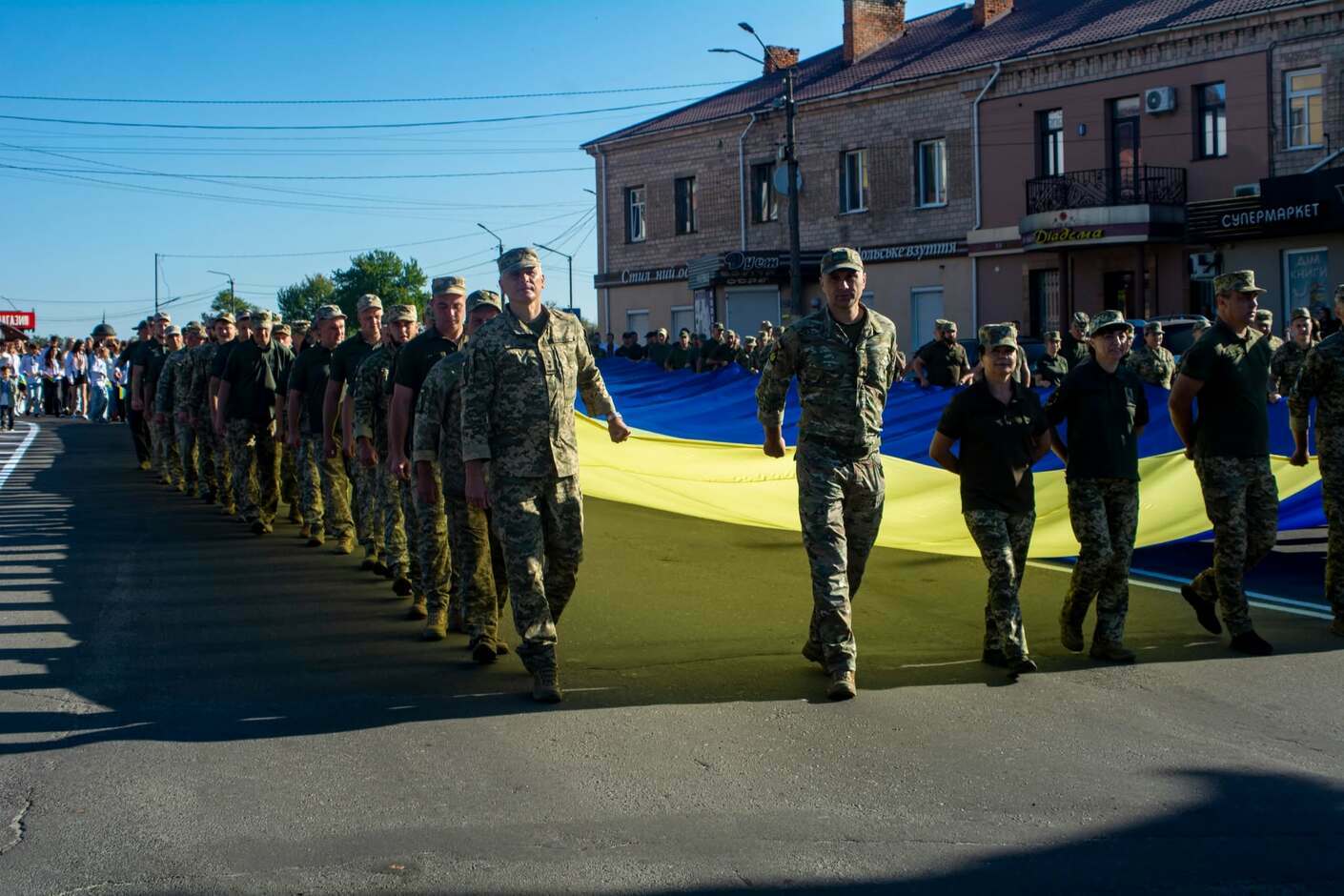
Independence Day in Dubno 2026
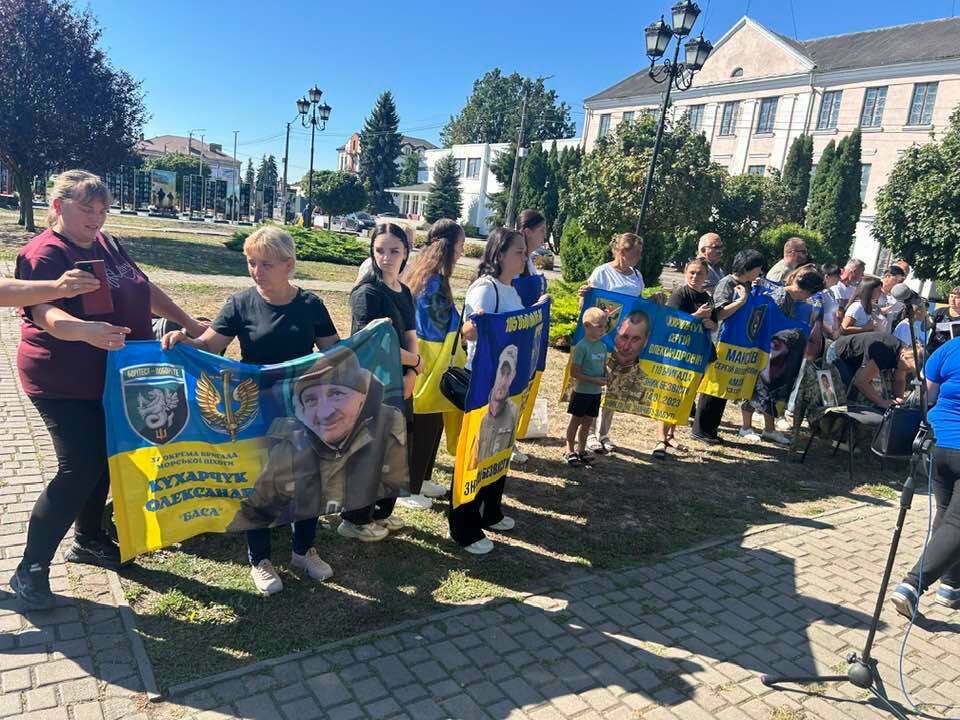
International Day of Remembrance for the Missing in Dubno, 30 August 2026
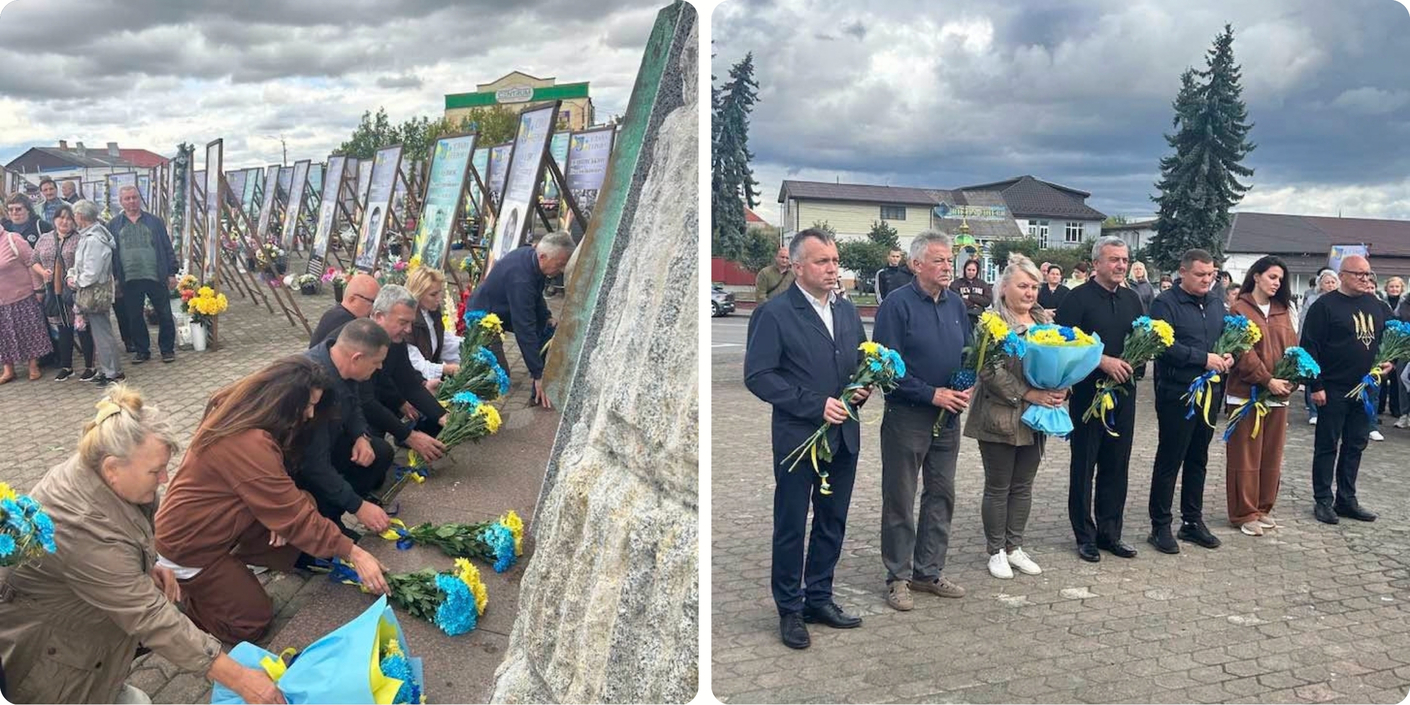
A wreath-laying ceremony at the monument to those who fought for Ukraine’s freedom and independence in Dubno to mark this year’s Defenders’ Day. During the celebrations, local residents raised around UAH 300,000 for the military
‘I am most proud of the support given to the army’
You have been the mayor since 2010. How has the role of the mayor changed during this time?
In fact, I was also mayor from 1996 to 1999, and after that I served as first deputy mayor for a long time. That means I really can draw a comparison… The decentralisation reform is one of the best reforms implemented since Independence. Before 2015, local governments were completely powerless and dependent on the region and the capital. However, after 2015, they started to determine the direction of their own community’s development. The budget started to grow and the community transformed before our very eyes. Our focus was on improving the community, which involved building a nursery and a sports school from scratch and carrying out major repairs to the bridges. For a while, we were in the top 10 of several infrastructure development rankings. However, the war brought all of this to a halt. Now, we work for the Armed Forces of Ukraine. Supporting them is our main priority.
Does your community take part in the “Shoulder-to-Shoulder: Cohesive Communities” project?
Yes, actively. Our partners in this project are Okhtyrka and Konotop. Recently, children from those cities spent a holiday in Poland together with our children. We also provide financial support to these cities.
What are you most proud of in your work since the full-scale invasion began?
Our support given to the army. I have no fewer than five hundred certificates of appreciation! I also have medals and signs of honour. Can you see that model aeroplane on my desk? The Commander of the Air Force gave it to me. These are my main achievements! However, the most important thing is that the Armed Forces of Ukraine have prevented the enemy from advancing any further west for five years now. The russian army is bogged down a thousand kilometres from Dubno. It makes me happy that our community is also contributing to this resilience through its support for the army.
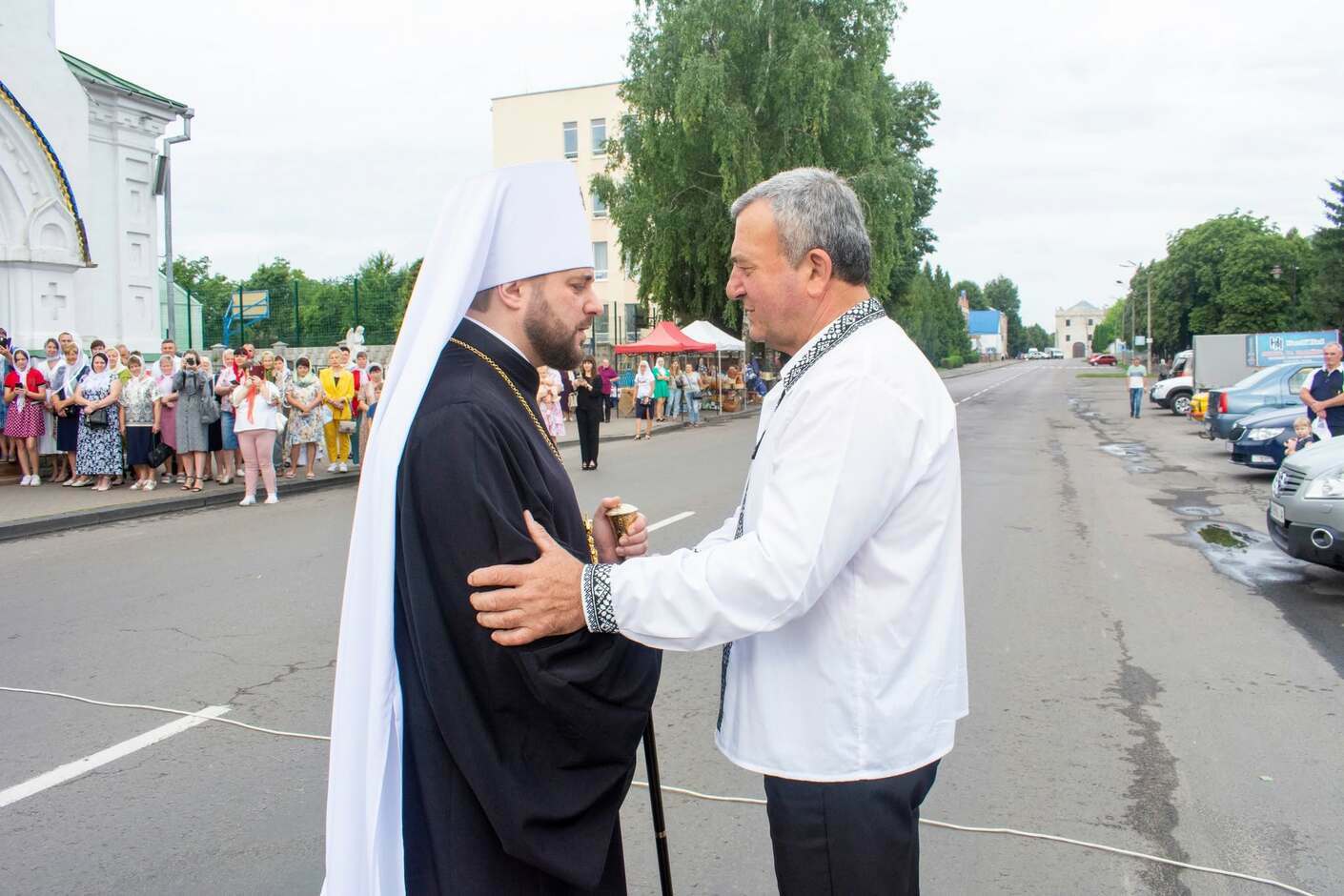
Vasyl Antoniuk and Metropolitan Ilarion of Rivne and Ostroh during the celebrations to mark Dubno City Day on 20 July 2026
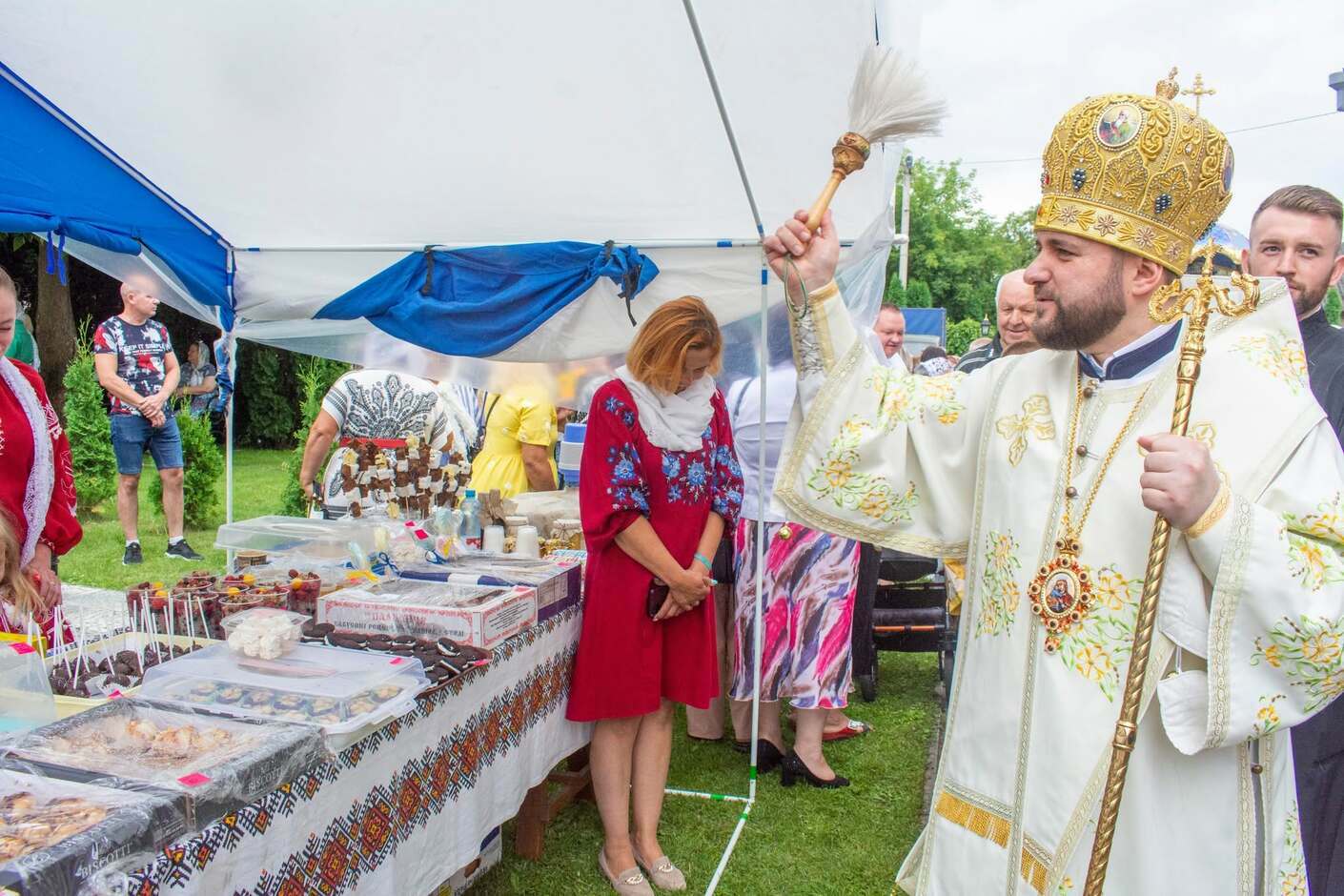
Blessings for the residents on City Day
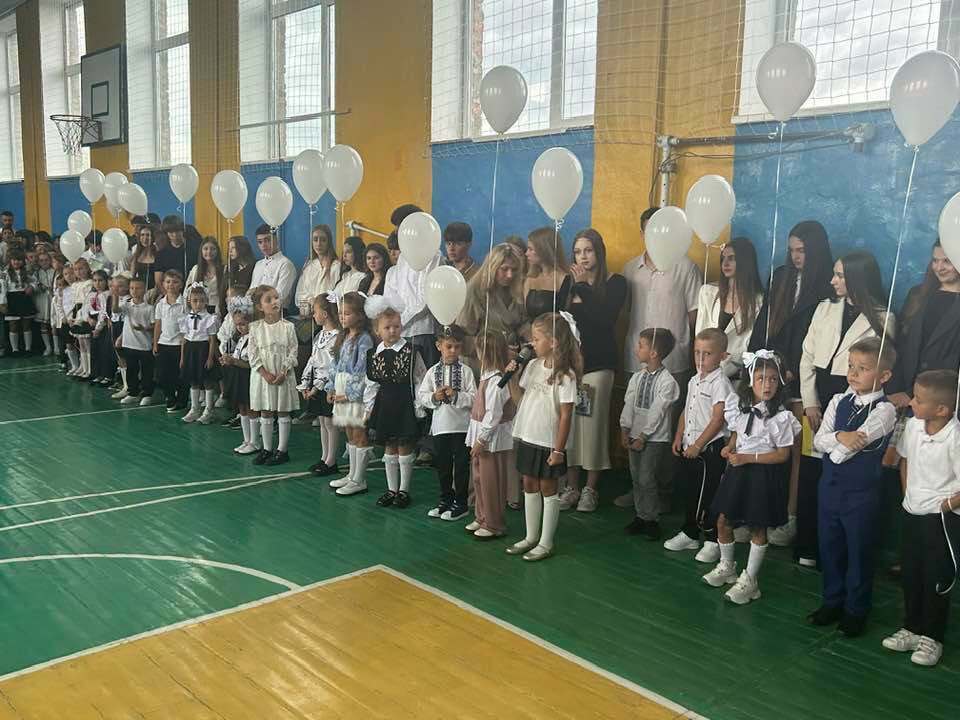
The celebration on 1 September at Dubno Lyceum No. 1 went like this
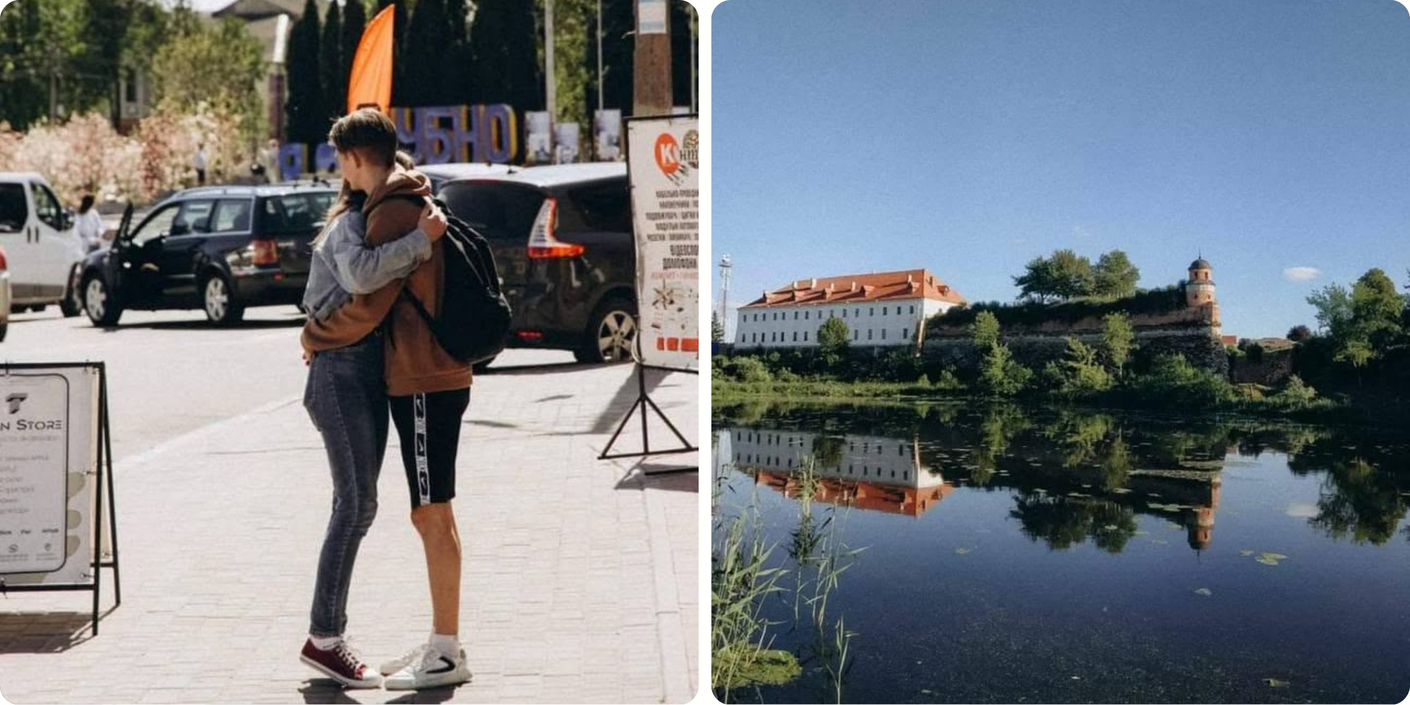
Peaceful Dubno
Tags:
Область:
Рівненська областьГромади:
Дубенська територіальна громадаSource:
Портал "Децентралізація"
20 October 2026
Для шкільних маршрутів у прифронтових областях залучать кошти ще на 90 укриттів - Віталій Безгін
Для шкільних маршрутів у прифронтових областях...
У шести прифронтових областях триває облаштування мобільних укриттів уздовж шкільних маршрутів. Ще 90 таких об’єктів...
20 October 2026
Нові правила водопостачання: що зміниться для громад
Нові правила водопостачання: що зміниться для...
Органи місцевого самоврядування та комунальні підприємства зможуть встановлювати тарифи на водопостачання і...
20 October 2026
«Майбутнє села – за підлітками». Як на Харківщині змінюють уявлення школярів про професії
«Майбутнє села – за підлітками». Як на...
Побачити, як під класичну музику на сучасній фермі доять корів, приміряти одяг рятувальника чи зробити перший у житті...
19 October 2026
Орієнтир на повернення: як евакуйована Пологівська громада опікується майбутнім своєї молоді
Орієнтир на повернення: як евакуйована...
Місто Пологи, що на Запоріжжі, знає про те, як має відбутися профорієнтація, не із чуток. Пологівська міська...