Water – top issue: How Sofiivka community survived after destruction of Kakhovka hydroelectric power station
Petro Sehedii, Mayor of Sofiivka in Dnipropetrovsk region, on community resilience in terms of ensuring a water supply for residents and proactively preventing all associated risks
By Dmytro Syniak
Before the full-scale russian invasion, the cornerstone of the communities’ work was improving the quality of service provision. But now a purely military aspect has come to the fore: resilience. Communities must now be able to survive in conditions of prolonged absence of electricity, gas, and central heating… Sofiivka community in Dnipropetrovsk region has unique experience in providing its residents with water in conditions when there is no water left not only from the taps but also from the wells. This is what happened when russian troops destroyed the dam at the Kakhovka hydroelectric power station, causing the vast Kakhovka reservoir, which had supplied Sofiivka community, to cease to exist. However, the community managed not only to survive but also to develop certain resilience strategies that may now be of interest to others. Petro Sehedii, Mayor of Sofiivka, spoke to Decentralisation about this.
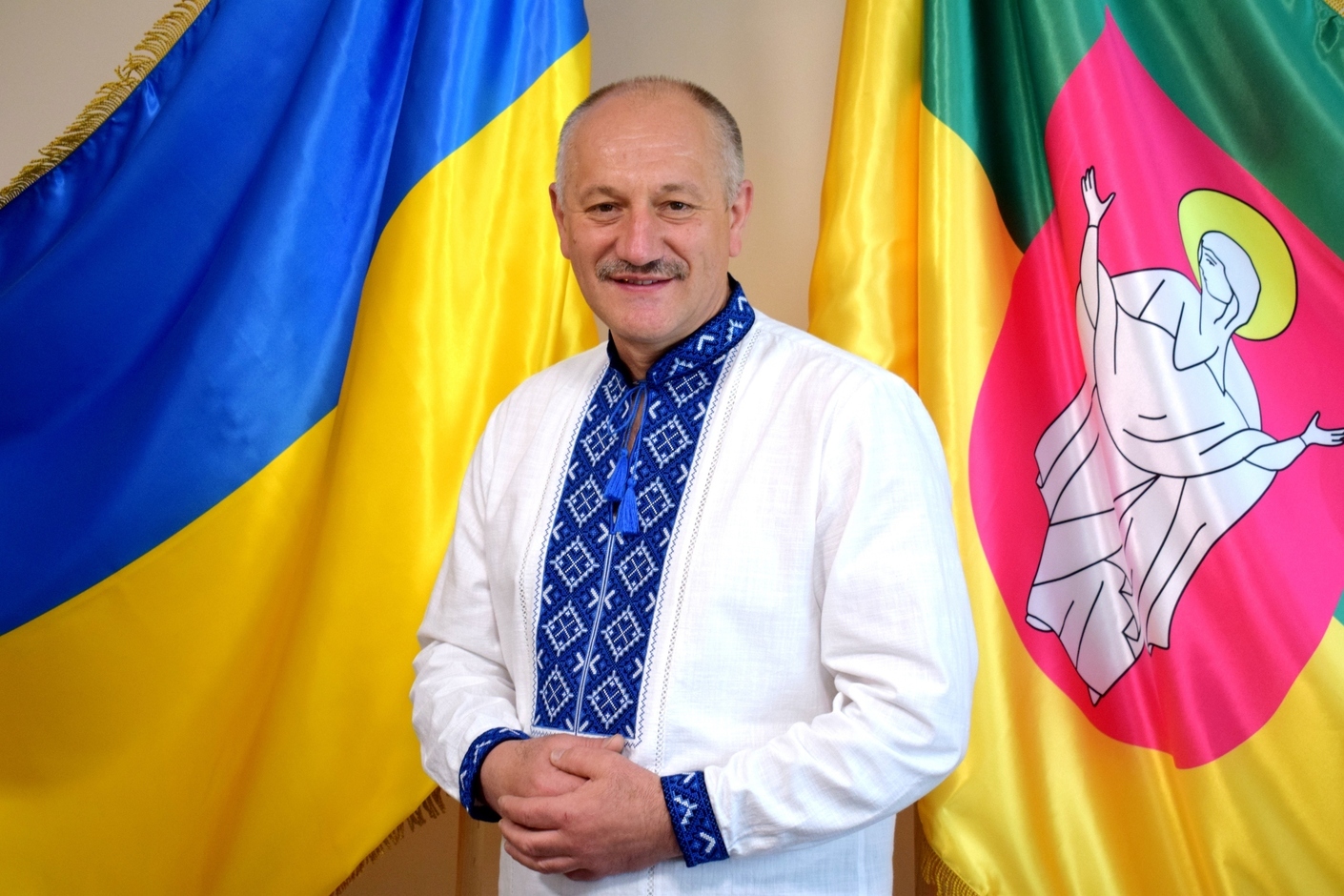
The experience of Petro Sehedii, Mayor of Sofiivka, is now ideally suited to his community: he graduated from the University of Civil Protection and worked in the fire service and the Ministry of Emergency Situations from 1987 to 2019.
Principles of resilience in relation to water supply, as outlined by Petro Sehedii:
1. Diversification: do not rely on a single water intake or water main
2. Autonomy: have backup boreholes, generators, and alternative power supplies for pumps
3. Monitoring: keep track of the condition of the networks, water sources, and water quality
4. Coordination: have an action plan with the authorities, the water utility company, the State Emergency Service, and the public in the event of an accident
When the Kakhovka Reservoir suddenly disappeared and the water stopped running from the taps
In many villages in Dnipropetrovsk region, there were water supply problems even before the russian invasion. How did the invasion change this situation?
Although things were far from ideal before, everything was working. We had water suppliers, we paid them and knew we would have water. But when the invaders destroyed the dam at the Kakhovka Hydroelectric Power Station, our community suddenly faced the threat of survival. We did not expect the russians to commit such a crime and were not prepared to be left without water. That, in fact, was our biggest mistake, because without heating, gas or even electricity, you can still manage to get by somehow, but without water – not a chance.
What did you do in the first few days after the destruction of the hydroelectric power station, when the water stopped running from the taps?
Unfortunately, the water stopped running not only from the taps, but also from many wells. After all, our community is situated on a slight high ground. Our first priority was to organise a system for delivering drinking water to people, using every piece of equipment at our disposal – whether it was owned by the community, the military, local businesses, or anyone else. We also immediately built up a water reserve at our pumping station, from which we filled water tankers every day. In the villages, we sold this water at a nominal price, and distributed it free of charge to residents of apartment buildings. In the residential neighbourhoods of our settlement, we naturally designated specific locations where people could come to collect water. In the private sector, we took a targeted approach, involving staff from our social services in this work. They would suggest where elderly, isolated or people with reduced mobility lived – those who were unable to go out for water themselves and to whom it had to be delivered. Another key aspect of our work was advising people on how to prepare containers for water, to ensure the water did not go off and people did not contract intestinal diseases. There was no end to the work…
Where did people get these containers?
Special tanks were needed, so we promptly made requests to community organisations, donors and businesspeople, who provided some of our households with 1-cubic-metre tanks. All our utility facilities also received these tanks. We then managed to obtain several water tankers from them as well. Supplying all these vehicles with fuel proved to be a major challenge for the community. We had previously had neither these costs nor such a large fleet of vehicles. But we managed. And three months later, water was supplied to us from Kryvyi Rih, even though they were also short of water there. We survived.
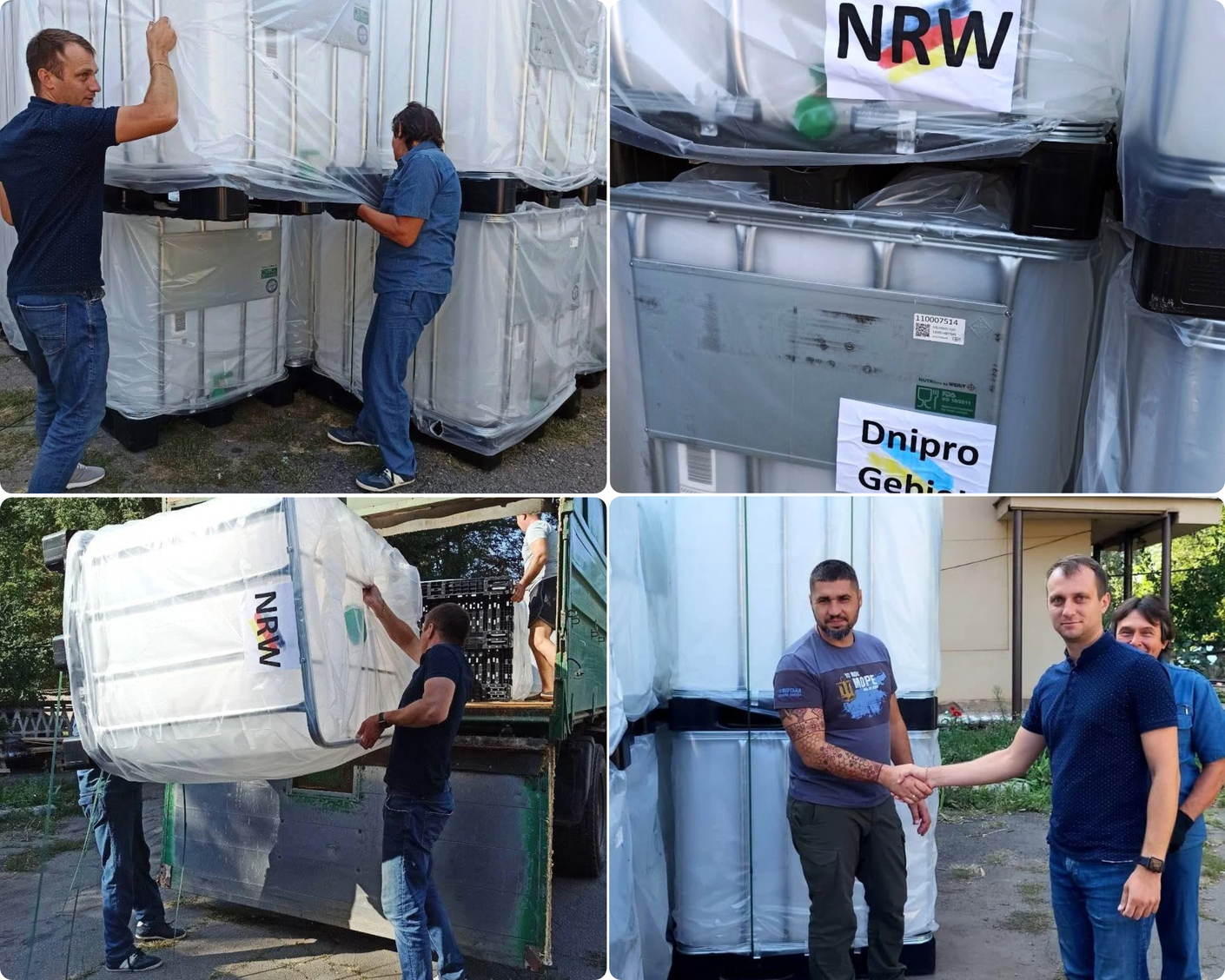
Water containers handed over to Sofiivka community as part of the activities of the Dnipropetrovsk Regional Office for International Cooperation, which enlisted the support of the government of the federal state of North Rhine-Westphalia through the German-Ukrainian association “Blue and Yellow Cross”
What should people do if the water from local wells is undrinkable?
Has there been no water from the taps for three months?
No, it was still supplied once a month, but not in sufficient quantities. We therefore immediately began the process of attracting investors to drill artesian wells in public areas – near schools, nurseries and the hospital. But the water flow was low: one well yielded a maximum of 2.5 cubic meters per hour, whereas we needed 90–100 cubic meters. Furthermore, unfortunately, due to the specific characteristics of our region, artesian water can only be used for domestic purposes.
What are these characteristics? Why could the water from artesian wells not be drunk?
Because it is polluted by the Kryvyi Rih mines. Even the water from our own wells is now used exclusively for domestic purposes, and its quality is deteriorating year on year. However, we used this water to wash ourselves, water our livestock, and irrigate our vegetable gardens… At least something! Hence, the artesian wells saved us. To make the water from them drinkable, we purchased water treatment plants for some of them. Every starosta district now has at least one such plant, and Mykolaivka starosta district even has two. There, with their help, water from the Buzuluk River – which is of fairly good chemical quality – is treated.
How much do these treatment plants cost? Have the dire water supply conditions made it any easier for you to find funding from international donors? Your community, more than anyone else, should be the first to receive their help…
Yes, indeed. The treatment plants are very expensive; they cost at least UAH 1 million each. But donors provided them to us. Moreover, the donors also maintained them for a year and trained us in how to operate them, and only then did they transfer ownership of the systems to us. The donor organisation Aktet provided us with a vehicle and a driver; we simply supplied the fuel, water, and the addresses to which he had to deliver the water. That driver worked for us for a whole month. The donors also helped us with pipes, equipment, concrete rings for wells and so on. They brought us so many plastic water storage containers that we later even had to turn down people who wanted to buy or donate them to us.
You mentioned well rings, but on the other hand you pointed out that the water in local wells is getting worse year on year. Is it worth developing this age-old technology, then? How important are traditional wells to ensuring the community’s resilience?
They are very important for villages; therefore, each one is registered, and some are even recorded on the balance sheet of the settlement council. In Sofiivka, with its apartment buildings, wells are no longer relevant. Instead, another old technology can be developed here: “kachalkas” – hand pumps. They do not require electricity, and people will not be left without water. We have already installed two such hand pumps in Sofiivka, and our architect has been tasked with planning a network of these devices across the settlement so that the distance from each household to the nearest pump is no more than 500 metres.
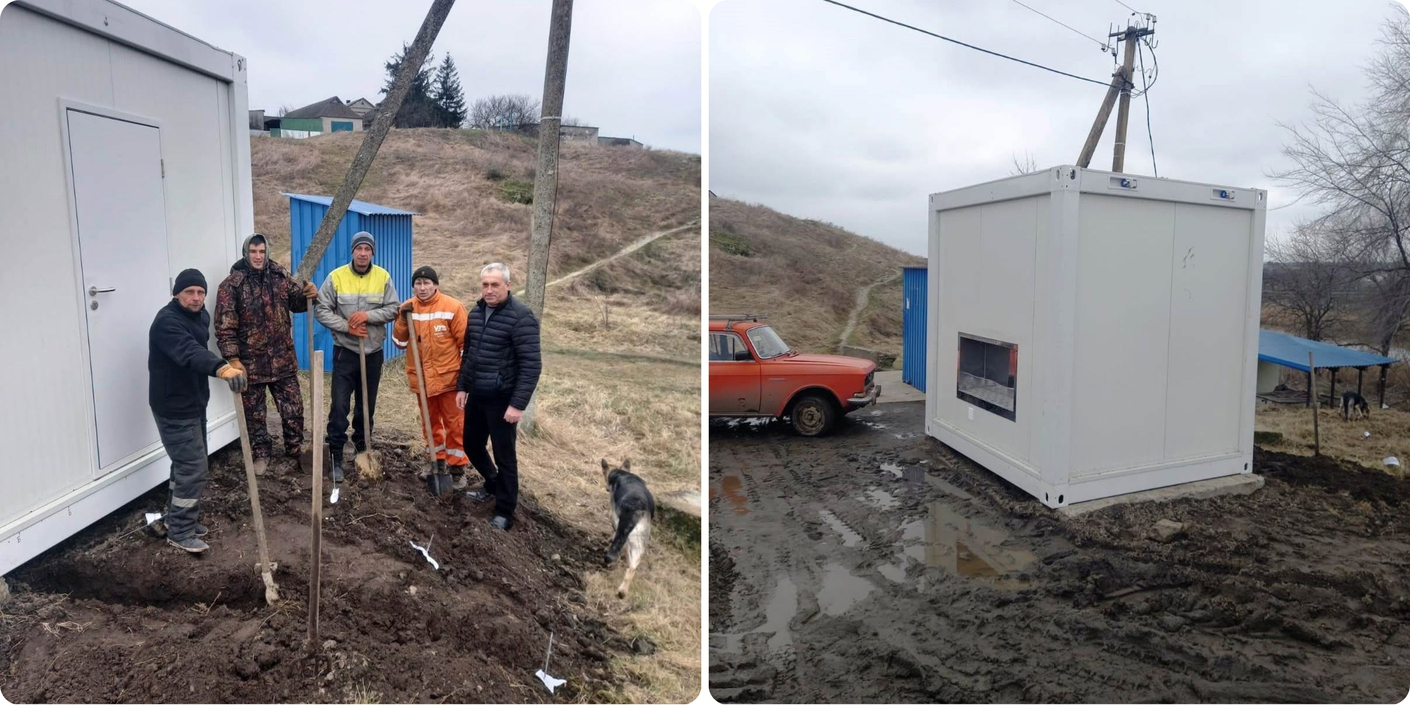
Installation of a water treatment plant, which Sofiivka community received under DOBRE programme, in Mykolaivka village. February 2024
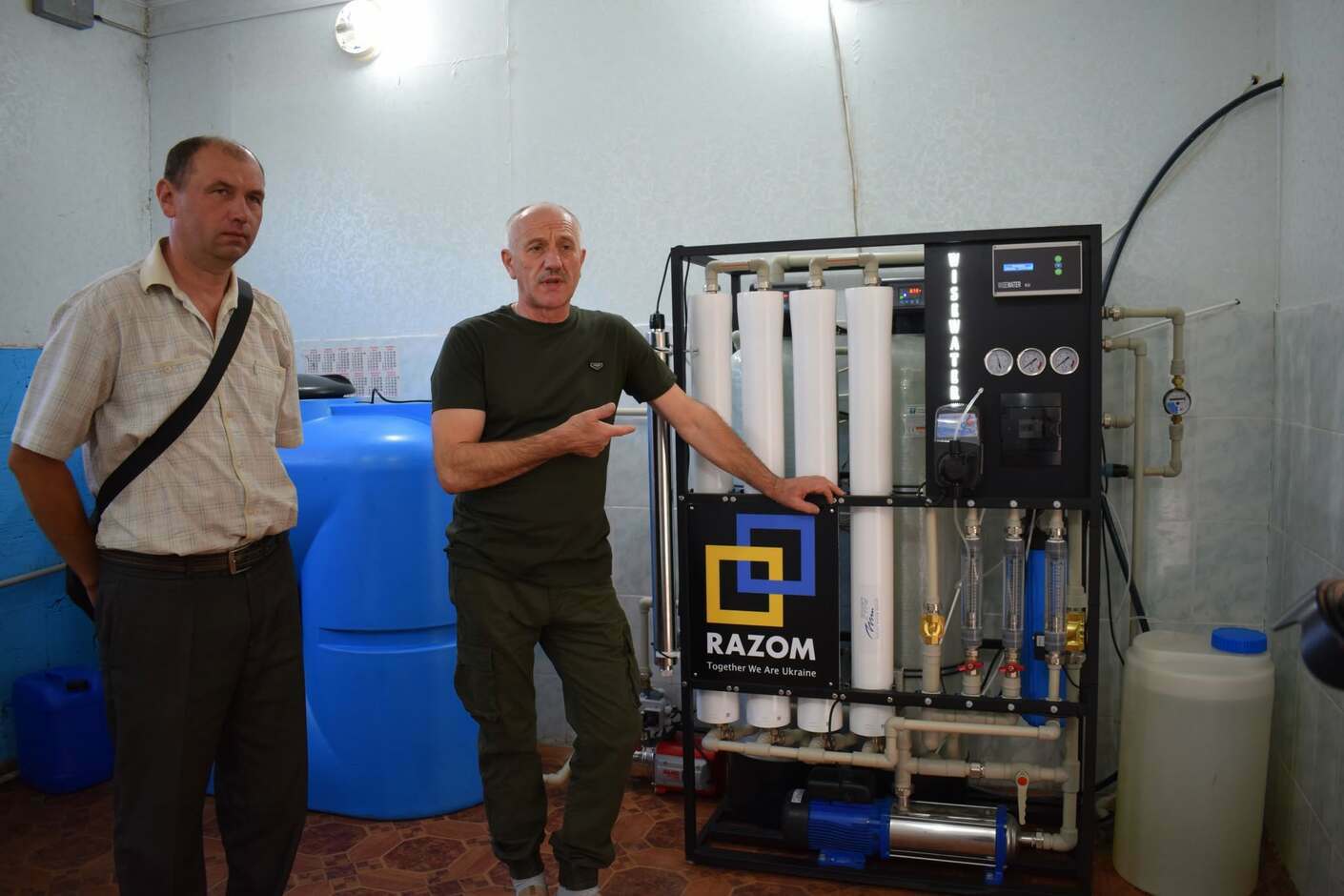
Water treatment plant in Sofiivka, received under cooperation between the Dnipropetrovsk Regional Council and the US-Ukrainian RAZOM Foundation. September 2023
The water supply from Kryvyi Rih, which failed to solve the problem
Three months after the russians destroyed the Kakhovka hydroelectric power station’s dam, water from Kryvyi Rih began flowing through the water mains, and water once again ran from the taps every day. A happy ending?
Not at all! It was the start of new problems, firstly because the water from it also turned out to be unfit for drinking. So, it had to be further treated, and we once again set about attracting investors. We managed to obtain several water treatment plants from donors, which we installed in all our operating schools, kindergartens, and the hospital. It also turned out that there was not enough of this water. The fact is that Sofiivka, the largest locality in our community, is also the end point of the main water pipeline. So, the water often did not reach our settlement – it was tapped off “along the way”. And the “route” is a long one – over 20 km. Moreover, if most of the villages through which the water main passes received water by natural gravity, then in order for it to reach Sofiivka, considerable pressure had to be generated in the network. Because, as mentioned earlier, Sofiivka is situated on high ground.
How can the problem of water supply be resolved globally?
We want to lay an independent main water pipeline from Kryvyi Rih to Sofiivka, which would have no other customers apart from us. We are currently in talks with the regional military administration on this matter. I think we will start preparing the project documentation this year. Even if there is not much water in this pipeline, we will be able to connect our villages to it in turn so that each one has water at least once every three days. We have also, thanks to funding from the State Fund of Regional Development, already developed a project to replace the water main in Sofiivka, where the pipes have not been replaced since the 1960s. The Cabinet of Ministers has even issued a resolution on the need to allocate UAH 30 million to us for this. We hope that we will receive this money next year… But I must say that the water problems we are currently facing are primarily due not to the water mains and boreholes, but to power outages.
How do you tackle this problem?
We have fully equipped our pumping station with diesel generators and, in addition, installed a 30 kW solar power station there, which enables the water utility to operate when there is no electricity. In principle, such solutions can also be applied to artesian wells. The aim is to have a generator or solar panels next to every well.
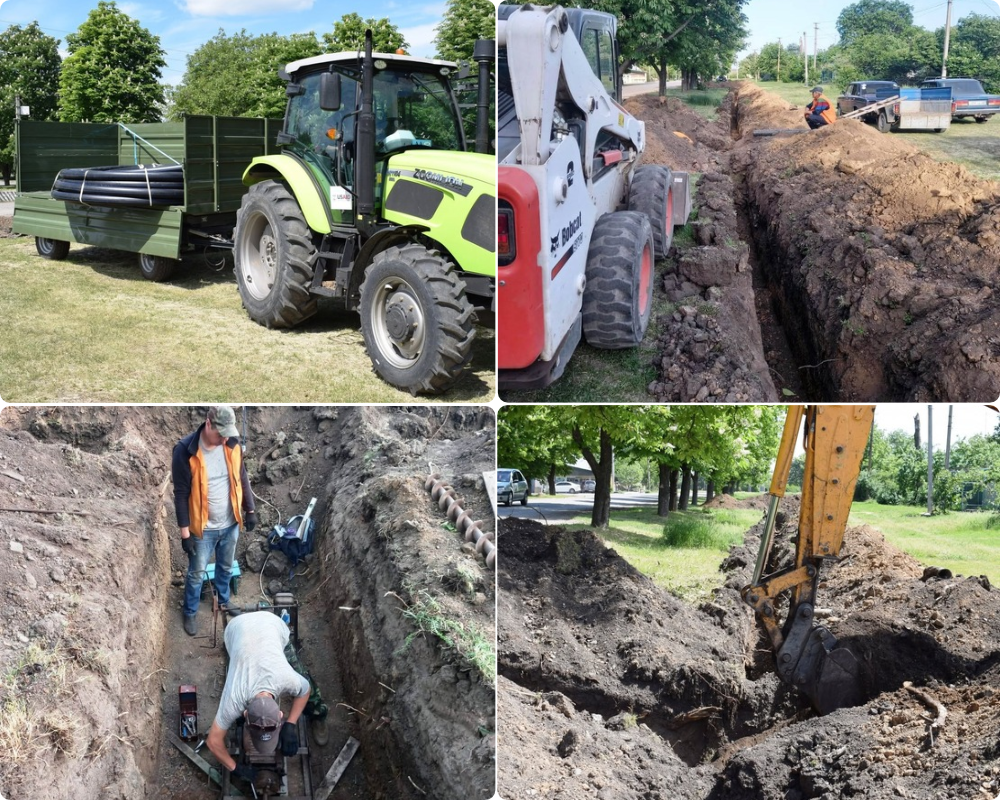
Work on laying a new section of water main to the residential neighbourhood of Sofiivka. The work is conducted by the “Sofiivske” utility company with the support of the Norwegian Refugee Council (NRC), which has provided some of the necessary materials. May 2024
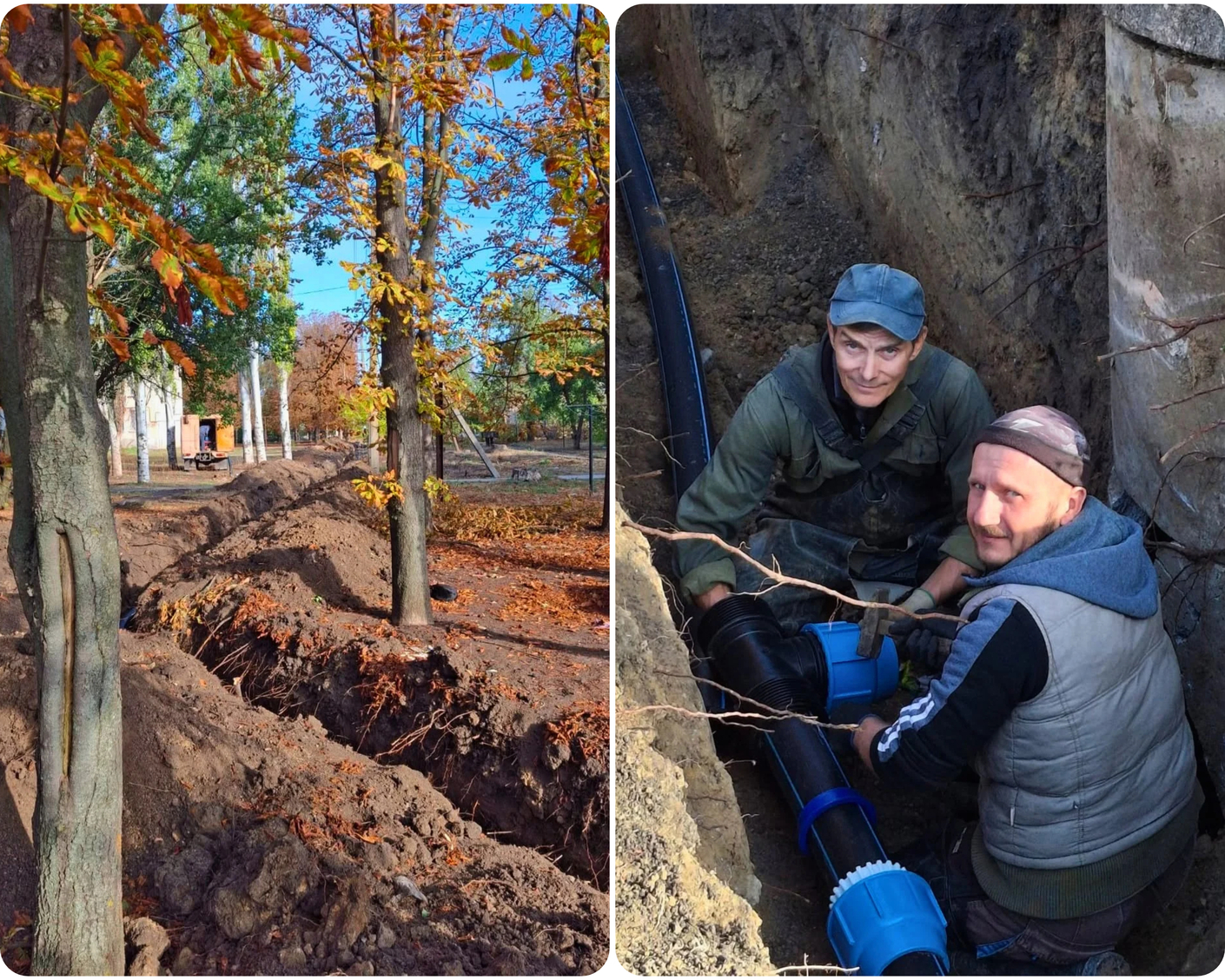
Repairs to the water supply system in Meliorativnyi housing complex in Sofiivka
How does one work in the absence of water?
What advice would you give to communities at risk of running out of water? How should they prepare for this?
Firstly, always have a supply of water. Almost every community now has a fuel reserve, and nobody questions that. So when I say that we need to stockpile water in the same way, community leaders often shake their heads sceptically. But they are wrong to do so! After all, sometimes all it takes is a single enemy missile or drone strike on a pumping station for the water to stop running from the taps. Therefore, having a water reserve is very important. For example, our water reserve currently stands at 5,000 cubic metres, and we replenish it every 4–5 days. This means we will always be able to hold out for at least two weeks in the event of a complete cut-off of the water supply. The next step should be to ensure there are enough artesian wells, which, ideally, should be connected to the water mains.
How did you calculate the amount of water people need?
In Sofiivka alone, we supply between 5 and 8 cubic metres of treated drinking water every day. This is for 8,000 residents. That means an average of 1 litre per person per day. People buy the rest themselves in shops. To ensure people have enough water, we want to build another clean-water reservoir next year with a capacity of 5,000 cubic metres, to double our total supply. The situation is better when it comes to service water. We have calculated that a single household needs around 7–8 cubic metres a month, and we have 3,200 customers. This means we need around 25,000 cubic metres a month. But here, the water supply system comes to the rescue, as do the rains. Almost every gutter leads to a barrel. We have a farmer who has developed a whole system of gutters that converge into a large tank – holding about 300 cubic metres of water. We have also allocated land for water storage tanks near apartment buildings. Many of our households have their own storage tanks holding between 3 and 5 cubic metres of water.
How can people be billed for water under such extreme conditions? Should they be charged the actual cost of water, or should they receive a subsidy? And if they are to receive a subsidy, how much should it be?
As a member of the community, I also use all the services provided by our utility company. Initially, as an ordinary customer, I paid 50 kopiikas per litre of drinking water, and later 1 hryvnia. You have to admit that this is not much, so nobody complains. On the other hand, everyone appreciates the water we sell; everyone knows it is of high quality and meets all standards. 1 hryvnia per litre is slightly less than the cost price, but we understand that these are difficult times for everyone, so we cover the utility company’s additional costs – as it supplies the community with water – using community funds. In addition, we allocate separate funds for repairs, the purchase of spare parts, fuel and so on. As for the centralised supply of industrial water, people pay UAH 89 per cubic metre. This is UAH 9–10 less than the cost price.
Tanks, boreholes – all of that is, of course, necessary. But does the settlement council not need a clear action plan in the event of serious accidents?
I would rather say: “We need an operational action plan” – listing all water supply sources in the community, analysing the quality of the water from them, specifying the storage locations for generators, taking into account water storage capacities, as well as the transport available to deliver it, and so on. The list is very long. And, of course, such an action plan needs to specify which staff the community can rely on in an emergency, and exactly what those staff members are supposed to do.
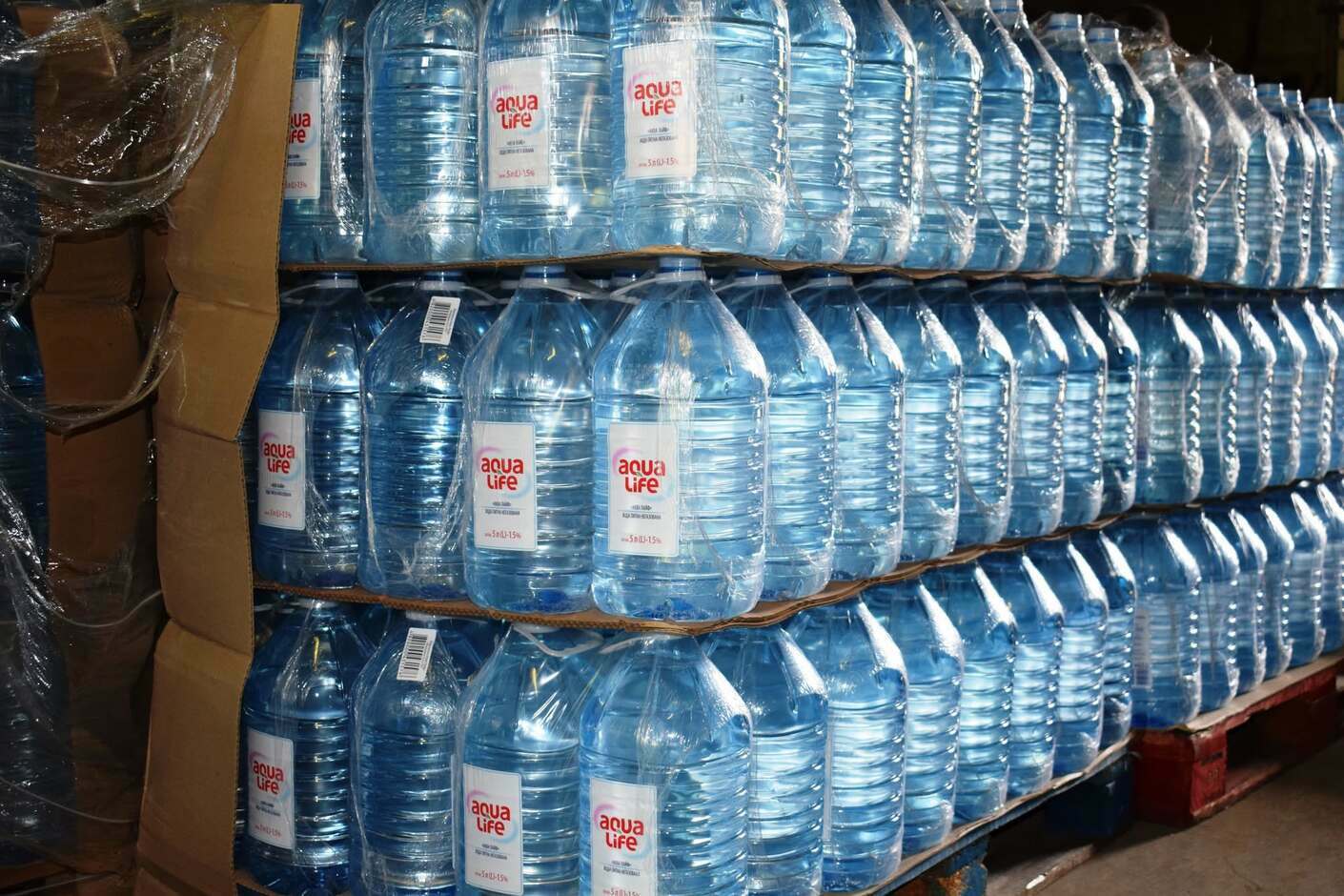
The warehouse with drinking water in Sofiivka
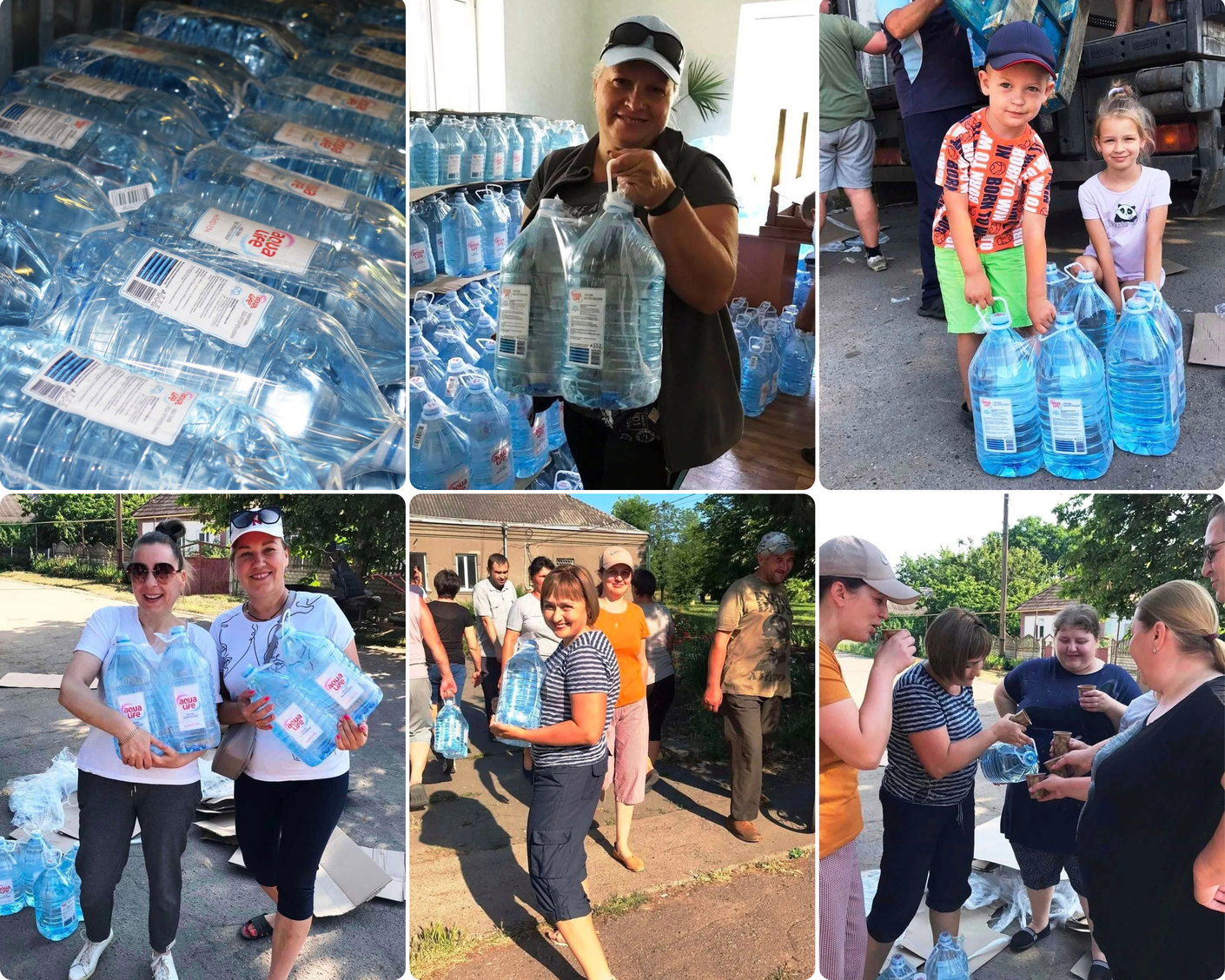
Handout of drinking water in Sofiivka
Water supply to local residents must be the number one priority for the community leader
What figures do you demand from the management of the water utility company on a monthly basis?
What do you mean, “monthly”!? The head of the water utility company reports to me every single day on the water levels in our clean water reservoir: so much has come in, so much has gone out, and the current reserve is like this. If the water main breaks, I keep a particularly close eye on these figures. If the water level in the reservoir suddenly drops from the five-metre mark to the two-metre mark, this automatically means the situation is critical and we have to do absolutely everything we can to resolve it immediately. Besides, we need to warn people to store up a few days’ supply of water until we can arrange deliveries in response to requests. The work is very painstaking. If you fail to let people know in advance that there will be no water tomorrow, they are unlikely to have time to collect water, and their problem will very quickly become yours.
What specialists should a community have in order to be more resilient to the challenges associated with water shortages?
Every month, specialists from the district public health service give us a report on the quality of our water. They also test the water at our water utility company, as well as in schools and nurseries. A great deal also depends on the staff at the pumping stations, who maintain the water pressure, as well as on the emergency teams, who do their best to restore the water supply promptly when there is a burst in the mains. And, of course, the engineering department and the technicians are also vital. More importantly, all these people have to work as a team, as one unit.
To what extent does the provision of water to the community occupy your typical working day?
My working day begins with receiving reports from the head of the water utility and the relevant specialists at the settlement council. They report on which addresses have already been supplied with water and how many requests are still pending. Together, we sort through all the issues related to this: breakdowns, repairs, payments, and the provision of transport and fuel. Everything has to run like clockwork, because people cannot wait a week, for example, for water. Their request has to be dealt with, if not on the same day, then the next. Water has to be the number one priority for every community leader. Even if it is available from the taps. It is the very first component of resilience.
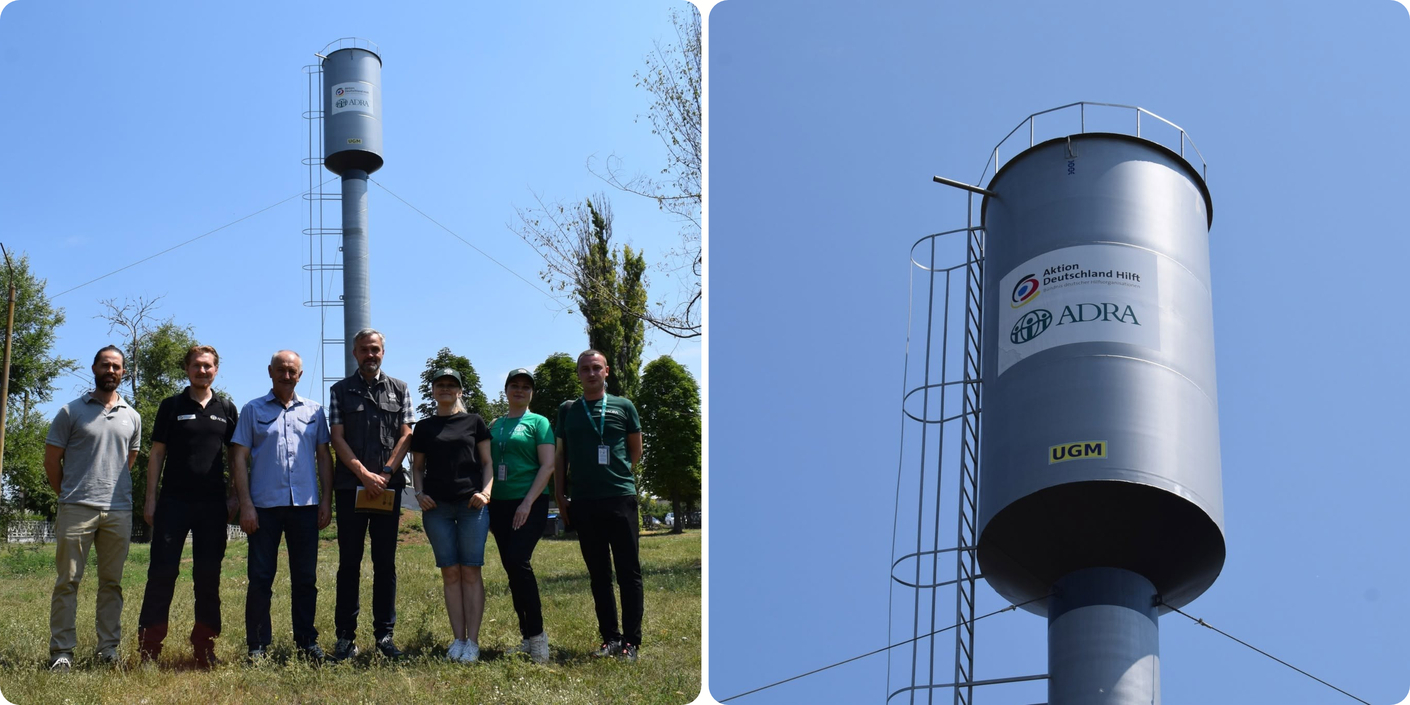
Representatives from the donor organisations ADRA Czech Republic and ADRA Germany visited Sofiivka during a monitoring visit to assess the implementation of the WMT Ukraine project ‘Safe water, psychological well-being and public transport for Ukrainians affected by the conflict’. The project was also supported by Aktion Deutschland Hilft and Atlas Copco, with advisory support from Epiroc. Thanks to the project, a water tower was installed and access to a borehole was provided in Sofiivka community, which ensures an uninterrupted water supply to healthcare facilities. July 2025
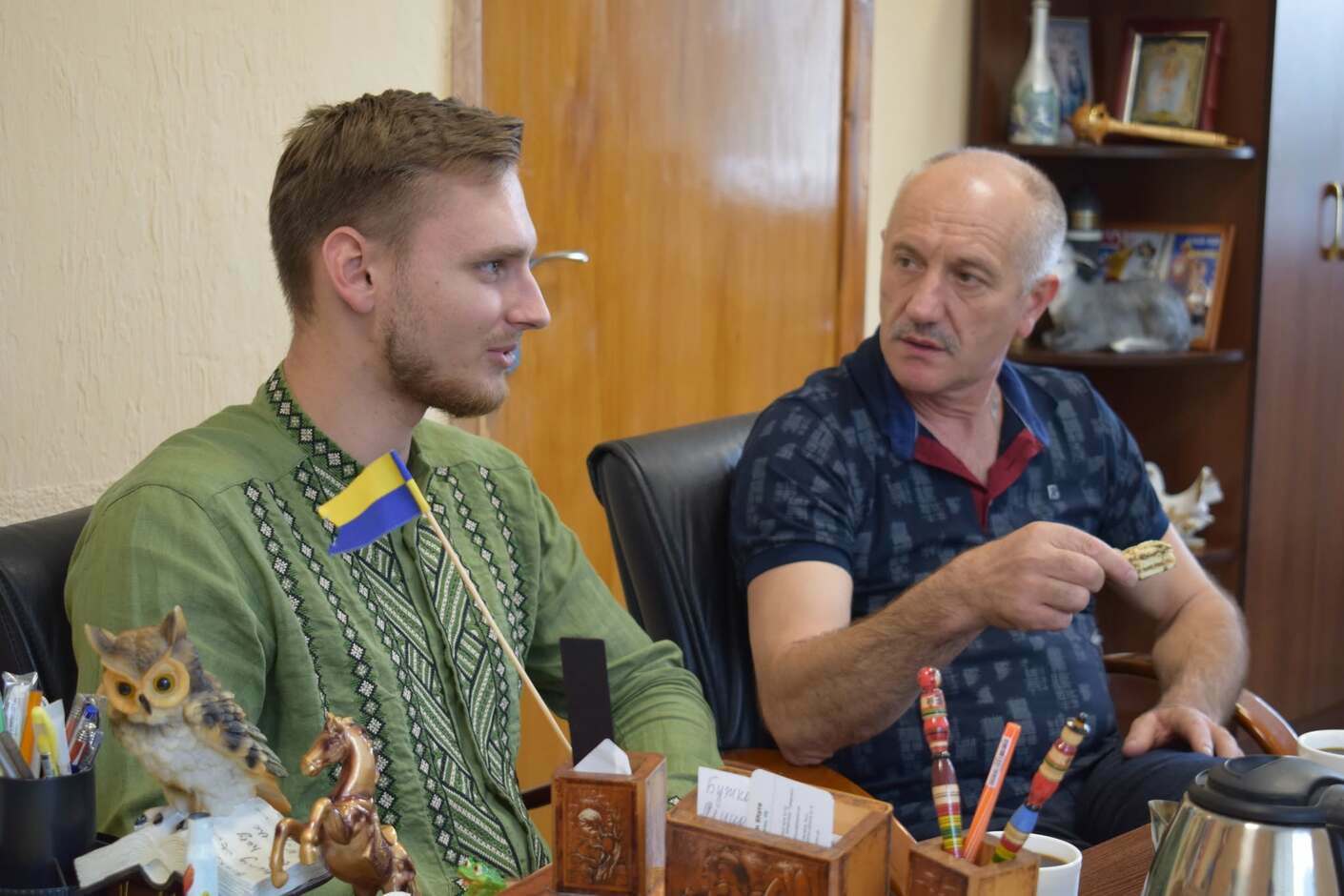
Petro Sehedii (right) and a representative of SpivDiia Charitable Foundation, which provided clean water to the Sofiivka Central Hospital. The project was implemented with the support of Diamondback Energy Inc, in cooperation with The World Orphan Fund and the Charity Organisation Charity Fund Bird of Light Ukraine. October 2023
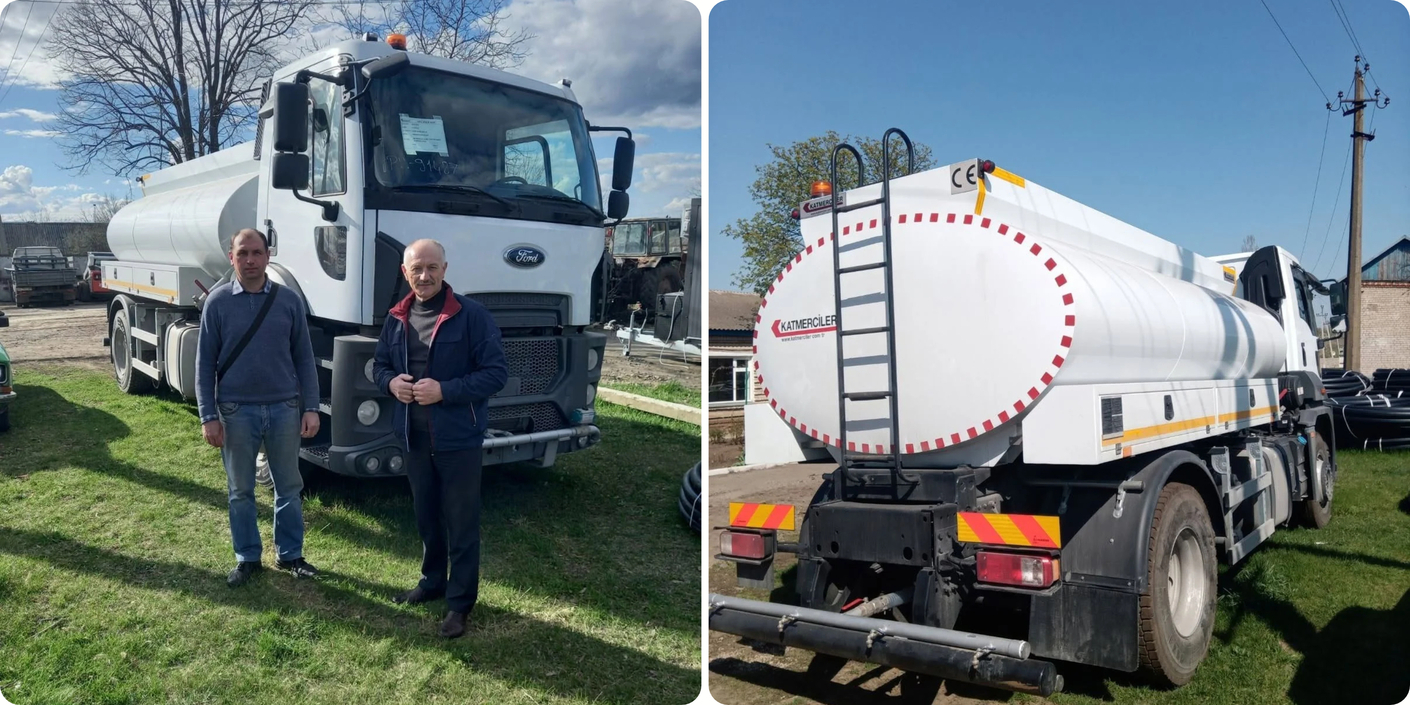
A brand-new water delivery vehicle, which Sofiivka settlement council received from the Dnipropetrovsk Regional Military Administration
06 November 2026
IDPs can choose their new community before evacuation: MinRehion develops new digital service
IDPs can choose their new community before...
A person forced to flee a dangerous territory needs to know, even before evacuation, where they will be able to live...
06 November 2026
Мінфін у жовтні забезпечив перерахування з...
У жовтні 2026 року Мінфін згідно з бюджетним законодавством забезпечив перерахування міжбюджетних трансфертів до...
06 November 2026
Громади можуть залучити до 100 000 євро на...
Литовський фонд співробітництва з розвитку та гуманітарної допомоги оголосив конкурс проєктів міжнародного...
06 November 2026
London Assembly Calls on London Boroughs to...
Andrew Boff, Chair of the London Assembly. Screenshot from the video address The Chair of the London...