Produce!: How to create an ecosystem for the development of new production facilities – Konstiantyn Yefymenko’s experience
What does a region need to ensure that a promising manufacturing specialisation does not remain an idea confined to a strategy or a presentation for investors, or even just a single successful enterprise?
It needs an environment in which the manufacturing sector has access to the necessary workforce, knowledge, and technology; where education and business work together; where research is transformed into products; and where new companies gradually emerge around established ones.
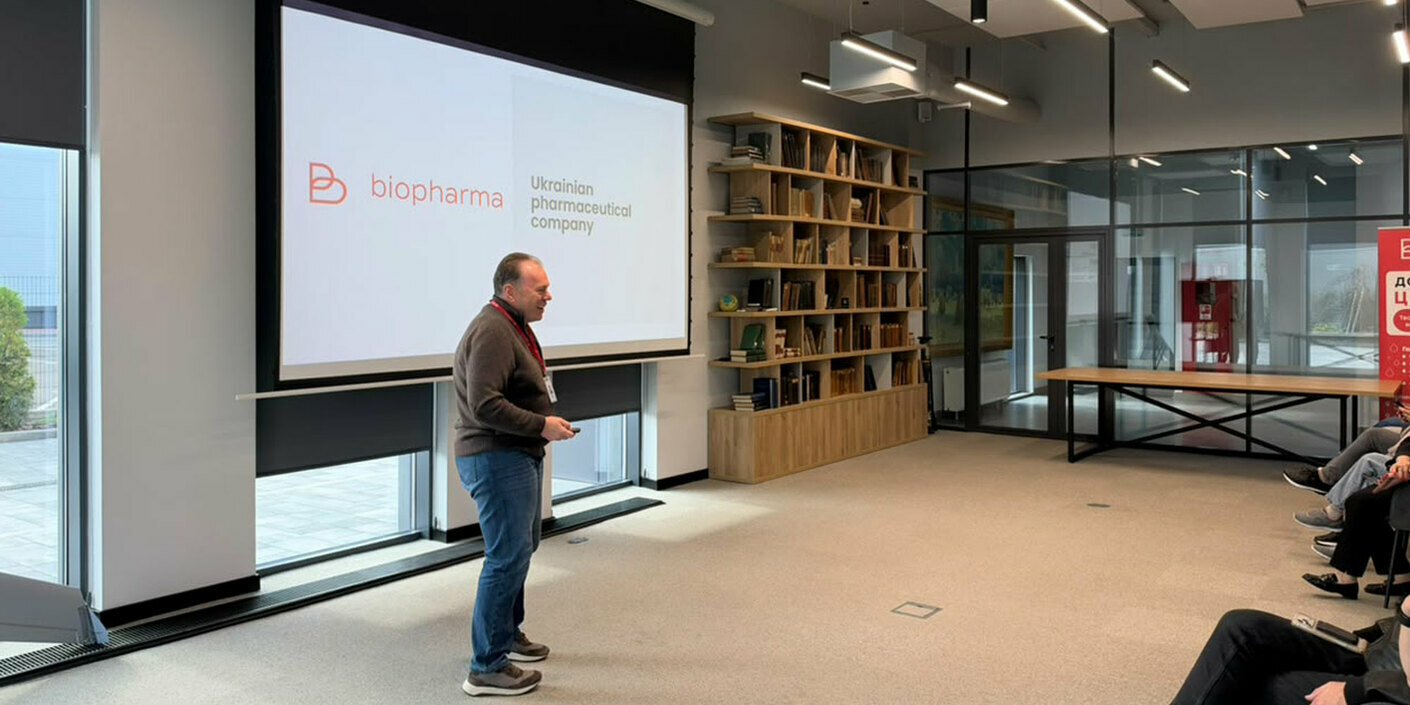
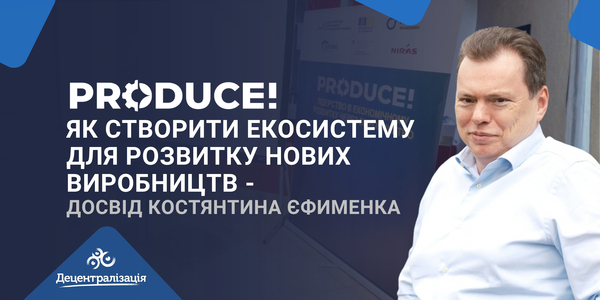
The participants in the Produce! training initiative “Leadership in Economic Development through Production” were presented with precisely this line of reasoning by Konstiantyn Yefymenko, President of BIOFARMA, on the second day of the final training module.
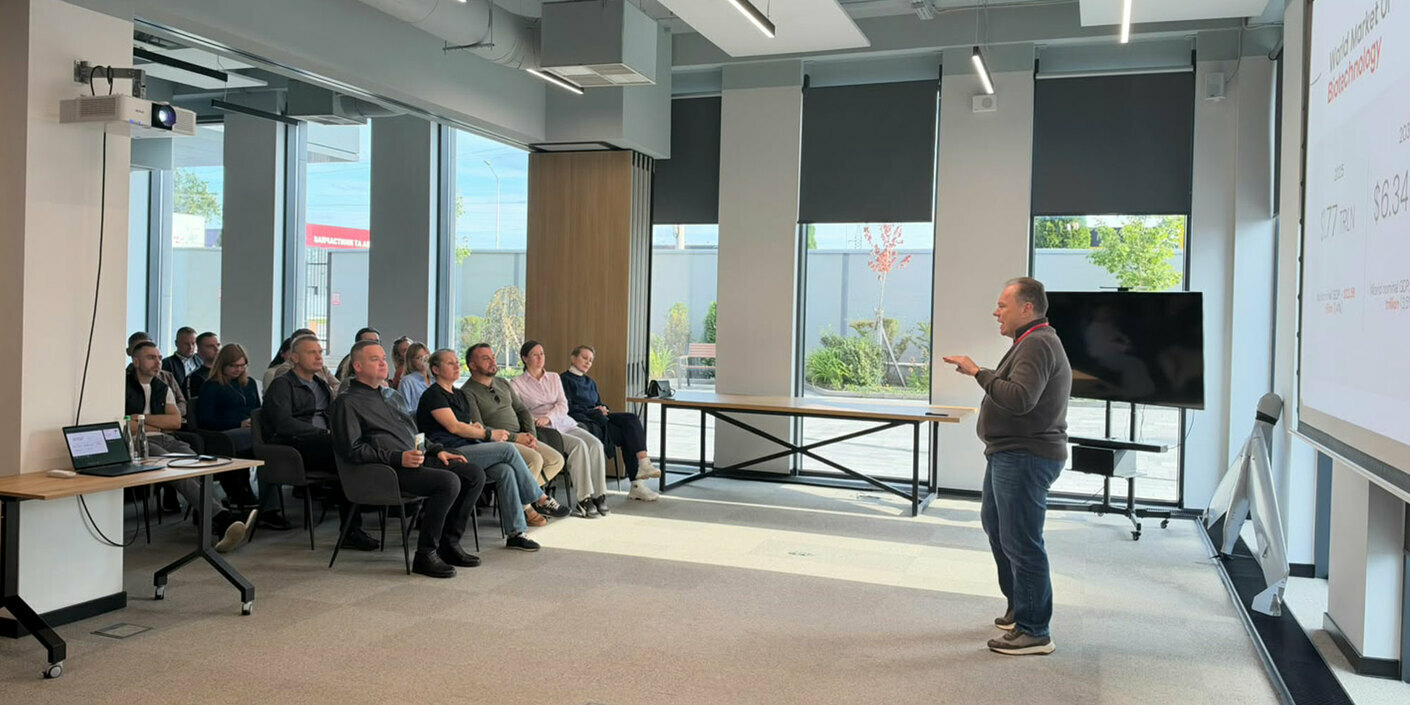
Teams from Vinnytsia, Volyn, Odesa, Sumy, Ternopil, and Khmelnytskyi regions participate in Produce! – representatives of government bodies and local self-government, regional development agencies, the business sector, and educational institutions. Their task is to prepare regional development projects, which they will then present to the Government, the Office of the President, and international partners.
Produce! initiative is implemented by the KIEF Academy under the auspices of the Ministry of Economy and Environment of Ukraine, with the support of the Swiss-Ukrainian “Ukraine’s Cohesion and Regional Development” (UCORD) project, which is implemented with Swiss support by NIRAS Sweden AB.
The second day of the training focused on practical models of economic ecosystems, covering everything from land and infrastructure preparation for production to human resources, education, technology, and business interaction. Konstiantyn Yefymenko’s presentation offered an additional perspective on this topic, explaining how to systematically develop a production specialisation and support its growth.
Not individual elements, but a system
When discussing the development of the biotechnology sector, Mr Yefymenko immediately shifted the focus from the enterprise itself to a much broader framework.
‘I am an industrialist. I love factories, and I build them. I will continue to do so for as long as I am able to live on this earth. But here, we are not building a factory. Here, we are building an ecosystem.’
In this model, the production site is just one element. Production requires raw materials, so a system for sourcing them is essential. Competitive technology is also needed, which requires laboratories, quality control and the continuous improvement of production processes. Specialists are also required, and they must be trained long before the company has any job vacancies.
If the aim is to develop a region’s industrial specialisation, then new companies, researchers and educational programmes are needed, as well as an environment in which they can interact.
For the regional Produce! teams, the principle itself is what matters. Simply identifying a promising sector or production project is not enough. It is also necessary to understand which interrelated elements must emerge around it to create a complete economic chain.
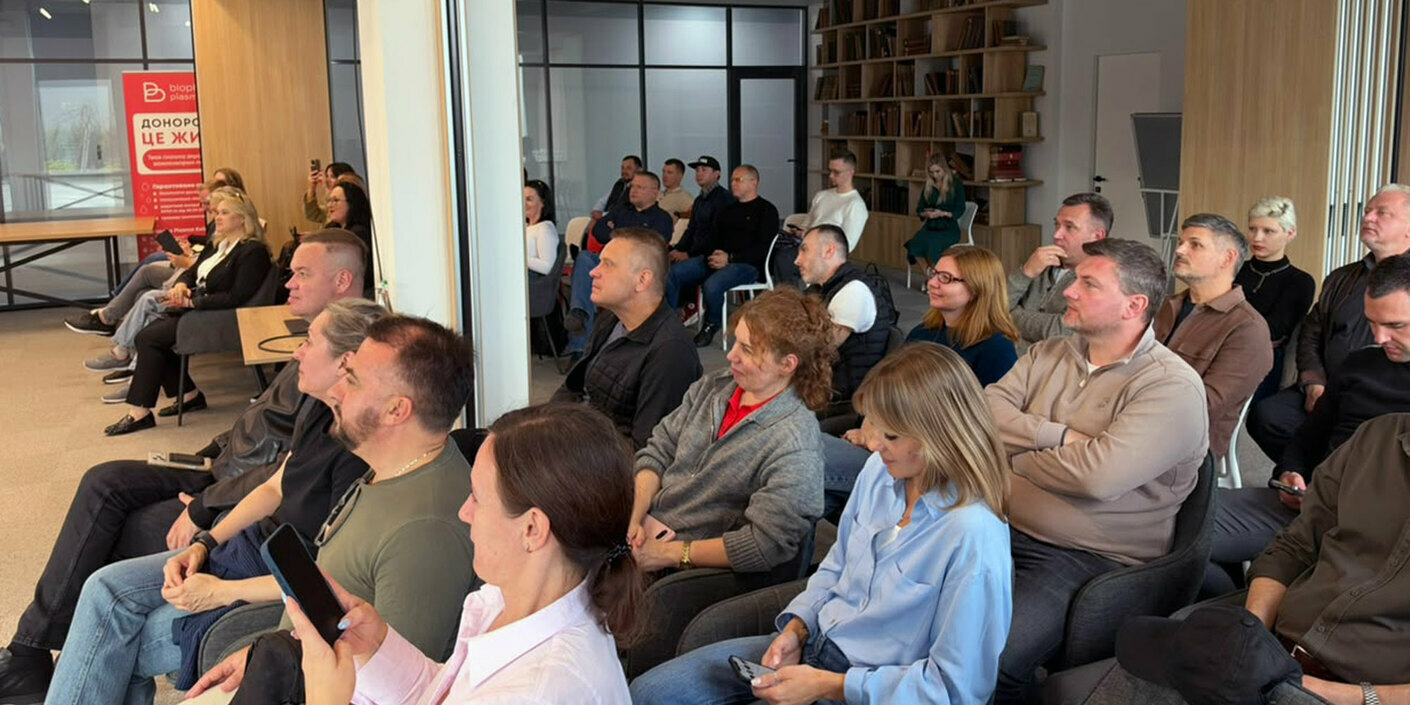
Staff must be trained before they are needed
Human capital is one of the central elements of the model presented by Kostiantyn Yefymenko.
The company’s approach does not begin with a search for ready-made specialists on the labour market. Instead, the company works with schoolchildren, supports in-depth study of the natural sciences, and helps talented and motivated children to plan their future education.
The next stage is university. A specialised department has been established at Taras Shevchenko National University of Kyiv. According to the model described by Kostiantyn Yefymenko, students spend an increasing amount of time in laboratories while studying, working alongside specialists on specific products.
‘We already have second- and first-year cohorts. These students, who are our Olympiad participants and whom we have known for several years, are studying there. From their second year onwards, they will spend part of their time here with us, and even more time from their third year. After their three lessons, they go into the laboratory and work on specific products.’
For regional economic policy, what matters is not the specific format of this model, but its rationale. Labour policy should be part of a region’s economic specialisation rather than a response to an existing labour shortage.
If a region plans to develop a particular industry sector in five or ten years’ time, the necessary skills must be considered today: what specialists will be needed, how will they be trained, which educational programmes will be developed, and where will future specialists gain practical experience.
From education to technology and the product
The model presented integrates education directly with research and industry.
Students should not just obtain a degree and then look for a place to apply their knowledge. Even during their studies, they are involved in real research projects in the laboratory. This creates a continuous cycle: education – research – technology – product – production.
This provides a broader understanding of the partnership between business and education. The outcome should be more than just educational programmes or signed memoranda of understanding; it should also result in specialists with the necessary skills, applied research, technological solutions, patents and products that can be utilised in manufacturing.
For Produce!’s regional projects, this is a matter of principle. If a region selects a specific area of specialisation, its education system must be able to produce specialists in that field and work with businesses to develop the necessary skills and technologies for that sector's development.
Competitiveness must be broken down into specific parameters
Another key part of the presentation focused on how the company assesses its competitiveness.
Konstiantyn Yefymenko illustrated this using the example of plasma-based pharmaceutical production. While the company monitors hundreds of indicators, he highlighted a few key economic performance indicators: the cost of raw materials, the yield of the most valuable product per unit of raw material and the stability of the production process. Even a small improvement in a single production indicator can significantly alter the company’s bottom line when applied to large production volumes.
For participants of the Produce! initiative, the value of this example lies not in the specifics of pharmaceutical production, but in the mindset.
A regional project must move beyond the general statement of “developing the sector” and consider the specific factors that determine the competitiveness of the chosen sector.
For example, for one sector this might be the cost of energy, while for another it could be the availability and quality of raw materials, logistics, productivity, technological standards, staff qualifications, or access to external markets. This makes it possible to identify specific areas of influence: those that the business itself can change, those that depend on the community or region, and those that require decisions at the national level.
Added value is generated not only in the production facility
The model presented places significant emphasis on research and development. Laboratories work on new products, quality control, and improving technological processes. Konstiantyn Yefymenko explained that such investments increase the yield of the most valuable product from the same volume of raw materials, providing an economic rationale. This is an important addition to the discussion on production with higher added value.
The transition from a raw materials-based model to a processing model is just one step. The next level involves proprietary technologies, engineering solutions, research, patents and new products.
The transition from a raw materials-based model to a processing model is just one step. The next level involves proprietary technologies, engineering solutions, research, patents and new products.
In such a model, therefore, research and development (R&D) is not a separate scientific activity alongside production, but one of the sources of its productivity and competitiveness.
For the region, this means that, when assessing the potential of a particular specialisation, it is important to consider more than just the available raw materials and production capacity. Equally important is understanding where the knowledge and technologies will come from to enable this specialisation to move further up the value chain.
Resilience – a key part of the manufacturing economy
In the Ukrainian context, another essential component of the manufacturing ecosystem is added: resilience.
Kostiantyn Yefymenko discussed backup power supplies and redundancy in critical production processes. For technologies that cannot simply be shut down and restarted a few hours later, a prolonged power cut can result in the loss of the product and cause significant financial losses.
Therefore, maintaining backup capacity is not just auxiliary infrastructure here; it is an integral part of the enterprise’s economic model.
Military risks also influence decisions about where to site production facilities. The company is developing sites in different locations to avoid concentrating critical stages of the production process in one place.
This means that regional teams must build resilience into their designs from the outset: backup power supplies, alternative logistics, sufficient engineering capacity, protection of critical processes, and the ability to continue operations in crisis situations.
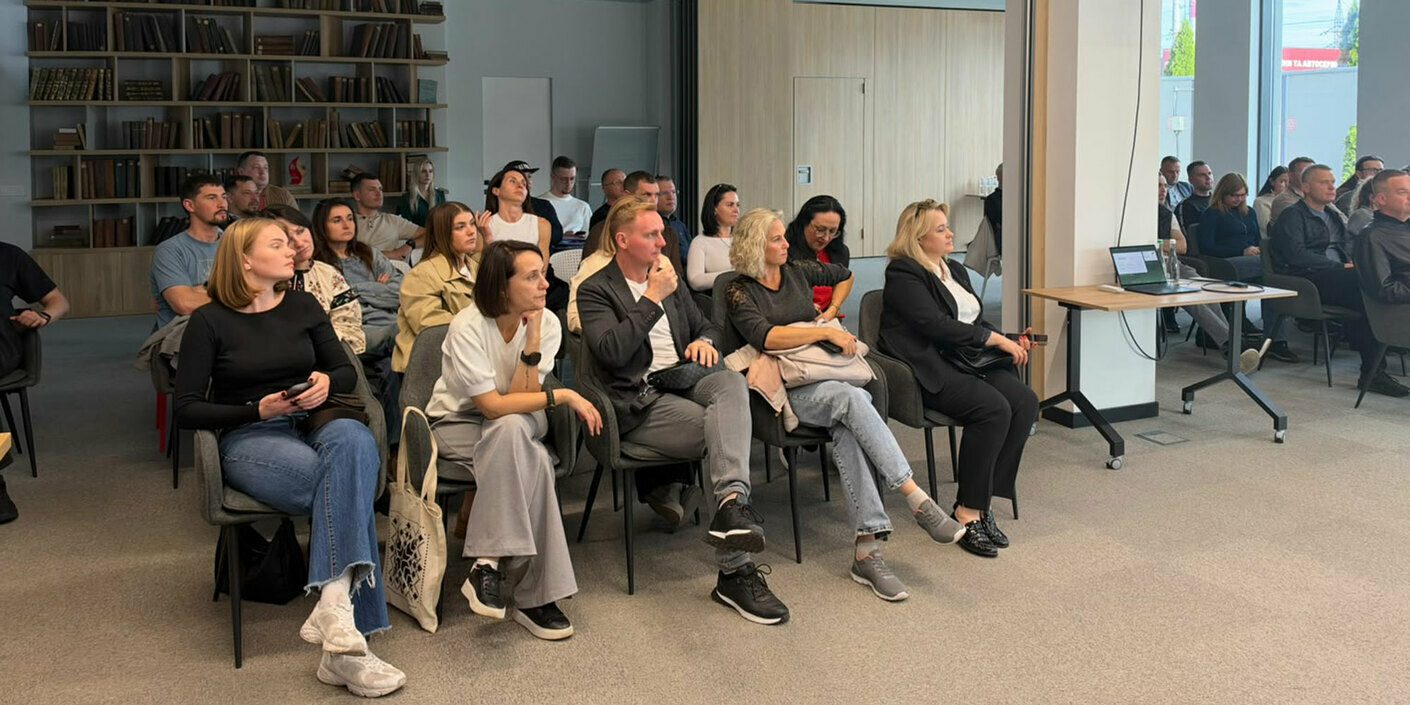
The ecosystem extends beyond the company
The conditions in which people live are another level to consider.
Kostiantyn Yefymenko explained that employees cannot fully concentrate on complex production processes if they are forced to think about solving their families’ basic problems while at work. Therefore, during the war, the company responded to its employees' everyday needs.
For local economic development, this concept extends far beyond corporate social policy.
Manufacturing firms compete for workers, while regions compete for people and their families. Consequently, factors such as housing, transport, education, healthcare, security, energy sustainability and the quality of the urban environment can influence a region’s ability to develop manufacturing.
This builds on the reasoning explored by the Produce! participants in the previous session on the second day of the training. A well-prepared site with engineering infrastructure and support services helps to attract investors and reduce production launch time. However, once production has started, the next question arises: does the surrounding environment have the capacity to provide the enterprise with the people, knowledge, technologies and opportunities necessary for further development?
When the ecosystem begins to reproduce itself
One of the most important aspects of Kostiantyn Yefymenko’s model is not how to create its initial elements, but what should happen next.
His vision is to create an environment in which new biotechnology companies, researchers, educational institutions, and laboratories operate alongside large-scale manufacturing. Initially, such an environment must be deliberately stimulated. The ultimate goal, however, is to reach a critical mass, after which new connections and businesses will begin to emerge from within the system itself.
‘We need to get to work and create the first ten. Once there are ten, these people will start networking with one another, sharing ideas and setting up these companies themselves.’
This aspect distinguishes the ecosystem from a mere collection of businesses, educational institutions and infrastructure facilities.
It reaches maturity when interaction between participants generates new projects, technologies and companies without them having to be created manually each time.
This logic is directly linked to the work carried out by the Produce! regional teams on cluster models. During a SWOT analysis, they concluded that clusters do not simply arise from the formation of an organisation. Rather, it must provide economic benefits to its participants through joint research and development, staff training, technological solutions, investment, and new production chains.
For a regional project, this raises an important question: what will motivate participants in the future ecosystem to continue collaborating once the project or external funding has ended? If such economic incentives exist, however, the region stands a chance of forming not just a temporary structure, but connections capable of developing independently.
From a production idea to an economic ecosystem
The second day of Produce! offered a chance to witness the evolution of production, which can be likened to the gradual formation of an environment.
Firstly, the region must be ready to receive investment in terms of space, infrastructure, and organisation. However, attracting a business is not the end goal of regional development.
The next task is to create conditions that give production access to people, knowledge and technology, and that enable it to form new links with other businesses. Gradually, new companies will emerge around it.
Therefore, the focus of the regional team is gradually shifting.
The question is not only “What kind of production do we want to attract or establish?”, but also “What needs to be developed around it so that a sustainable economic ecosystem is established within five to ten years?”
The answer to these questions distinguishes a single investment project from one capable of transforming the region’s economy.
Read more about Produce!
“From resources to factory: what regional teams learn through the Produce! Initiative”: on how to move from a region’s strengths to a production project and a product with higher added value.
“When production conflicts with the rules of the game: Produce! lessons by Oleksandr Sokolovskyi”: on the conditions under which Ukrainian manufacturers operate, and the barriers that cannot be overcome at the level of an individual enterprise or region alone.
“SWOT analysis as real-world testing: What Produce! initiative teams work on”: on how regional teams tested the viability of their own production ideas, analysed resources and constraints, and determined which solutions depend on the business or regional level, and which require government policy.
“Produce!: How communities can create conditions for new enterprises to emerge”: on the rationale behind the second day of training, the community’s role in preparing the site and infrastructure, the operation of an industrial park, workforce training, and why an investor needs not just a plot of land, but a ready-made environment for a quick launch of production.
Tags:
regional development study ucord regional development agency business
16 October 2026
До $65 тисяч на соцпослуги: Уряд масштабував програму Малих грантів на всі громади України
До $65 тисяч на соцпослуги: Уряд масштабував...
Кабінет Міністрів України ухвалив рішення, яке кардинально розширює можливості територіальних громад у розвитку...
16 October 2026
Уряд спростив реалізацію проєктів за комплексними планами стійкості
Уряд спростив реалізацію проєктів за...
З 15 жовтня для проєктів у межах експерименту за комплексними планами стійкості діють оновлені правила. Уряд визначив...
16 October 2026
Профорієнтація в дії. Як Івано-Франківська громада виховує фахівців, які хочуть працювати вдома
Профорієнтація в дії. Як Івано-Франківська...
Уявіть дев'ятикласника, який упевнено заявляє, що мріє про кар'єру в IT лише тому, що чув про високі зарплати у цій...
15 October 2026
Правовий режим майна закладів освіти...
правовий статус майна комунальних закладів освіти та повноваження засновника і керівника закладу; які...