From resources to factory: what regional teams learn through the Produce! initiative
The availability of land and infrastructure, and the designation of an area as an “industrial park”, do not in themselves make an area industrial. In order for manufacturing to flourish here, people must be willing to invest their own funds and take risks. The area must also have a reliable energy supply, sound economic logic, logistics, and a skilled workforce. It must also be an environment in which workers will want to live.
This was the topic of discussion on 25 September, the first day of the third and final module of the Produce! training initiative “Leadership in Economic Development through Production”. Teams from Vinnytsia, Volyn, Odesa, Sumy, Ternopil, and Khmelnytskyi regions are working on regional projects designed to transform the regions' strengths into new production facilities, jobs, investment and added value. The training is attended by representatives from regional authorities, local self-government, regional development agencies, the business sector, and educational institutions.
The programme is implemented by the KIEF Academy under the auspices of the Ministry of Economy and Environment of Ukraine, with the support of the Swiss-Ukrainian “Ukraine’s Cohesion and Regional Development” (UCORD) project.
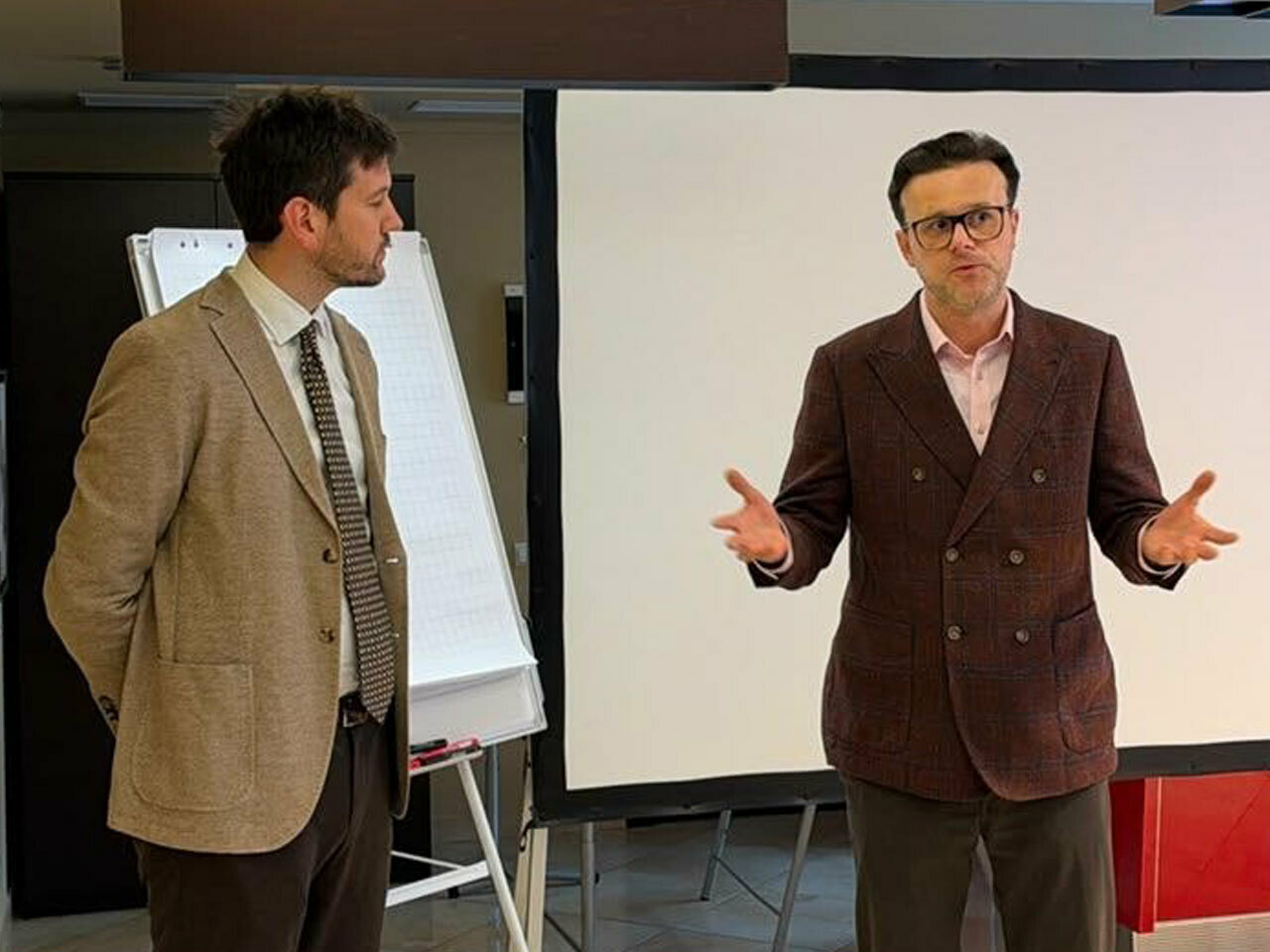
Opening the module, Viktor Halasiuk, CEO of the KIEF Academy and UGF, member of the KIEF Supervisory Board, Adjunct Professor at kmbs, and Doctor of Economics, emphasised the importance of an ecosystem-based approach to regional economic development.
‘This approach helps regions to unlock new economic opportunities, find the right tools, and align the interests of different stakeholders in order to stimulate economic development, attract investment in industry, scale up production, and promote exports of non-commodity products,’ said Viktor Halasiuk.
For the six regional Produce! teams, this is an opportunity to put economic development theory into practice. During the first two modules, the participants worked on methodologies, government support schemes for manufacturing, investment, Lean approaches, and artificial intelligence. The final module focused on the experiences of people setting up manufacturing businesses in Ukraine, as well as practical work on their own projects.
Philippe Brügger, Deputy Head of Cooperation at the Embassy of Switzerland in Ukraine, drew attention to the fact that russian attacks are increasingly targeting the Ukrainian economy and industry. However, the development of manufacturing remains essential to the resilience of the country.
The Ukrainian Ministry of Economy and Environment has set an ambitious target: to increase the share of the manufacturing sector in Ukraine’s GDP from 8% to 20%. This can be achieved when the regions are aware of their own potential, the needs of business, and opportunities for development.
‘Representatives of the authorities, the private sector, and all stakeholders should sit down together and understand the region’s potential, what already exists here, the needs of the labour market, the skills people possess, what changes are needed in regulation, and how to ensure access to funding. Such a partnership is crucial,’ said Philippe Brügger.
He emphasised that UCORD supports regional development agencies, which can bring together local authorities, businesses, educators, and other partners around economic projects. This work is expected to result not only in six prepared projects, but also in lasting links between regions and national institutions, in particular with the “Made in Ukraine” programme.
‘If we want to have strong regions in the future, we need strong institutions and strong partnerships that will drive economic growth,’ said Philippe Brügger.
Maryna Bryl, UCORD Project Leader, remarked that Produce! has a broader scope than simply training on business tools. It is about regional development and the ability to create projects that align with the regions’ strategies and real needs.
‘We consider and position this initiative specifically as one aimed at the regional development of our pilot regions. Regional development agencies can form the necessary partnerships for projects that the regions need, and then help to develop and implement these projects,’ said Maryna Bryl.
A topic-specific conversation on the first day involved Ihor Liski, the founder and chairman of the supervisory board of EFI Group. After 2014, he lost the businesses he had built in Luhansk region and practically started his entrepreneurial journey from scratch. Since then, the group’s companies have established new production facilities across several economic sectors.
For the Produce! participants, this offered an entrepreneurial perspective on something that is often overlooked in regional strategies: factories do not simply appear because land is available. It is created when answers are found to a number of difficult questions. What problem does the product solve? Where is its added value created? Who will buy it on the domestic or international market? Why must production be located here specifically?
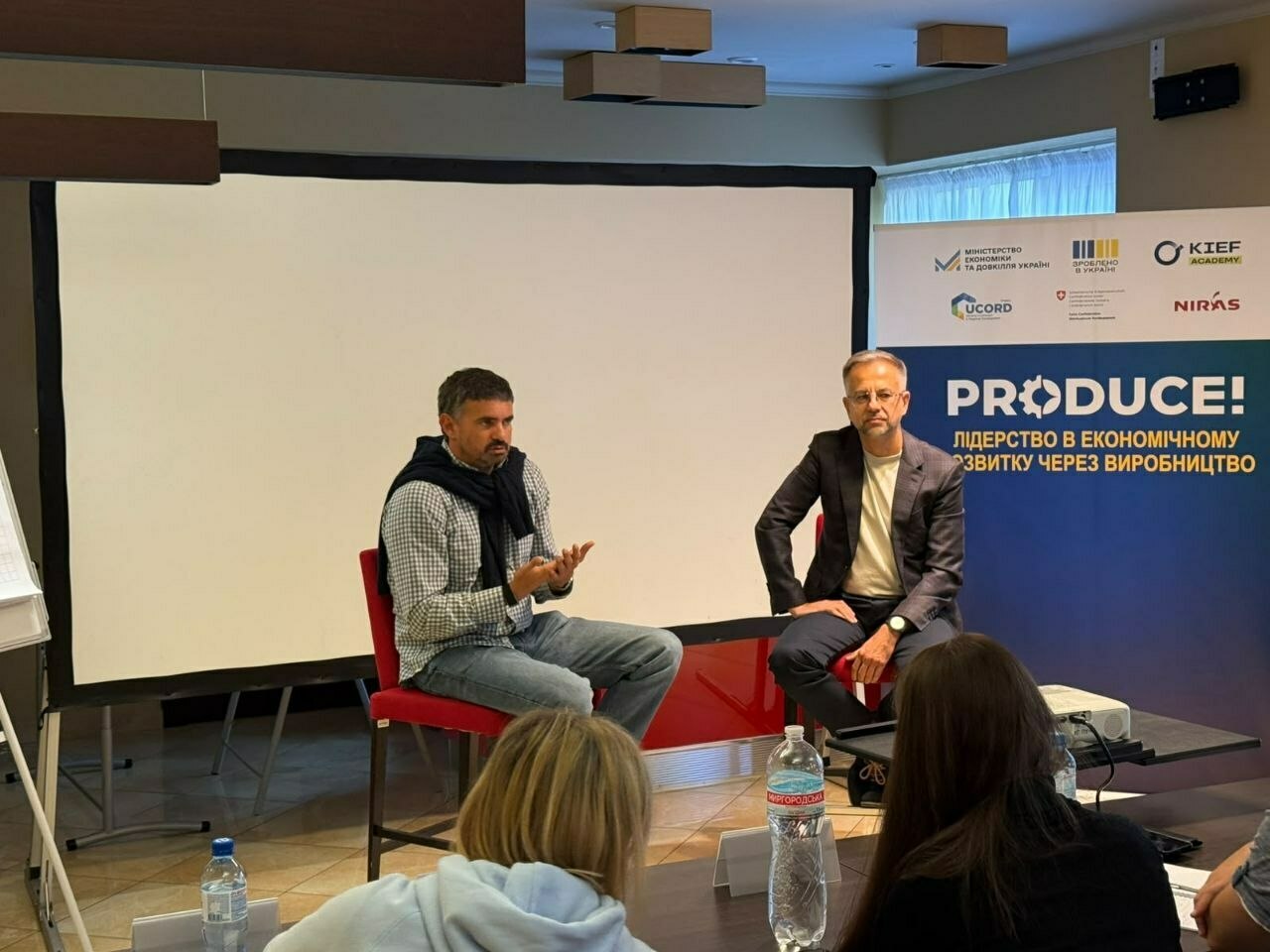
Ihor Liski illustrated this logic with the example of Ukrainian honey. Ukraine has strong beekeeping traditions and significant volumes of raw materials, but for years it has sold them cheaply. Others reaped the main profit from packaging, branding, marketing, and selling the finished product. The way out of this model is not simply to export more, but to process the raw materials, create a product, control its quality, and build a brand.
‘A strategy is the logic by which a company is expected to succeed. It is important to understand the purpose of the business: what problem it solves and where its value and added value lie. The approach of “we have a plot of land – let’s build something” simply does not work,’ said Ihor Liski.
This idea is directly relevant to industrial parks. Having land, utilities, and a catchy name does not guarantee that a manufacturer will set up operations on the site. In order to achieve this, it is necessary to understand the needs of the target entrepreneurs, assess the area’s competitive advantages, and honestly identify its weaknesses.
Rather than containing general statements about a “favourable location”, a regional investment passport should provide information on access to electricity and gas, roads and railways, proximity to raw materials and markets, the size of the local workforce, access to vocational training, housing, healthcare and social infrastructure. Land without a workforce is not an advantage.
For workers, it is not just salary and job security that matter. They also need opportunities to gain qualifications, rent or buy a home, send their child to kindergarten, see a doctor and spend time with their family. Therefore, the region’s industrial policy must consider the full range of factors that contribute to a person’s quality of life, not just the factory and the access road leading to it.
In wartime, this is further compounded by the need for resilience. Ihor Liski used the example of large-scale glass manufacturing to explain that the decision on where to locate a factory cannot be based solely on the principle that “the further away from the front line, the safer it is”. The key factors for continuous production are a stable electricity supply, backup capacity, a gas supply, logistics for raw materials and finished products, staff, and the ability to maintain operations in the event of disruption.
Major investments do not simply come about on the basis of a presentation. Years of preparation are required, as well as a technical design, strong partners, the trust of financial institutions, and a team willing to take responsibility for its own decisions. Therefore, regional projects should be carefully calculated proposals rather than wish lists: they should specify which business, the conditions, the partners and the sources of funding.
At the end of the talk, Ihor Liski set out three guiding principles for those wishing to create successful manufacturing projects: believe in Ukrainians’ ability to produce high-quality products; seek to add maximum value; and learn to work together.
He says that Ukraine lacks not only capital or technology, but also trust between business, the authorities, and communities. When everyone tries to implement an idea on their own, limited resources are spread too thinly. In contrast, strong projects emerge where participants are able to reach agreements, allocate roles, and envisage a shared outcome.
‘We waste our limited resources on unnecessary competition when what is needed is cooperation. We must learn to trust one another, be honest, and work on projects together,’ concluded Ihor Liski.
Over the next two days, Produce! participants will visit innovation and production sites and continue working on the SWOT analysis and stakeholder map for their projects. The final module is designed to help them turn their developed ideas into projects that can be discussed in concrete terms with the business sector, the government, and international partners.
Read about the conversation with Oleksandr Sokolovskyi, the founder and president of the Tekstyl-Kontakt group of companies, which was held during the final module of the Produce! initiative, in the next article on the Decentralisation portal.
Read more on this topic: “From production potential to development projects: Six regions complete training as part of Produce! Initiative”
Tags:
regional development ucord European Cohesion Policy study
Source:
Портал "Децентралізація"
16 October 2026
До $65 тисяч на соцпослуги: Уряд масштабував програму Малих грантів на всі громади України
До $65 тисяч на соцпослуги: Уряд масштабував...
Кабінет Міністрів України ухвалив рішення, яке кардинально розширює можливості територіальних громад у розвитку...
16 October 2026
Уряд спростив реалізацію проєктів за комплексними планами стійкості
Уряд спростив реалізацію проєктів за...
З 15 жовтня для проєктів у межах експерименту за комплексними планами стійкості діють оновлені правила. Уряд визначив...
16 October 2026
Профорієнтація в дії. Як Івано-Франківська громада виховує фахівців, які хочуть працювати вдома
Профорієнтація в дії. Як Івано-Франківська...
Уявіть дев'ятикласника, який упевнено заявляє, що мріє про кар'єру в IT лише тому, що чув про високі зарплати у цій...
15 October 2026
Правовий режим майна закладів освіти...
правовий статус майна комунальних закладів освіти та повноваження засновника і керівника закладу; які...