Fuel, water, and underground schools: What frontline communities expect from the state
Frontline communities do not need general rules for restoration, but solutions for daily work under shelling. How can emergency ambulances, refuse collection lorries, buses, and generators be refuelled when there are no petrol stations left in the city? Where can children be taught if there is only one underground school for the entire community? How can a water supply project be implemented when the required co-funding amounts to one-tenth of the community’s total own revenue?
During the “Decentralisation 2026: Legislative Agenda” forum, Yurii Bova, Mayor of Trostianets, and Denys Korotenko, Mayor of Shyroke, discussed this topic.
Mobile refuelling stations for communities without petrol stations
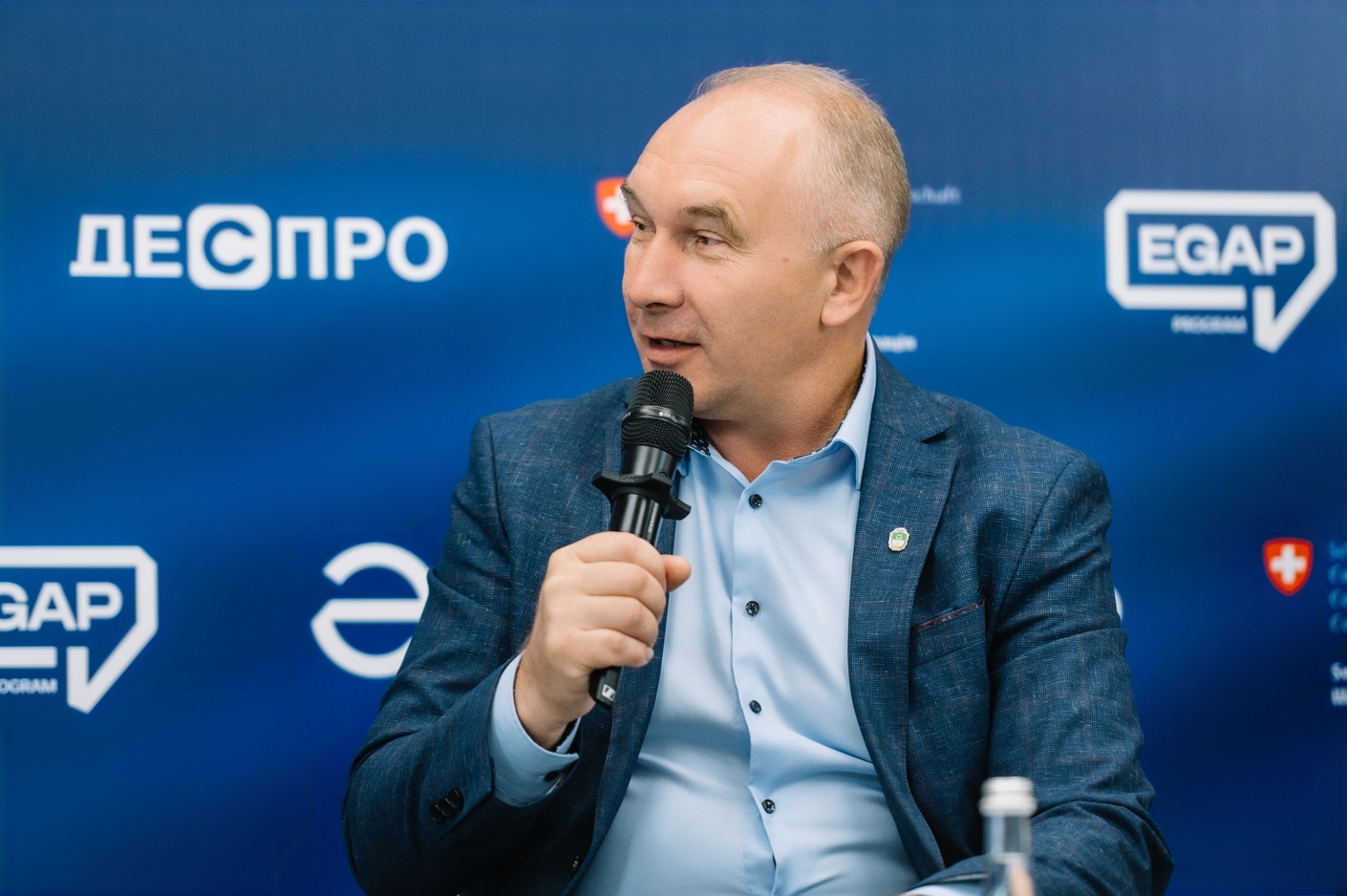
Yurii Bova explained that not a single petrol station has been operating in Trostianets since June, and only a few petrol stations remain in the surrounding area. Fuel has to be sought out and brought in, even though it is essential for the operation of municipal vehicles, emergency ambulances, buses, refuse collection lorries, and generators.
The Mayor said that a draft law has already been developed for such situations, which should allow the use of mobile refuelling stations. Before the war, the legislation did not provide for their use. Such a station could quickly arrive in a community, sell fuel for a short period and then move on, without becoming a permanent target for russian attacks.
Yurii Bova informed that the initiative has been backed by the Association of Ukrainian Cities. He said that the Ministry of Finance has also expressed its support, although some members of the Parliament are opposed to the draft law.
In this context, the Mayor asked: if mobile petrol stations do not become a legal tool for communities, what other solution will ensure that critical services are supplied with fuel during the winter?
‘Give me another solution as to how I can supply my community with fuel for their generators this winter. And this solution must be found right now. Another two months – and it will be too late.’
Recovery begins with the realisation of what needs to be preserved
For Trostianets, situated 35 kilometres from the border with russia, recovery is not simply a matter of repairs. It begins with the ability to maintain heating, water supplies, medical care, transport, and jobs.
Yurii Bova highlighted the need to review approaches to medical infrastructure in border communities. When it is dangerous to transport people and the wounded for tens of kilometres under the threat of drones and shelling, the hospital must be able to provide the necessary care on the spot.
He spoke about evacuation. If a community receives notice that a village needs to be evacuated, it is not enough simply to organise the departure. Answers must be prepared in advance as to where people will live, work, send their children to school, and access services. This is particularly important given that many people do not want to travel far from their homes.
Yurii Bova also proposes the use of master plans for community development. Such a document should provide a comprehensive overview of the community’s resources, needs, potential sources of funding, timelines, and the sequence of works. He provided an example of assessing the roofs of municipal buildings with a view to installing solar power stations.
‘You can see all the resources required, you can see the way forward, the timelines, and everything else.’
The community has grown from 15,000 to 50,000 residents
Shyroke community is situated roughly 20 kilometres from the front line and comprises 35 localities. Before the full-scale war, around 15,000 people lived there. Now, Denys Korotenko, Mayor of Shyroke says, the figure stands at about 50,000.
Most of the people who have arrived in the community are from other districts of Zaporizhzhia region, as well as from Kharkiv, Mykolaiv, Kherson, and Dnipropetrovsk regions. Keeping an accurate count under such circumstances is difficult, so one indirect indicator has been the volume of waste removed – this has increased approximately threefold.
As the population has grown, so too has the strain on infrastructure, education, and public services. The community has only one underground school, which is not enough for the number of children.
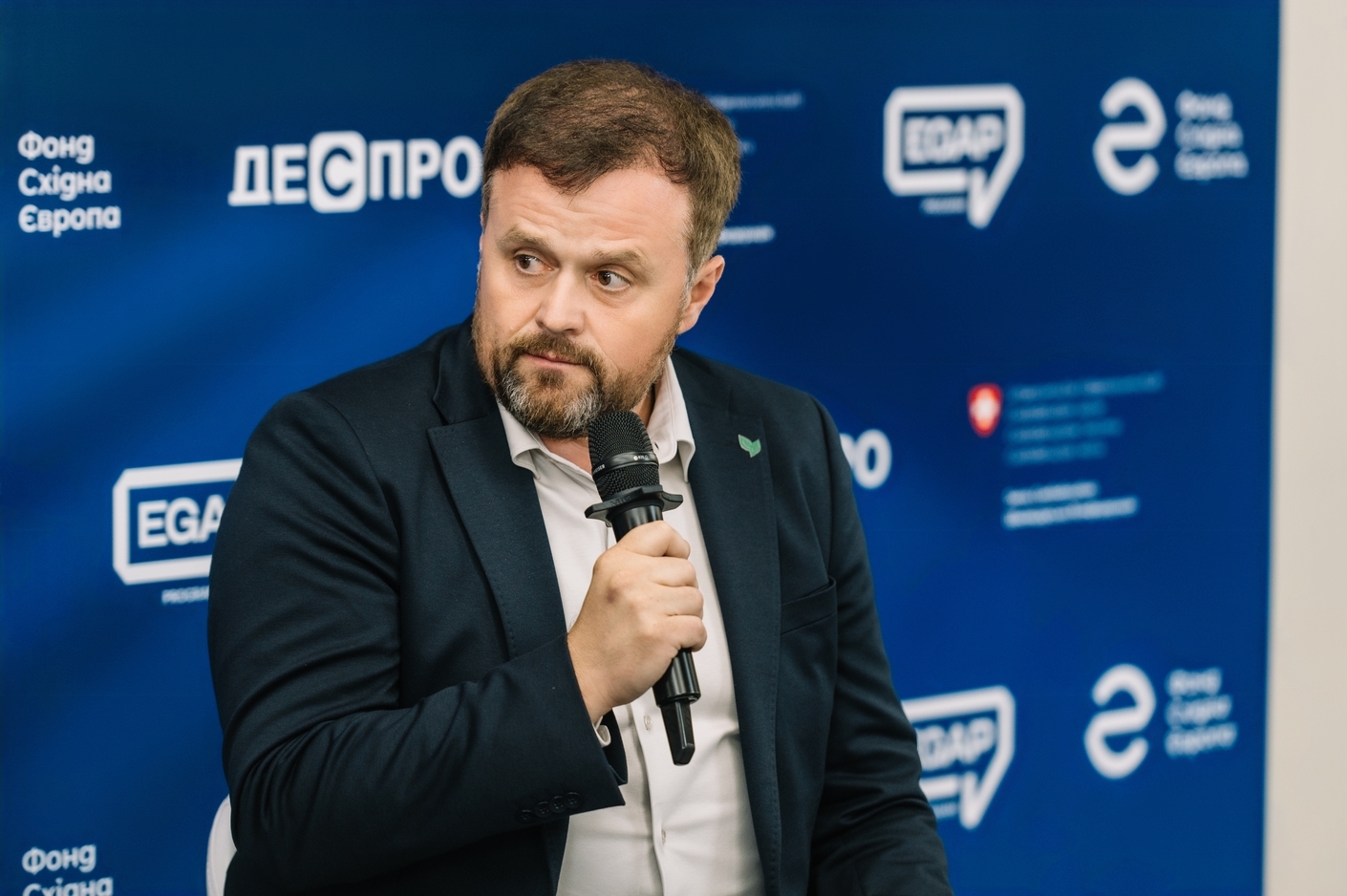
‘We have a huge strain on our infrastructure, a huge strain on waste management, and a huge strain on education, simply because we have just one underground school for the whole community.’
For Denys Korotenko, recovery is about more than just building or repairing. When the community sees facilities restored and new solutions emerging, it creates a sense of stability and gives people a reason to stay.
Projects become outdated faster than funds can be found
Shyroke community has nearly 30 projects in the DREAM ecosystem – in different spheres, apart from culture. However, without funding, project documentation quickly becomes outdated: the cost of labour and materials rises, legislative requirements change, and new adjustments and expert assessments are required.
The community leader cited the example of a water pipeline reconstruction project in the village costing UAH 100 million. To implement it, the community must provide UAH 23 million in co-financing. This amounts to around 10% of its own revenue.
‘If we cannot find the money, what happens to the projects? They become obsolete. Period. We cannot do anything with them afterwards; we have to spend money all over again.’
Denys Korotenko believes that co-financing requirements for frontline communities should differ from the rules for rear territories. Special tools are also needed for working with international partners: communities are looking for any funding opportunities, but not every potential foreign partner is prepared to apply for a joint project.
Trostianets and Shyroke communities describe different local realities, but their requests are the same: decisions regarding fuel, evacuation, services, infrastructure and recovery must take into account that communities near the front line are already operating under these conditions.
Read more about the general legislative agenda, outlined during the forum by representatives of the Parliament, the Government, and international partners, in the article “Delineation of powers, community resources and rules for frontline territories: Legislative agenda of decentralisation”
Read more about the findings of a survey of community leaders on legislative priorities in the article “Remuneration, personal income tax, and legitimacy of councils: What community leaders named as legislative priorities”.
Read more about the staffing capacity of communities, administrative services, and the legislation on administrative fees in the article “Administrative Service Centres start with people: What communities need for quality administrative services”.
Read more about the powers of local councils, military administrations and special rules for frontline territories in the article “How to retain the legitimacy of local councils during wartime and regulate the functioning of frontline communities”.
Read more about the involvement of local government associations in law-making and their proposals for strengthening the resource base of communities in the article “Local government associations: Draft laws to be developed with communities, and resources to remain locally”.
Read more about the approaches to reforming the system of planning and financing regional development in the article “Four steps to effective regional policy: Anatolii Tkachuk’s approaches”.
Read more about Ukraine’s preparations for the EU cohesion policy in the article “EU Cohesion Policy: Ukraine needs not only laws, but a system of governance and partnership”.
Read more about data, digital tools, and the role of regional development agencies in the article “Data, agencies, and people: What transforms regional policy into action in communities”.
Read more about the education network, vocational education, and the needs of frontline communities in the article “Education for community resilience: Legal barriers that need to be removed”.
Read more about the post-war administration of affected territories in the article “After martial law: How to restore local self-government in affected territories”
Source:
Портал "Децентралізація"
22 September 2026
Жити містом, а не долати його. Як безбар’єрний...
Безбар’єрність міського простору починається з конкретних рішень, які дають людям більше самостійності у щоденному...
22 September 2026
Tender: Support to preparation of Development...
The Polaris Programme: Support to Multi-Level Governance in Ukraine invites eligible tenderers to submit...
22 September 2026
У Стрию відбудеться регіональний форум «Доброчесність у громаді: від принципів до практичних дій»
У Стрию відбудеться регіональний форум...
Як перейти від реагування на корупційні ризики до системного формування культури доброчесності в громадах? 29...
22 September 2026
5 можливостей долучатися до програм Interreg
5 можливостей долучатися до програм Interreg
Програмний період Interreg 2021-2027 у розпалі - в рамках конкурсів обрано понад 300 проєктів за різними...