On career guidance that involves everyone. How Vasylkiv community creates an ecosystem of conscious choice
In Vasylkiv, the career guidance system works in cooperation with all the bodies involved in ensuring that students make conscious career choices: schools, vocational colleges, the business sector, and the authorities.
‘We are thrilled that, thanks to DECIDE Project, a career guidance system is developing in the city. We need allies in schools. Previously, the focus was solely on social education teachers – we even ran career guidance training sessions for them. Now, children receive professional guidance in navigating the world of professions,’ says Hanna Bondar, Deputy Director for Educational and Vocational Training at the Vasylkivskyi Vocational Lyceum.
Modernising the learning environment, developing a corporate identity, maintaining an active social media presence, adjusting programmes to employers’ needs, reorganising open days, engaging in social initiatives, and providing continuous training – brick by brick, vocational colleges are also building a career guidance system.
Read on to discover which companies the students from schools in Vasylkiv visit, what they are most excited about, what the challenges of career guidance are, and what vocational schools are doing in response.
Overcoming fear and stepping out of the comfort zone
The transformation of careers guidance in Vasylkiv began with a challenge for the teachers themselves. When the community joined DECIDE: VET initiative, teachers received not only modern materials for the JOBS course (developed by a team of experts from DECIDE Project at the Zurich University of Teacher Education and adapted for the Ukrainian education system), but also took on a completely new role – that of mentors.
‘I recall that this work seemed new to us teachers, and at times even overwhelming,’ recalls Kateryna Khvorost, Deputy Director for Educational and Educational Work at Vasylkivska Gymnasium No. 7, a maths teacher and career guidance coordinator. ‘First of all, the teachers themselves who wanted to become career counsellors had to learn how to communicate. But their enthusiasm outweighed all their fears.’
The students got involved in the process straight away. Thanks to the interactive tools from DECIDE Project – flipcharts, stickers, and coloured cards – career guidance lessons differ from typical lessons. The children present their own ideas, explore the labour market, and even ask adults awkward questions.
‘I believe that the teachers have started to see the children in a new light, and the children have started to see us in a new light,’ says Kateryna Khvorost.
The careers counsellor recalls that during the first lessons, children were shy about assessing themselves when asked, for example, to talk about their strengths. However, this changed over time.
The future of the profession: a career counsellor in every school
Today, the role of career counsellor in the pilot communities is performed by teachers, but this role is rapidly becoming a specialised profession.
‘At the moment, we do not yet have such a position in schools, but the standard for this profession is almost ready and will soon be approved. This means that, in the near future, career counsellors will appear in schools,’ explains Valentyna Poltorak, DECIDE Project Manager.
The systematic approach offered by DECIDE helps to establish a link between the community career coordinator and the school career counsellor, ensuring that a child’s choice in Grade 9 is conscious and based on their real interests.
Testing out professions: from ceramics to energy efficiency
The students in Vasylkiv not only learn about a profession – they test it out for themselves. One of the components of the national pilot scheme for the career guidance and counselling system is, after all, visits to local enterprises to learn about businesses. Despite the security challenges posed by the war, the community has managed to organise excursions to a variety of major local companies, including Ventilation Systems (Vents), Epicentr Ceramic Corporation, Advertising Textiles, and the ViYar Tech furniture factory.
Children are not afraid to ask questions about employees’ salaries or where they can study in order to work for a particular company in the future.
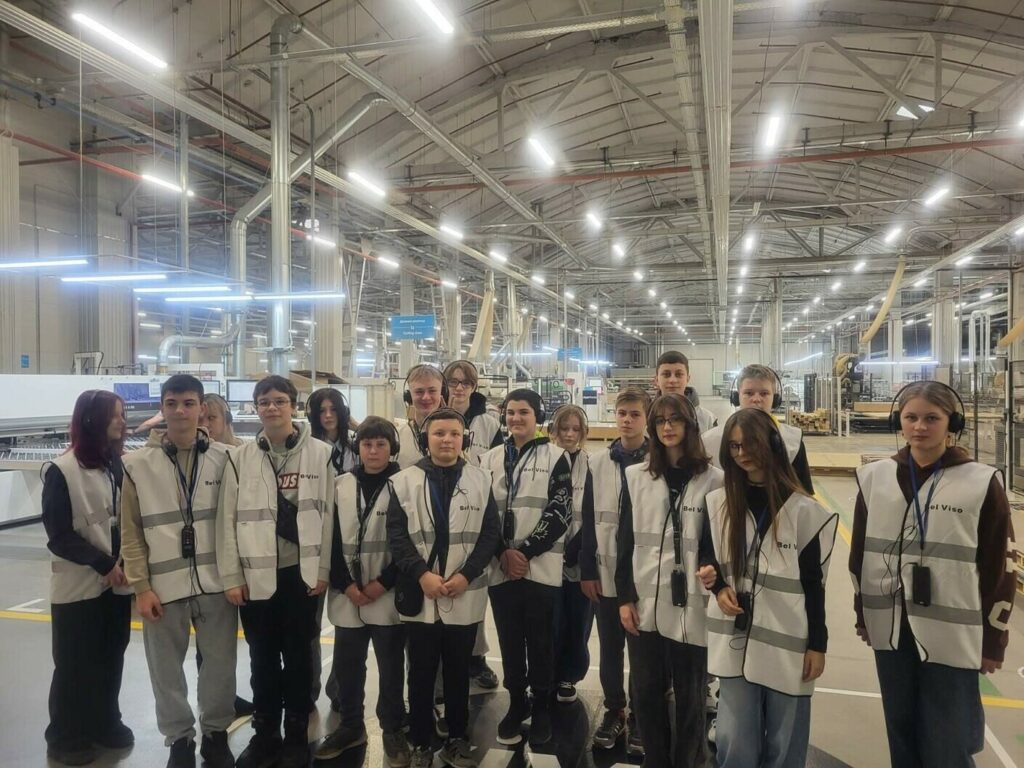
In ViYar Tech
They seemed to enjoy their visit to Ventilation Systems the most. Children learned more about engineering and technical specialisms, the main stages of ventilation equipment production, energy efficiency and applications in construction; they visited the production workshops and had the opportunity to observe the manufacturing process: design, assembly, and installation of the equipment.
Both the children and the teachers were struck by the fact that large stores, such as Metro, have long since stopped using traditional heating methods, such as radiators. Instead, everything is heated using energy-efficient equipment that ensures an optimal indoor climate.
‘It is also interesting that women work on many stages of production. For example, they assemble electrical circuits. There are no restrictions. The company even emphasised that women are best at performing meticulous tasks,’ says Kateryna Khvorost.
At almost every company, students were given gifts: pens, notebooks, merchandise, and sweets.
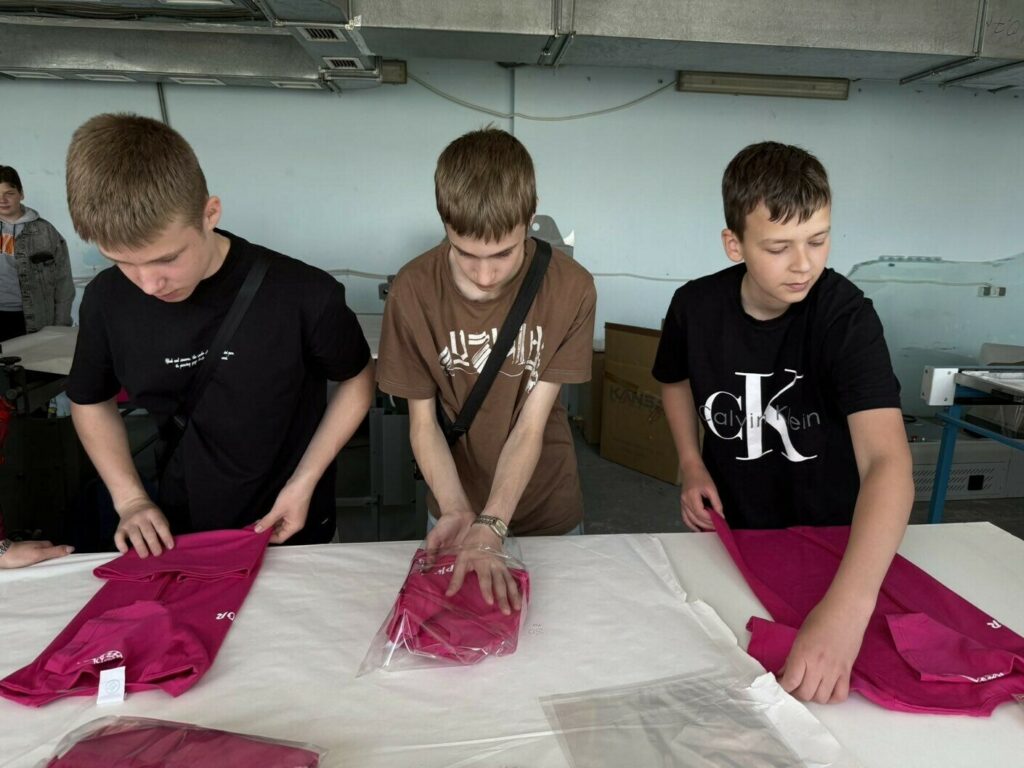
Students testing their skills at REKLAMNYI TEKSTYL Ltd
Both the students and the career counsellors faced new discoveries and challenges. The ability to negotiate with people is the challenge that Kateryna finds the most difficult.
‘Sometimes it was clear that representatives of some companies simply had no interest in talking to the students. We had to convince them that we work not only for today, but also for the future of our country. Once these businesses had welcomed the students, they invited us to visit again. In general, the meetings were very warm. We have not yet reached some of them, but we already have considerable experience in how to persuade them,’ says the careers counsellor.
On the example of active cooperation with vocational school and of positive transformation
Schools in Vasylkiv also cooperate with local vocational schools, in particular the Vasylkivskyi Vocational Lyceum. Children attend workshops and open days, where they have the chance to experience what is like to be a chef, a builder, a beauty specialist, and so on. For example, children attended workshops on “3D Braid Weaving”, “Cooking Poached Eggs”, and “Creating Designer Nail Art Using an Airbrush”.
‘They constantly develop, have modern equipment, and invite famous people to teach subjects or run workshops. Schoolchildren are impressed by this approach, as they often think that vocational schools are just a drain on resources and outdated. But what they enjoy most is when they are given the chance to use welding equipment or sewing machines, for example. And on one occasion, they even made their own bento cakes,’ says Kateryna.
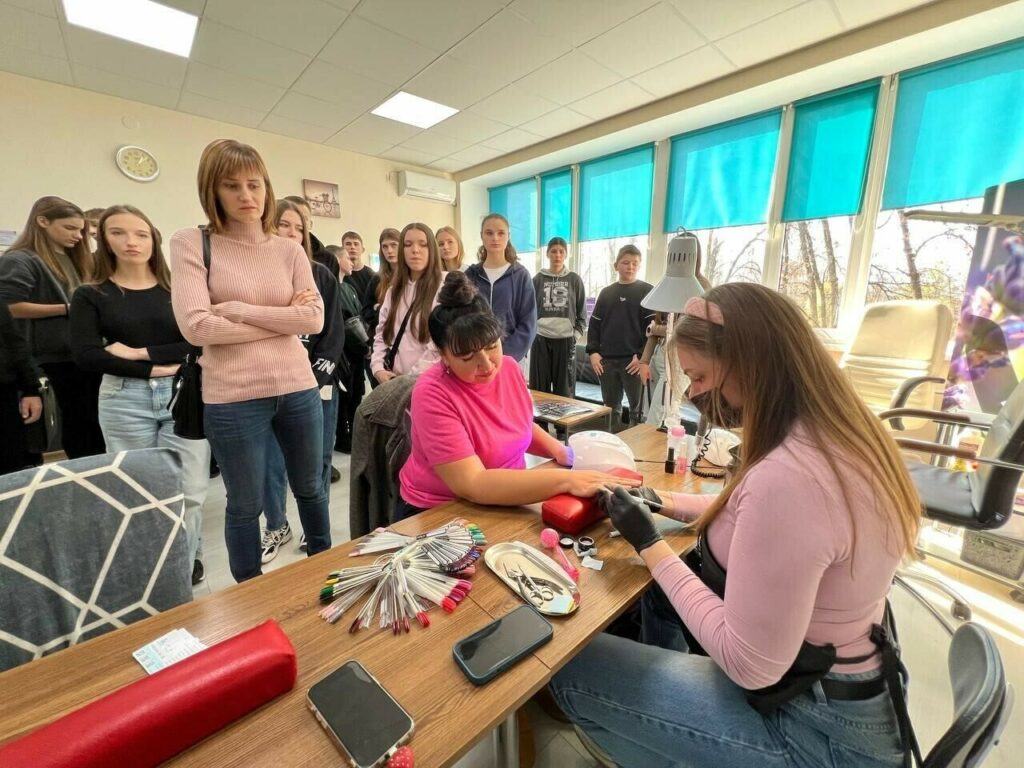
During the open day at the manicure workshop
Back in 2018, Vasylkivskyi Vocational Lyceum established the following system: to invite one class from each school in the city, starting from Grade 7, to visit the lyceum for one day at a time. This provides an opportunity to interact with students and teachers.
In the beginning, lessons at the lyceum were suspended entirely during open days. But over time, the decision was made to involve the lyceum students in leading tours and masterclasses. The idea was that children are more likely to trust their peers who study here than adults.
These days, it works like this: each vocational course prepares its own workshops, engaging activities, and presentations. Each group, comprising several instructors, teachers, and students, follows its own route. For example, there are stations for electric welders, chefs, the service sector, and the STEM centre. Different groups follow different routes so that they do not cross paths, ensuring everything runs as smoothly as possible.
At the inauguration of the Open Days
‘When it comes to the food service programme, students have the chance to decorate biscuits or prepare poached eggs. If the programme is in dressmaking, they sit down at the sewing machines. The most fascinating thing is seeing their eyes light up during these activities. When, for example, the girls put on a welder’s mask and touch an electrode for the first time, it is a priceless moment. Basically, we make the children part of our team for a few hours,’ says Hanna Bondar, Deputy Director for Educational and Practical Training at the Vasylkivskyi Vocational Lyceum.
At the end, children are treated to some tasty snacks, the waiters set the tables beautifully, and the children are handed out leaflets with QR codes and interesting information about the lyceum. Hanna Bondar recalls a story about a schoolboy who was so impressed that he asked for several leaflets, saying, ‘I have to show this to my parents. They won’t believe what I’ve seen and where I’ve been.’
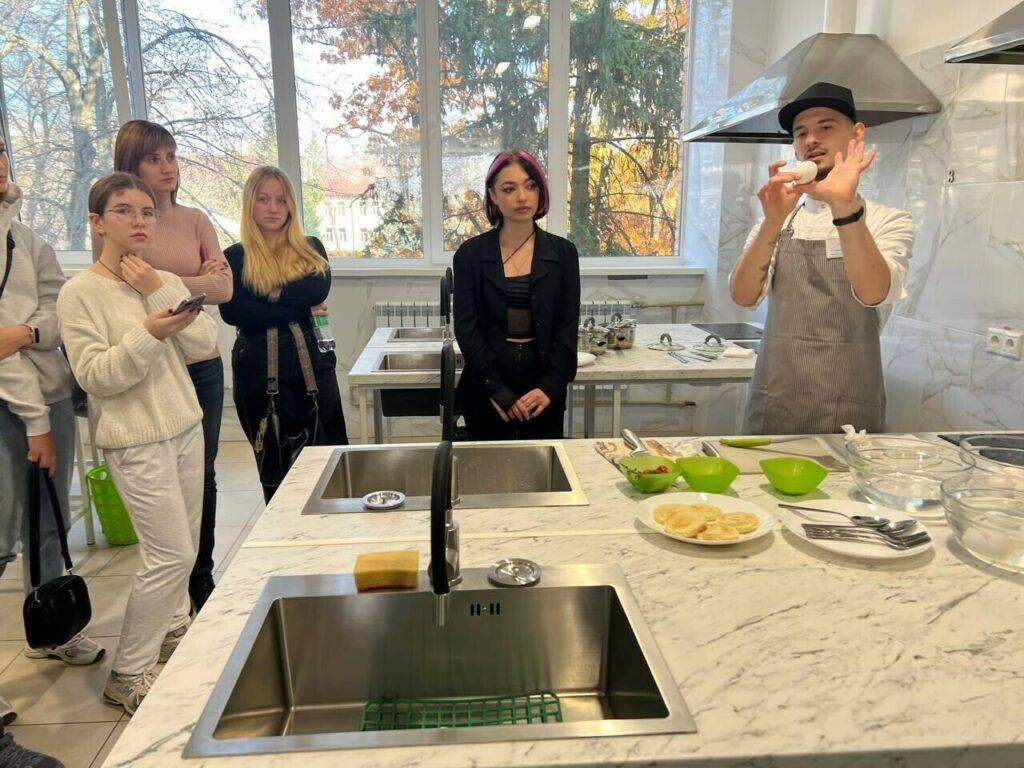
During the open day
The approach to open days has also changed. Previously, they were held in the spring, but later it was realised that this was too late, as by that time the children had already made up their minds. So it all begins in the autumn and ends with the New Year celebrations, during which they also try to create a colourful atmosphere – they set up St Nicholas’s residence and post office, organise gingerbread-baking workshops and put on interesting exhibitions. All of this is designed to capture the attention of both children and adults.
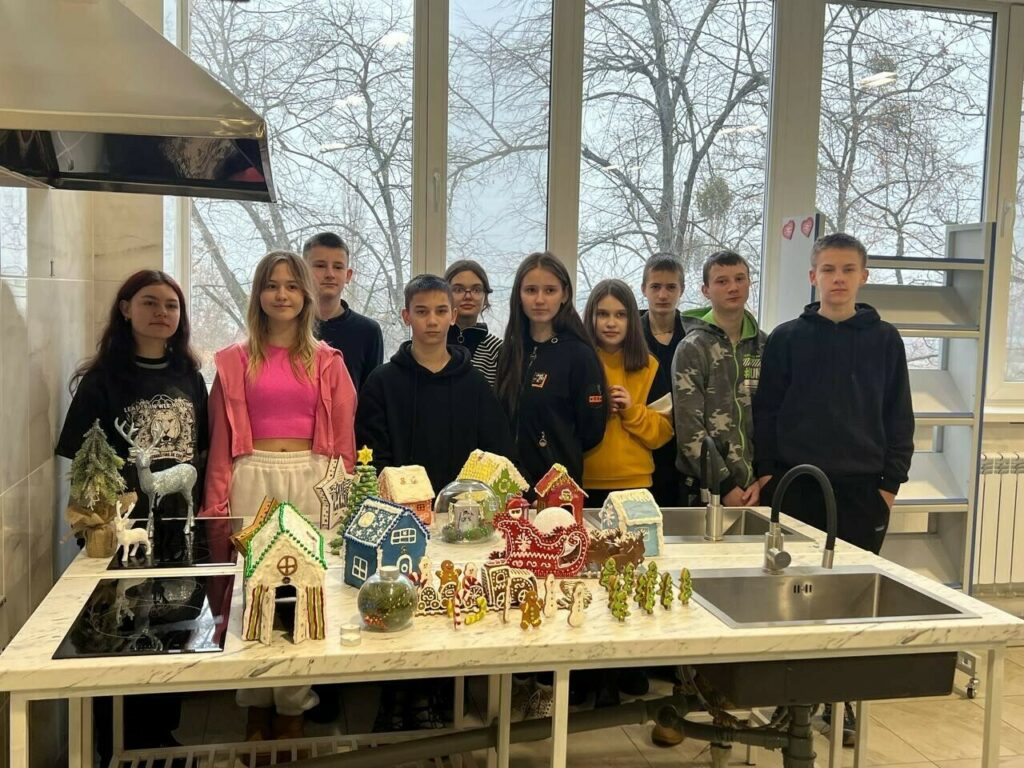
Creating a gingerbread Christmas village
Parents are also invited to the open days. Representatives from the school also attend parents’ meetings from time to time to present the opportunities available at the lyceum.
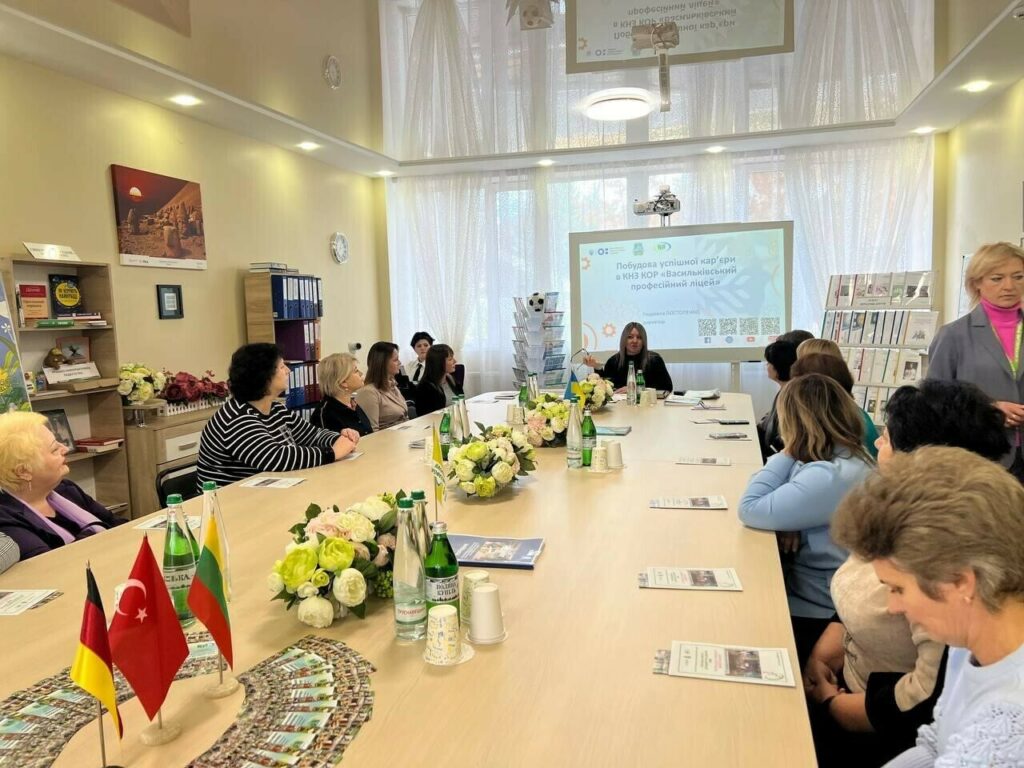
During the presentation on vocational education for teachers and parents
‘One day I went to a parents’ evening at a large local lyceum. Every year, they have 5–6 classes of Grade 9 pupils leaving the school, so they are our target audience. I showed the parents a video clip from our vocational school. They watched it and said, “What you’re showing us – where is it?” I told them, “It’s our Vasylkivskyi Vocational Lyceum. We’re your neighbours. I walked here to see you.” They were very surprised,’ says Hanna.
Now, according to Liudmyla Postolenko, Director of the Kyiv Regional Council’s Municipal Educational Institution “Vasylkivskyi Vocational Lyceum”, teachers call and ask when the next events will be held, or whether they can enrol for next year.
‘This is because our model is clear and easy to understand: students will not just spend three years studying here; this is something needed and relevant today, and something that can make money. We ask, “What are your dreams? Will it be your own micro-business or a start-up? Or do you want to work for a company?” We guarantee, “Within 1–3 months, you will have a micro-job where you can earn money. On top of that, the education is free, with a scholarship and an income.” Then everything becomes clear to Grade 9 students,’ explains Liudmyla Postolenko.
To attract potential students and improve the quality of the learning process, a great deal of effort is invested in creating a modern, comfortable environment.
‘The aim is to make the lyceum a place where students feel at home. This involves both psychological and physical aspects. We have started to secure grant and government funding, purchase new equipment and carry out renovations. We realised that our target audience is young people who want everything at once. So our task is to demonstrate the entire cycle of vocational education: from training to employment,’ explains Liudmyla Postolenko.
For example, the Vasylkivskyi Vocational Lyceum has now established training and production workshops and laboratories, such as an information and resource centre, a practical training centre for the service sector, and practical training centres for garment manufacturing, public catering, and IT.
With the support of DECIDE, a culinary hub worth UAH 3.5 million, equipped with modern facilities, has also recently been established here, where students can test their skills in different professions.
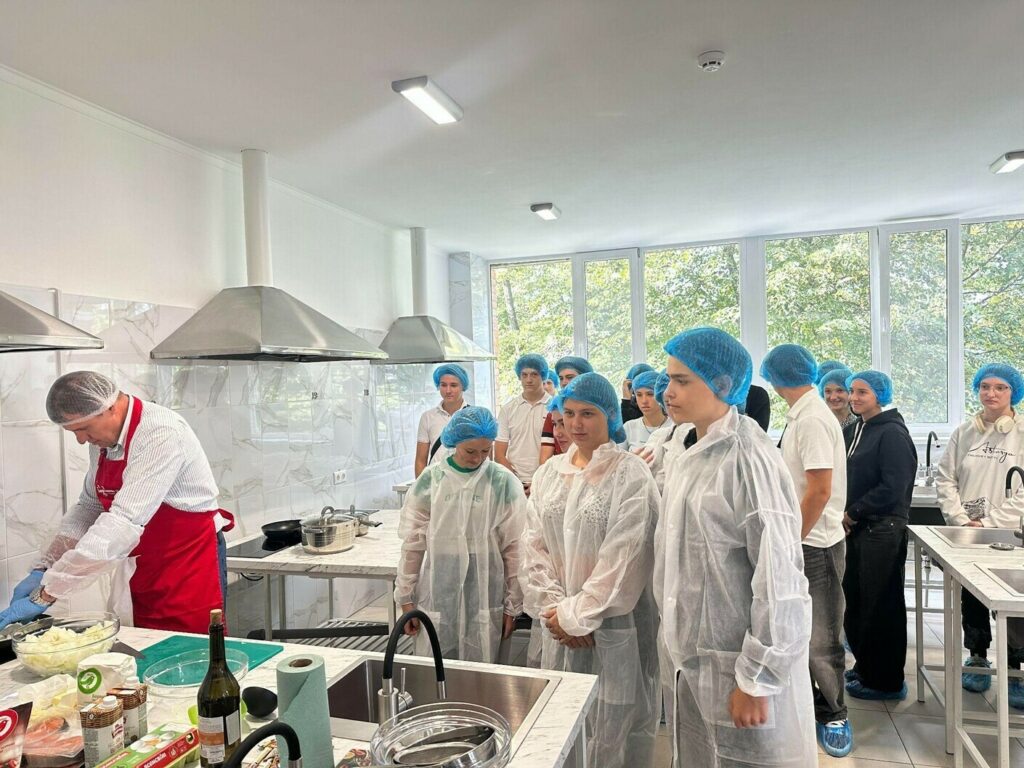
At the hub during a workshop for schoolchildren
Moreover, back in 2004, a development strategy for the institution was developed here. The strategy was the first of its kind among vocational schools in the region. And in 2025, within the framework of DECIDE: VET initiative, the decision was taken to update it. Thus, with the support of DECIDE Project experts, a Strategic Development Plan until 2027 was developed and approved.
There are also so-called presentation areas where local residents can see what the students do. For example, once the construction students were laying paving stones with interesting patterns. They set up a gazebo and a small tent nearby and offered people coffee and pastries (during public holidays, this might include Easter cake or something symbolic of a particular occasion).
The vocational school also actively cooperates with the business sector, in particular by establishing new contacts within the framework of DECIDE: VET initiative. Currently, there are two memoranda of understanding between the Vasylkivskyi Vocational Lyceum and the business sector (Ventilation Systems Ltd, Kyiv BKK Ltd). They also cooperate with Auchan Ukraine, Kulynychi, Vents Ukraine, and the VK System Research and Manufacturing Company.
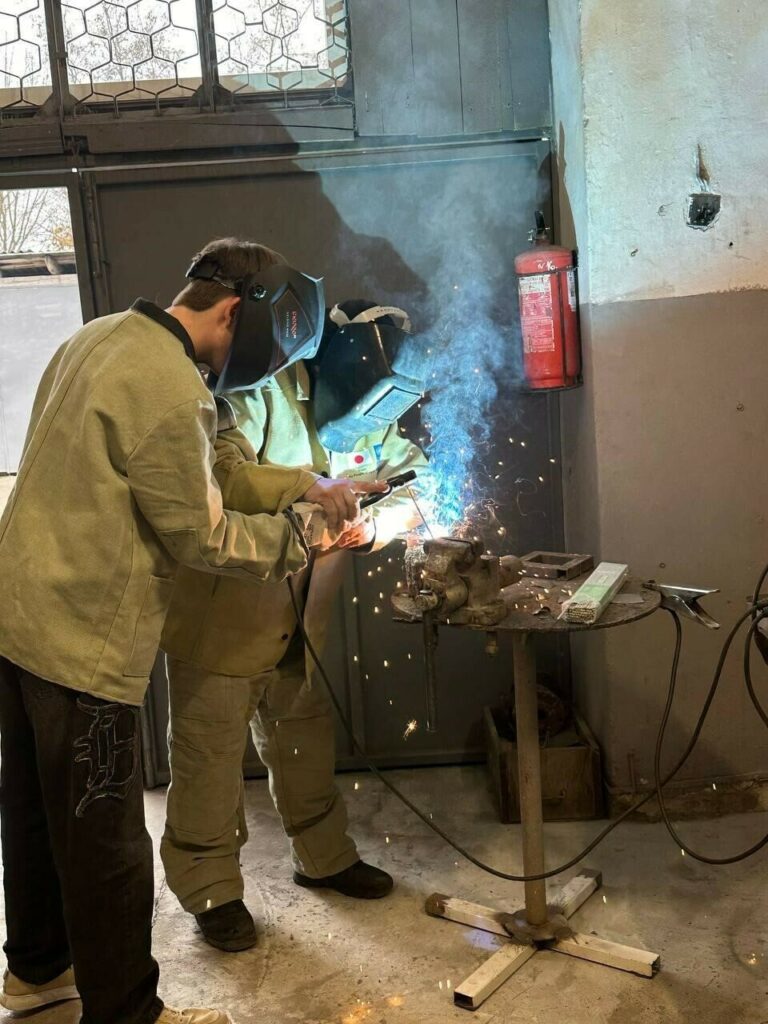
During the open day
The curriculum is adapted to meet employers’ needs as well as, in particular, to make the programme increasingly attractive to prospective students.
‘We have been and continue to research which professions are in demand today, and we analyse the labour market in the region. Based on these needs, we adjust our licence programmes. One of our aims is to ensure that our prospective students understand they will not be left without a job. For example, we introduced the profession of ‘Information processing and software operator’ because we realised this profession is in demand. Previously, tailors would simply have to sew sample garments – now they sew cardigans or coats, as these are modern items,’ explains the director of the vocational lyceum.
In 2024, the first pastry chefs also graduated – a profession that was added to the list not long ago. Prior to that, the profession was chef-waiter.
In general, a huge part of the success of the Vasylkivskyi Vocational Lyceum is due to its well-established career guidance system.
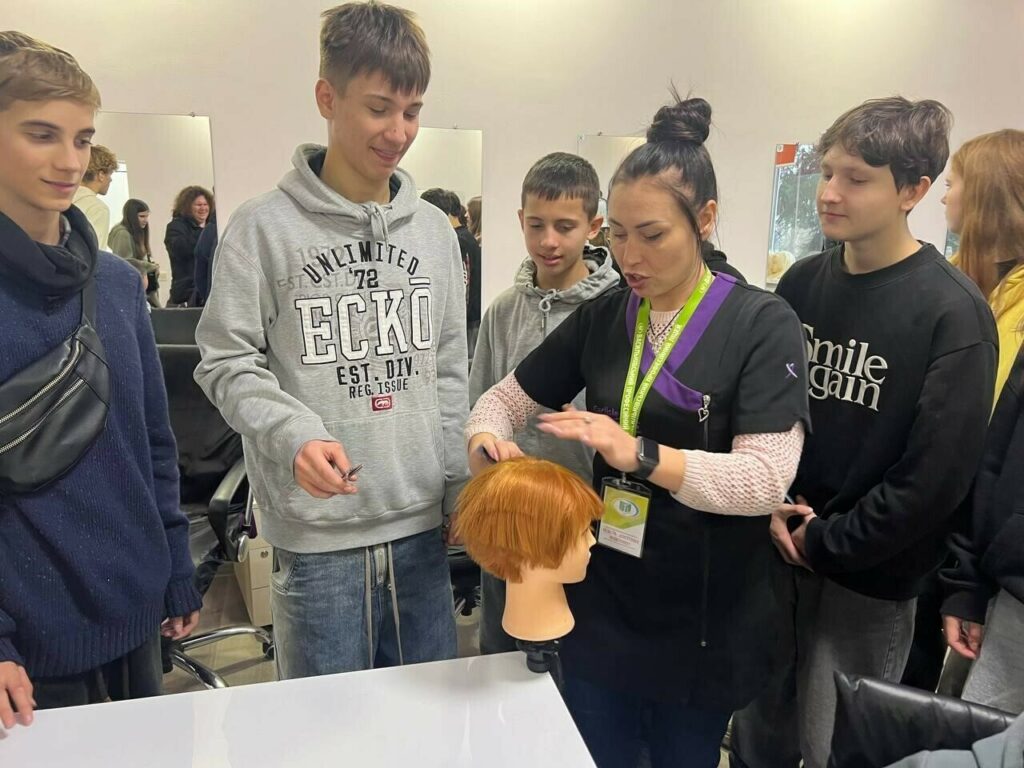
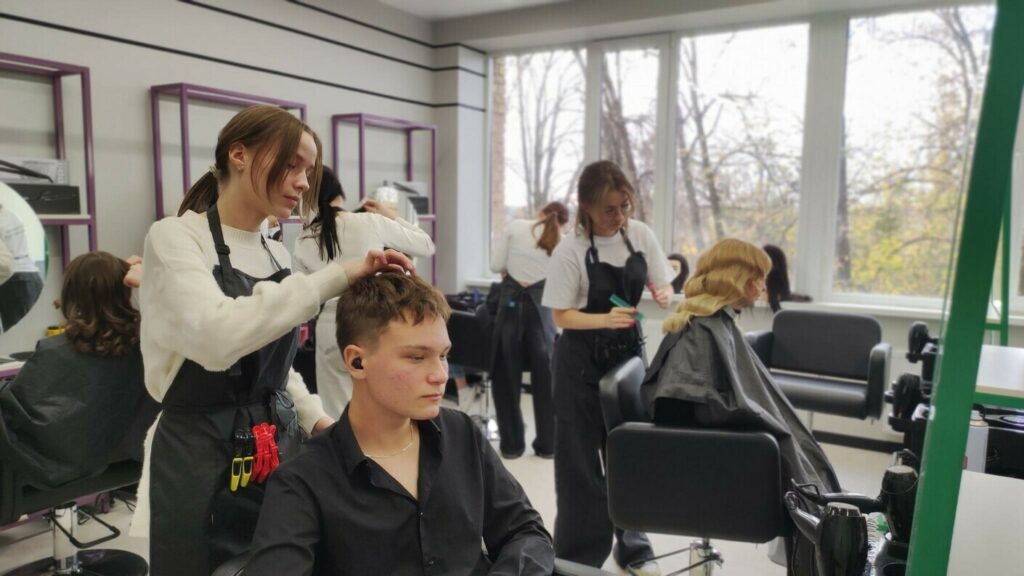
During one of the open days at the workshop for hairstylists (hair stylists-modellers)
‘The main goal of the career guidance system is to help a child find a vocation they are passionate about. Because, to a certain extent, your profession is your second life. If a person goes to work with pleasure and if their job has become more like a hobby, they are a happy person. Finding your strengths, developing soft and hard skills, and explaining the realities of different professions – these are the tasks that should fall to the career guidance system. And we need to work on this in partnership with schools,’ concludes Hanna Bondar.
Mariia Buleiko (Markovska)
Tags:
education vocational training college
Область:
Київська областьГромади:
Васильківська територіальна громадаSource:
Проєкт DECIDE
22 September 2026
Live in the city, not struggle to get through...
Barrier-free urban spaces begin with specific solutions that give people greater independence in their daily lives....
17 September 2026
Barrier-free beach in Odesa: How accessibility changes seaside holidays
Barrier-free beach in Odesa: How accessibility...
The Decentralisation portal is launching a series of articles on community initiatives that make public spaces and...
15 September 2026
Career guidance unites. How evacuated...
The community is located in an area of active hostilities; its residents have been fully evacuated and are now...
10 September 2026
«Де народився, там і згодився». Як...
Проблема відтоку молоді за кордон для Керецьківської громади, що на Закарпатті, історично є гострою, адже регіон –...