From knowledge to solutions: how the municipalities of Irkliiv and Shakhove joined forces to improve safety
The war has forced Ukrainian municipalities to seek new forms of cooperation and to tackle challenges together that are difficult to overcome on their own. One example of this is the collaboration between Irkliiv in Cherkasy Oblast and Shakhove in Donetsk Oblast. The municipalities first connected through the national project “Side by Side: United Communities”, and this partnership later evolved into a concrete solution in the field of safety.
For Shakhove municipality, one of the key challenges was maintaining the local fire brigade following the relocation of businesses and municipal services due to the full-scale invasion. At the same time, Irkliiv municipality was already building its own civil protection system. This sparked the idea of a partnership that would address the needs of both sides, preserving a professional team and enhancing residents’ safety.
However, the road from idea to implementation was not an easy one. The municipalities had to determine how to properly formalise the cooperation between them from a legal perspective, resolve funding issues and prepare the necessary documents. This is where the training and advisory support provided by U-LEAD expert team played a crucial role.
Training as preparation for making difficult decisions
Even before the work on the forthcoming project began, Irkliiv municipality joined U-LEAD training programme “Steps for Specialists: Drafting and Approving the 2026 Local Budget”.
According to Nadiia Danylevska, the Head of the Finance Department of Irkliiv Village Council, taking part in the programme enabled the municipality’s officials to explore new methods and tools for drawing up local budgets in the context of the war and future recovery.
In addition to helping the municipality improve its budgetary processes, the training programme also encouraged a fresh perspective on resource allocation and development planning. This experience subsequently became an important foundation for efforts to develop inter-municipal cooperation.
When did the need for consultations arise?
Although the idea of cooperation between municipalities looked promising, a number of practical issues had to be resolved in order to put it into practice.
It was necessary to understand how to organise cooperation between municipalities in different oblasts, how to delegate powers, how to draw up an agreement correctly, and how to regulate inter-budgetary transfers. That was when the municipality turned to U-LEAD with Europe team for advisory support.
“Through our collaboration with U-LEAD experts in Cherkasy and Ternopil Oblasts, we were able to examine in greater detail the issue of inter-municipal cooperation between municipalities across different regions. The lawyers were a great help to us in drafting the Agreement on Inter-Municipal Cooperation in the Field of Civil Defence, which delegates certain tasks between the rural municipalities of Irkliiv, Cherkasy Oblast, and Shakhove, Donetsk Oblast. As this is our first experience of implementing such a project, expert support was especially important to us,” said Ms Danylevska.
Serhii Slynko, the Head of the Regional Office of U-LEAD with Europe in Cherkasy Oblast, describes this case as exemplary: “Irkliiv municipality is a classic example of a successful transition from a theoretical understanding to the signing of a real, legally binding cooperation agreement. Step-by-step mentoring and expert advice helped local officials overcome procedural hurdles and navigate every stage of the process without a hitch.”
From idea to agreement
Once the model for cooperation had been defined, work began on preparing the necessary documents.
Irkliiv municipality submitted a proposal to initiate cooperation to Shakhove Rural Military Administration. The next step was to set up a joint commission to draft the agreement and approve its membership. Once the document had been agreed upon, it was forwarded to the Ministry of Communities and Territorial Development of Ukraine. In April 2026, the agreement was entered into the Register of Inter-Municipal Cooperation Agreements.
However, another important step was required to launch the project: approval of the inter-budgetary transfer. To this end, the municipality prepared a separate set of documents for the Ministry of Finance of Ukraine. The relevant approval was received on 21 May 2026.
Following this, the municipalities moved on to the practical implementation of the agreements.
The hardest part: finding a mechanism
Despite the successful outcome, the preparation process was not straightforward. After all, the municipalities had to find answers to numerous questions, ranging from funding to the deployment of staff and equipment.
Ms Danylevska spoke about her concerns: “How do we put all this into practice? Where do we find the funds, where do we station staff and equipment, and how do we ensure this is done within the law? As always, we turned to U-LEAD team for advice.”
Mr Slynko explains that these difficulties are typical of most projects of this nature:
“The main challenges are typical of most partnership: these include, at times, lengthy discussions regarding the formula for a fair financial contribution from each party, as well as the procedural complexity of drawing up agreements. Furthermore, the fear of making mistakes that regulatory bodies might interpret as misuse of funds can also act as a deterrent.
Any form of joint management — be it waste management, running inclusive centres, or ensuring safety — relies on legally sound and financially transparent documentation. Without clear legal guidance, ready-made agreement templates and a detailed breakdown of the flow of grants, local authorities rarely dare to launch such complex inter-budgetary processes.”
This is precisely why issues relating to legal formalities and inter-budgetary transfers often require expert support.
Practical outcome
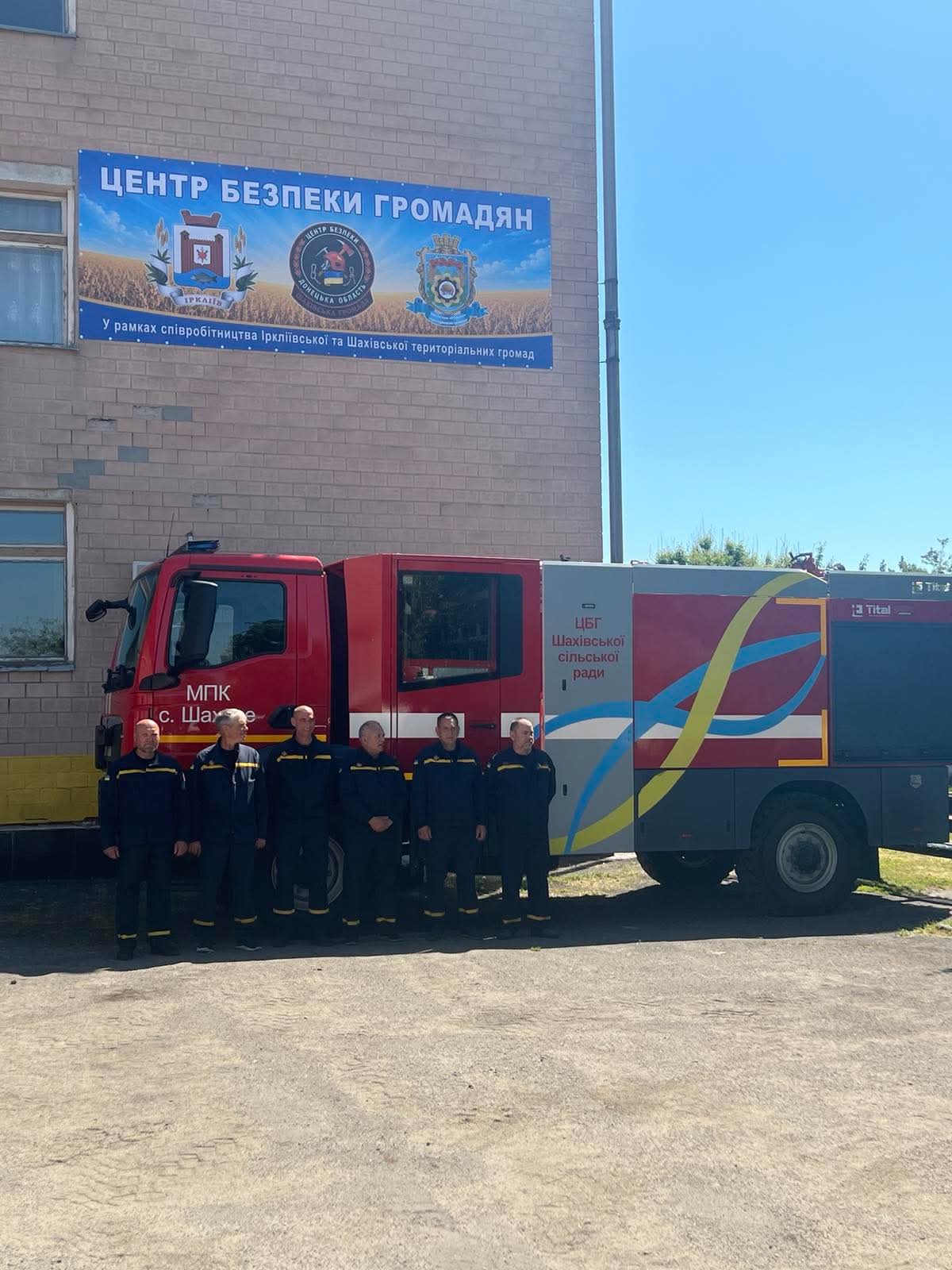
Once all procedures had been completed, from June 2026 onwards, members of the fire and rescue team from the Safety Centre of Shakhove municipality have been working in the municipality of Irkliiv.
“The most valuable aspect of this inter-municipal cooperation for our municipality has been securing jobs for our fire brigade. A major advantage was the host municipality’s willingness to help resolve housing issues for the fire and rescue service staff,” recalls Yulia Hrynova, the Chief Specialist for Accounting and Reporting at Shakhove Rural Military Administration.
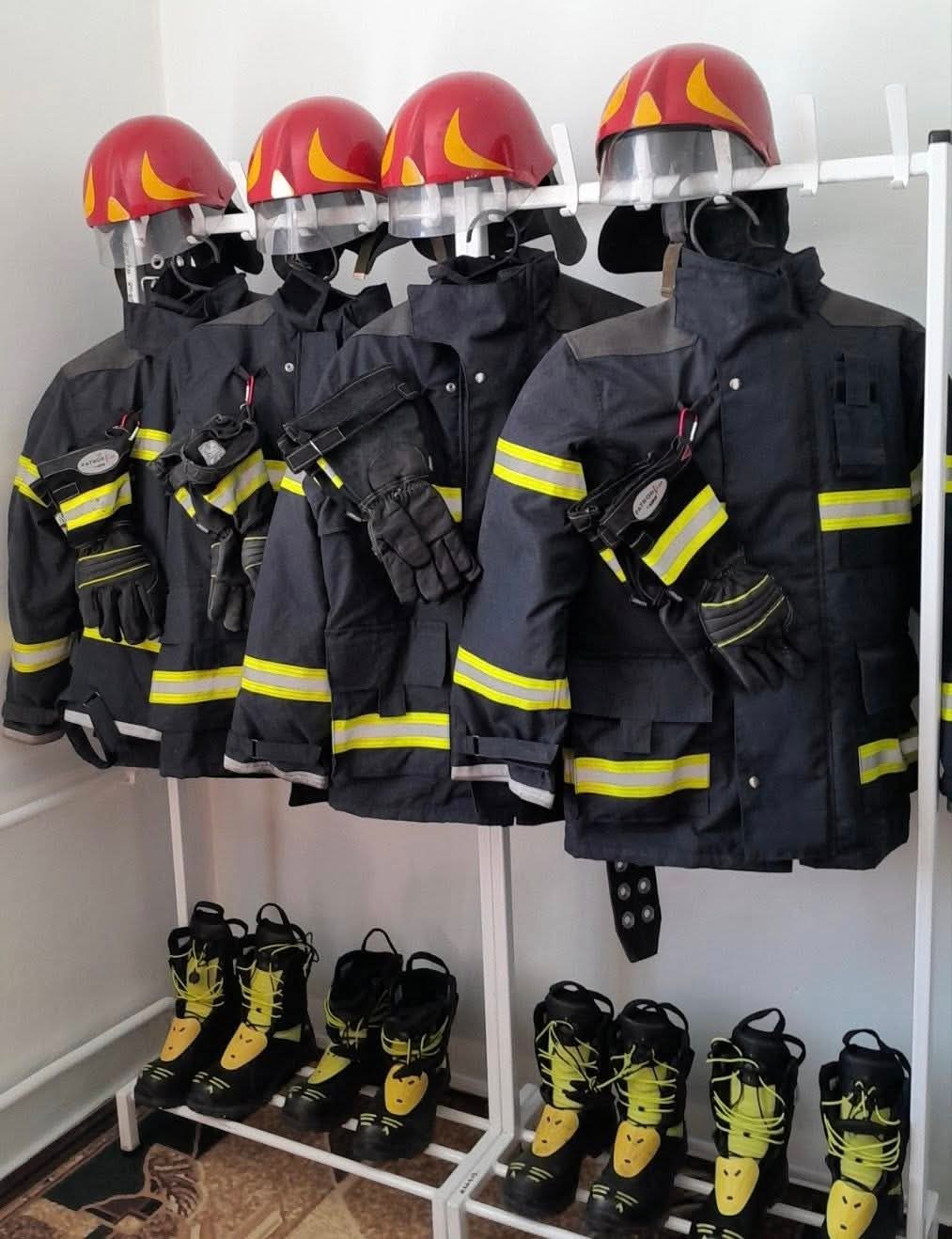
“From June 2026, members of the fire and rescue team at the Safety Centre of Shakhove rural municipality, who have the necessary technical equipment and expertise, will ensure industrial and fire safety for the residents of Irkliiv rural municipality, conduct preventive maintenance, and will later serve as the foundation for establishing a Public Safety Centre and form an integral part of the overall emergency response framework,” says Ms Danylevska, highlighting the benefits for her municipality.
For Shakhove, this is an opportunity to retain a professional team, whilst for Irkliiv municipality, it offers a chance to strengthen its safety system thanks to the specialists’ expertise.
Lessons for other municipalities
The experience of Irkliiv and Shakhove municipalities illustrates how inter-municipal cooperation helps to resolve practical issues even in wartime.
According to Mr Slynko, the need for these kinds of solutions will only grow:
“Due to severe budget constraints, the need to pool resources is critical across all sectors, from security and the environment to healthcare, housing and utilities. It is far more cost-effective for municipalities to invest in joint inter-municipal projects or institutions than to try to maintain costly infrastructure on their own, which serves a relatively small number of residents.”
The Head of the Regional Office of U-LEAD with Europe in Cherkasy Oblast also notes that municipalities are increasingly opting for partnership rather than competition:
“This trend is now very clear and pragmatic, particularly following the abolition of the ‘military income tax’ and the high public demand for support for the armed forces, which has forced municipalities to think more carefully about every hryvnia. In general, locally self-governing bodies are increasingly opting for partnership rather than “municipal selfishness”, pooling resources for safety, waste management, social services and the joint application for major international grants.”
The case of Irkliiv and Shakhove municipalities proves that even complex challenges can open up new opportunities for partnership. And when municipalities bring together initiative, a willingness to cooperate and expert support, these partnerships turn into solutions that deliver results for people.
11 October 2026
From adversities to opportunities: UCORD and...
On 12 October, an international discussion “Regional pathways to turn crisis into competitive advantage: from...
09 October 2026
Добре врядування та якісна освіта: як залучити молодь до розвитку громад і доброчесного врядування
Добре врядування та якісна освіта: як залучити...
7 жовтня у Львові відбувся форум «Амбасадори доброчесності: освіта та партнерство заради розвитку громад»,...
09 October 2026
КРОКУС у регіонах: UCORD готує АРР до проєктного розвитку територій
КРОКУС у регіонах: UCORD готує АРР до...
A two-day training course on using the KROKUS platform for representatives of 20 regional development agencies was...
09 October 2026
«Я обираю майбутнє в Україні!»
«Я обираю майбутнє в Україні!»
Що потрібно, аби саме так могли сказати кожен учень і учениця, які завершують школу? Не просто знати назви...