‘Packed like sardines’ – a thing of the past. How Desna community turned a cloakroom into a modern bomb shelter
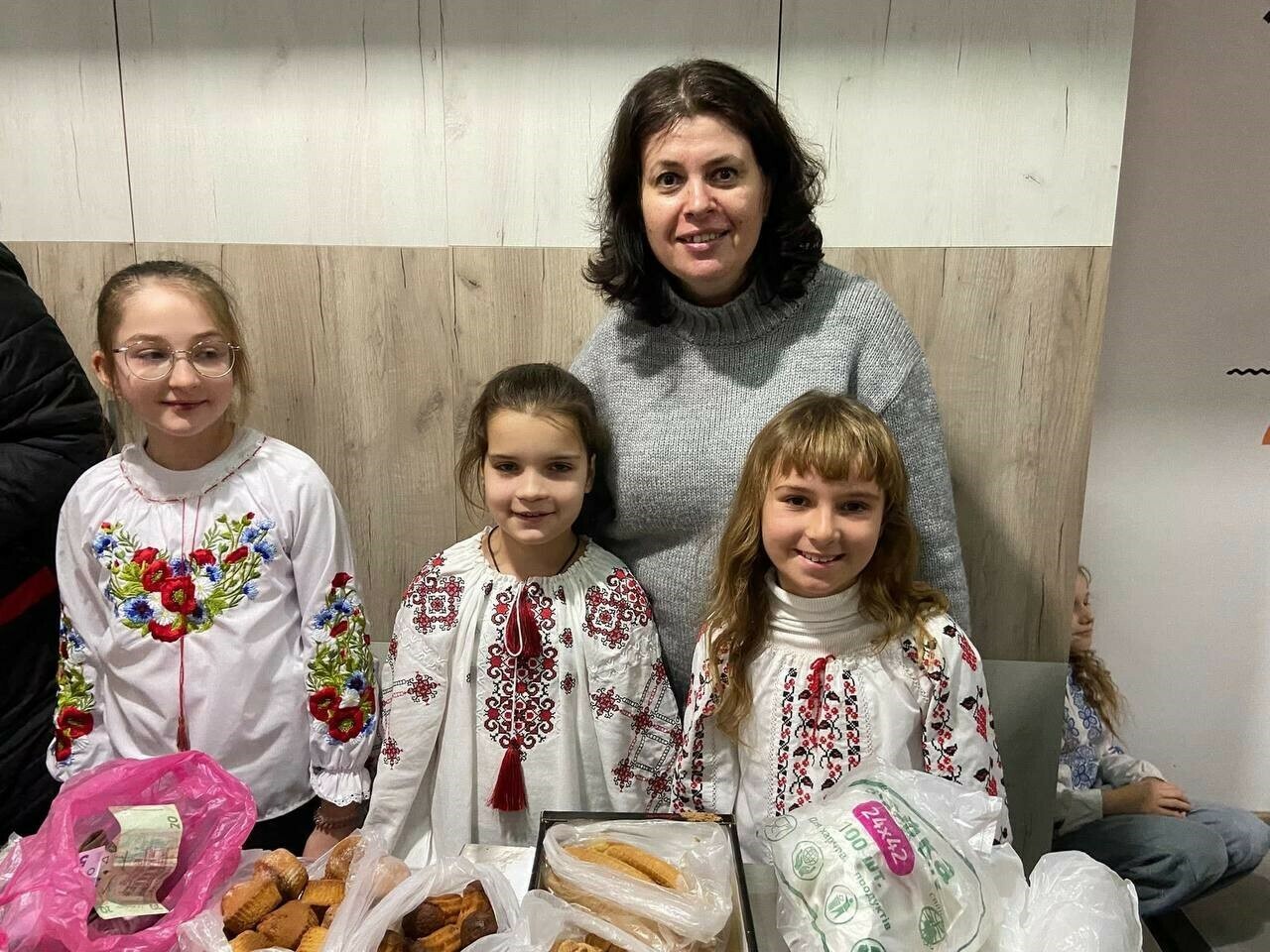
Desna community in Chernihiv region is special because its centre is the military town of Desna. When the full-scale invasion began, the community was faced with a critical problem: none of its three schools had proper bomb shelters, not even in the basements.
With 560 students currently enrolled at the lyceum, ensuring safety is not just a requirement of the times, but also a prerequisite for continuing the educational process and ensuring students’ safety.
‘When the question of establishing a bomb shelter arose, the only available place was the cloakroom in the lyceum of Desna community. In March 2022, people stayed in this room without windows and proper ventilation for over a month. There were no toilets or sewage systems, and it was difficult to breathe,’ recalls Nadiia Hurtovenko, Head of the Education Department of the Desna Settlement Council.
However, the community did not give up. Thanks to its partnership with the Swiss-Ukrainian DECIDE Project, the DECIDE:Vidbudova initiative, and the persistence of the local team, an ambitious renovation project was implemented, creating a safe educational space covering 400 square metres.
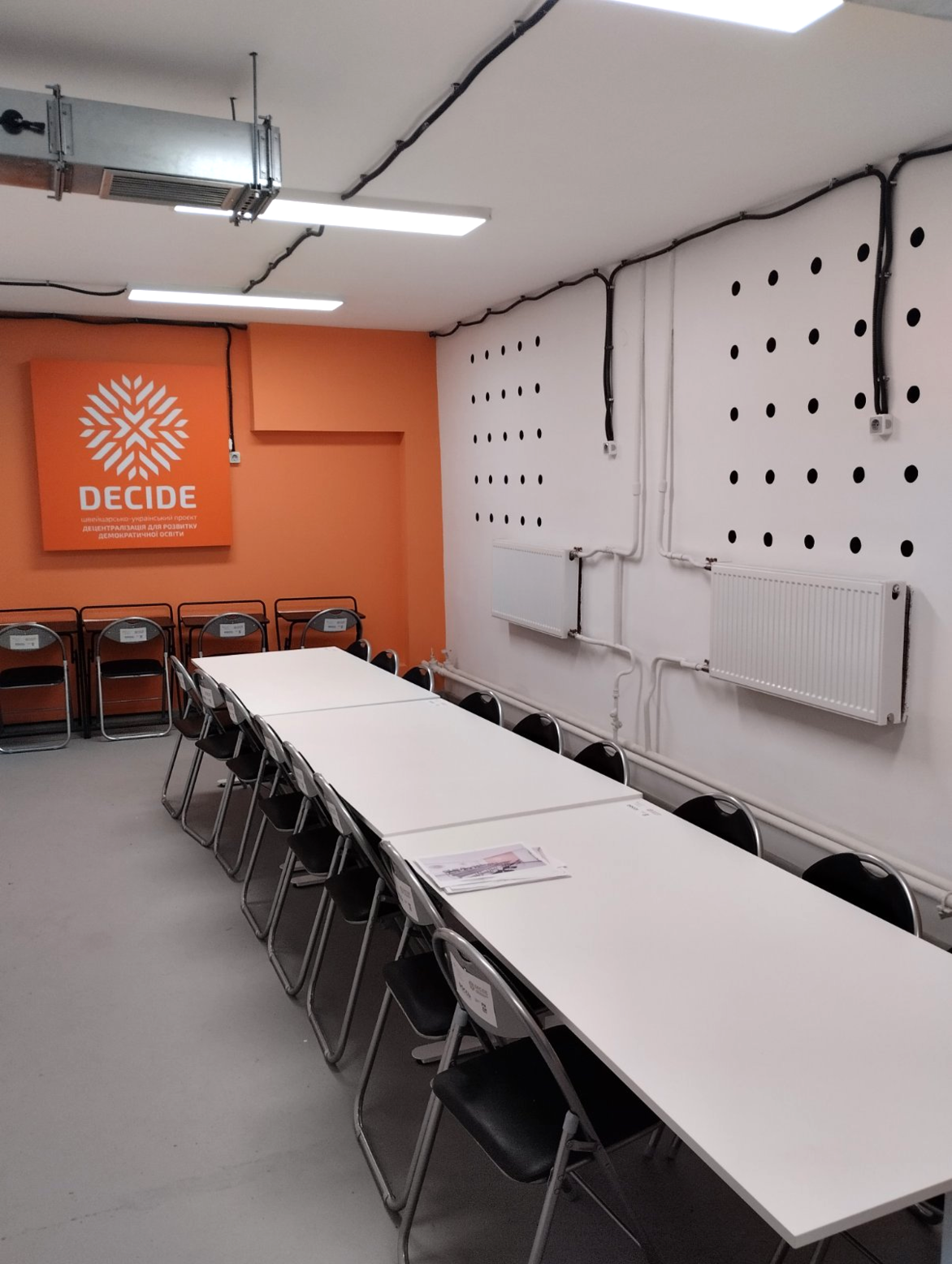
Bomb shelter after renovation
Read this article to find out how the community managed to overcome bureaucratic obstacles, why children called the old bomb shelter a ‘sardine can,’ and how schoolchildren painted the walls of their new space themselves.
‘Children fainted and had nosebleeds’
When the full-scale invasion began, the situation in Desna community was really tough. The principal of the lyceum recalls with horror the evacuation drill on the eve of the invasion, when more than 900 schoolchildren had to be accommodated in the cloakroom.
‘When I look back at what happened and see what we have today, I feel like crying. Back then, we took the expression “packed like sardines” literally. There were situations when children fainted, one child had a nosebleed because the natural ventilation simply could not cope. It was scary and dangerous. But we had no choice. When the full-scale invasion began, locals came here with their sleeping mats, brought chairs from classrooms so that they could at least sit down and wait out the shelling,’ says Olha Semkiv, Deputy Principal of the lyceum.
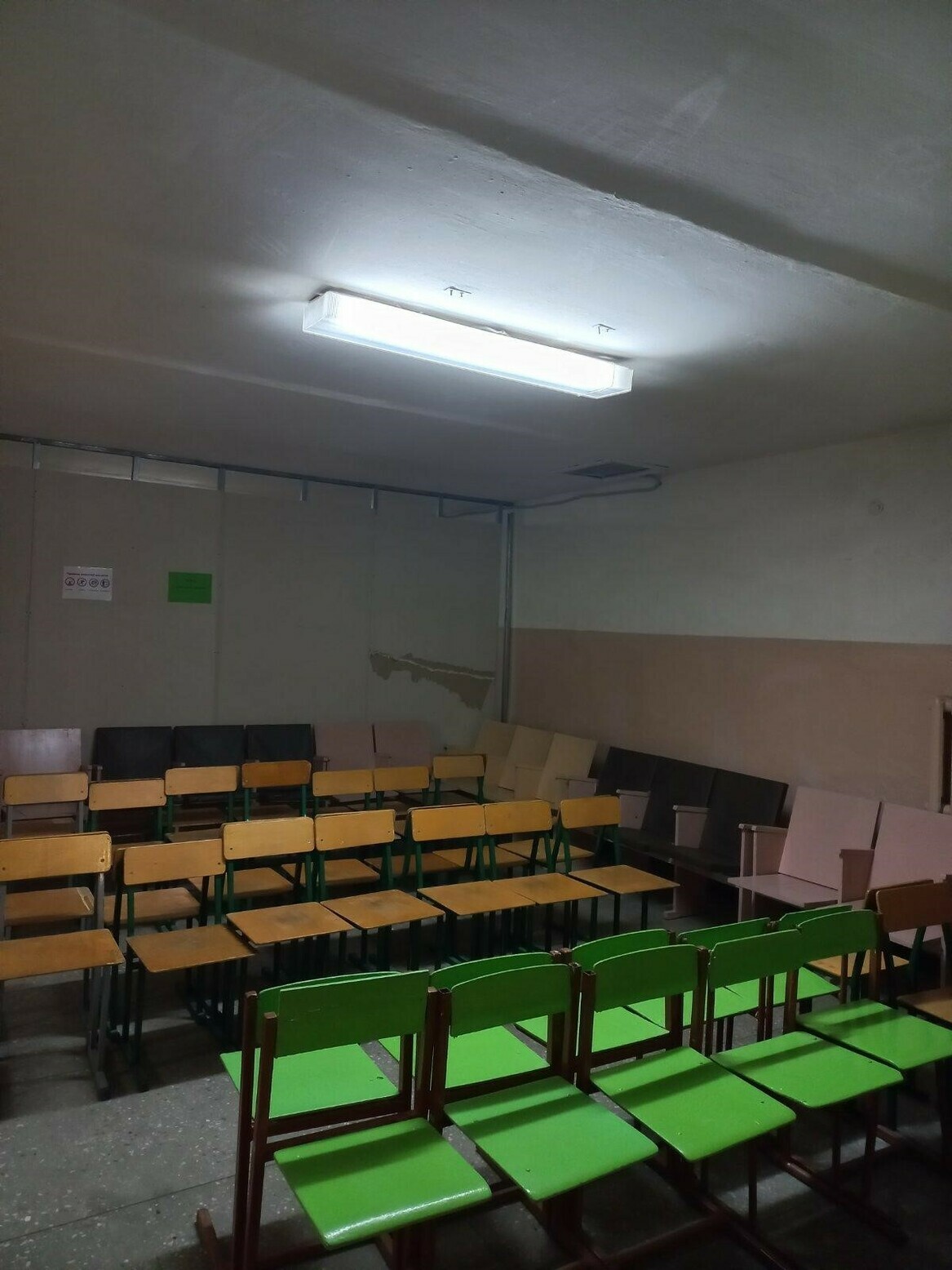
Bomb shelter before renovation
The restoration process was challenging. In addition to the fact that the building had been damaged twice by explosions (more than 150 windows and some interior doors were blown out), there was also a legal obstacle: the land under the school belonged to the Ministry of Defence.
‘It was a stalemate: we were unable to carry out renovations on land that did not belong to us. And without renovations, it was impossible to build new exits, which are critical for safety standards,’ explains Nadiia Hurtovenko. ‘Despite all the difficulties, it was a real team effort. Everyone got involved in the process of re-registering the land, from local councillors to regional leaders and architects. And when we finally saw the opportunity to participate in DECIDE Project, we started “to knock on every door”. I am glad that they believed in us.’
Another challenge was that hidden defects caused by shelling were discovered during the renovation: the roof was leaking, the walls were cracking, and the surfaces needed to be repainted. The premises also needed to be dried out.
‘The initial cost of the project was UAH 4.2 million. The bulk of this, around 60 per cent, was covered by DECIDE Project. Later on, a further half a million was allocated for additional work that arose during the process. The rest was co-financed by the community,’ says Nadiia Hurtovenko.
The restoration process took about a year and a half, from the announcement of the selection in August 2023 to the official opening on 1 September 2025.
A project that bridged generations
A distinctive feature of this restoration was the active participation of the schoolchildren themselves. In the framework of the project, school teams competed for the opportunity to arrange their own space in the bomb shelter – DECIDE allocated a mini-grant of UAH 50,000 for this purpose.
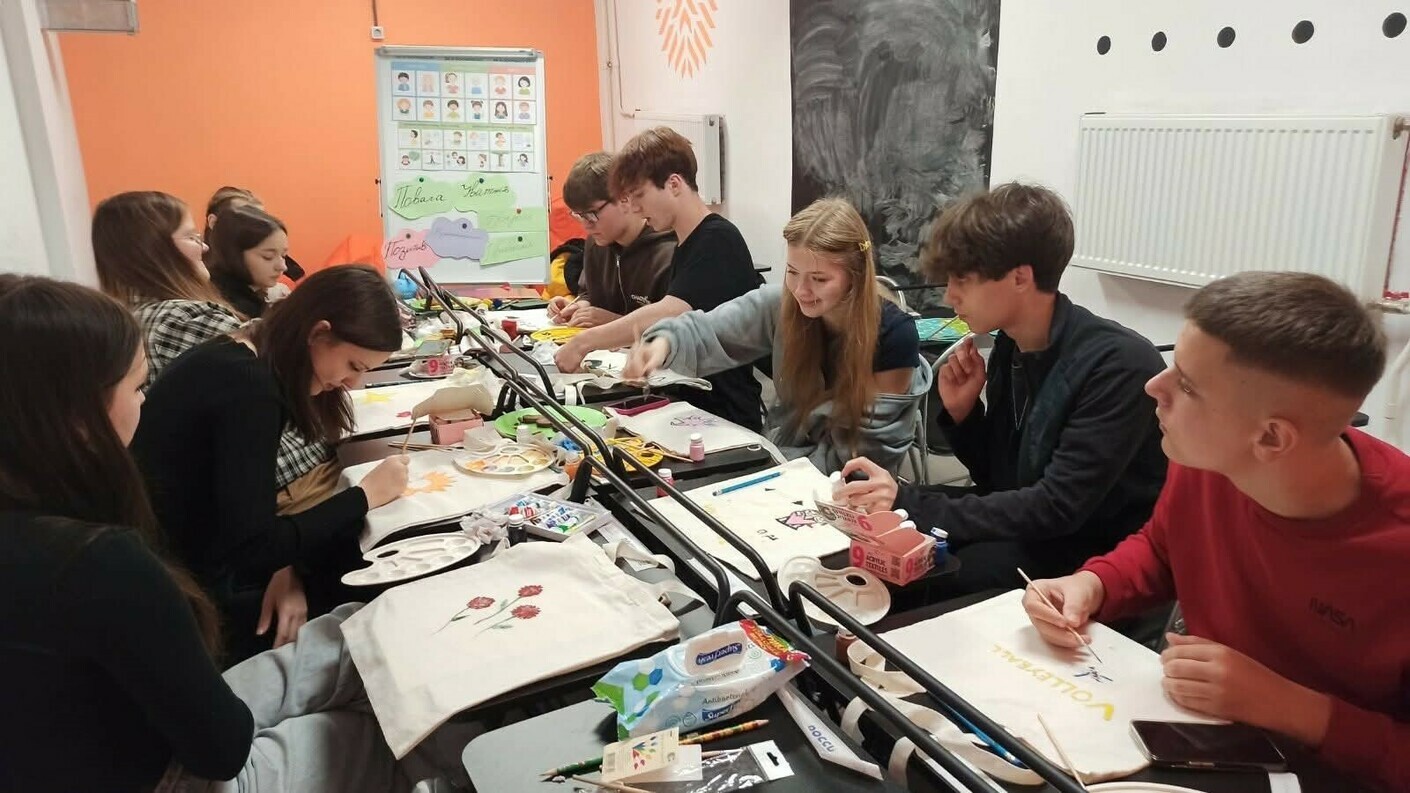
DECIDE experts taught students how to develop projects from concept to implementation. Four school teams competed for the first place. Two of them proposed to create a sports hall in the bomb shelter, while another dreamt of a specialised room for in-depth English language learning. The winning idea was called ‘Step Communication’
‘Our project is called “Step Communication” because during the war, our live communication has greatly decreased. We wanted to create a room that would combine different opportunities: here we can hold English lessons, play games, and just relax. Even when students from neighbouring villages are waiting for the bus, they can do more than just scroll through their phones; they can sit in beanbag chairs and play board games or chat,’ says Aliona Roiko, a ninth-grade student.
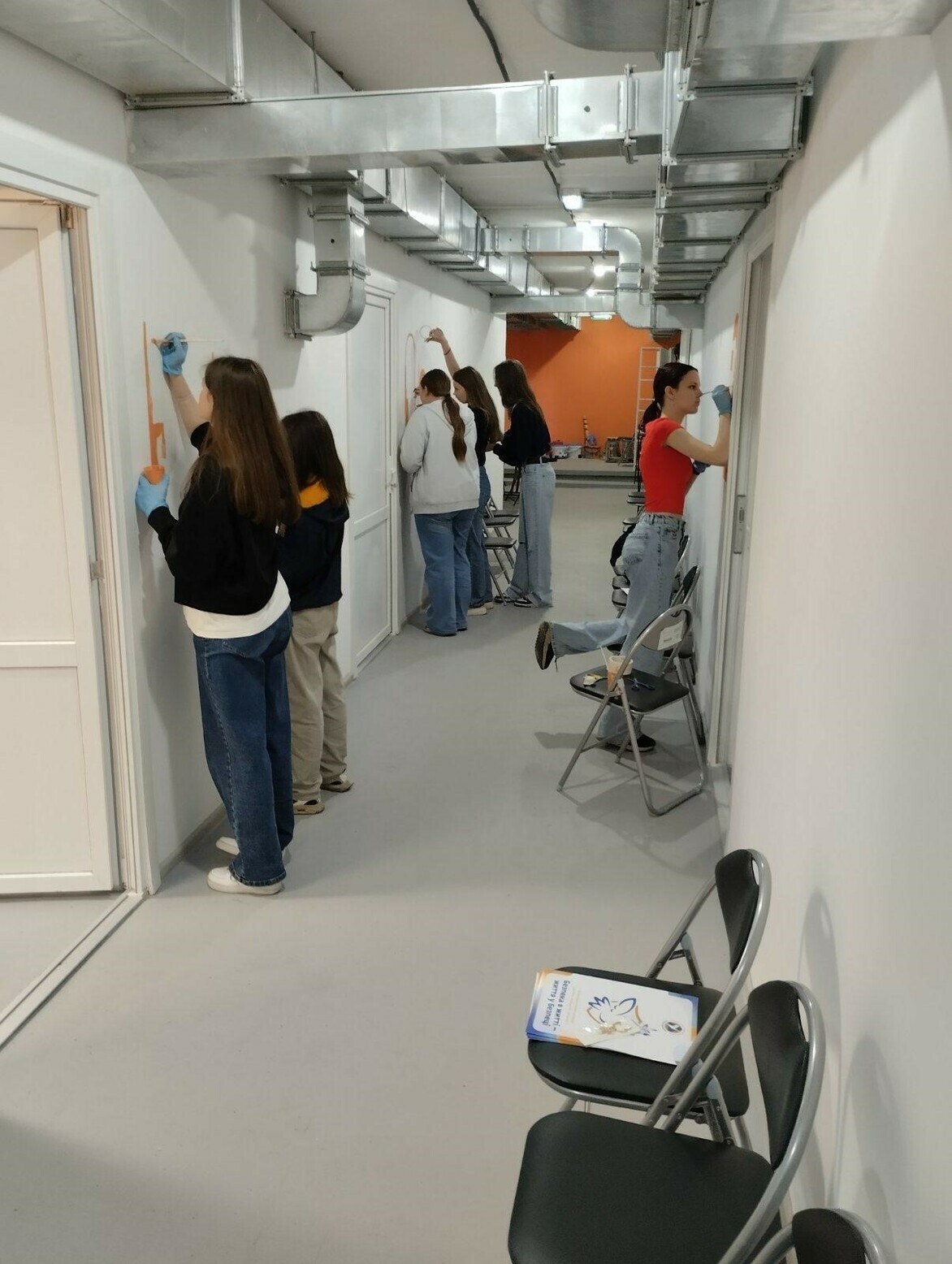
Students are decorating the bomb shelter to match the design
Valeriia Sorokina, also a ninth-grade student, adds that learning how to develop projects from DECIDE was a real eye-opener for them:
‘The experts explained to us the essence of identifying and solving problems. For example, the problem is not the lack of a bicycle to get to school, but the fact that you are late for class. And this fundamentally changes the ways to solve the problem. Teenagers were given a voice, we were heard – and that’s great. And thanks to this process, I realised that I might pursue a career in management.’
The teachers were most impressed by how the children learned to take responsibility for themselves.
‘When it came to decorating their room, the students told us, “Turn on the projector and you can leave.” They painted the walls themselves, creating the space of their dreams. They finished painting when the end-of-day bell rang. Then we realised that we would finally be able to start the next academic year offline, because we already had a wonderful bomb shelter,’ says Olha Semkiv.
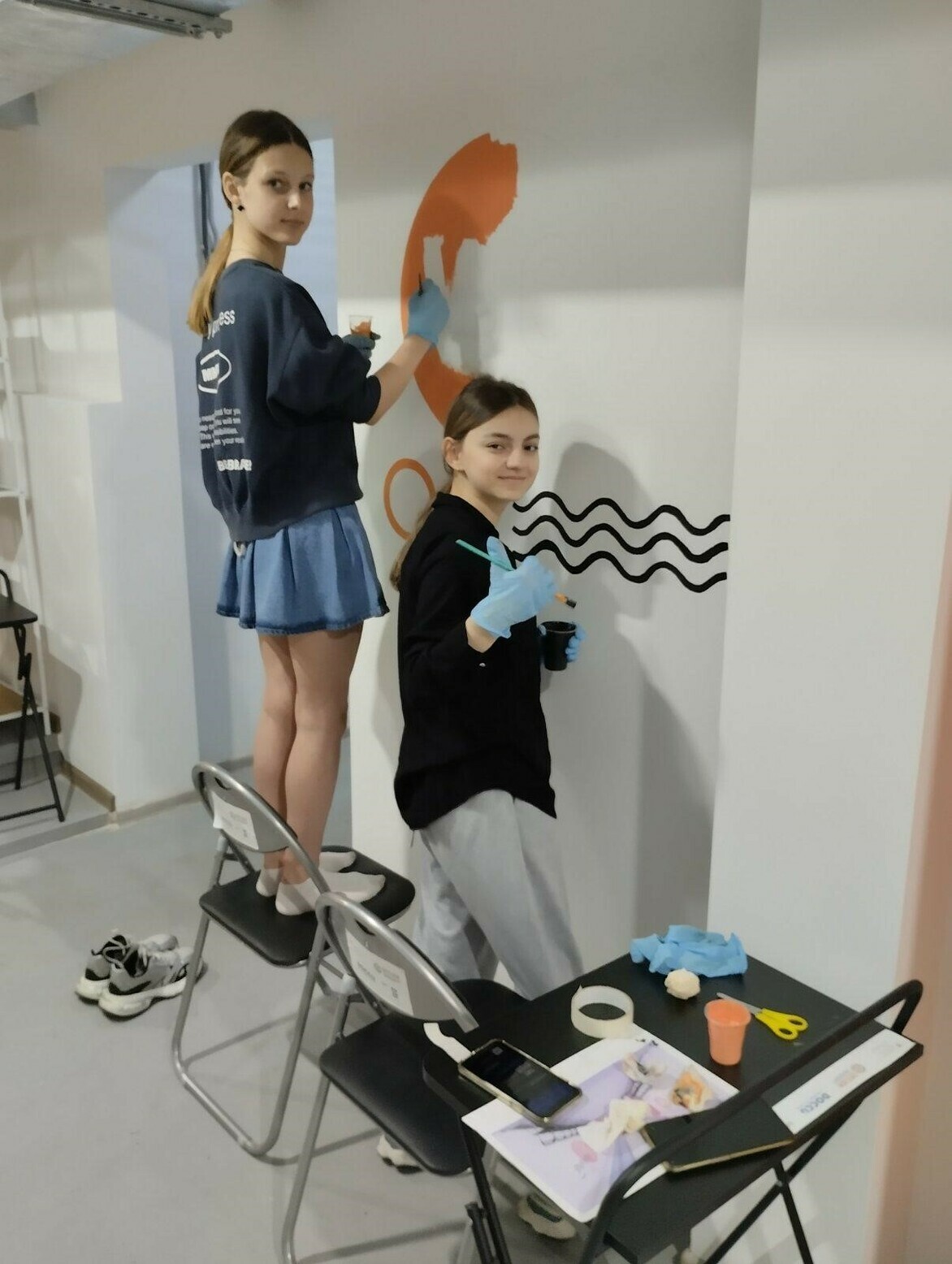
Students are decorating the bomb shelter to match the design
The bomb shelter today
Today, the bomb shelter at the lyceum offers 400 square metres of safety and comfort. All the utilities have been replaced: high-quality ventilation and modern lighting have been installed, toilet facilities have been fitted out, and a pumping station and lifts for children with special educational needs have been installed.
‘Now it’s not hot here and it’s easy to breathe. Of course, there is noise, but it’s much less thanks to the insulated rooms. I love our physics labs in the bomb shelter: it’s more fun there, we can turn off the lights and work with mirrors. The light colours of the walls are calming; it’s no longer that dark, Soviet-style dungeon,’ Valeriia shares her impressions.
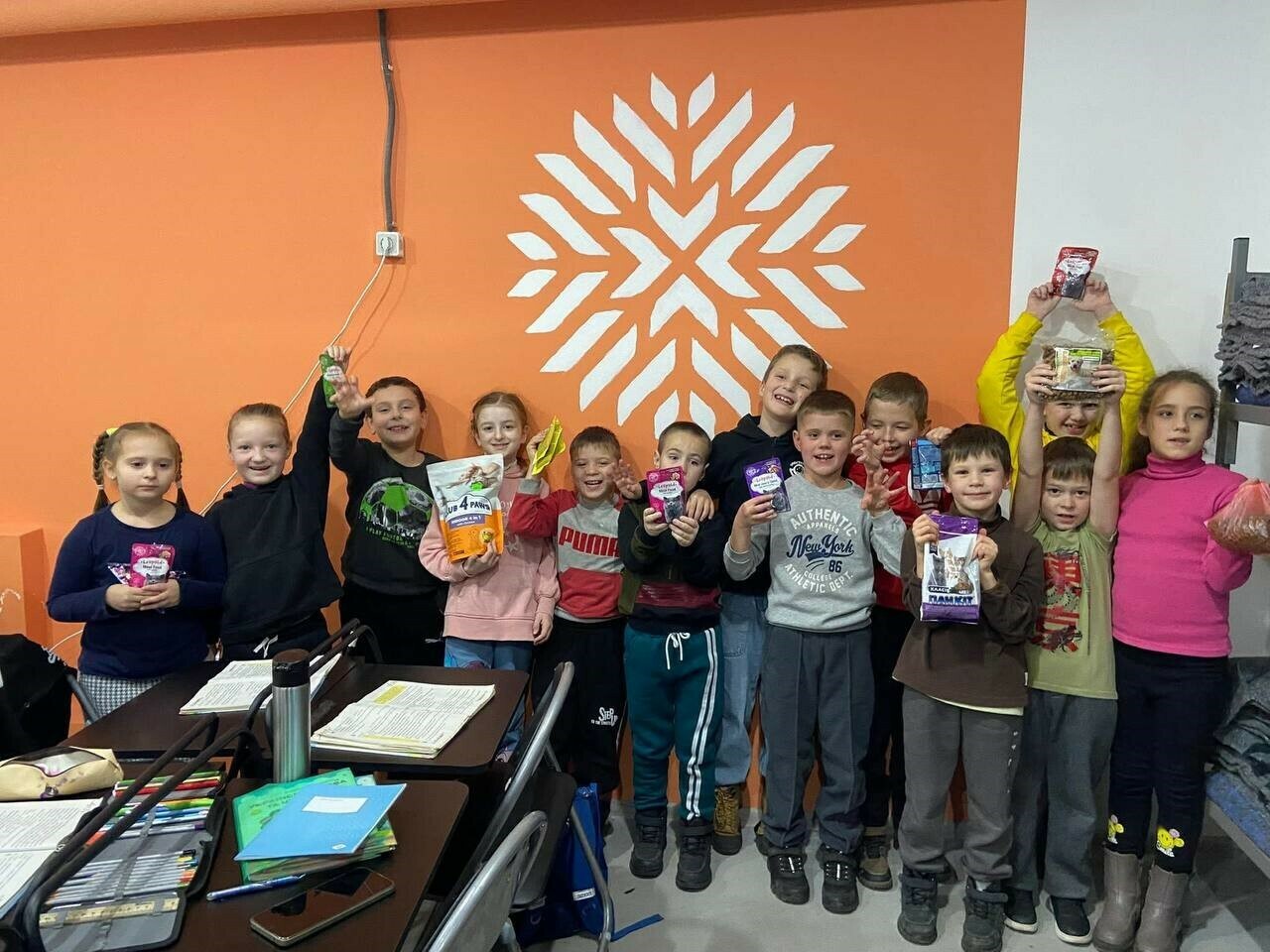
The space is divided into five classrooms, allowing for uninterrupted lessons even during prolonged periods of air raid sirens. The administration has developed a flexible schedule so that different classes can take turns.
‘The furniture in the rooms is multifunctional. If necessary, it can be quickly folded against the wall in the afternoon, and the children can dance, do gymnastics or even play football there,’ says Olha Semkiv.
The bomb shelter has everything necessary for comfort:
- A medical office, currently adapted for the educational process so that all children can study, but if necessary, it can be quickly used for its intended purpose.
- Comfortable furniture, desks, and beanbag chairs.
- Projectors, laptops, and tablets.
- Beds where children can rest after difficult lessons.
- Walls painted with rubber paint that can be written on like a whiteboard.
- A generator, additional heaters, and technical water supplies.
Primary school teachers and pupils also appreciate the new space. Lidiia Tymoshenko, Deputy Principal for Educational Work at the primary school, emphasises the social importance of the project:
‘Thanks to this bomb shelter, we have been able to resume full-time extra-curricular activities. This is critically important for our community, as many parents are military personnel who often serve outside the town. It is more reassuring for them to know that their children are at school all day, under the supervision of teachers and in safety.’
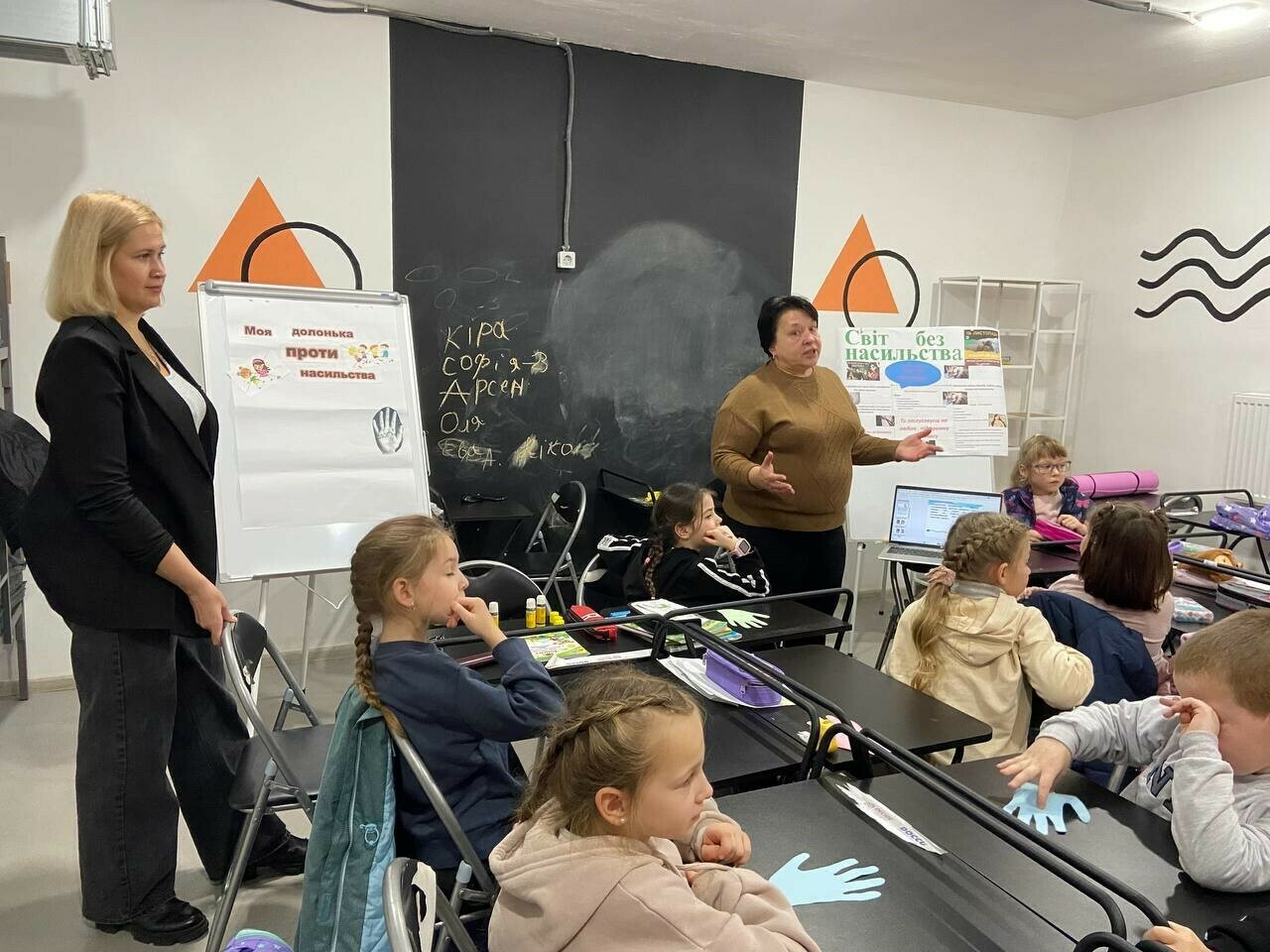
Previously, during times of air raid sirens, the lyceum was forced to interrupt classes or send children home, but now learning continues in comfortable conditions
‘Parents have relaxed a little and trust us with their children. Last year, during air raid sirens, children were often taken home, but now, with a fully equipped bomb shelter, students stay. They know that it is safe here, that they will have lessons here, and that their friends are here,’ says Svitlana Polovetska, Deputy Principal for Educational Work.
The only challenge remains stable internet in the basement, which the community continues to work on. But the main achievement is the resumption of face-to-face learning and the sparkle in the eyes of children who can once again communicate with their peers and teachers in person.
‘This year, air raid alerts in Chernihiv region are particularly frequent and long. Despite this, children come to school. They have finally sat down at their desks and are extremely happy about it,’ concludes Nadiia Hurtovenko.
Mariia Buleiko (Markovska)
26 September 2026
Коли виробництво впирається в правила гри: уроки Produce! від Олександра Соколовського
Коли виробництво впирається в правила гри:...
Якісний продукт, сучасне обладнання й сильна команда не гарантують виробникові успіху. Підприємство може програвати...
25 September 2026
Нові умови оплати праці освітян з 1 вересня 2026 року
Нові умови оплати праці освітян з 1 вересня...
1. Що насправді змінюється в оплаті праці З 1 вересня 2026 року в Україні запрацював новий механізм оплати праці...
25 September 2026
Від благоустрою до стійкості: як війна змінила роль ОСН і чому законодавство має наздогнати практику
Від благоустрою до стійкості: як війна змінила...
У Києві відбулася XV Всеукраїнська конференція з питань самоорганізації населення. Цього року ми говорили про органи...
25 September 2026
Від ресурсу до заводу: чого команди регіонів навчаються в рамках ініціативи Produce!
Від ресурсу до заводу: чого команди регіонів...
Вільна земля, підведені комунікації та назва «індустріальний парк» ще не роблять територію промисловою. Щоб тут...