Occupied but still standing strong Shulhynka. Interview with Head of Military Administration
Natalia Petrenko, Head of the Military Administration of the occupied Shulhynka rural community in the Luhansk region, refuses to hire men on principle, believing that they should be on the battlefield. Her work is also part of the fight against russian aggression. She stays informed about the situation in the occupied community, helps people leave and brings displaced persons together in an effort to preserve the local Ukrainian identity.
By Dmytro Syniak
Shulhynka is a village situated between Siverskodonetsk and Starobilsk, 120 kilometres from the russian border. In May 2018, it became the centre of a successful and promising community uniting 12 nearby localities. However, in February 2022, russian troops occupied the Shulhynka community and immediately reinstated the old Soviet system of centralised control in the captured villages. Natalia Petrenko, a community leader, decided to stay and protect her people wherever possible. However, she had one major flaw: whenever she witnessed injustice, she could never remain silent. The occupiers therefore soon became aware of her dissatisfaction with the policies of the new authorities. One day, Ms Petrenko was subjected to a four-hour interrogation at the Starobilsk district police station. Afterwards, she realised that she would be sent to jail next time.
After fleeing to unoccupied territory, Natalia Petrenko joined the fight against the russian occupiers, taking up the position of Head of the Shulhynka Military Administration. From the outbreak of the full-scale war, the administration has only accepted women for employment. This is a principled position held by Natalia Petrenko. ‘Men are needed on the battlefield,’ she explains simply. Both her husband and her elder son are currently serving in the Army, and seven of the administration’s 14 employees are also military personnel.
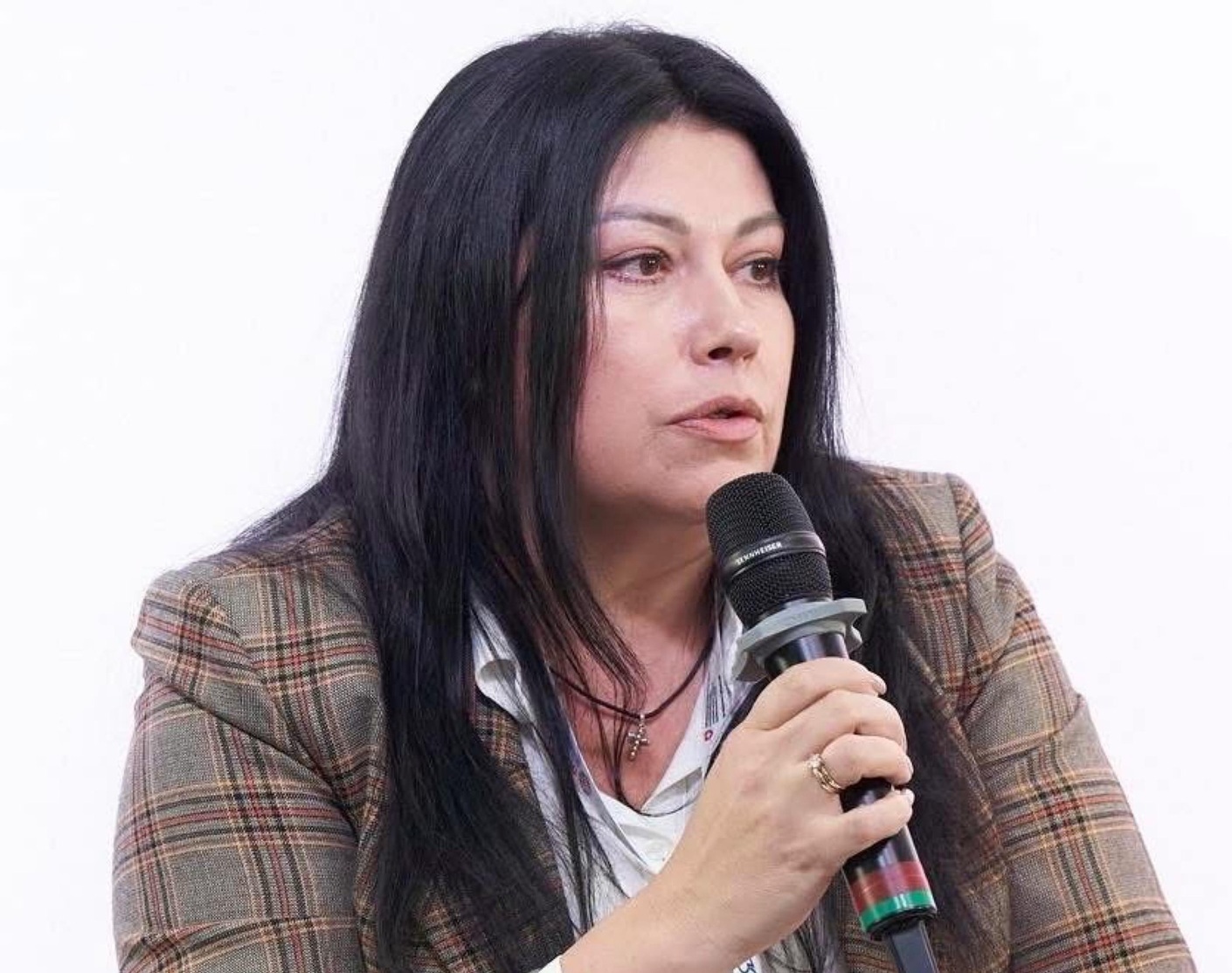
Natalia Petrenko, Head of the Shulhynka Military Administration
How housing is being illegally confiscated in the occupied territories
Two years ago, we discussed how the military administrations of occupied communities could form the basis for the future liberation of Ukrainian territories seized by russia. What, in your view, are the main functions of these administrations now, at a time when liberation seems even more uncertain than before?
The role of military administrations in facilitating the return of territories remains, but the emphasis has shifted slightly. The main goal of the administrations now is to maintain contact with those remaining in the occupied territories. It is also important to understand what is happening there. After all, accurate information about the enemy’s actions enables the development of effective countermeasures.
However, this communication is becoming a growing risk for the people living in these territories, isn’t it?
Indeed. Therefore, we take extensive measures to ensure that our informants are never exposed. People often have no idea that I am communicating with their neighbours, friends or children – we keep our identity so secret. Conversely, I refrain from speaking to my relatives because I know they would be the first to be investigated if anything were to happen. Fortunately or unfortunately, my husband and I have virtually no close relatives left in the occupied territories as both our parents have passed away.
What has happened to your property in Shulhynka?
As there was no one to look after it, it was confiscated. It was stolen outright. Will we ever get our family home back? Will it survive until the end of the war? Our family has agreed not to talk about it, so as not to cause unnecessary heartache. It is very upsetting. I know that our house is now occupied by people from elsewhere who were settled there by the occupying authorities. As in the territory controlled by the Ukrainian government, there are now many displaced persons in Shulhynka who have fled other Ukrainian cities and villages destroyed by the war, mainly Siverskodonetsk, Bakhmut, Lysychansk, Rubizhne, Svatove and the surrounding villages. They have taken the place of those who left for unoccupied territory and other countries, such as the Baltic states, Poland, Norway, Sweden... Around 2,000 people left, and the same number arrived.
Can property be sold in the occupied territories and the money taken out?
It is impossible to live in the occupied territories without a russian passport, so people are forced to obtain one. Now, imagine that I have to sell my house. In order to do so, I would need to travel to Shulhynka, obtain a russian passport and then formally complete the sale. However, everyone knows that I will be imprisoned as soon as I cross the border. Even if I managed to avoid contact with the FSB, what would people in Ukraine think of me for having a russian passport? This passport is a disgrace to me – I would never take it.
Is it still possible to travel to the occupied territories? Do the occupying forces allow locals to pass through?
About two months ago, some fellow countrymen of mine who are also renting an apartment in Kyiv invited me to visit them. They told me the following story: A woman used to visit her daughter in Novoaidar from time to time. However, during questioning at Sheremetyevo Airport, she was told, ‘This is your last trip! You have to decide who you are with.’ The FSB also analyse the social media accounts and other information of those they interrogate. If they find that someone has liked a pro-Ukrainian post, they will stamp ‘deportation’ in their passport and ban them from entering the country for five or ten years. For this reason, people are afraid to travel abroad, as this is one way in which people’s property is confiscated. Certain individuals close to the government send border guards information about individuals deemed ‘unwanted’, who are then not allowed to enter russia or Belarus. Later, these individuals seize the person’s ‘empty’ house or flat.
There has been information about the large number of Asians who have moved to Mariupol. Are there any such people in your community?
Yes, unfortunately. Recently, a child was born to a family of a Tuvan who had moved to our community. Yes, unfortunately. Recently, a child was born to a family of a Tuvan who had moved to our community. This is officially called ‘family reunification’. Relatives come to visit russian soldiers, look around, and then say, ‘Look how well the Ukrainians have it! Let’s stay here!’ And that’s that! If a soldier is stationed nearby, his relatives may be given an ‘empty’ apartment or house which has actually been confiscated. The relatives of russian soldiers are not always ethnic russians, of course. Interestingly, the occupiers do not go to the occupied cities of Luhansk and Donetsk because they are uncomfortable there. They come to us. This is somehow... disgusting. Even worse is when russians come to us to buy grain, potatoes and other products. Sometimes they travel from far and wide to purchase goods in bulk. They are amazed by how much we grow and how densely everything is planted. Many people come...
Picture from Natalia Petrenko’s Facebook page. Under the picture, she wrote: ‘Anyone who has visited Shulhynka even once keeps these memories in their heart’
Under absolute control
How would you describe the current situation in your community?
First of all, I should mention that the communities in the northern Luhansk region are in a completely different situation to those in which hostilities occurred. Due to this ‘quiet occupation’, these communities have retained almost all of their infrastructure and population, which is mostly made up of farm workers who refused to leave. On the other hand, these communities are significantly different from those occupied in 2014. After eight years of war, the residents of these communities have clearly felt the difference between Ukraine and russia. This is why school leavers in the north of the Luhansk region try to enrol at Ukrainian universities rather than russian ones, and despite all the difficulties, make their way to Kyiv, Kharkiv, and Dnipro. Having made this choice, they are forced to stop communicating with their parents. This communication is dangerous for their parents. If they do contact them, they stick to general topics such as the weather and health.
On your Facebook page, you wrote that the occupiers in Siverskodonetsk only allow mobile phone calls to emergency services. I also know that they are blocking the internet in order to prevent people from contacting residents of territories controlled by the Ukrainian government. Could you please tell us more about this? What is happening with communications in Shulhynka?
Neither WhatsApp nor Viber work there anymore. Fibre optic internet is completely vulnerable to eavesdropping. Interestingly, the most secure phones against eavesdropping are old models that people hide in order to communicate with the ‘free world’. The FSB is aware of this, so merely possessing such a phone is grounds for suspicion of ‘treason’. In addition, a large number of Chinese smartphones have been imported from russia over the years of occupation, with Odnoklassniki, VKontakte and Max already installed. Control systems have been imported too, obviously. These phones pose a significant eavesdropping risk.
Everyone in Ukraine knows how your community has flourished as a result of the decentralisation reforms. You implemented so many infrastructure projects! You attracted a lot of extra-budgetary funding. But what have the occupying authorities achieved? Have they improved life in the community in any way?
What are you talking about?! This is a disaster! In the first year alone, the russians took everything we had accumulated since the amalgamation. And it was not just us. The Starobilsk community, for example, had a lot of advanced hospital equipment. All of it went to Rostov. We had excellent, modern ambulances. They took those away and gave us old UAZ vehicles instead. All of our mobile administrative service centres and post offices disappeared in Rostov, too. Now, just like in Soviet times, people have to travel to the district centre to obtain any certificate. Moreover, unlike with us, these certificates are not issued in 10 minutes, but must be ordered in advance and take weeks to process. The funniest thing is that the facilities we built ended up on russian TV. This includes all kinds of sports facilities, children’s playgrounds and parks. The new authorities tied ribbons around them and ceremoniously cut them in front of the cameras. People laughed, but who cares! When people ask the authorities why nothing is being repaired, built or improved in the community, they receive the same answer, ‘Because of the war.’
Do the locals not see all this?
Of course they do! But nobody speaks out against it because there are armed people standing nearby. Even in chat rooms and Telegram channels, everyone remains silent. As soon as someone dares to express their disapproval, they are attacked by various so-called ‘patriots’, ‘The young republic is just getting on its feet, and you...!’ In other words, the contrast with Ukraine is enormous.
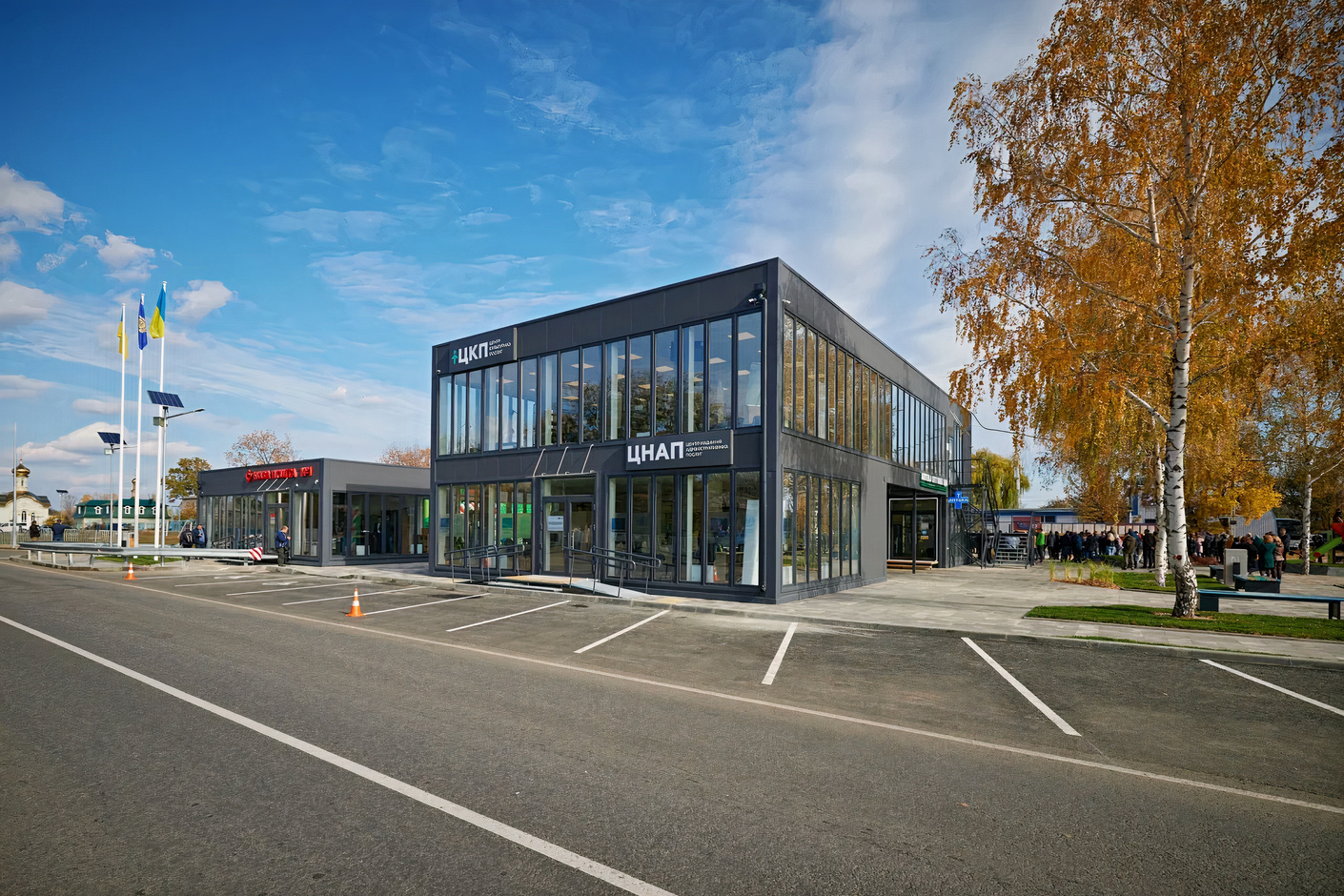
Shulhynka Community Service Centre, which combined the Cultural Services Centre and the Administrative Services Centre. Photo from 2021
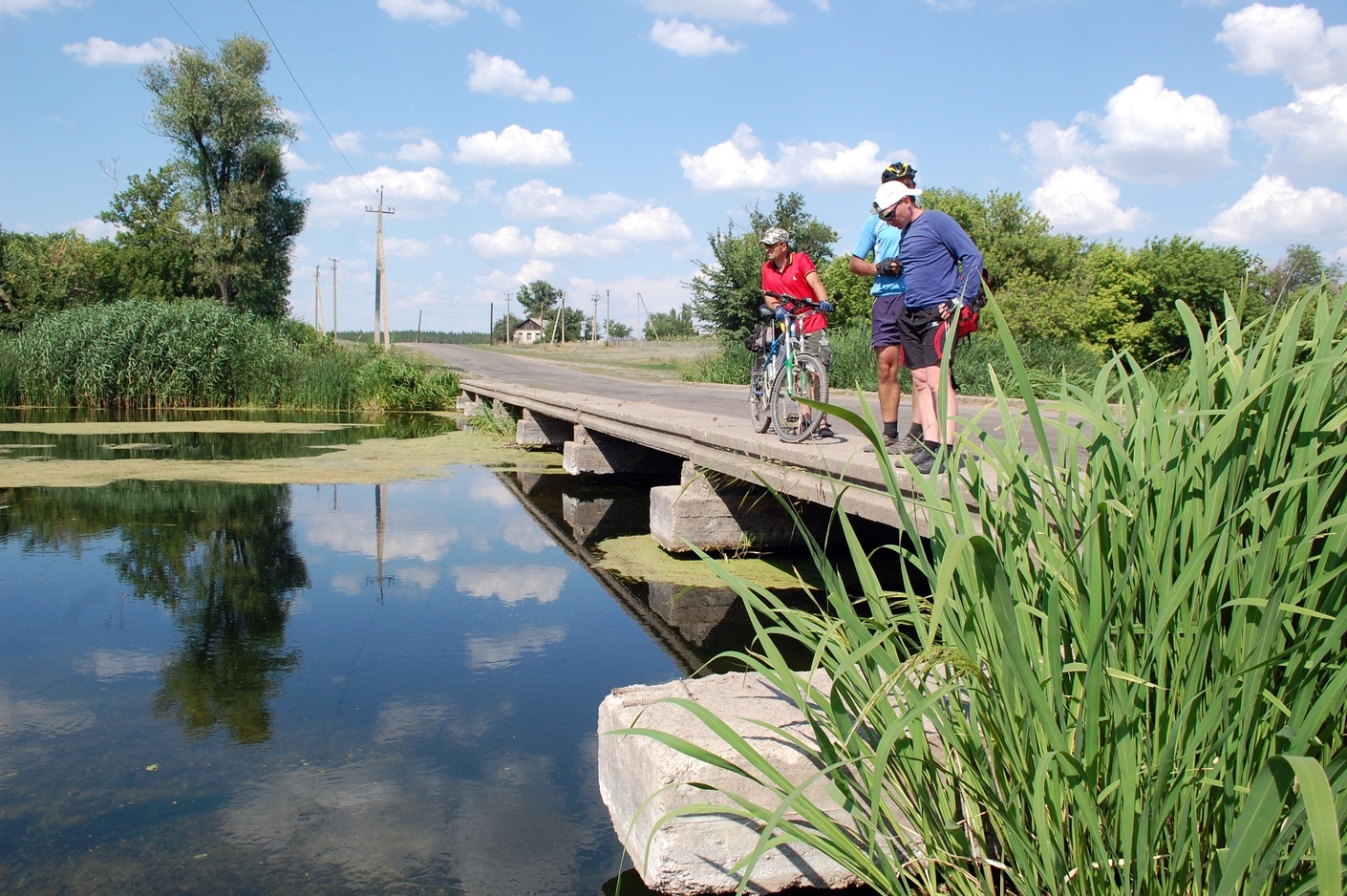
Peaceful Shulynka, summer 2013
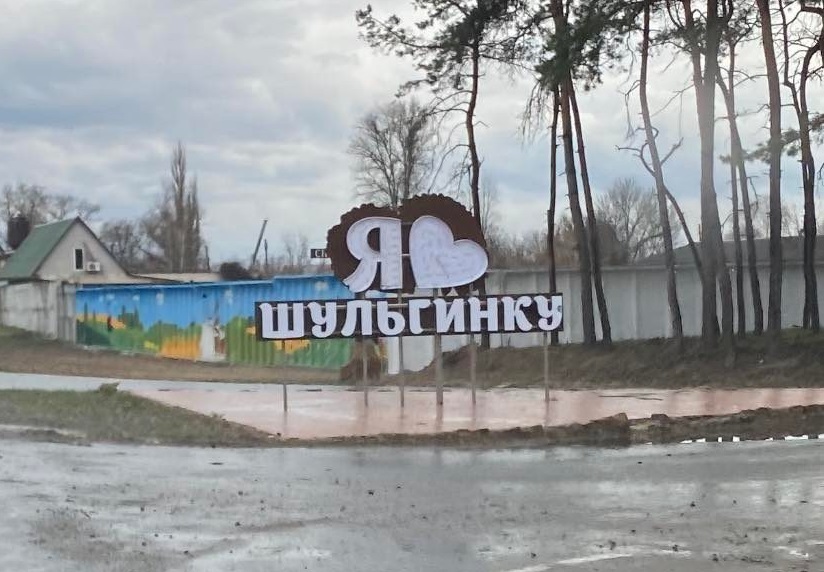
Shulhynka prior to the full-scale war, autumn 2021
‘Silent occupation’ and Ukraine in the heart
You mentioned the ‘silent occupation’ of the northern part of the Luhansk region. Please tell us how russia is attempting to integrate these territories. Is it succeeding?
It is not original: the method of the carrot and the stick. The more radical individuals were publicly deprived of their liberty, and stories about how ‘traitors were caught’ were subsequently shown on television. Such people were taken deep into russia, and the rest of society quickly learned their lesson and fell silent. However, this has not made them pro-russian. I know people in the occupied territories who still drive cars with Ukrainian number plates. At checkpoints, they claim there were queues at the MREV (Ministry of Internal Affairs Vehicle Registration Office), or that they did not have time. In reality, however, this is a sign of defiance towards the occupiers, and a signal of support to us. However, I would never advise being so frank. Silence is golden, and it is better not to risk putting yourself in danger. The time will come... I can see how many of my former fellow villagers view my Facebook page. However, they never leave comments or likes because it is dangerous. Nevertheless, these people have Ukraine in their hearts.
Are pro-Ukrainian activists still being arrested in the occupied territories?
Recently, only one person was arrested in the Shulhynka community: a man who had been involved with the Aidar Battalion in 2014. Why he remained under the russians despite his past is a mystery to me. After all, the russians persecuted anyone who belonged to the security forces, and here we have Aidar! To be fair, that man lived quietly in the village and never bothered anyone, but someone still reported him. The investigation is ongoing, and the trial will take place soon. We have already appealed to Dmytro Lubinets, the Ukrainian Parliament Commissioner for Human Rights, to include this man in the prisoner exchange lists. As he has no relatives in the territory controlled by the Ukrainian government, apart from us there is no one else who can do this.
From what you say, life in the occupied territories is far from easy. In theory, people should gradually be fleeing from there. Are they?
No, as I said, they are mainly fleeing from the Siverskodonetsk and Bakhmut districts. Some of our people who initially fled to russia are now returning, though. They thought they would be treated as equals there. But it turned out that they are just seen as ‘khokhly’ (a derogatory term for Ukrainians). By the way, the residents of the Ukrainian territories that were occupied in 2014 also often do not accept the ‘new citizens of the young republic’. Many people disapprove of them and ask where they were ‘when the war was raging for eight years!’ Sometimes, even doctors in Luhansk refuse to treat them.
Are the hostilities affecting the Luhansk region? Are people afraid to return?
Our military strikes targets with great precision. No residential buildings have been damaged by shelling; all of the firepower is directed at fuel tanks, ammunition depots and military equipment of all kinds. And now, in Novyi Aidar, Lysychansk, Rubizhne, Svatove and Starobilsk, it is becoming somewhat uncomfortable for the russians.
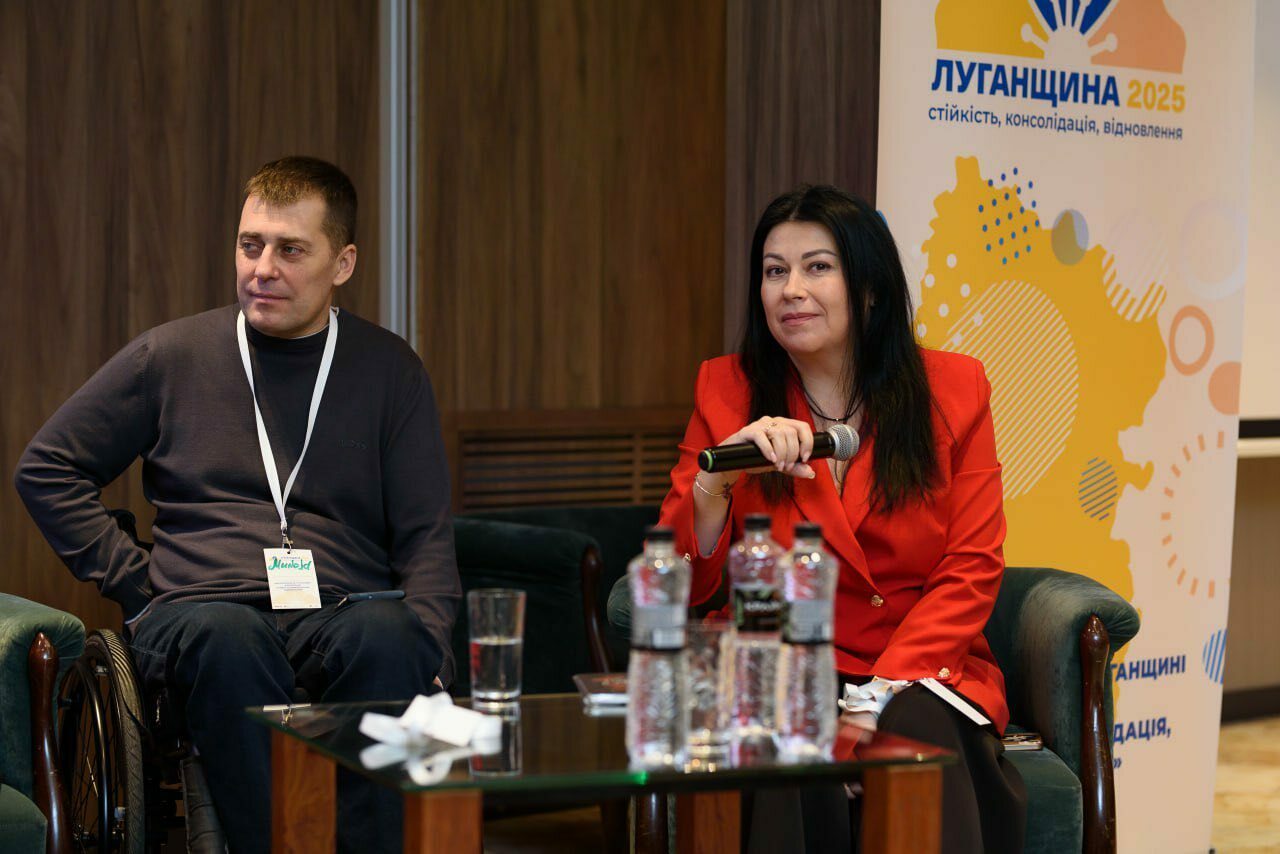
Natalia Petrenko speaking at a panel discussion entitled ‘Strategic vision of the role of the Luhansk region during or after the occupation’, which was part of a conference on relocation and sustainability in the Luhansk region. December 2025
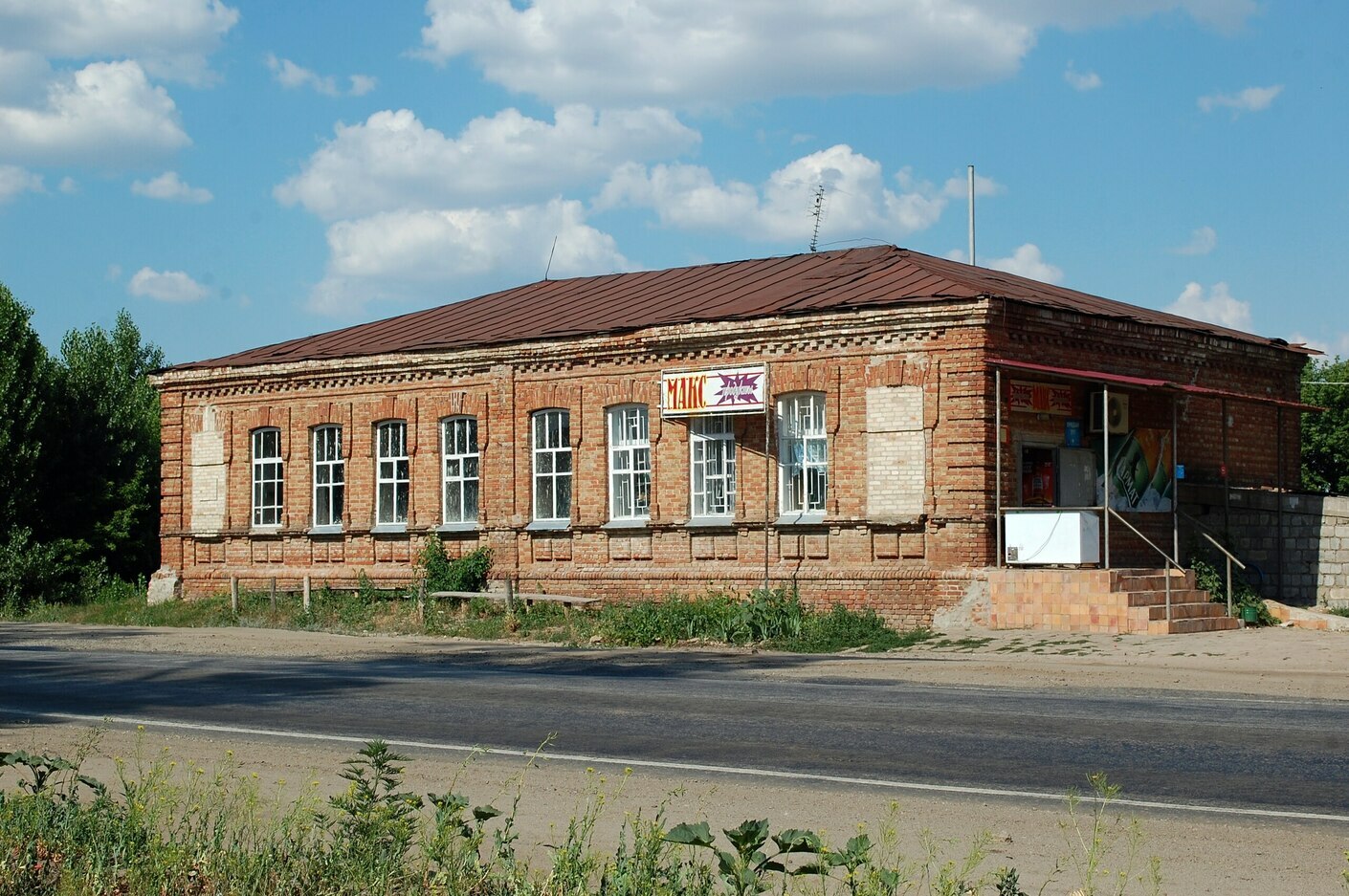
Shulhynka before the full-scale war
How Ukrainians have lived in a reservation since forever
How widely spoken was Ukrainian in your community before the occupation? How widely spoken is it there now?
I have access to several Telegram channels created by the occupying authorities. People know that they are being monitored, of course, so they try to write in russian. However, they have never studied russian and have no idea how to speak or write it. Sometimes they write things so funny that they make me laugh. In Soviet times, all our schools were Ukrainian-speaking. My mother went to a Ukrainian school, as did I and my children. In Shulhynka, people have spoken Ukrainian exclusively for centuries. This makes the efforts of the occupying authorities, who are breaking people and convincing them that the language they have spoken all their lives never existed, look even more grotesque. And that they themselves are actually russian, even though none of our people have ever considered themselves to be so.
Does this mean that the occupiers immediately removed the Ukrainian language from the school curriculum?
No, not immediately. It was an optional subject during the first year of the occupation. Then the russians took Tolstoy and all sorts of long-forgotten writers and poets off their dusty shelves and convinced everyone that they were ‘wonderful and beautiful’. They also claimed that ‘your Shevchenko thought in russian’ and that ‘your Gogol was russian at heart’. It is so wild and sad! Ukrainian children are forced to listen to and learn this nonsense. I heard about one such case. One boy had to learn russian ‘cases’. He became so disgusted with it over time that he asked his mother never to say that ‘idiotic word’ in front of him and covered his ears when she asked if he knew the cases. Believe me, there are no russians here; we have been Ukrainians since forever.
How many children are born in Shulhynka nowadays?
Unfortunately, there are many; 270 students attend our lyceum. On the other hand, a similar number have left for the unoccupied territories and Europe. We keep in touch with them. Personally, I am in favour of offline learning and I recognise that there are relatively safe communities in Ukraine where children can attend school instead of spending all day in front of a computer. However, we do not have the moral right to deprive children living under occupation of the opportunity to receive a Ukrainian education. Even if there are not many of them...
How many is not many?
Each year, two to five children find a way to contact us and sit exams in all subjects in order to obtain a Ukrainian-style certificate. The training takes place in strict secrecy via encrypted communication. Students complete many tasks independently and submit them for review. These are the children who later leave for territory controlled by the Ukrainian government. This year, for example, two children arrived, passed the National Multi-Subject Test successfully, and enrolled at universities in Ukraine, which is free from russians.
What do the parents of these children think about this decision?
Their parents support them. You simply cannot imagine what life in the ‘LPR’ is like. It is a real reservation! For its inhabitants, some university in Rostov is the crown jewel of their dreams. Even then, the boys are not allowed to go there and cannot appear near the russian border without special permission. They also have to take exams according to russian regulations. How can a child who has never spoken or written russian possibly pass a russian language exam?..
News on Facebook reports that schoolchildren and students from the ‘LPR’ are taking part in the UAV championship. What are your thoughts on the militarisation of children in occupied territories?
Yunarmiya, the organisation primarily responsible for this militarisation, arrived shortly after the military. Now, children are building drones in their labour classes. This is happening not only in occupied territories, but in all russian schools. We can now return to the beginning of our conversation about the role of military administrations. Through our connections with people, we encourage them to leave and experience freedom and the ability to speak their own language.
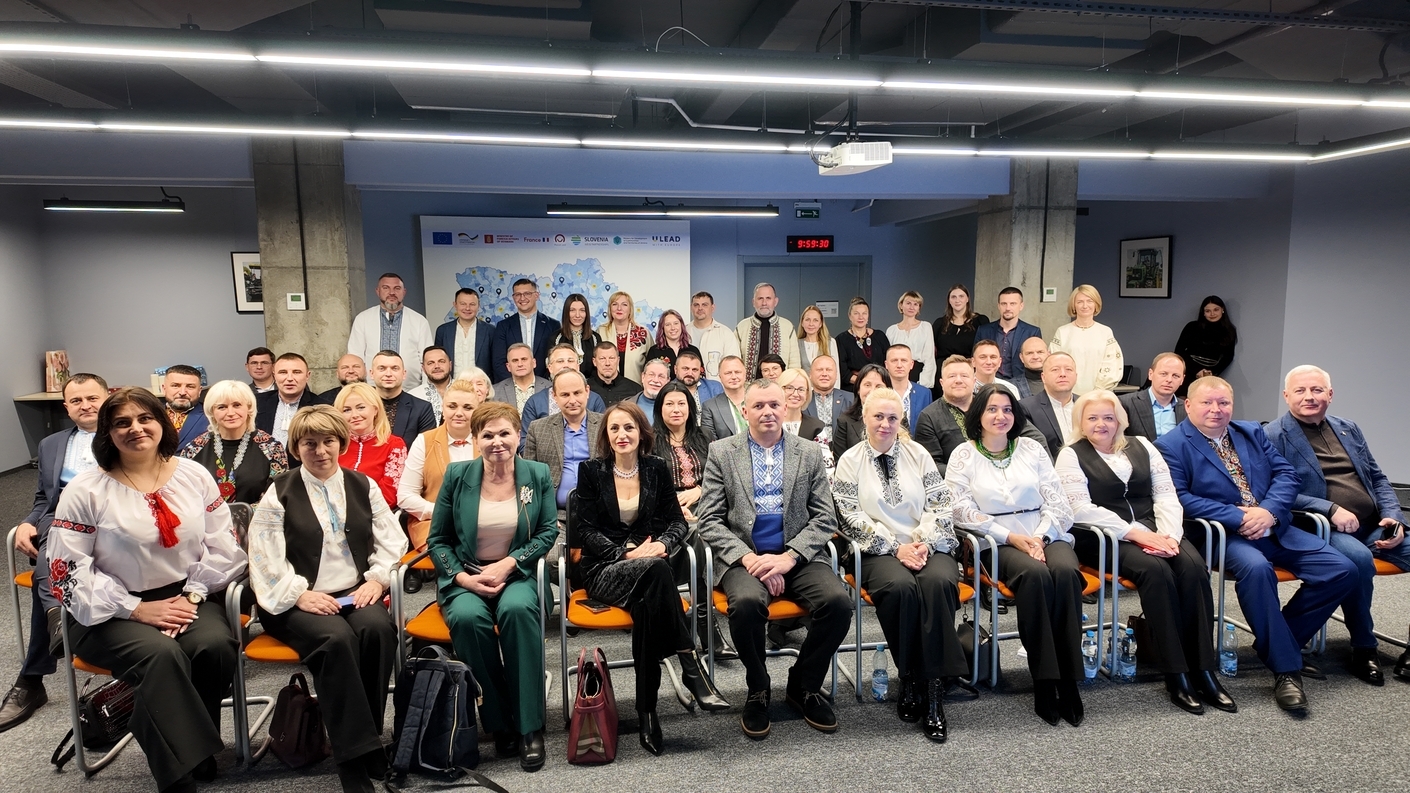
This was last year’s meeting of the U-LEAD Leaders League. Even before the full-scale invasion, the Shulhynka community enlisted the support of 25 other Ukrainian communities at the same meeting
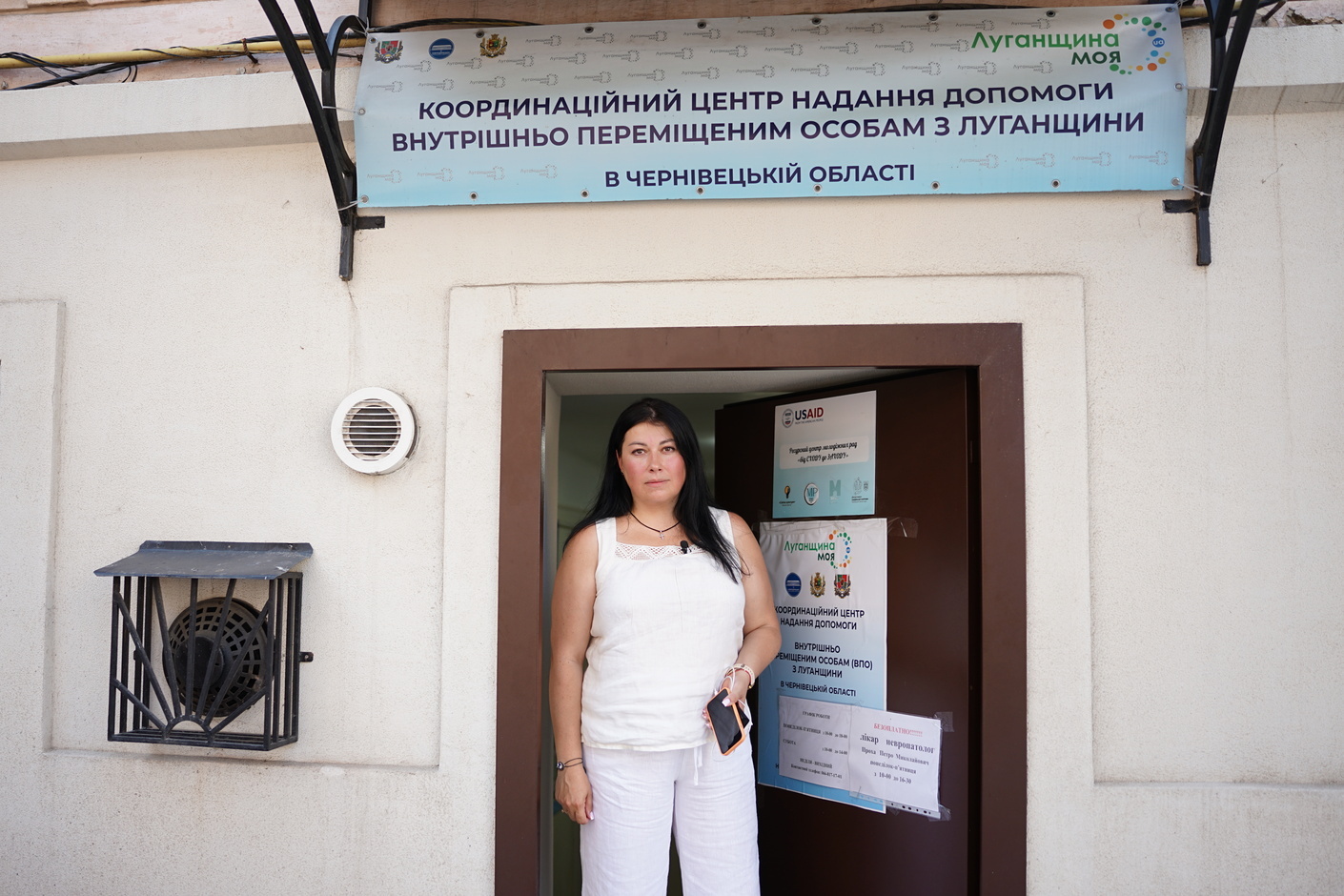
Natalia Petrenko at the door of the humanitarian hub in Chernivtsi, where residents of Shulhynka can receive assistance
How to separate a Ukrainian from their home?
Can people be persuaded to leave?
Many more people would be willing to leave if there were at least some possibility of them obtaining housing. If the Shulhynka community were a combat zone where everything was destroyed, almost everyone would leave. But when your home is intact and you are offered, at best, a room in a dormitory somewhere unknown, the situation is completely different. Well, again... We are Ukrainians... What Ukrainian would just leave their home like that? After all, our whole life revolves around it in one way or another.
In russia, all boys are conscripted into the army when they turn 18. How do the parents of high school students living in occupied territories feel about this?
They believe two things: that the war will end, and that they will be able to leave in time. However, this is nonsense because it is becoming increasingly difficult to leave. In russia, the policy is clear: every man must ‘pay tribute to his homeland’, meaning he must fight for it. In the territories occupied since 2014, most of the men have long since been conscripted, and many of them are now deceased.
Are people from the occupied territories being conscripted into the russian army?
On full speed! There is a total mobilisation, even though this has not been officially announced. In other words, there are no orders from the appointed local authorities. The general rule is that if you violate something – for example, if you fail to pay alimony – you will be sent to the battlefield immediately. Volunteers are also welcome, of course. To give you an idea, out of 5,000 residents in our community, at least 50 people have volunteered for the Ukrainian army – and those are just the ones I know about. Conversely, only a few have joined the russian army – marginalised individuals lured by russia with incentives such as mortgage loans and loans to buy Chinese cars. The graves of some of these lovers of easy money have long been flying flags.
You mentioned that you currently rent a flat in Kyiv. Is there any prospect of buying a flat?
That is my greatest pain. When the evacuation was announced in 2022, I took responsibility for those who did not want to leave. I convinced them. In spring 2022, only the families of military personnel left immediately; everyone else was reluctant to leave. But Ukrainians, as perhaps you recall, listened to Arestovich’s fairy tale for two to three weeks and believed it because they really wanted to believe it...
What about the YeOselya Programme and electronic vouchers for military personnel?
Few people can afford the initial deposit required for this programme, which is at least UAH 200,000. The paperwork is also very expensive. Many people also rent flats, so where are they supposed to get the money? Military personnel can receive electronic housing vouchers. However, there are many problems with these vouchers. You apply for a voucher and the system says your partner must confirm the application through Diya. However, Diya often fails to update the status of combatants. When you call the Ministry of Veterans Affairs, you find out that the hotline is not working ‘due to a high volume of calls’. A third problem is that the data does not match that of your partner. If even the slightest detail is different, the signature is blocked and it is impossible to tell what is wrong. What is more, only the first 4,000 people can receive assistance. All of this is disappointing.
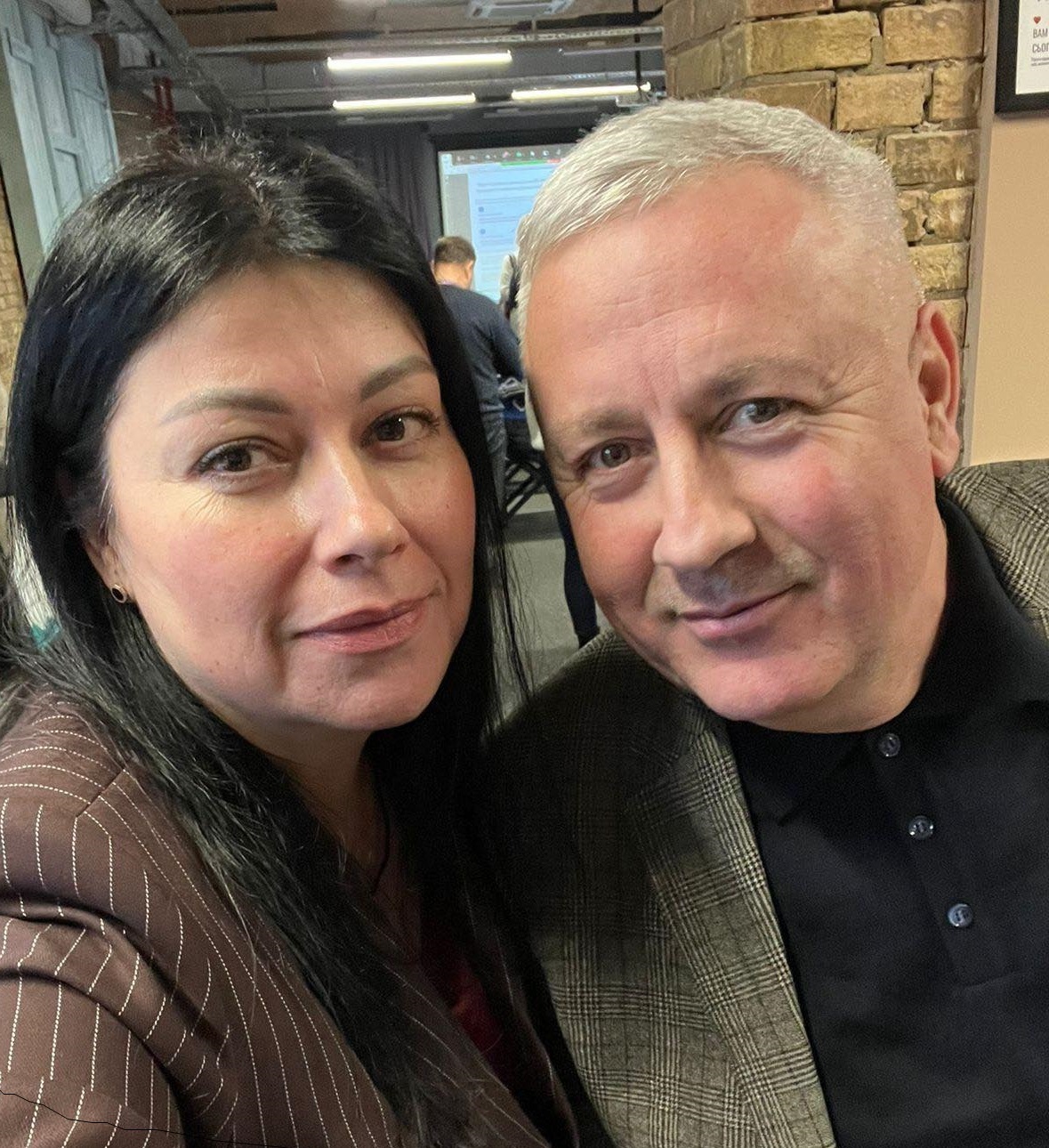
Natalia Petrenko and Vasyl Mitko, Mayor of Nikolske in Mariupol district and member of the Council on IDP Issues at the Kyiv City Military Administration. Under this photo, Natalia Petrenko wrote: ‘Only those who have lost everything (but not their faith in Ukraine) as a result of the war and temporary occupation of our communities by russian invaders fully understand the problems of our residents...’
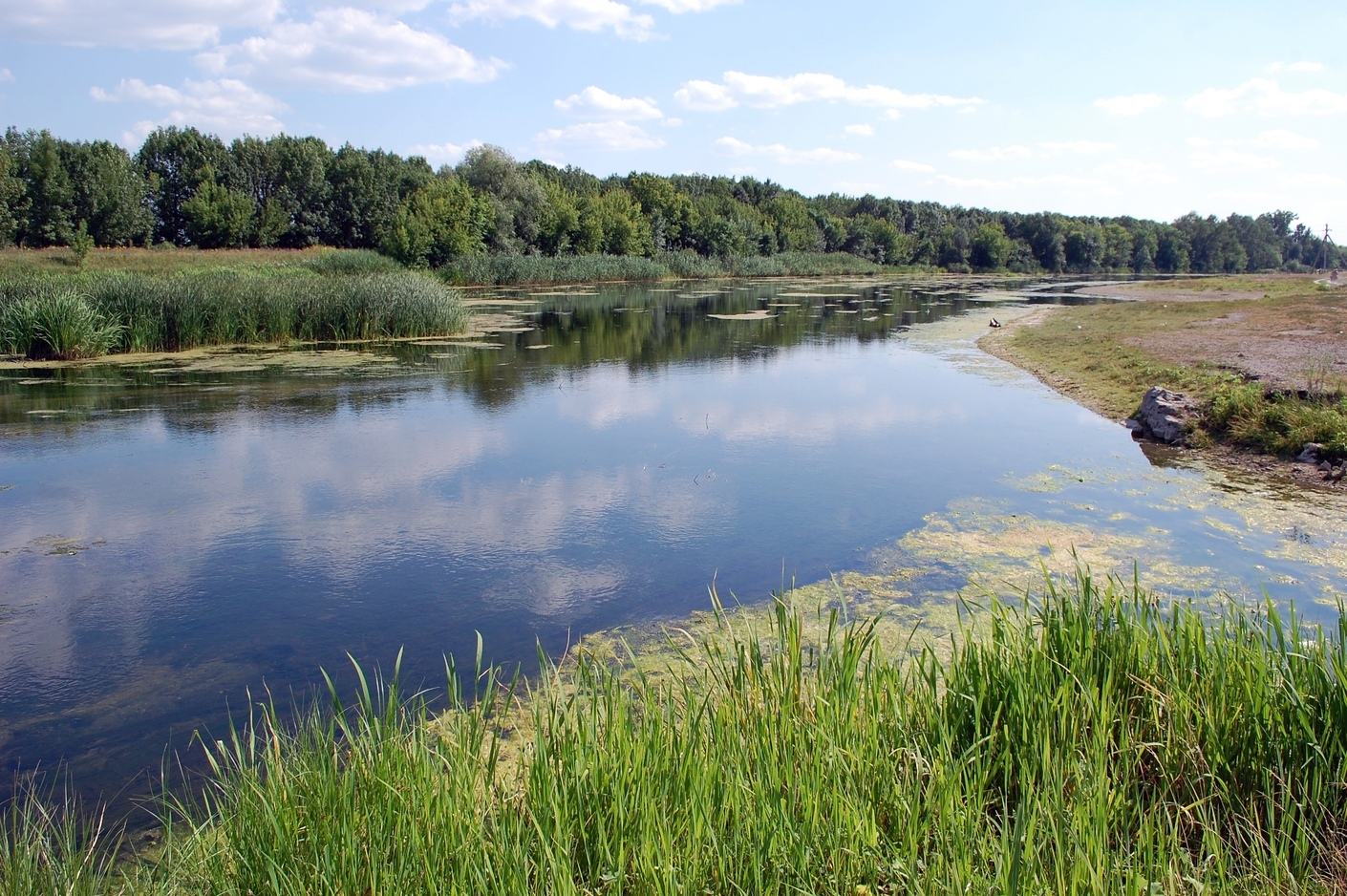
The Aidar River in Shulhynka, before the full-scale war
Collaborators
How are local businesses coping, particularly the farmers who formed the backbone of your community’s economy?
In the neighbouring Svatove community, where there was fierce fighting, many farms were damaged. Many farmers were pressured to leave, but almost all of them stayed in our community. Since farmers were the main employers, people stayed too. Of course, the farmers re-registered because if you do not re-register, you immediately lose everything. It is a very simple approach.
In your opinion, is this collaboration?
It depends on how you look at it. If we are talking about the fact that the russians are using the money paid by farmers to buy ammunition and missiles, then this is, of course, collaboration with the enemy. However, if we consider that farmers are ensuring the stability of the Ukrainian population in this territory and preventing famine, we could argue that they are operating within the humanitarian sphere.
Is the Shulhynka Military Administration bringing criminal cases against collaborators?
This is what hurts me. I would very much like these people to be held fully accountable for their actions. That is why I am involved in drafting a law on relations with people who have left or still live in temporarily occupied territories. The working group is led by Ukrainian MP Tamila Tasheva, who was the permanent representative of the President of Ukraine in Crimea until November 2024. The working group also includes representatives of the Ministry for Development of Communities and Territories. We are trying to develop fair rules for this situation. We usually learn about the collaboration of certain individuals through russian Telegram channels. However, it is proving difficult to prosecute such individuals.
Why is it not easy? Could you give an example to help explain?
Sure, why not! Here is one. A man got a job with the occupation administration, heading up a secondary unit. He had probably dreamed of this position all his life – or perhaps he had never even dared to dream of such a thing. Then a ‘window of opportunity’ opened up for him. He diligently performs his duties, attends all official events of the occupation authorities and poses for photographs with St George’s ribbons. He generally feels great. We are suing him. Then, suddenly, his legal representative – a Ukrainian lawyer – appears at the trial. It turns out that traitors to their homeland have the right to a lawyer! This lawyer completely discredits my testimony about this man’s voluntary cooperation with the enemy. She claims that he was forced to cooperate, that his fingers were almost stuffed in a door, and that he is poor, unhappy and unwell, and cannot leave his elderly parents. But you have to live on something! Besides, his parents also work for the enemy! I burst out, addressing the lawyer, ‘I have a feeling that you are on putin’s side and against Ukrainian statehood!’ She calmly replies, ‘No, it’s just my job!’ So much for access to fair justice! How is this possible? Perhaps we should invite putin to testify. He could inform the court about the ‘Nazis’ in Ukraine and the ‘oppression of the russian-speaking population’. The court will probably acquit him. It is just crazy! We have a lot of work to do on cases like this! We have verdicts on starostas, school principals and cleaners who collaborated. But where are the verdicts concerning the local elite? At most, they are declared suspects. None of the major collaborators have been convicted. Ukraine only announces suspicions against them, which they laugh at and use to their advantage. Due to the sluggishness and uncertainty of our legislation throughout the 12 years of war, it turns out that we are helping them.
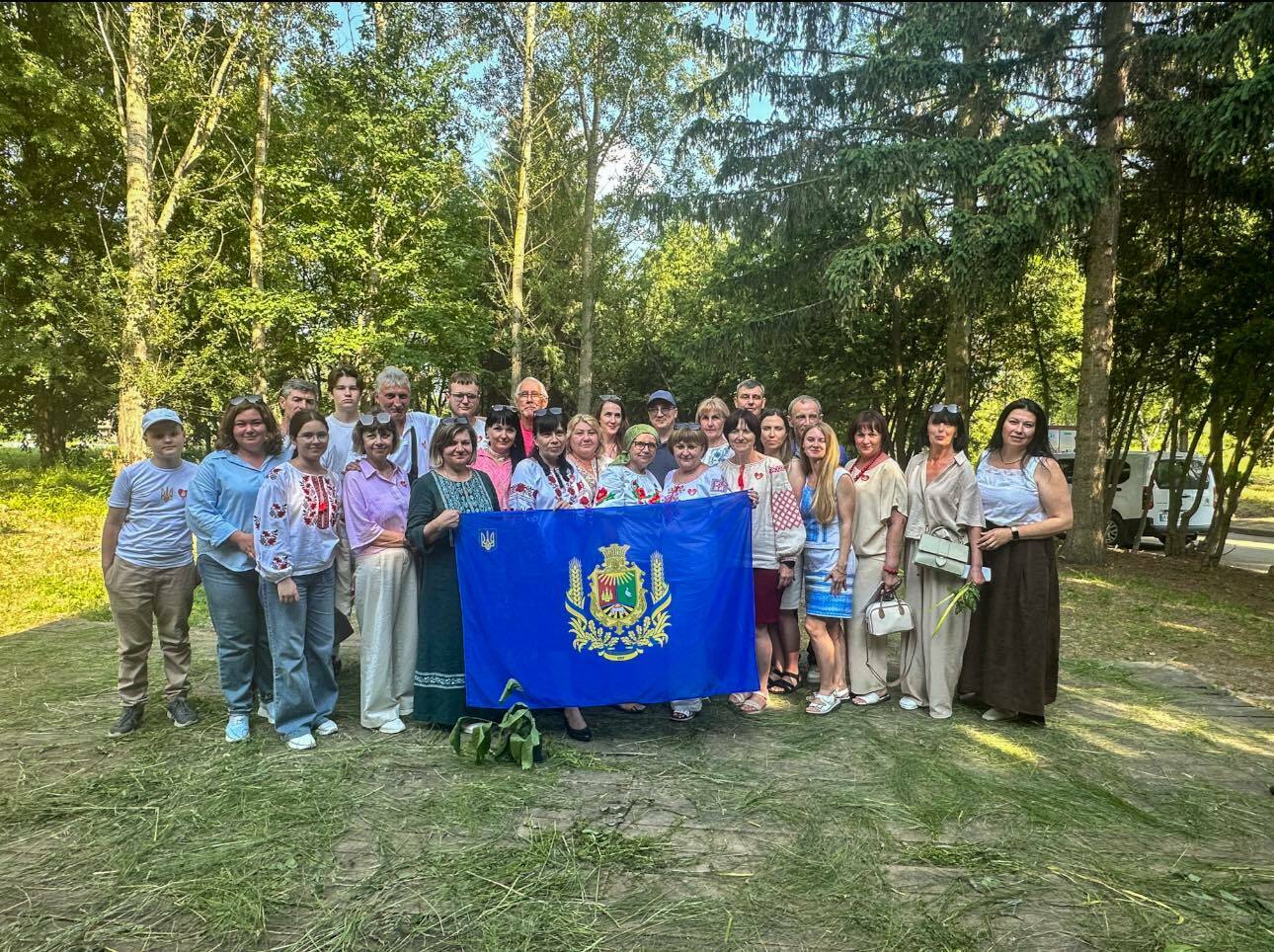
Residents of the Shulhynka community at a celebration organised by the Shulhynka Military Administration at the Pirohiv Museum in Kyiv
‘Shoulder-to-Shoulder’ with the whole of Ukraine
You often participate in forums dedicated to local self-government issues. How important is this for you, as the leader of an occupied community?
You know, I have a strong desire to speak about people from occupied territories. I do not want Ukrainians to say, ‘It’s all because of them!’ We never called for putin; we always spoke Ukrainian and we are and always have been patriots. Many of us are.
What is most important for you and your community right now when you think about the future?
For me, the most honest answer is that everything is very complicated. We need to consider everything we have lost, no matter how small the detail. After all, we have lost more than just territory... What is your favourite mug, your favourite room, the house you grew up in? This covers a whole life! I realise this may sound arrogant, but what other way is there to put it? Familiar settings and the feeling of home are extremely important to Ukrainians. For us, our home is a fortress! We have also lost our connection with our ancestors. After all, I myself cannot go to my mother’s grave, nor can I ask anyone else to do it for me. Because they will later be asked how I got in touch with them. This is our sacrifice, whether conscious or forced, for the sake of preserving our country, statehood, and identity.
In an interview with Decentralisation, Pavlo Kuzmenko, Mayor of Okhtyrka, argued against the maintenance of military administrations in occupied territories as a means of saving money. He argued that the employees of these administrations have virtually nothing to do and that displaced persons should be dealt with by host communities anyway. What do you think about this?
I understand such comments. They do not arise out of nowhere. However, it is important to look a little deeper and not to oversimplify everything in terms of ‘necessary’ versus ‘unnecessary’. The problem lies not only with the administrations themselves, but also with the fact that the state has not yet defined clear rules: who is responsible for what, what powers the administrations have and how they are financed. Due to this uncertainty, many of our decisions appear to be merely formal, and people's genuine requirements often get overlooked in reports. Nevertheless, we have achieved a great deal: we have restored documents and registers and organised medical and social assistance for our residents. Now they need housing and social support... Relocated military administrations were not set up to be ‘special’. They exist to ensure that the state remains present in the lives of communities, even when those communities are temporarily occupied. They perform tasks that no one else can carry out. These include protecting the interests of the community in court, keeping records of children, preserving public property, planning reconstruction and supporting their people, even if they do not have IDP status. One more important thing: these are people who remain Ukrainian citizens, work within our legal framework, pay taxes, and support the army. For them, the community is not an abstract concept. It is their home, even if it is currently occupied. We are talking about people, historical memory, responsibility and future recovery.
Many communities on the front line and on the border with russia receive assistance through the ‘Shoulder-to-Shoulder: Cohesive Communities’ Project. Are communities in the occupied territories involved in this Project?
At first, they ignored us. We are not fortresses on the border with ‘darkness’, but are instead located deep behind the russian army’s lines. However, the leaders of the occupied communities campaigned for their inclusion in the Project. Recently, we were finally included in the ‘Shoulder-to-Shoulder’ Project. We regret losing so much time... This is because one of the areas of our work involves creating material reserves for displaced persons, as well as planning for their possible return home after the de-occupation of our communities. We have developed weekly and monthly plans for this return. We have also purchased various pieces of equipment, including generators, fuel, shovels, torches, and inflatable boats, at considerable expense. All of this is in accordance with current government regulations. Dear government officials, please amend the resolution on the use of the reserve fund to allow this property to be used in host communities! We will then gladly allocate it to our partner communities under the ‘Shoulder-to-Shoulder’ Project. They really need all of this, especially now during blackouts.
Have you decided on partners for this Project yet?
Yes and no. Even before the full-scale invasion, U-LEAD brought together 25 community leaders for training. We became friends and signed a memorandum of cooperation with each other at the end of the course. This means that I already have people to turn to for the ‘Shoulder-to-Shoulder’ Project. I think our first partner will be the Novovolynsk community, where our young people recently implemented a wonderful microgreen-growing project run by U-LEAD. Our young people also received lessons in financial literacy and communication in Novovolynsk. They also made friends and had the chance to stay in Novovolynsk, a really nice city with a bright future.
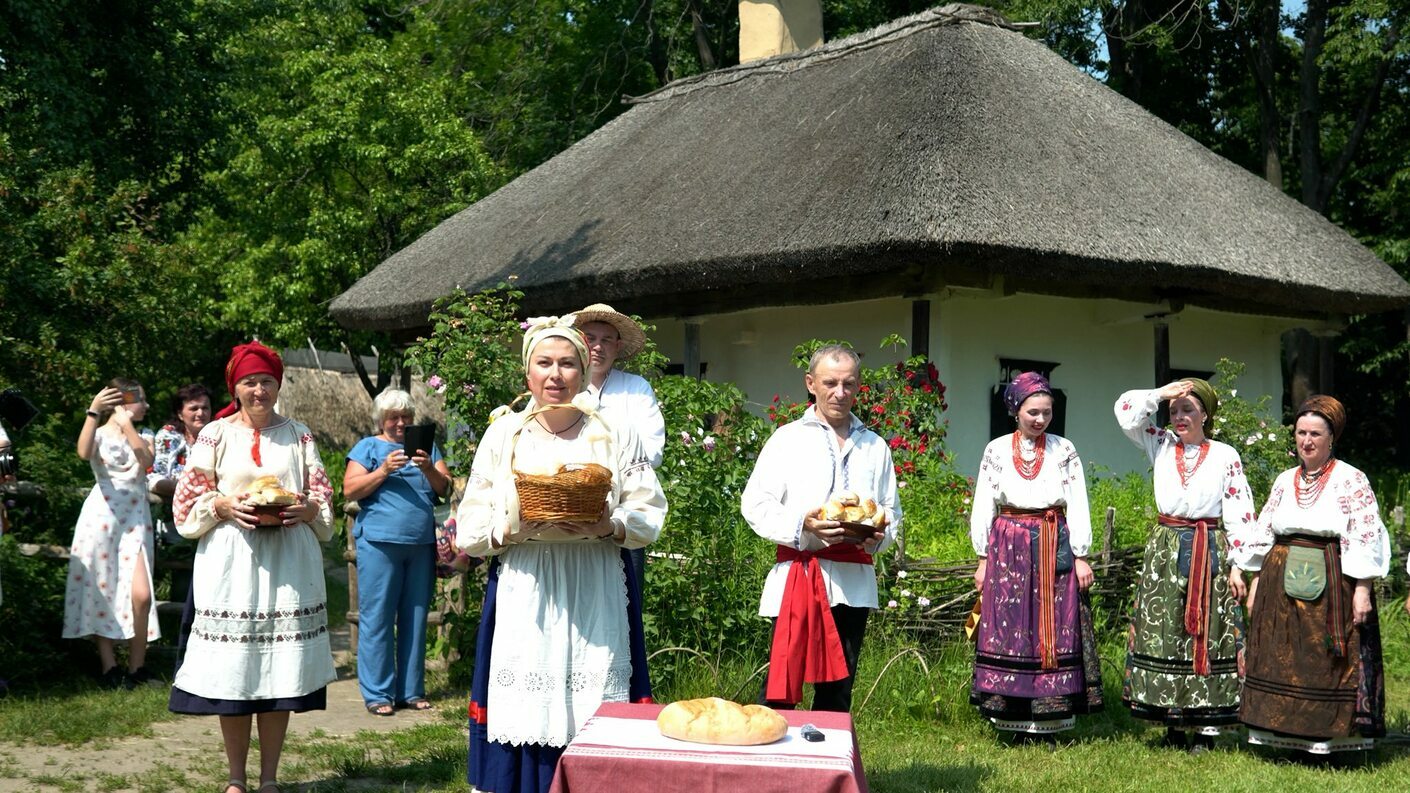
Residents of the Shulhynka community at a celebration organised by the Shulhynka Military Administration at the Pirohiv Museum in Kyiv
‘All men must serve in the army, and we will manage on our own…’
What do you consider your greatest achievement as Head of the Military Administration?
We have successfully registered our temple holiday and the tradition of baking so-called sopka pies in the National Register of Intangible Cultural Heritage. These pies are made from a mixture of flour and pork cracklings. These pies once saved people during the Holodomor, after which they became a popular local culinary highlight. This year, we also held a big celebration at the National Museum of Folk Architecture and Folkways of Ukraine ‘Pyrohiv’. Looking at these people, we could truly say, ‘Here it is, our community!’ Because a community is made up of people. We maintain contact with our compatriots in Europe, which is one aspect of our work. When a person in Portugal suddenly receives birthday greetings from the head of their community, it means a lot. I am sure that the older generation, especially those who held a certain status in Ukraine, will return as soon as hostilities cease. But we will have to fight for the children…
How can we win this battle?
We must encourage young people to get involved in decision-making... At the first session of the Shulhynka community council, I suggested to the councillors that we set up a youth council. The councillors, who are mostly elderly, jokingly replied that they would rather support the creation of a council of elders. Nevertheless, we created a youth council and a dedicated space for it, providing young people with the opportunity to influence decisions within the community. Then, when we set up the Institute of the Third Age, it was our own young people who taught the elderly how to use computers. The result was wonderful: the older generation saw that young people could be serious and useful; they were not just hooligans. The young men and women, for their part, saw their grandparents as people who loved learning as much as teaching. This is how we must win hearts and minds of young people. I can give the example of my younger son. He loves his country very much and wants to live here. He says, ‘We need to love our country so much that other people around the world can see it. Then they will come here and invest their money. Ukraine will then be like a magnet for them...’ My younger son is now 17, and some people here are advising me to send him abroad before it is too late. When he heard this, he responded, ‘Why abroad? If my father and brother are here, I won't leave Ukraine!’ As his mother, I am very concerned about him, but what can I do? The choice is his!
Are your husband and elder son in the Army?
They are. Only women work in our administration. That has been my principled position from the outbreak of the full-scale war. We do not need ‘irreplaceable’ specialists – we can replace anyone. Right now, men's hands and strength are needed on the battlefield. This primarily applies to those who lived in the occupied territories. They should be the first to fight for their land. They should not avoid this responsibility by seeking ‘strategically important’ positions. It is dishonest and insincere. This is why 14 women are working in our military administration, 7 of whom have male relatives in the Army: husbands, brothers and fathers...
Do you regret anything? Have you missed any opportunities during these terrible four years of war?
No, I have no regrets. Were it February 2022 now, I would do everything the same way. This war is pure evil, inflicted on us by russia. If any of our compatriots cannot see this, then they simply lack a Ukrainian identity. It is not 2014 anymore, when many people still had illusions. Everything is obvious now. If someone says, ‘We are still far away from that!’, they are as mistaken as we once were. To resist russia, we must unite our identity, dignity and sense of responsibility, embracing everything that makes us Ukrainian. Then we will become much stronger.
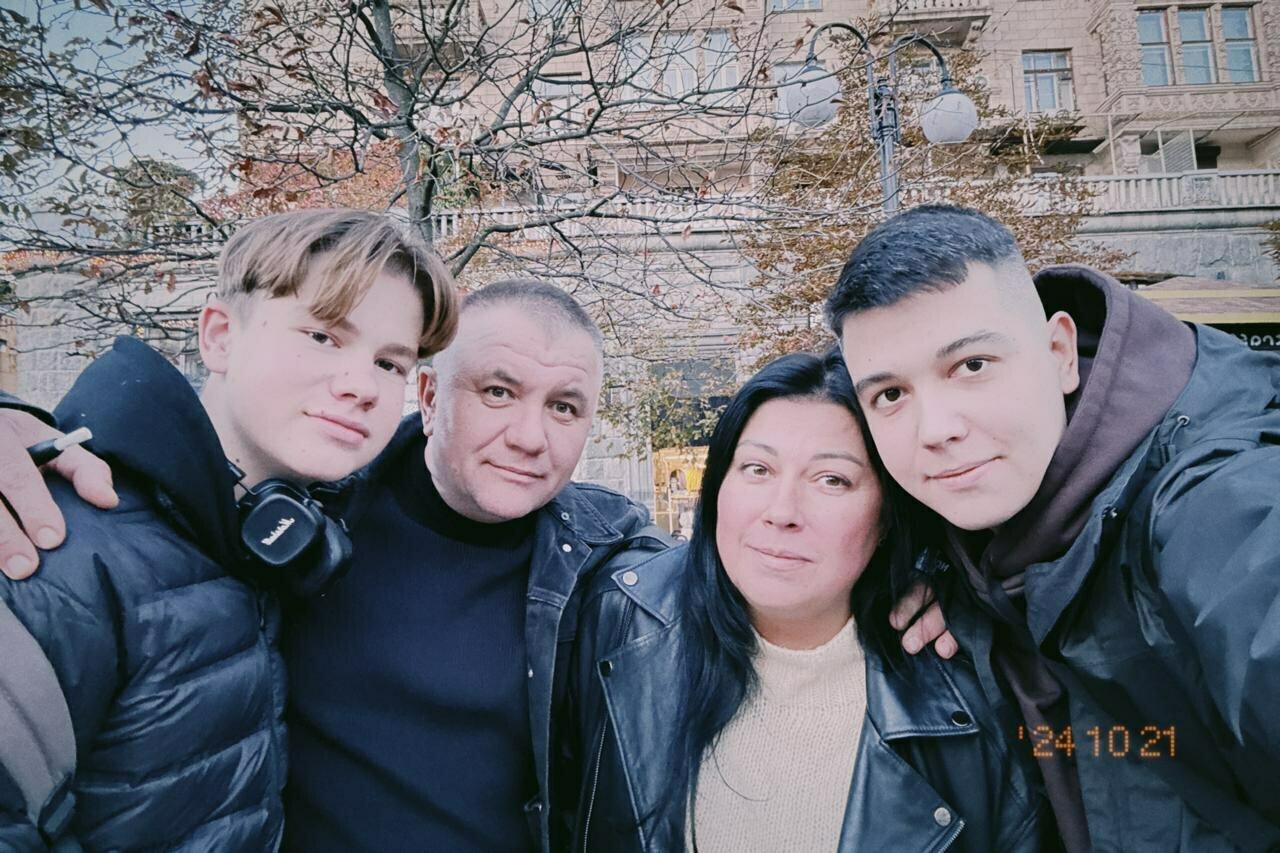
Natalia Petrenko with her husband and sons. Her elder son and father are currently serving in the Armed Forces of Ukraine
26 December 2025
В Україні стартує проєкт «Будинки майбутнього: екологічне модульне житло»
В Україні стартує проєкт «Будинки майбутнього:...
Громадська організація ДЕСПРО долучається до проєкту державно-приватного партнерства «Будинки майбутнього: екологічне...
25 December 2025
«Більше, ніж місто: як Львів будує метрополію...
Автор: Дмитро Синяк Україна все ще будує власну модель децентралізації. Наступним логічним кроком після...
23 December 2025
Швейцарська підтримка сприятиме реалізації...
5 агенцій регіонального розвитку отримають гранти на реалізацію стратегічних пріоритетів у рамках програми...
23 December 2025
Open Call: Partnership in Preserving and Improving Access to Public Services
Open Call: Partnership in Preserving and...
The Swedish–Ukrainian Polaris Programme: Supporting Multilevel Governance in Ukraine announces a call to support...