The fortress in ruins. Head of Huliaipole Military Administration on evacuation lottery, people in basements, and the price the city is paying for defending Ukraine
Serhii Yarmak, Head of the Huliaipole City Military Administration, on the difficulties of evacuation, the complete destruction of the city by the russian army, and the residents’ hopes of returning there at any cost
By Dmytro Syniak
For almost four years, the small city of Huliaipole has been a thorn in the side of the russian occupying forces. No matter how hard it tried to overcome the Ukrainian defence line built around the city, the russian army was unable to succeed, and all attacks usually resulted in a one-way trip for russian soldiers. In recognition of its extraordinary resilience and outstanding role in defending the state, the President awarded Huliaipole the honorary title of ‘Hero City of Ukraine’ on 1 October this year. However, in recent months, the front line has moved critically close to Huliaipole, which continues to hold out heroically. We spoke to Serhii Yarmak, Head of the Huliaipole City Military Administration, about the extremely challenging circumstances facing the community.

Serhii Yarmak, Head of the Huliaipole City Military Administration, during the online award ceremony for participants in the children’s competition ‘The Best New Year’s Toy for the Huliaipole Christmas Tree’ on 4 December 2025
There is not a single intact building left in the city, but about 150 residents live in the ruins
Over two years ago, in an interview with Decentralisation, you said that you loved the Armed Forces of Ukraine as much as your wife, children, and parents. Has your love remained as strong despite the approaching front line?
It has grown even more! I can see with my own eyes how much every metre of Ukrainian land is costing the russians! The losses they are suffering are insane! Huliaipole has become a mass grave for thousands of invading Muscovites. However, the russians are relying on their numbers and are not taking losses into account, so unfortunately they are slowly advancing. They are now advancing from Donetsk, trying to encircle Huliaipole and the Ukrainian troops stationed there. If it were not for strongholds like ours, the invaders would now be in Dnipro, Kyiv or even Lviv. As it is, we are stopping them here. However, we are paying a high price for this. Many of our men and women have died, and only ruins remain of our once wonderful, cosy city. The shelling continues every day. Artillery, clouds of drones, guided aerial bombs... Some days, 15–20 guided aerial bombs fall on the city.
How many buildings have been destroyed in the city?
It would be better to ask how many remain intact! Probably none... It is a great pity about those with architectural value, such as our local history museum, the city council building (which used to house the Zemstvo administration) and the Nadiia (Hope) steam mill... Everything has been destroyed. Two weeks ago, I was in the city and saw the destruction with my own eyes. What we once built with such difficulty has now been destroyed. We used to have a very beautiful, clean city; we used to clean the streets thoroughly until recently. Now they are completely covered in broken stones. This is the price that Huliaipole paid for defending all of Ukraine. Above all, it protected the people who live in Lviv or Kyiv, who go to work, go on holiday and buy furniture and household appliances for their homes. Our residents have nowhere to buy these things anymore because they have become homeless. Even those who have remained in the city live in basements.
Are there any people left in Huliaipole? In the invincibility points?
Yes, about 160 people remain. In total, there are 173 people in the community. I have been asking them to evacuate for four years, and to be honest, I am getting a bit fed up with it. In my opinion, they are either waiting for something to happen, or they are over 70 and simply want to ‘die at home’. The russian army is happy to provide this opportunity to anyone who wants it, including those waiting for it. In practice, it is much easier to wait for a guided aerial bomb, which will bury you alive in your basement, than it is to wait for a russian soldier who may or may not leave you alive. The military administration no longer delivers humanitarian aid or food to the city. I will not risk my people for this. The invincibility points have not worked for a long time because everything is broken.
So, are those who remain in the city destined to starve to death?
Not at all! We delivered so much food and other humanitarian aid to Huliaipole that it will last for at least six months. We also delivered lots of drinking water and filled all the city’s water towers. This can be used for technical purposes or for drinking after boiling. People also have generators, batteries, and a certain supply of fuel... However, I want to emphasise that we warned everyone in advance about the cessation of support, and we did so many times. We asked them, and even begged them, to evacuate. People refused. It was their conscious choice.
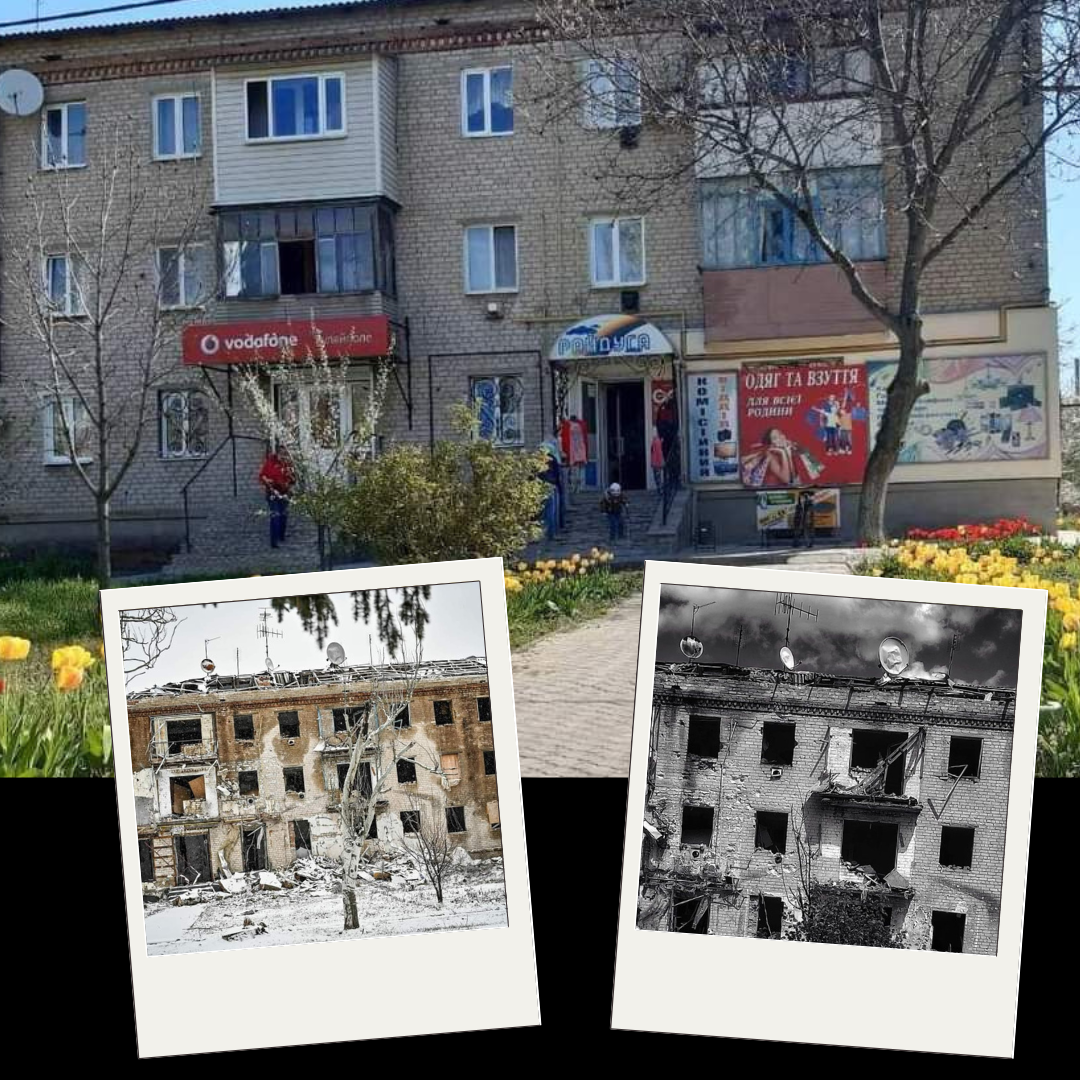
An apartment building in Huliaipole – before the war and now
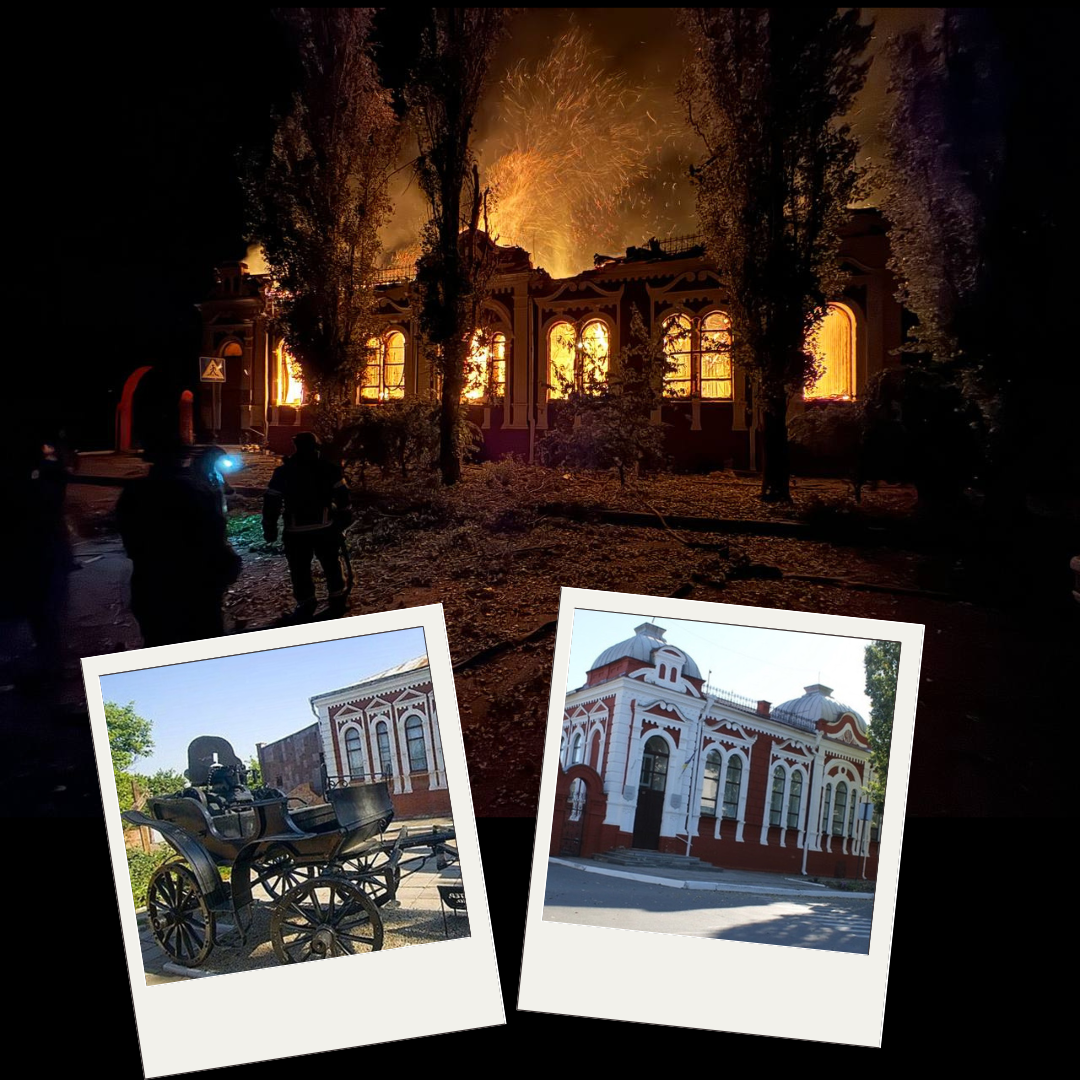
Huliaipole Local History Museum – before the war and now

The ‘Suchasnyk’ cultural and sports centre in Huliaipole – before the war and now
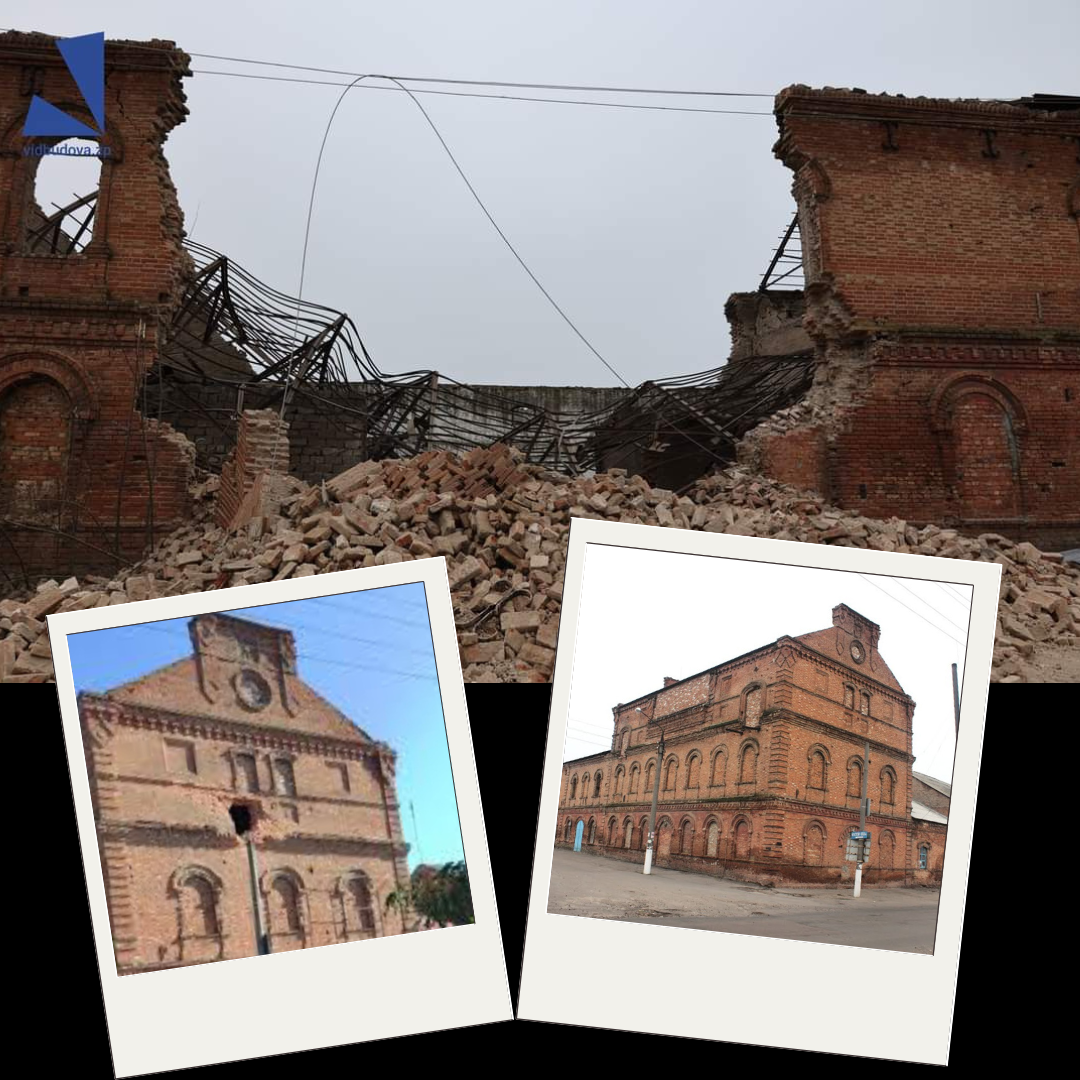
The architectural landmark of Huliaipole – the Nadiia (Hope) mill, built at the end of the 19th century – before the war and now
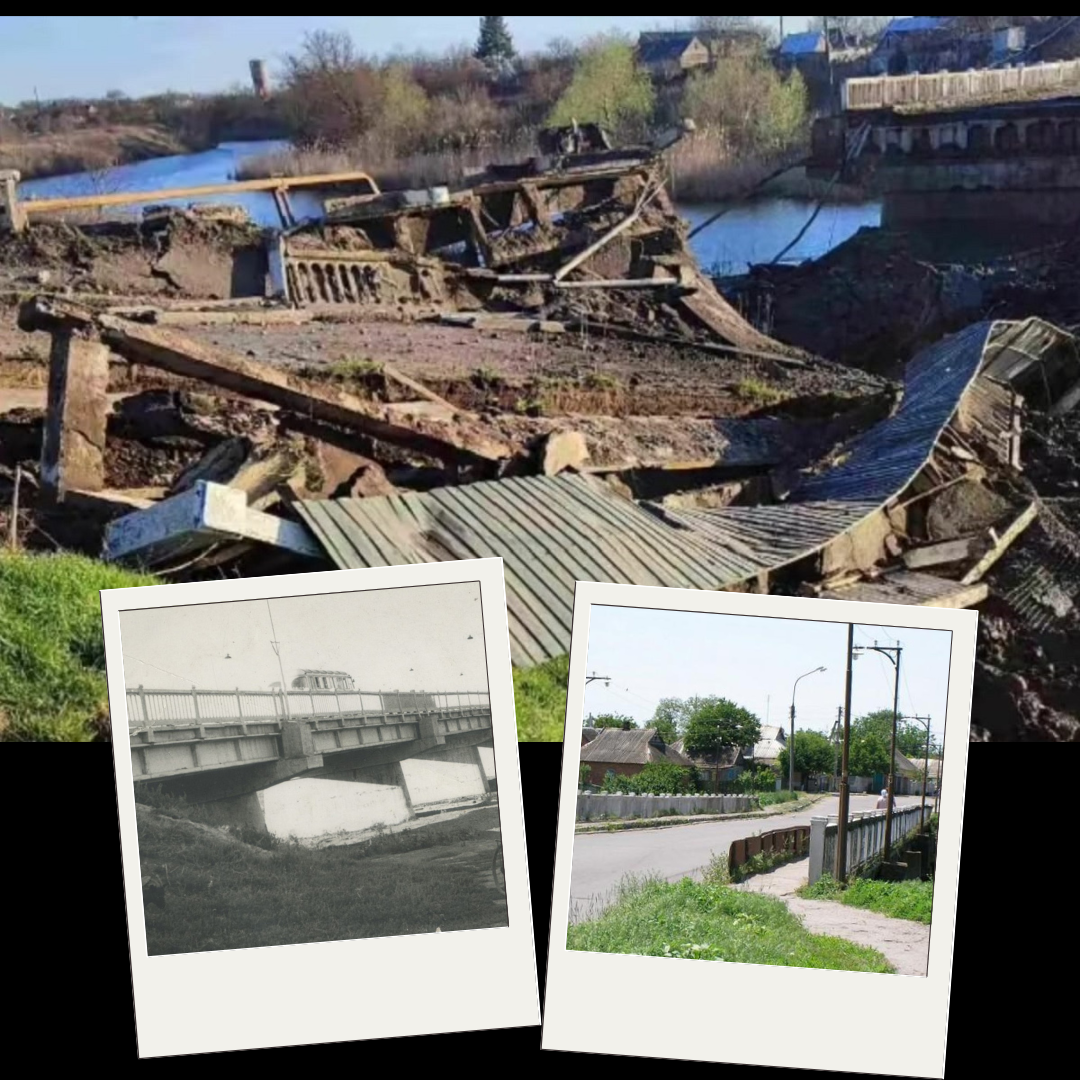
The bridge in Huliaipole – before the war and now

The central hotel in Huliaipole now
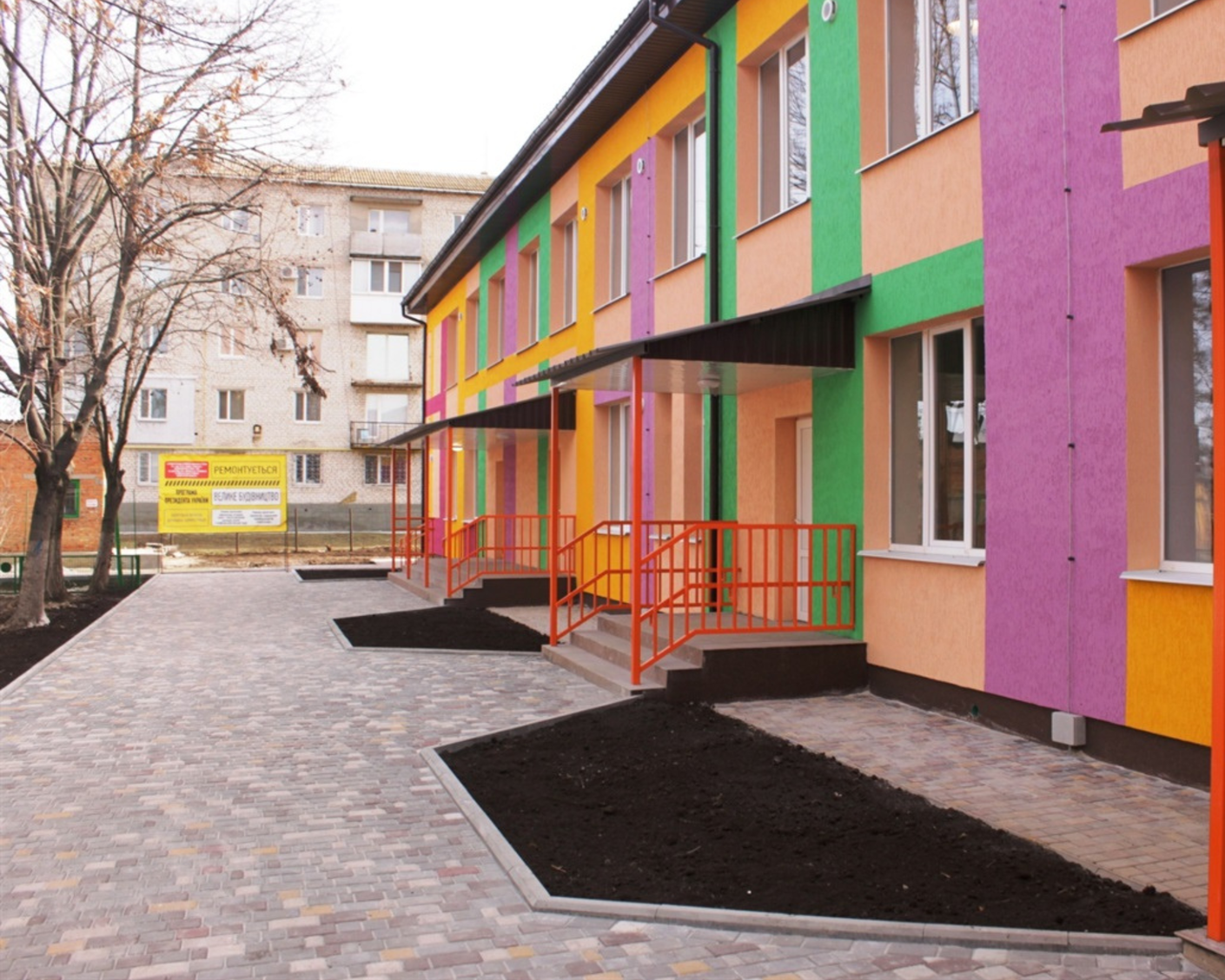
The ‘Sonichko’ (Sun) kindergarten before the war…
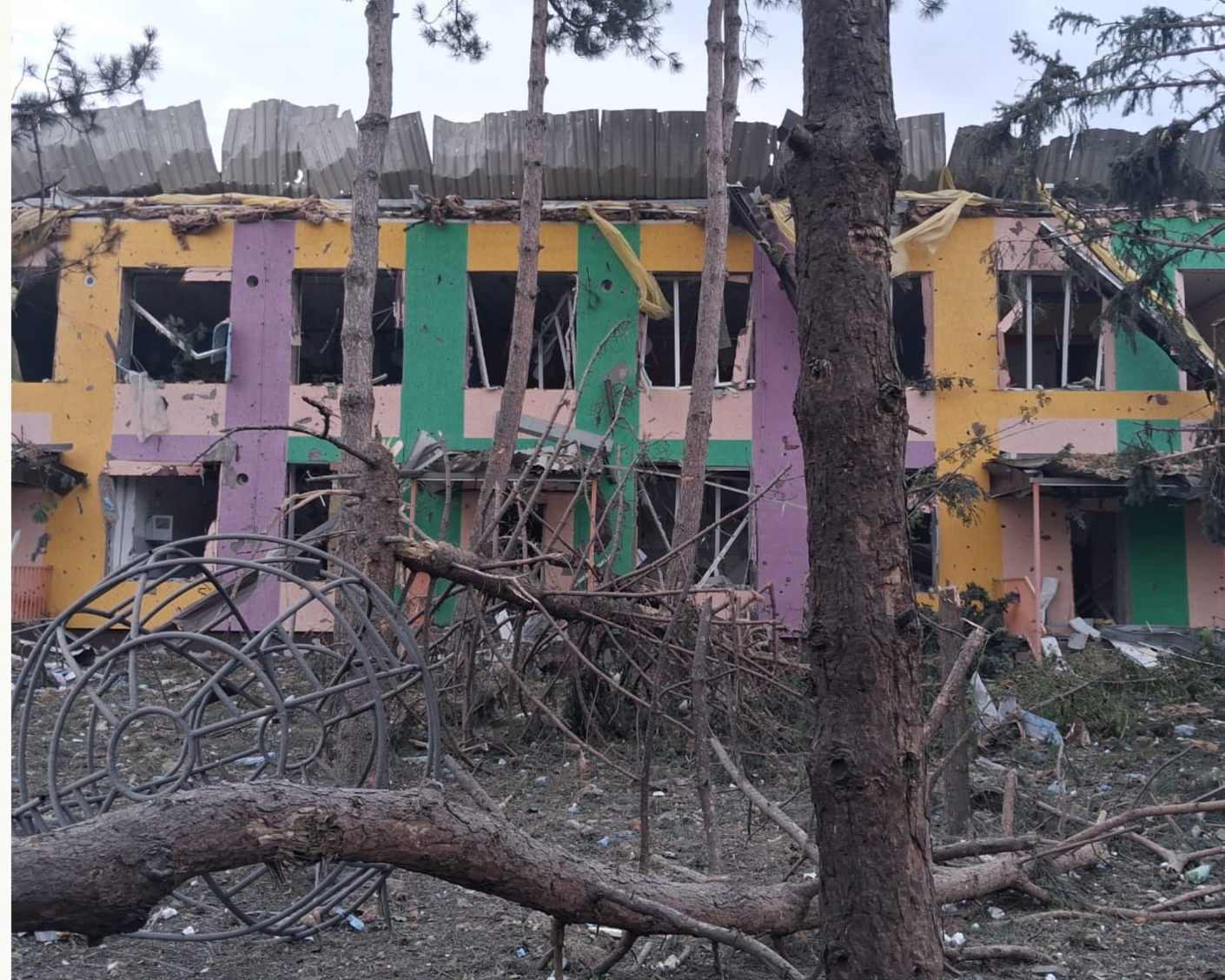
. … and after the missile attack.
‘Evacuation has now become a difficult and risky logistical operation...’
What is the Huliaipole Military Administration doing now?
Our work falls into three main areas: assisting the Armed Forces of Ukraine, evacuating residents, and helping displaced persons. Prior to the full-scale invasion, approximately 15,000 residents lived in Huliaipole, with an additional 5,000 residing in other community villages. Although they are now scattered around the world, most of them remain in Ukraine. They need help and reassurance that they have not been abandoned.
You said that you are involved in the evacuation, yet you also said that none of the remaining 173 residents in the combat zone want to leave. How can this be explained?
People tend to wait until the last minute. Only when their homes have been reduced to ashes do they call and ask to be evacuated. Evacuation no longer just involves a bus arriving at a ‘meeting point’. It is a difficult logistical operation involving the military, the police, the State Emergency Service, volunteers, deminers and city council employees... Armour, electronic warfare equipment and drones that can fly ahead and check whether it is possible to reach the destination are all needed. I cannot tell you about all the measures involved because they are classified. However, I can say that even if everything goes perfectly, evacuation is still a lottery. For example, a random drone could easily hit an evacuation bus or, even worse, an armoured vehicle belonging to the Armed Forces of Ukraine, which are extremely valuable for defence. (I am primarily referring to the people driving in it). However, we cannot abandon those who want to leave. We are forced to rescue them, which puts our employees and the city's defenders at risk. Therefore, from time to time, we evacuate residents who are ready to leave. For this, we urgently need a minibus, by the way. Perhaps someone could lend us one. Please write about this in your publication.
Where do you evacuate local residents?
There is a special distribution centre in Zaporizhzhia where we first take people. There, they receive assistance from employees of our Administrative Services Centre, as well as from social workers and psychologists. We help them to replace lost documents, find out what they need, provide all the necessary social services and, if they have no other housing, such as with relatives, we help them to settle into dormitories.
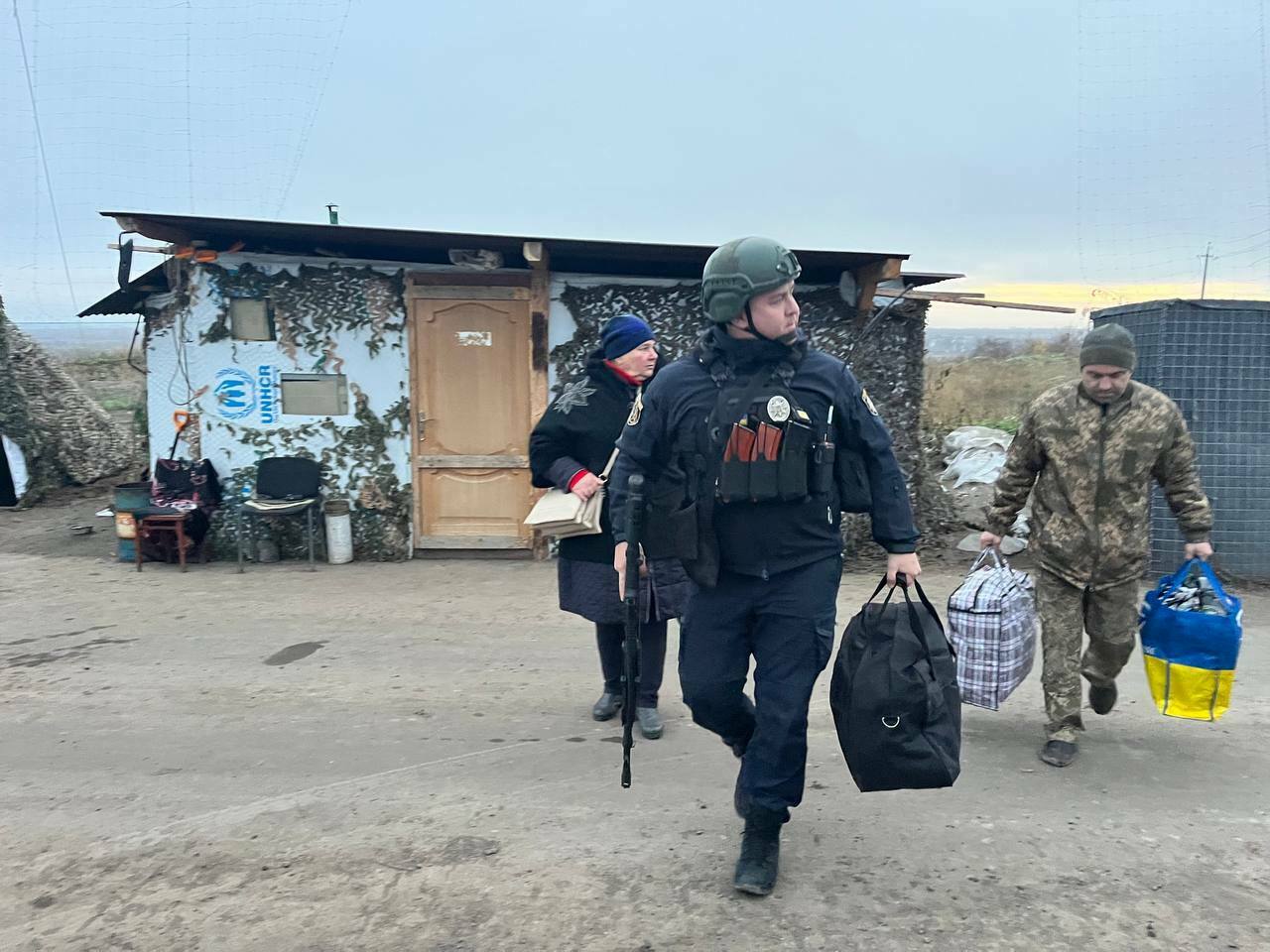
The difficult logistical operation of evacuating the population now poses a considerable risk to rescuers

Evacuating people with limited mobility is particularly difficult
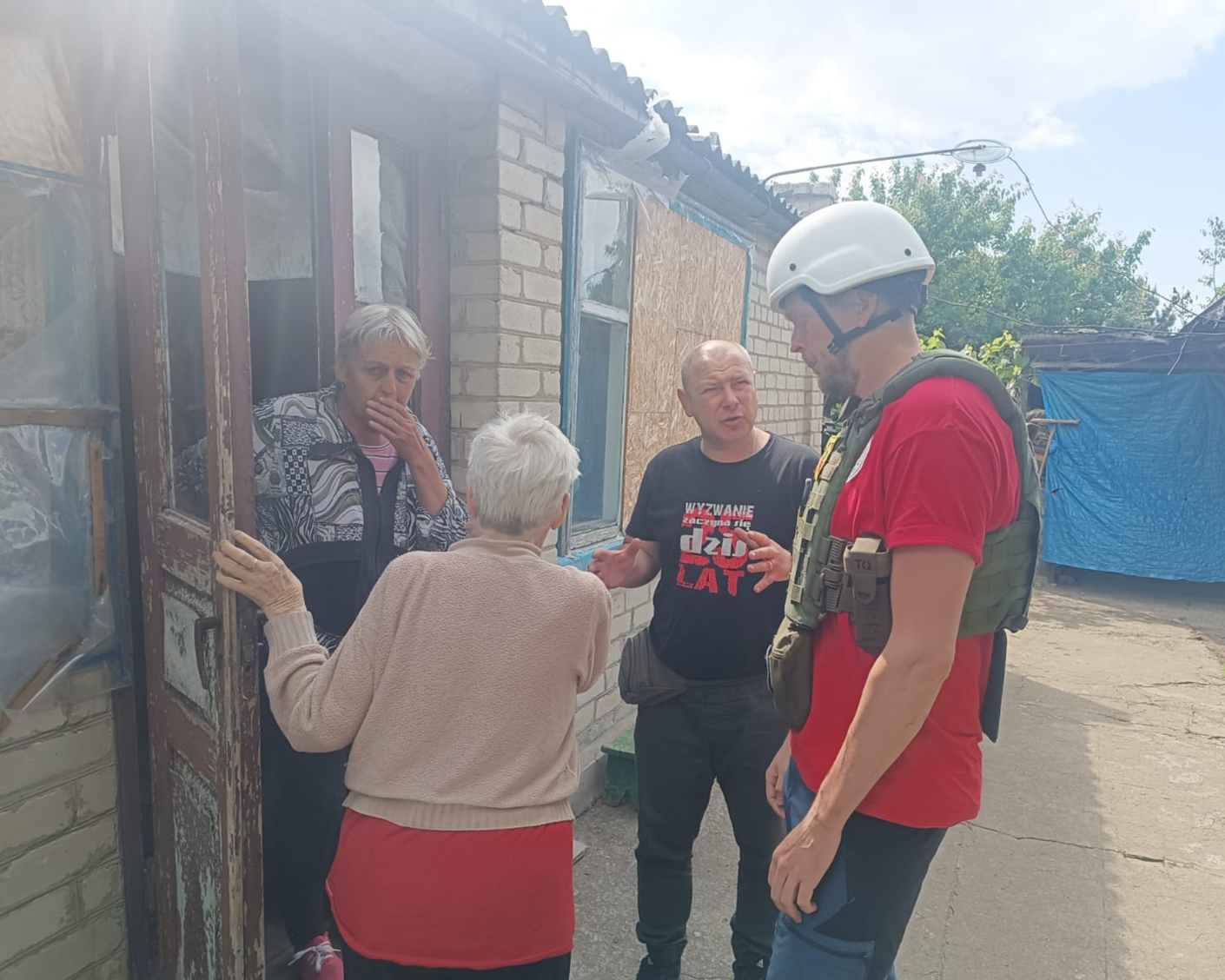
Serhii Yarmak (centre) persuading the last residents of Huliaipole to evacuate, summer 2025
Three and a half years in the basement
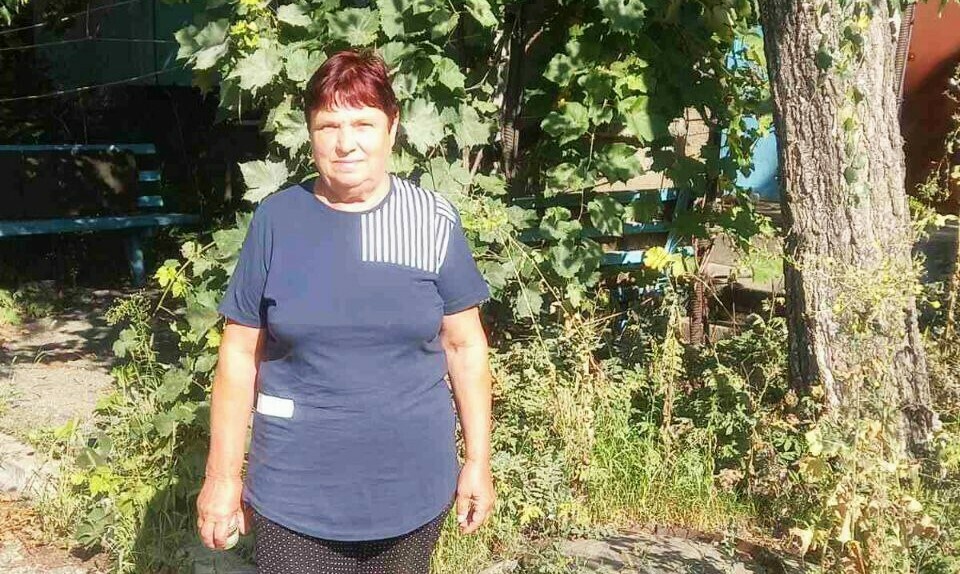
Avhustyna Cherdokleieva, a 62-year-old resident of Huliaipole who lived in the basement of a city apartment building until August this year, dreams of returning to the city
I lived on Tsvitna Street in Huliaipole for over forty years. I worked at a food factory. The russians left only ruins of it. In the spring of 2022, when the shelling was not as intense as it is now, I would run to the basement of the house opposite whenever the air raid sirens sounded. As shelling also occurred at night, I began to spend more and more time there. Then I moved my most valuable belongings there, as it was safer for them. The windows in my flat on the first floor had already been blown out by explosions. Eventually, I moved to the basement permanently. There were already other residents there. At first there were five of us, then nine...
Don’t get me wrong – we weren’t tramps. Everything was clean and tidy! We even bathed once a week in the corner behind a curtain, heating water in pots. We had a gas stove and a gas cylinder, and a wood-burning stove for heating. Light came from a strip of halogen lamps connected to a car battery. The battery itself was charged by a diesel generator stored under the stairs. Volunteers brought us food for free, so we found it easier to survive in this basement than in Zaporizhzhia, for example.
Avhustyna Cherdokleieva near her basement in Huliaipole. Summer 2025
Besides, the basement was very sturdy with thick walls, so we felt safe there. However, in August of this year, the bombing became much more intense. Russian drones started flying everywhere. Nearby houses were reduced to rubble. Mine too. Ultimately, we had to leave. I was one of the last four residents to be taken away by volunteers. Of course, I cried when I left. After all, I had lived in that basement for three and a half years – it was a part of my life. I had spent my whole life in Huliaipole, which was now a frightening sight to behold.
I am currently staying in a small cottage in Vyzhnytsia, in the Chernivtsi region. Thank God it is free. Some of our basement neighbours are now renting flats in Zaporizhzhia for UAH 5,000–6,000 per month. My pension is only UAH 4,000, so where would I find that much money? My daughter lives in Zaporizhzhia with her husband and two children – where would they accommodate me?!
To this day, I still talk on the phone to the people I lived with in that basement. Sometimes, through our tears, we cry, ‘God, what a good time it was! How harmoniously we lived, soul to soul!’ We remember how we cooked for the soldiers, how we hid from the shelling and how we joked with each other. We all agree that as soon as the fighting stops, we will go back to Huliaipole. We will get together, set the table, and spend a long time reminiscing about everything we have been through...
‘Fifteen communities in Ukraine stand ‘Shoulder-to-Shoulder’ with us...’
Do you work with international organisations to provide assistance to displaced people?
We do, and GEM and Proliska are helping us the most. We are currently negotiating with them to provide our residents with hygiene kits. Most of our people have settled in Zaporizhzhia, with almost 7,500 people having made the area their home. This makes it easier to help them. We have a hub in Zaporizhzhia through which we distribute aid. The fact that people have not fled abroad or even travelled to western Ukraine speaks volumes. They do not want to leave their hometowns and have faith in the Armed Forces of Ukraine. They keep saying that the war is about to end. At least, they really hope so.
Is Huliaipole participating in the ‘Shoulder-to-Shoulder: Cohesive Communities’ Project?
Yes, and we regularly receive various forms of assistance from our project partners, such as specialists, vehicles, humanitarian aid and funds... We have around 15 partners, so it is difficult to name them all off the top of my head. It is great that Huliaipole is supported by the whole of Ukraine and that everyone understands how important it is to stop the russians here. The Ivano-Frankivsk City Council is probably helping us the most. Recently, for example, they provided us with a truck with a hydraulic tailgate for transporting humanitarian aid.
Do your partners in the ‘Shoulder-to-Shoulder’ Project offer housing to displaced persons from the Huliaipole community?
Yes, Ivano-Frankivsk and Terebovlia are offering accommodation in their dormitories to our residents. Although our people are not moving en masse to western Ukraine, this offer is invaluable. It demonstrates the genuine support of our partner community. This support also extends to employment: for example, our utility worker recently found a job at the Ivano-Frankivsk municipal services company.
Does your community still receive personal income tax from companies registered in Huliaipole?
Yes, but it is decreasing every year because the communities to which these companies have relocated also want a share of it. Unlike us, these communities have influence over these companies because they provide them with infrastructure, land and premises. Consequently, the proportion of our own revenues in our budget is falling rapidly, while state aid is growing rapidly. We give almost all of our revenues to the Armed Forces of Ukraine. This year alone, for example, we transferred approximately UAH 20 million to a special fund created by the Regional Military Administration to support the Armed Forces.
Russian websites sometimes refer to Huliaipole as a ‘wicked city’, in reference to the fact that the invading army has been trying to conquer it for four years. Has historical memory influenced this unique resilience? After all, in the 1920s, Huliaipole was the capital of Makhno’s republic – the most powerful figure in the Ukrainian otaman movement?
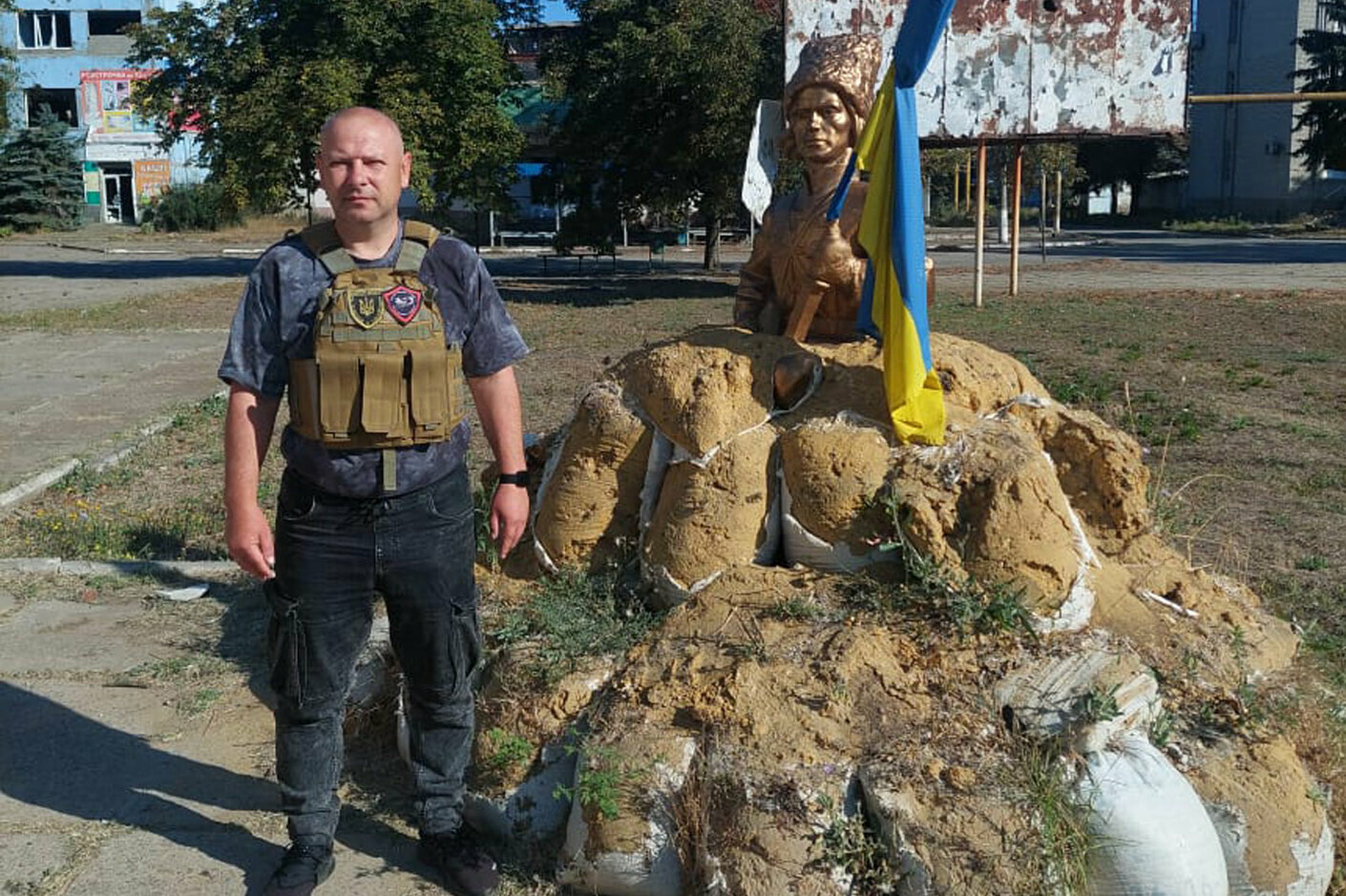
I think it has. Our people are very angry with Russia – that is how most of us feel about what has happened over the last four years. When people are angry, they do not run away; they fight back. In the centre of our city there used to be a monument to remind us of Father Makhno’s time, and it was still standing when I was last in Huliaipole. The sight was striking: ruins and burnt-out buildings all around, and Father Makhno standing in the middle of it all, sabre in hand, surrounded by sandbags and a Ukrainian flag, as if in a combat position. And it was intact…
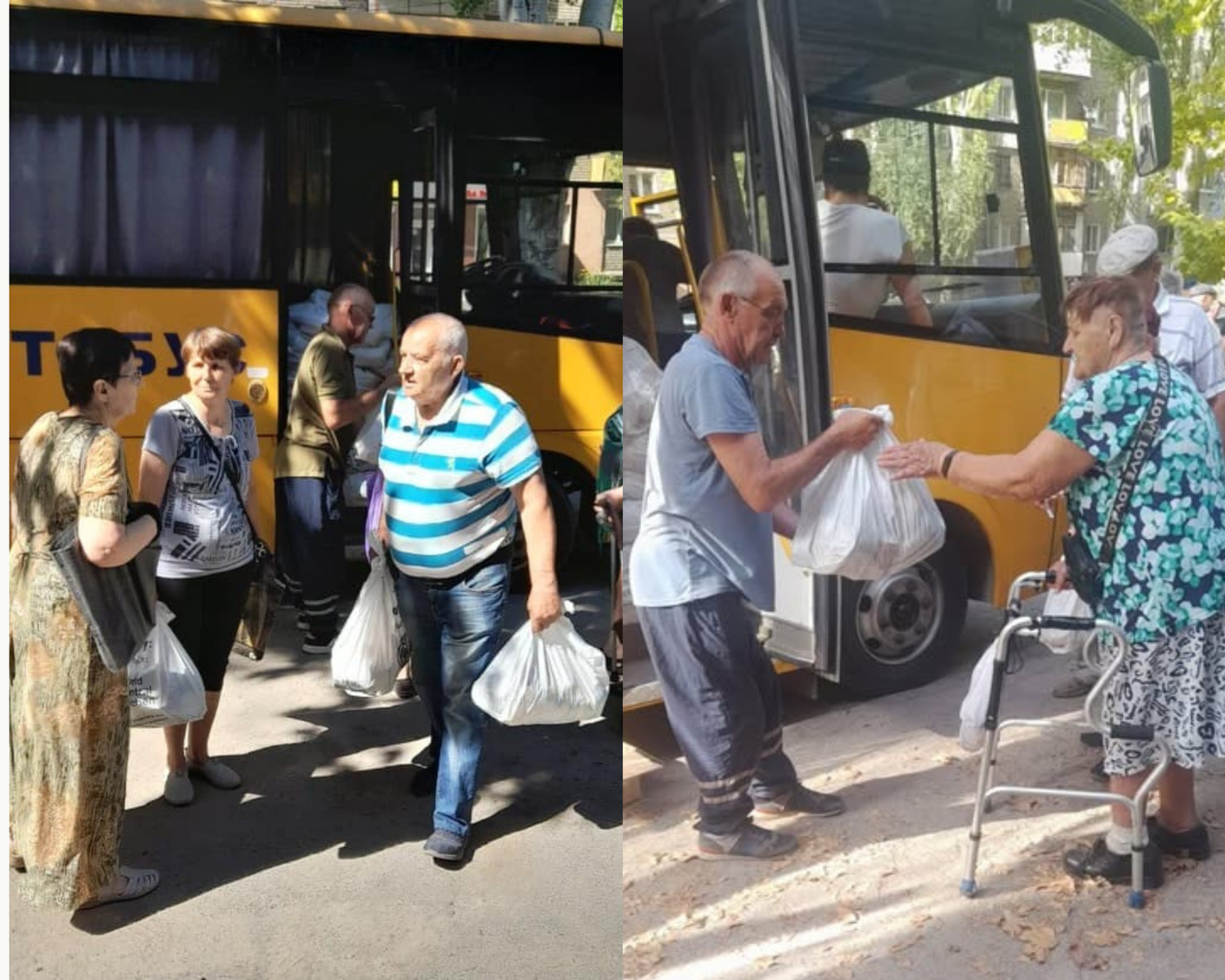
Distribution of humanitarian aid to displaced persons from Huliaipole in Zaporizhzhia

Signing of a Memorandum of Cooperation between the Huliaipole community and the National Congress of Ukrainian Associations in Italy, 2025

Signing of a Memorandum of Cooperation between the Huliaipole community and the Italian municipality of San Pio delle Camere in the Abruzzo region, 2025
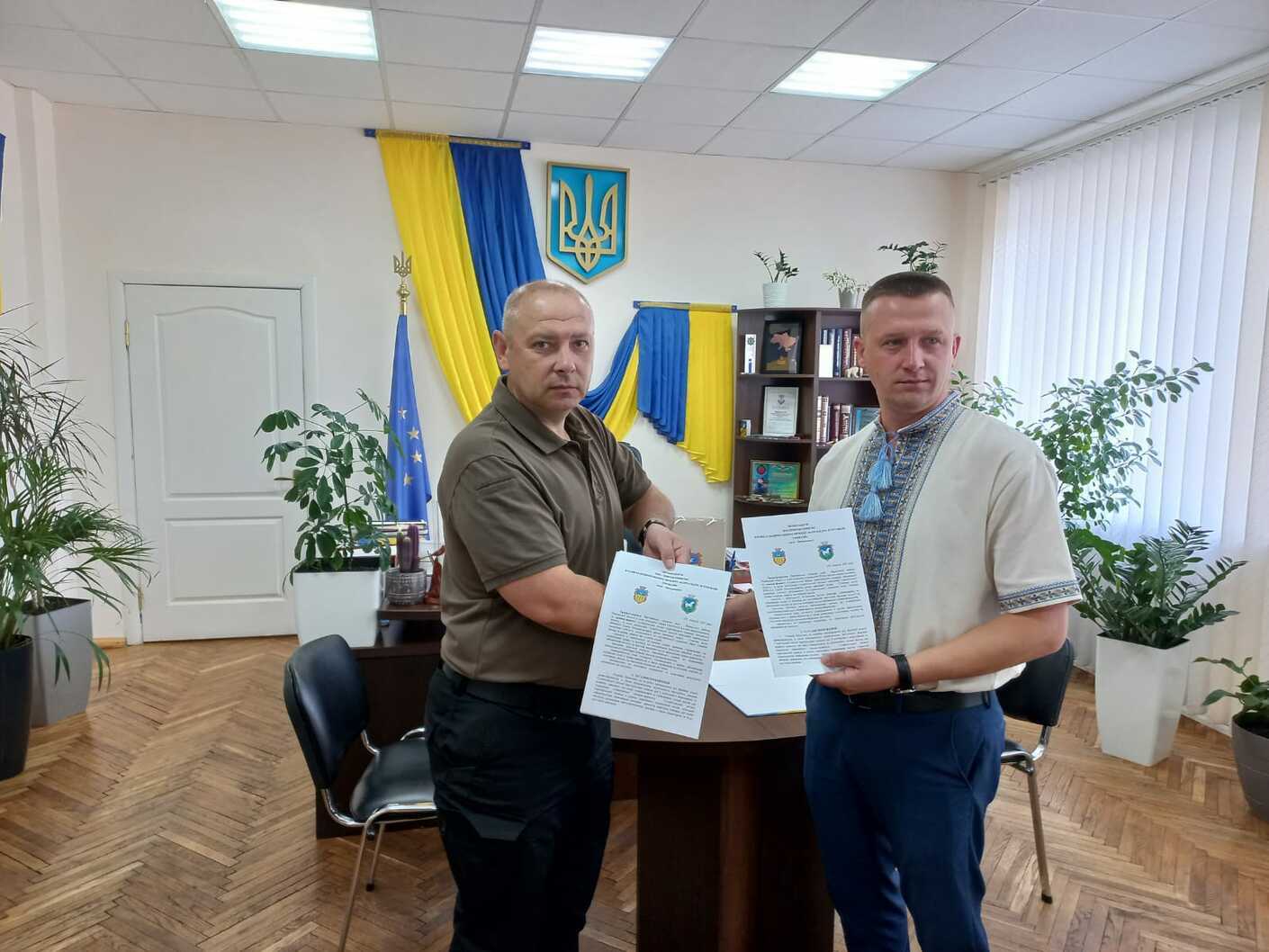
Serhii Yarmak and Bohdan Kvachuk, Head of the Zarichne Community in the Rivne region, signing a Memorandum of Cooperation within the framework of the ‘Shoulder-to-Shoulder: Cohesive Communities’ Project
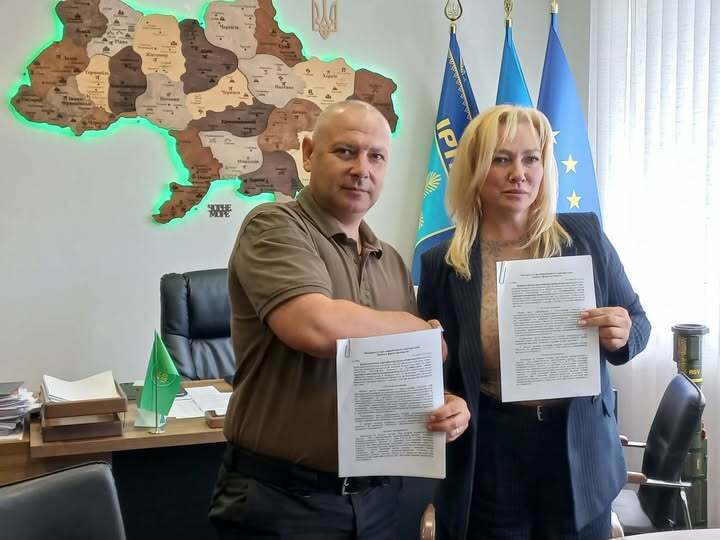
Serhii Yarmak and Anzhela Makeieva, Head of the Irpin Community in the Kyiv region, signing a Memorandum of Cooperation within the framework of the Shoulder-to-Shoulder: Cohesive Communities’ Project

Ivano-Frankivsk is a key partner of Huliaipole in the ‘Shoulder-to-Shoulder: Cohesive Communities’ Project. In the photo: Serhii Yarmak (right) and Ruslan Martsinkiv, Mayor of Ivano-Frankivsk
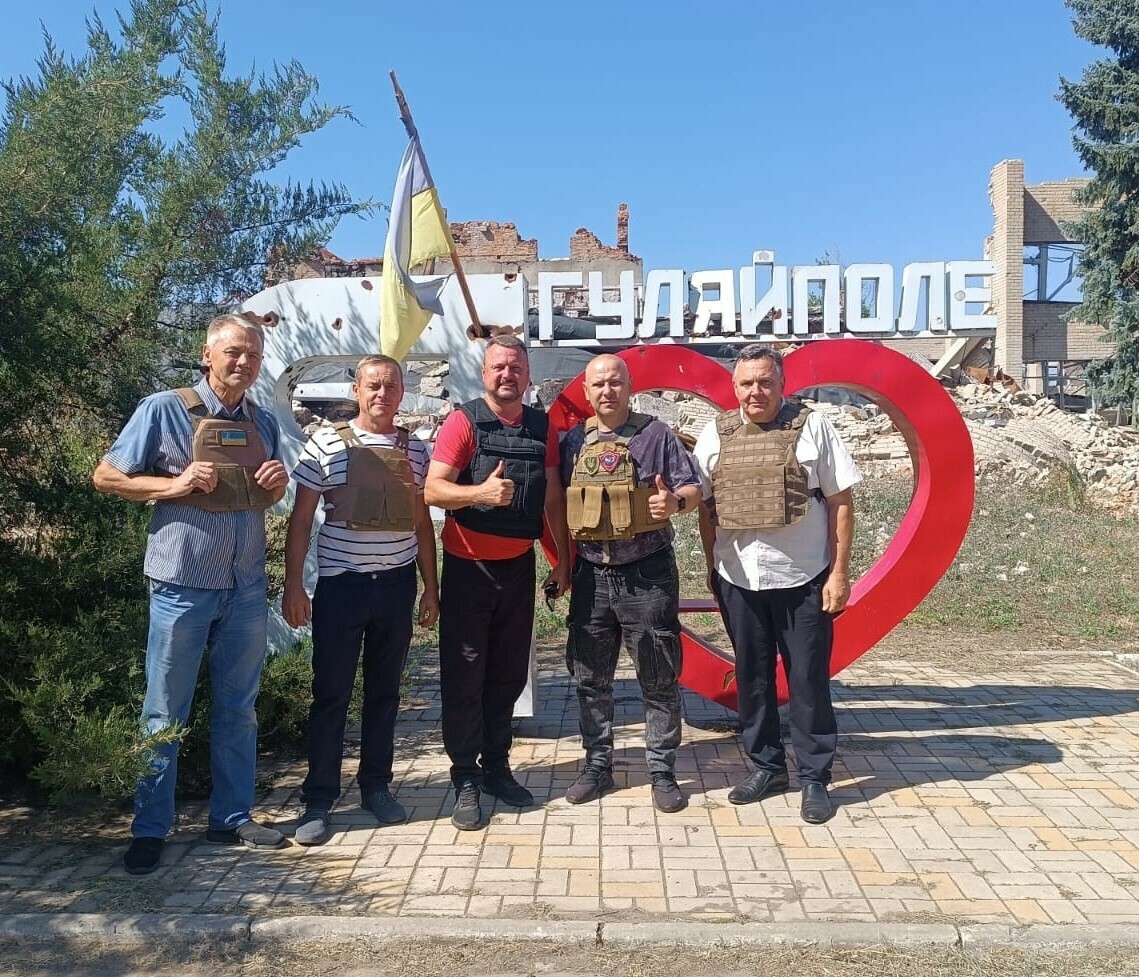
Serhii Yarmak (second from right) and a delegation from the Terebovlia community – Huliaipole’s partner in the ‘Shoulder-to-Shoulder: Cohesive Communities’ project, summer 2025
The Republic on Tachankas
Several small peasant republics emerged in Ukraine between 1918 and 1920: Pereiaslavska, Dermanska, Mliivska, Pashkivska, and Bashtanska, among others. However, Huliaipole stood out not only because of its relatively large area, but also because its leader, Nestor Makhno, attempted to establish a unique social order inspired by the Zaporizhzhia Sich era. A distinctive feature of Huliaipole was that, at the beginning of the 20th century, 99.5 per cent of its land was still collectively owned and could not be sold. It was cultivated jointly by the community, who also divided the harvest among themselves. This gave Huliaipole vast experience in self-government, which would later prove invaluable in establishing the peasant republic.
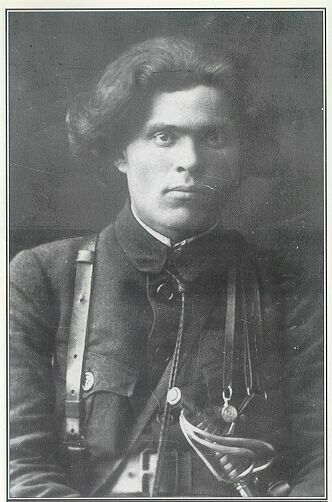
Nestor Makhno in 1919 (aged 31). The ataman’s biggest mistake was cooperating with the Bolsheviks and refusing to cooperate with the Ukrainian Government
Nestor Makhno, whom the peasants respectfully called ‘Father’, was the head of the Committee for the Salvation of the Revolution, which dealt with all matters relating to the republic. He also began reforming schools, seeking to remove them from state control, while simultaneously organising literacy courses. In Huliaipole, they started publishing newspapers and leaflets, delivering lectures on various subjects, and staging plays. As well as the classics, they staged two newly written plays: ‘The Life of the Makhnovists’ and ‘The Way of the Makhnovist’. The Committee for the Salvation of the Revolution also established an army which, at its peak, numbered more than 80,000 people. As it moved quickly, making use of its knowledge of the steppe landscape and its numerous tachankas (spring-loaded carts with machine guns), it could only control the territory intermittently. Consequently, Makhno’s state formation is sometimes referred to as the ‘republic on tachankas’. This army prevented the Bolsheviks from taking bread from the peasants during prodrazviorstka, saving them from the Holodomor of 1921.
A monument to Father Makhno, as remembered by Serhii Yarmak on his last visit to Huliaipole
Serhii Yarmak next to the concrete sculpture of Nestor Makhno in the centre of Huliaipole, summer 2025
Serhii Yarmak and a delegation from the Terebovlia community – Huliaipole’s partner in the ‘Shoulder-to-Shoulder: Cohesive Communities’ Project, summer 2025


01 June 2026
Усунення диспропорцій в НГО земель: що змінює постанова Кабміну № 676 для громад
Усунення диспропорцій в НГО земель: що змінює...
Уряд ухвалив довгоочікувані зміни до Методики нормативної грошової оцінки (НГО) земельних ділянок. Постанова КМУ №...
01 June 2026
Анонс: вебінар «Актуалізація даних працівників...
Запрошуємо керівників закладів загальної середньої освіти та представників територіальних громад долучитися до...
01 June 2026
From legislative changes to public assemblies:...
Whilst Ukraine is at war, rebuilding its destroyed territories and preparing for accession to the European Union,...
01 June 2026
Ivankiv community launches partnership with Polish Gmina Pawonków
Ivankiv community launches partnership with...
Ivankiv settlement community in Kyiv region and Gmina Pawonków in Lublin County, Silesian Voivodeship, the Republic...