From partnerships to joint projects: How Clusters4Regions, supported by UCORD, empowers regions
The Clusters4Regions initiative has helped regional teams move from the concept of cluster-based cooperation to joint work on specific projects. In working groups comprising business representatives, academics, educators, communities, and regional development institutions, participants identified common needs and developed solutions – ranging from water safety and energy efficiency to tourism development and the processing of industrial waste.
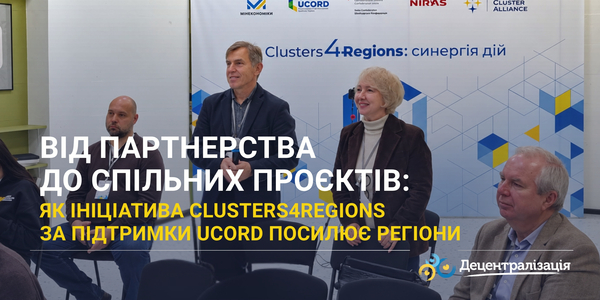
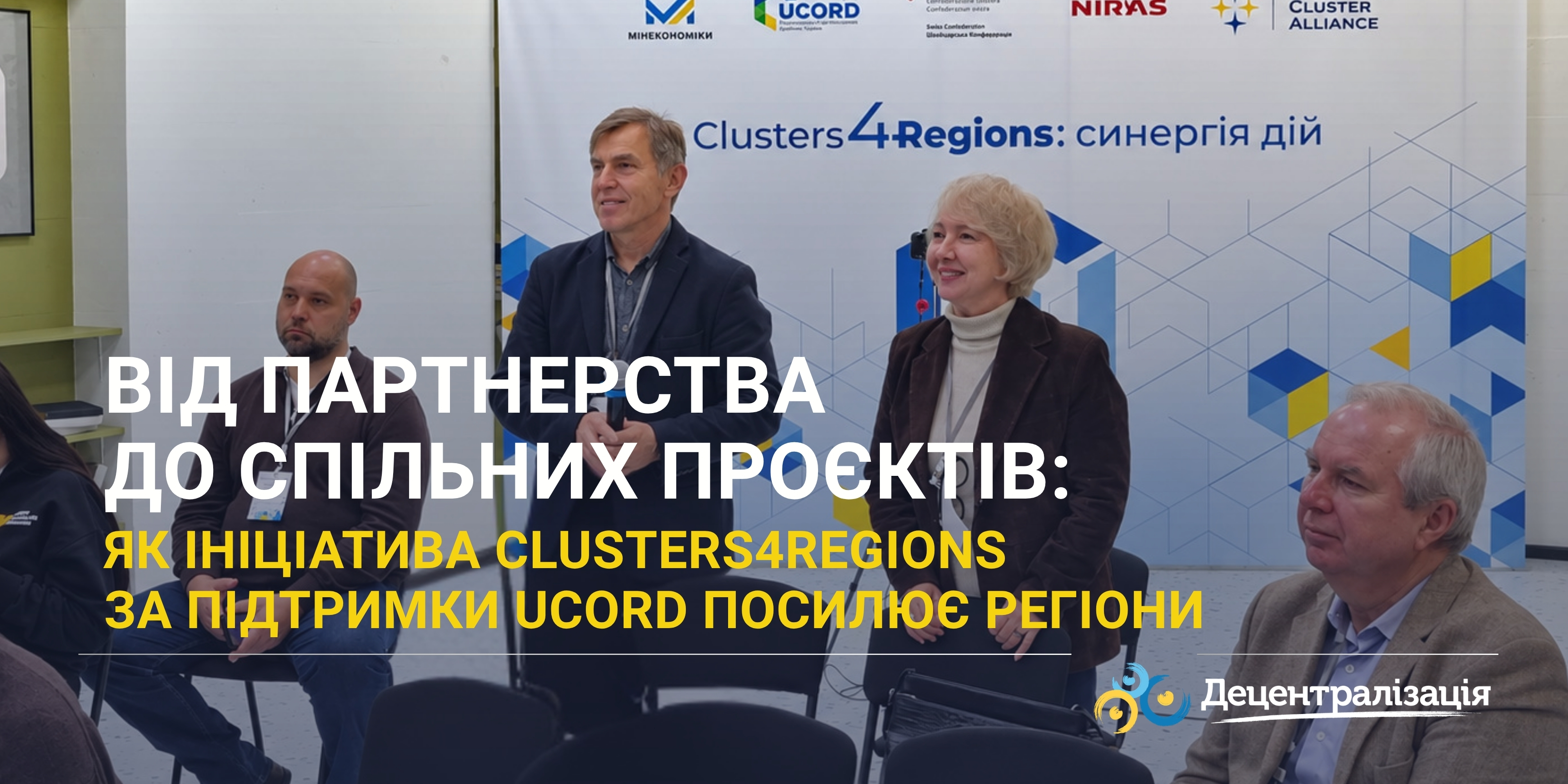
The forum of cluster project teams and working groups, held in Kyiv, demonstrated the progress of this work: the teams presented their findings, while the jury assessed their potential and prospects for further development.
The value of the cluster model becomes apparent when the knowledge, resources, and contacts of different participants are transformed into joint action. Through such cooperation, businesses can attract specialists and technologies, enter new markets, and create products with greater added value. For the region, this represents an opportunity to unite the potential of business, science, education, and communities around shared objectives. Whether the project proposals will develop into sustainable clusters will depend on whether the partners continue this work.
Clusters4Regions is an initiative to create and implement cluster programmes in six regions of the country (Vinnytsia, Volyn, Sumy, Odesa, Khmelnytskyi, and Ternopil regions). The initiative is implemented by the Ukrainian Cluster Alliance at the request of the Ministry of Economy and Environment of Ukraine, with the support of the Swiss-Ukrainian “Ukraine’s Cohesion and Regional Development” (UCORD) Project, which is aligned with the priorities of the EU, international donors, and the reconstruction of Ukraine.
From discussions to joint work
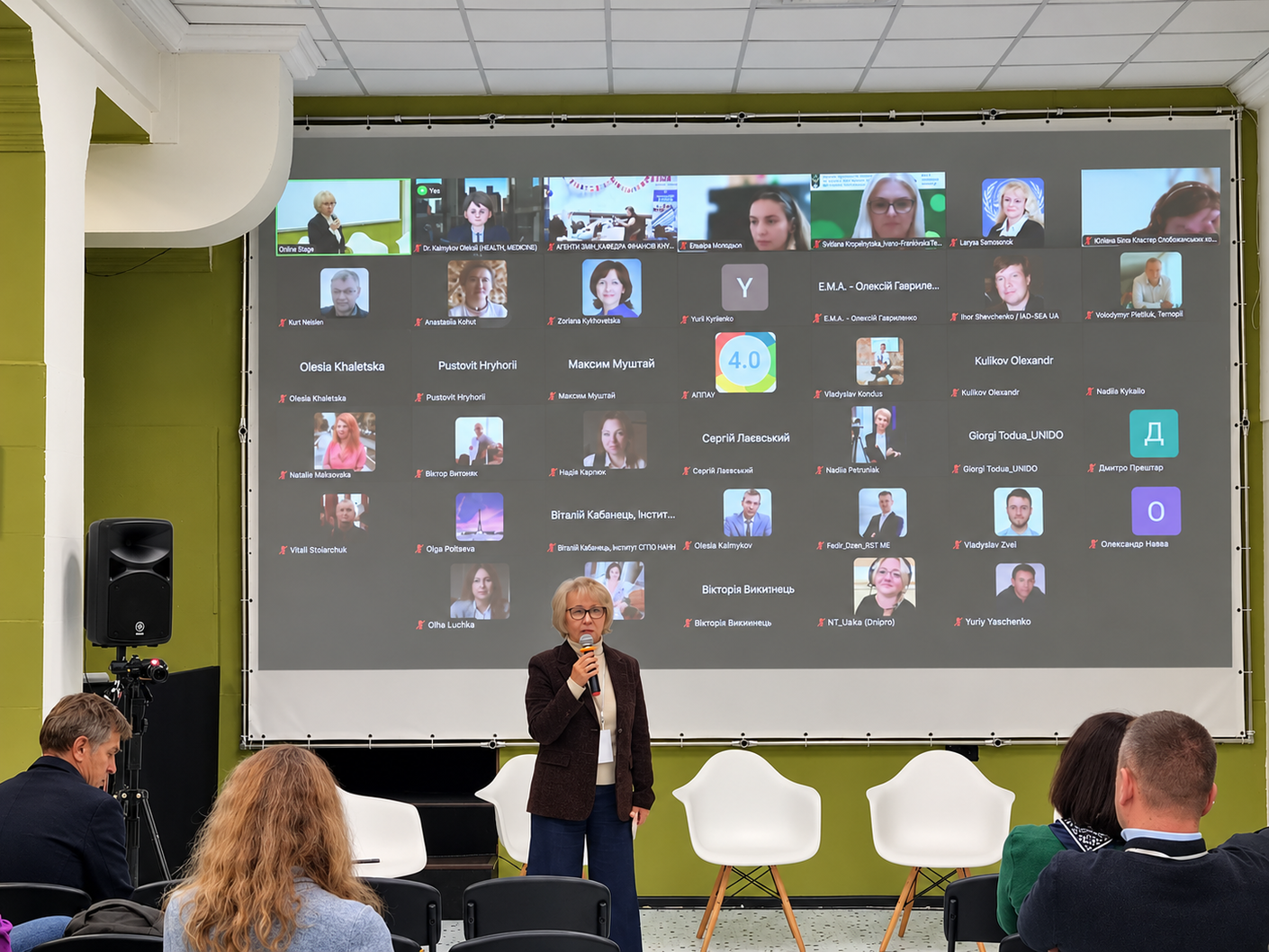
Olena Nyzhnyk, UCORD Component Lead “Regional development”, which is implementing the Clusters4Regions initiative, recalled that the work began in early 2025 with discussions on what the Ukrainian model of regional cluster-based economic development should look like, how the partnership should be structured, and what role should be played by business, the authorities, communities, regional development agencies, education, and science.
‘At the very beginning, we started with such discussions and dialogues, which were almost theoretical in nature, as partnership was at the heart of our initiative. A partnership based on institutions, on mutual understanding and trust between the regional development agency, the regional authorities, local self-government, and the key stakeholders – business, education, science, and the civil society sector. All of this has to form a partnership that drives the economic development of the regions, utilising clusters as a tool.’
According to Olena Nyzhnyk, the next step is to move from discussions to projects in which partners are prepared not only to declare their cooperation but also to get involved in its implementation.
‘What I found important and valuable in individual projects was the co-funding involved, the engagement and participation, and the synergy between completely different partnerships. And this, in my opinion, is the most important and interesting aspect of this initiative.’
Oleksandr Yurchak, General Director of the Ukrainian Cluster Alliance, explained that at the forum, the teams presented specific projects which they had developed through the preparation of regional programmes, the training of cluster managers and project management training: these projects demonstrate the benefits that cluster cooperation can bring to regions and communities.
‘Sometimes it is quite difficult for a group of small and medium-sized enterprises to demonstrate their advantages. The best way is to present projects: what they contribute to the economy, and how they address the challenges that regions, communities, and different technological sectors face.’
Volyn region: Science for business and a gastronomic route
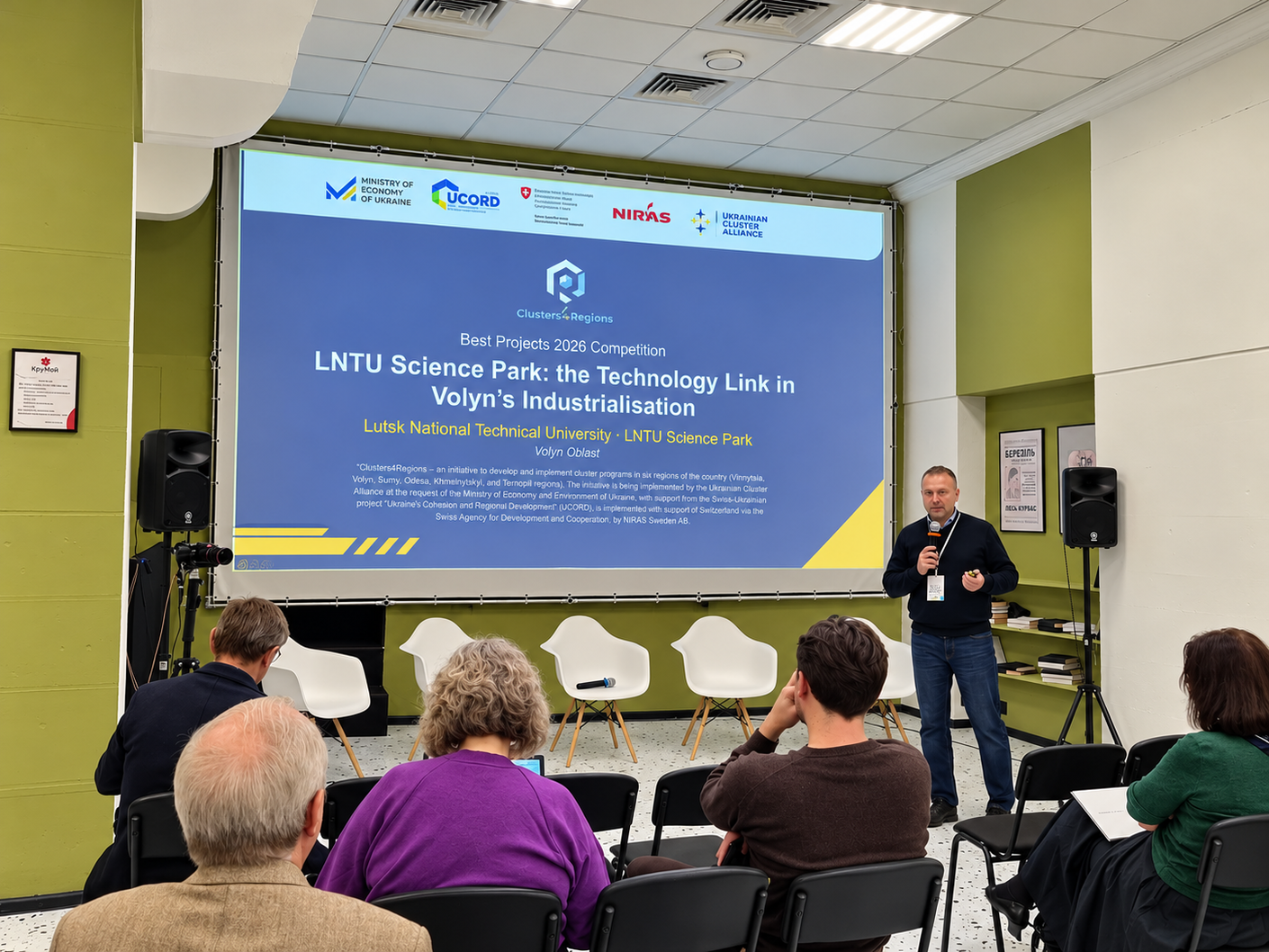
Mykola Polinkevych, Clusters4Regions Regional Coordinator in Volyn region, presented a project designed to foster cooperation between businesses and the scientific community. This project aims to help businesses gain access to technologies and innovations, and to enable researchers to address the current needs of businesses. The project involves creating a single point of contact for businesses’ technology-related enquiries: from audits to prototypes and pilot projects. The expected outcomes are over 20 qualified enquiries, 12 technology audits, and two pilot solutions co-funded by businesses.
‘The aim of this project is to establish cluster-based cooperation between the business sector and the scientific community. Typically, our businesses have limited access to innovations, patents, and technologies, whereas science operates in isolation, with research often left untouched on a shelf. We need to build this ecosystem.’
Companies willing to co-fund the work have joined the project. The team plans to analyse business needs and establish cooperation in cybersecurity, IT, and robotics.
The second project in Volyn aims to develop a gastronomic route centred on Volyn potatoes. The plan is to involve local producers, hospitality establishments, the university, and regional development partners. The aim is to promote local produce and create a tourism offering that combines production, gastronomy, and travel throughout the region. According to the project, the route is to cover at least five communities, bringing together no fewer than 20 hospitality establishments and 10 local producers. Planned outcomes include a bilingual digital map with QR codes, dishes featuring Volyn potatoes on the menus of at least 15 establishments, and no fewer than five supply agreements.
Ternopil region: Uniting producers and developing tourism
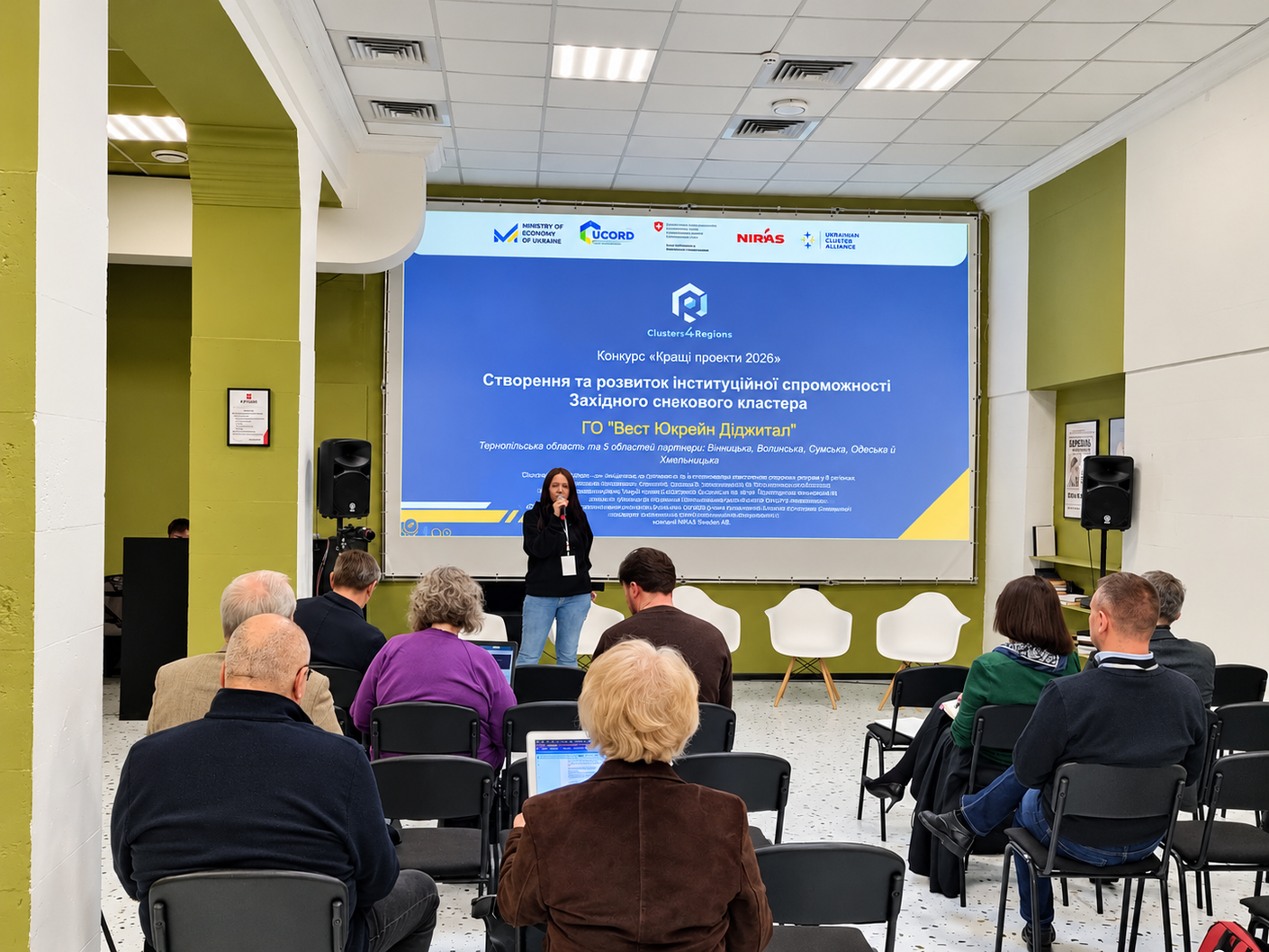
Oksana Kachurovska from the Centre for Business Support and Business Initiatives in Ternopil spoke about the plan to create a snack cluster. The plan is to involve local producers of crisps, popcorn, and healthy sweets, as well as educational institutions and retail chains.
‘We spoke to these companies and thought it would be a brilliant idea to bring these producers together. They face very similar challenges. These include, in particular, a lack of cooperation, the failure to build value chains, as well as a shortage of staff and opportunities for development.’
In the first phase, the team aims to establish partnerships between manufacturers and, later, to develop joint business pilot projects and cooperation with the industrial parks in Ternopil and Chortkiv. The plan is to involve at least 20 small and medium-sized enterprises from Ternopil region and gradually expand the cooperation to five other regions. Objectives include a cluster strategy up to 2030, at least three joint business pilot projects, and ten commercial negotiations with potential buyers.
Ivanna Mryha, Head of NGO InSource: Centre for Development of Initiatives from Ternopil region, presented the “Vista of Zbruch” tourism cluster, which brings together communities in Ternopil and Khmelnytskyi regions along the River Zbruch. The team works to connect local producers and hospitality establishments with tour operators and systematically offer visitors itineraries and local produce.
‘We have a solid foundation for tourism products in the region, but there is no systematic approach, no sufficiently well-established communication with travel agencies, and no opportunity to market these tourism products. We intend to address this in future phases.’
The cluster already involves five communities and 13 partners from the hospitality sector. Over 253 kilometres of tourist trails have been marked out in the region, and five cycle routes have been developed. The next tasks are to develop craft products and sign agreements with tour operators, create three or four ready-made weekend tours, and conclude at least three agreements with tour operators. This should help transform existing tourist routes and local products into an offering that can be marketed systematically.
Vinnytsia region: Engineering skills and the development of territories around the water reservoir
Yurii Klamenko, CEO of the Vinnytsia Automation and Instrumentation Cluster, presented the Hardware Student Hub project, designed to help address the shortage of engineering talent. Students will work on practical tasks set by businesses, receive support from mentors, and have their skills recorded in a matrix of technological competencies.
‘Competencies are verified not by exam results or credits for lectures attended, but by the equipment developed, assessments from mentors, practitioners and experts, and, of course, self-assessment. Verified profiles are added to the matrix, which opens up access to the hub’s equipment and, most importantly, ongoing contact with practising engineers.’
The plan is to involve businesses, universities, and vocational colleges in the initiative. Businesses will set practical tasks and provide mentors, whereas students will be able to gain experience by working on real-world projects. Specific targets include ten student teams, over 40 students, and at least eight prototypes. The hub is also set to provide over 300 hours of access to equipment and over 400 hours of mentoring support.
Vinnytsia region also presented a project for the development of the territory around the Ladyzhyn Water Reservoir. Six communities, the business sector, academics, and the regional development agency are set to join the joint planning process. The proposed tools include scientific analysis, a working group, strategic sessions, and a hackathon. The scope of participants includes over 40 local businesses and more than 20 academics and students. The plan envisages five strategic sessions, an inter-municipal cooperation mechanism and a roadmap for the sub-region’s development for 2028–2034.
Khmelnytskyi region: Stronger cluster and new uses for textile waste
Elvira Moldavan presented the Podillia Greenhouse Cluster projects. One of these projects aims to establish the organisational and financial framework for the greenhouse cluster, facilitate communication between participants, and identify future areas for development. The team plans to prepare cluster operating policies, financial and economic documents, bilingual communication materials, and a roadmap for a dual transition – digital and green – by 2030.
‘They all operate like separate colonies, with little communication between them. As a result, this diverts resources away from opportunities to present themselves and move in a single direction, as a united front – to showcase the potential of Khmelnytskyi region as a producer of agricultural products grown under cover.’
Another project concerns textile waste from the light industry. According to estimates presented during the presentation, enterprises in Khmelnytskyi generate around 300 cubic metres of such waste every month. The team proposes to develop a model for the collection, sorting, and reuse of this waste, to create a digital map of collection bins, and to prepare project documentation for a future recycling plant. Plans also include the development of software to monitor the fill levels of these bins. Two study visits to European countries and ten consultations with specialists are also planned.
According to Elvira Moldavan, part of the work has already begun: the partners are studying European experience and possible ways of using textiles. One area of focus is the recycling of the material for the production of street furniture, building materials, and mats for agriculture.
The project envisages cooperation between the Podillia Fashion Cluster and the Khmelnytskyi IT Cluster, particularly on a digital map and an app. Businesses, academics, civil society organisations, and utility companies are also involved in finding solutions.
Key aspects highlighted by the jury and partners
Giorgi Todua, Industrial Development Expert at UNIDO Division of SME Competitiveness, Quality and Job Creation, pointed out that some of the clusters are at an early stage of development. He emphasised the importance of the teams’ ability to implement the proposed projects and sustain the partnerships established.
‘The most important aspect is the ability to establish cooperation between cluster participants and the institutions that can support them. It is important that the organisations that put forward these proposals are themselves able to implement and sustain them.’
Giorgi Todua also expressed his support for the idea of clearly defining clusters and establishing a national register. In his view, this will help to better target resources for cluster development and determine what support they need at different stages.
Working groups: From idea to joint action
After the presentations of regional projects, the participants demonstrated how working groups help to drive these initiatives forward. The discussion centred on practical matters: how to allocate roles, coordinate partners’ needs, review decisions, and maintain cooperation after a specific event or funding period has ended.
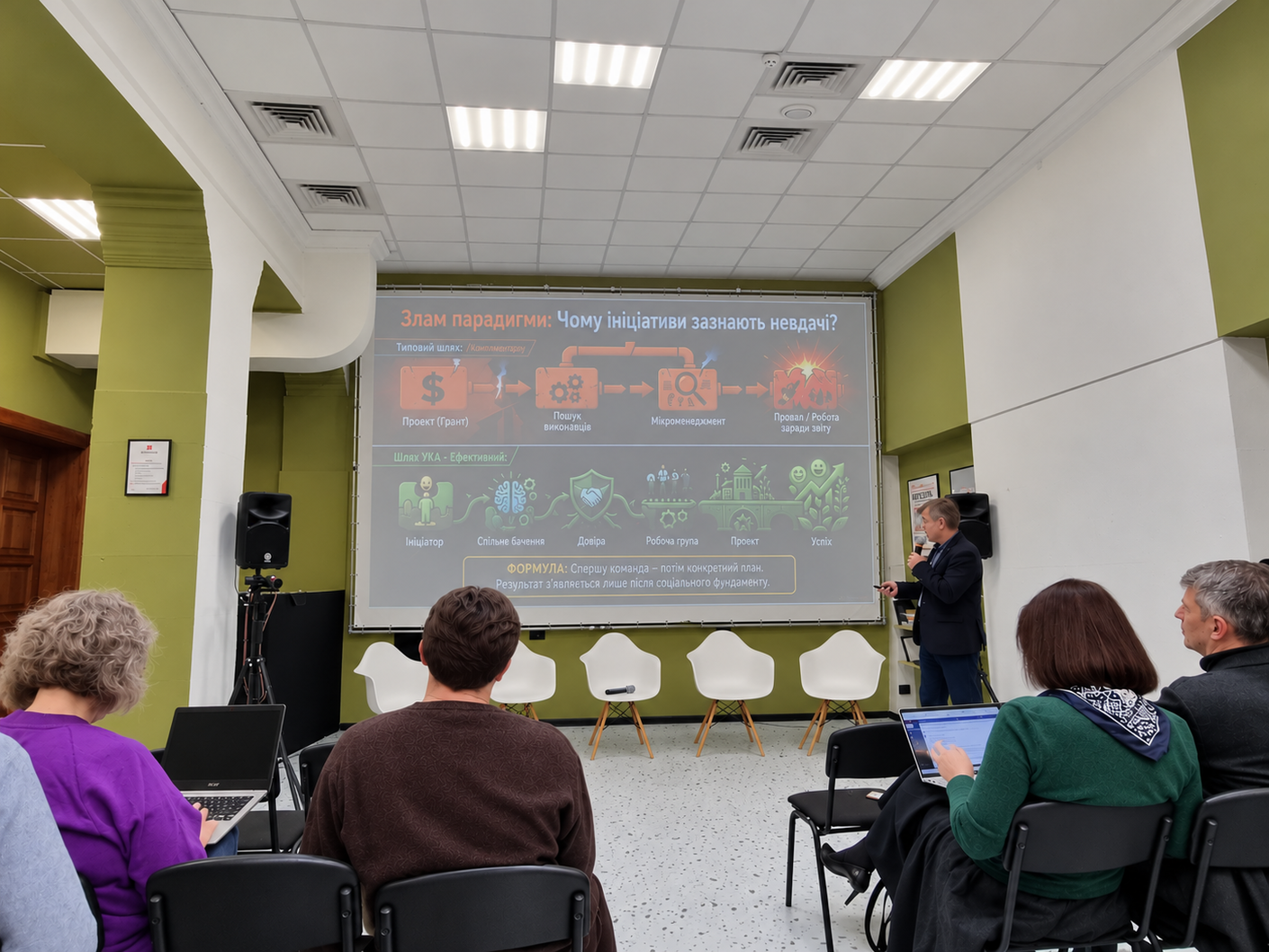
Oleksandr Yurchak described working groups as the foundation of cluster sustainability. However, such cooperation requires discipline and ongoing agreements. It is important for participants not only to come together around a common theme, but also to make commitments, monitor progress, and return to a shared action plan.
This is evident in the example of Odesa region. The working group, presented by Nataliia Matkovska, brought together 13 participants to address the region’s water-related challenges. Its members are working on a comprehensive approach to water security: from hydrological and environmental research and digital modelling to the preparation of technical and economic feasibility studies. The team is exploring, in particular, the integration of water desalination with renewable energy.
One practical step has already been taken: according to Nataliia Matkovska, the working group has justified and submitted to the State Water Agency a proposal to include the estuaries in the state water monitoring programme for 2027. To achieve this, the participants needed to adopt a common position, draw on scientific expertise, and engage with state institutions.
In Sumy region, Vladyslav Kondus, Clusters4Regions Regional Coordinator and Executive Director of the NGO “Sumy Energy Equipment Machinery Cluster”, presented the work of the energy machinery cluster group. It focused on the communities’ needs in restoring critical infrastructure. The mechanical engineering cluster, Sumy State University, the Institute of Applied Physics, the regional authorities, the regional development agency, the Chamber of Commerce and Industry, and equipment manufacturers have all joined the cooperation. Their task is to shorten the process from a community’s request to a ready-made engineering solution.
One of the outcomes is the AquaSafe Mobile project, a mobile unit for water treatment and purification. Its estimated capacity can reach 10 cubic metres per hour, and it can be deployed in up to four hours. However, the team still needs to undergo an engineering review of the solution. This clarification is important: the project is currently at the development stage, rather than a finished system ready to be handed over to communities.
Another working group in Sumy – focusing on agricultural processing and innovation – is looking for ways to reduce raw material losses in small agricultural enterprises. Its achievements include a proposal to research biodegradable straws made from industrial hemp and a potential pilot project for the mobile drying of cereals and oilseeds. Before launching either solution, the team plans to assess the needs of businesses, technical specifications, and economic viability.
Using the example of Rivne region, the “Cluster for Veterans” working group, coordinated by Tetiana Vorontsova, demonstrated how cluster cooperation can address social needs. Eight participants – veterans, representatives of civil society organisations, the business sector, and the authorities – conducted an audit of local veteran support programmes and the budgetary expenditure allocated to them over the past two years. Their next steps include preparing proposals for regional programmes, helping to relaunch the Veterans’ Council under the Mayor of Rivne, and compiling a map of veteran-friendly businesses.
Working groups from Kyiv region also presented their practical results. The front-office team at the EDIH Kyiv HiTech innovation hub reported on 34 client case studies and around ten brief audits. This model brings together nine consortium members and five authorised integrators to help small and medium-sized enterprises identify their needs, test solutions before piloting them, and find service providers.
“Vertical Integration” working group focused on helping businesses assess their production efficiency and understand what changes they need to make. It produced a white paper, held a webinar attended by 55 registered participants, and organised an in-person event on technical automation, as well as selecting five small and medium-sized enterprises for a diagnostic audit.
“Smart Energy” team presented a comprehensive approach to energy efficiency – from audits to the implementation of solutions and securing funding. The results of a survey of over 100 communities showed that 80% of respondents represented small communities willing to provide sites for energy equipment. One of the group’s areas of focus is a pilot “energy island” project in Zhytomyr region under a public-private partnership.
These examples show the different levels of maturity among the groups. Some already have client case studies and are providing services, whereas others are testing hypotheses or seeking partners for pilot projects. What they all have in common is the transition from a general idea to the allocation of roles and specific next steps.
The jury selected the winners in five categories
Based on the jury’s assessment, the winners were:
- Best joint cluster product or service – “Potato Route of Volyn”: a gastronomic route and promotion of the “Volyn Potatoes” regional brand
- Best cluster cooperation project – “Matrix of the Region’s Technological Competences” from Vinnytsia region
- Best innovative cluster project – AquaSafe Mobile from Sumy region, a project involving the research and development of a mobile water treatment plant for backup water supply to communities.
- Best cluster capacity-building project – the development roadmap for the “Ladyzhyn Sea” sub-region up to 2034.
- Best scaling and market development project – “Vista of Zbruch” tourism cluster.
The jury also selected the winners from among the working groups. The top three were teams from EDIH Kyiv HiTech: first place went to “Front Office”, second to “Smart Energy”, and third to “Vertical Integration”.
The next step is for the Ukrainian Cluster Alliance to select three projects to support in the next stages. Media promotion of the winners is also planned by the end of the year; in particular, some of the projects are set to be presented at ReBuild Ukraine.
Olena Nyzhnyk emphasised that winning the competition and setting up a working group do not in themselves guarantee a sustainable outcome. What matters is whether the partners can continue their cooperation and turn it into economic and social change:
‘Launching a cluster initiative does not in itself mean that a fully-fledged cluster has been established. Real results will only begin to emerge when this cooperation generates products, markets, investment, jobs, and added value. Donor support needs to build capacity for the long term, but, of course, we have to work hard ourselves to ensure sustainable development continues once funding ends.’
She also drew attention to another practical resource for teams – regional development agencies, which can help identify European programmes and projects, as well as provide guidance on the conditions for participating in them. She gave examples of regional development agencies in Vinnytsia, Khmelnytskyi, and Ternopil regions:
‘The Vinnytsia agency is the contact point for the Interreg URBACT programme, in which all regions can participate. The Khmelnytskyi agency acts as the contact point for Interreg Europe. The Ternopil agency is implementing the CrossEco project – a small-scale projects fund under the Environment priority within the Interreg NEXT Poland–Ukraine 2021–2027 programme.’
According to Olena Nyzhnyk, participation in the Interreg NEXT Poland–Ukraine programme is limited to border regions: the first call for small grants has already been announced, and the next one is tentatively scheduled for the first quarter of 2027. Agencies can therefore become a point of entry for cluster teams to access relevant opportunities – helping them to identify which calls for proposals are open, what requirements they entail, and whether a specific project is eligible to apply for a particular call.
The forum demonstrated that the Clusters4Regions initiative has given regions a strong impetus to work together: business, academia, education, communities, and development agencies come together around specific projects and seek opportunities to continue them. With the support of the Swiss-Ukrainian “Ukraine’s Cohesion and Regional Development” (UCORD) Project, this cooperation has taken on a practical form – in the form of working groups, project proposals, and plans for the next steps. The teams’ task now is to maintain this momentum and transform the partnerships they have built into products, services, and added value for the regions.
03 November 2026
Від житлової стратегії до конкретних рішень: як...
Житлова політика в умовах війни має відповідати на кілька завдань одночасно: допомагати людям знаходити житло,...
03 November 2026
A national park within a municipality or a...
National nature parks in Ukraine comprise millions of hectares of forests, water bodies and protected ecosystems. Yet...
03 November 2026
Housing as a condition for community recovery:...
Hundreds of thousands of internally displaced people have found refuge in communities across Ukraine. Sustainable...
03 November 2026
Territorial dimension of industrial...
Author: Olena Snihova, Doctor of Economics, Senior Research Fellow at the State Institution “Institute of Economics...