How the Kryvyi Rih Agglomeration Was Created: From the First Conversation to a Partnership of 14 Communities
On 3 September 2026, in Kryvyi Rih, representatives of 14 of the 15 territorial communities (hromadas) of Kryvyi Rih Raion signed a Memorandum of Cooperation on the Formation and Development of the Kryvyi Rih Agglomeration.
The Kryvyi Rih Agglomeration did not emerge overnight with the signing of the Memorandum. Its creation was preceded by almost nine months of consistent work: from the communities’ first introduction to the concept of agglomerations and learning from the experience of Lviv and Lublin, to building trust, identifying common interests, assessing the positions of the communities and developing joint solutions. This experience demonstrates that an agglomeration begins not with a legal form, but with the capacity of communities to look beyond administrative boundaries.
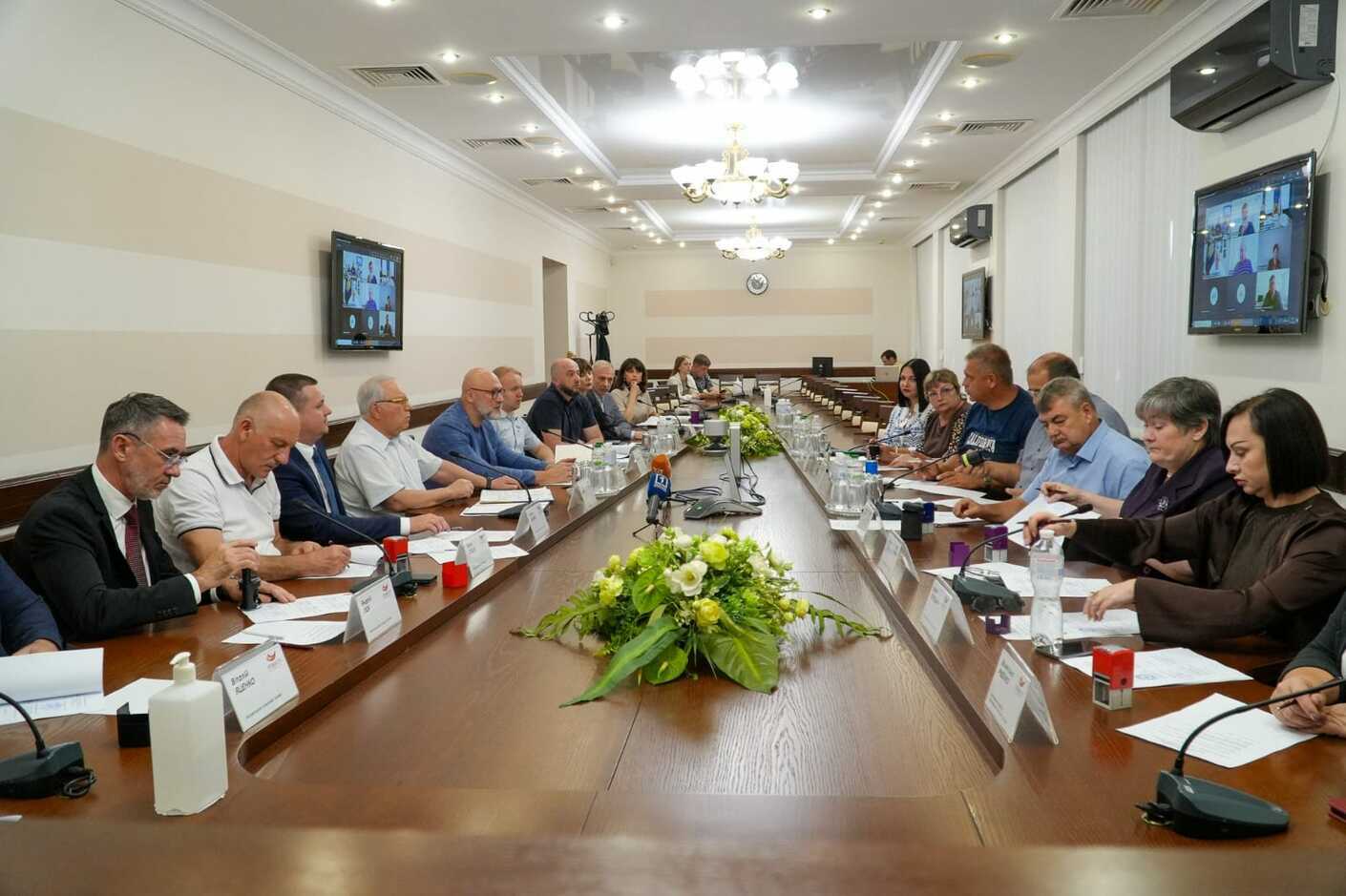
Working session during the event at which the Memorandum of Cooperation on the Formation and Development of the Kryvyi Rih Agglomeration was signed. Kryvyi Rih, 3 September 2026.

Signing of the Memorandum of Cooperation on the Formation and Development of the Kryvyi Rih Agglomeration. Kryvyi Rih, 3 September 2026.
This result should not be viewed merely as the signing of a document. Far more interesting is the path that led to it. The Kryvyi Rih case gradually developed into a methodology of its own: first, knowledge; then, direct exposure to the experience of others; followed by work on the culture of interaction, the identification of practical common interests, an assessment of the positions of all communities, and only then a joint political decision.
In this process, the KRYTSIA: Support for Recovery of Kryvyi Rih Raion Project, financed by the Grand Duchy of Luxembourg and implemented by LuxDev — Luxembourg Development Cooperation Agency — in partnership with PROMAN and NUR, acted primarily as a catalyst and a platform. The Project helped mobilise professional expertise, organise dialogue, introduce the communities to Ukrainian and European experience, and turn an abstract idea of cooperation into concrete solutions. However, at every stage, the key decisions remained with the communities themselves.

Matthias Morgner, Deputy Team Leader of the “Support for Recovery of Kryvyi Rih Raion” Project, joins online the event marking the signing of the Memorandum on 3 September 2026.
Kryvyi Rih Raion: Scale, Contrasts and Shared Challenges
Kryvyi Rih Raion comprises 15 territorial communities and covers an area of 5,724.9 km². Its population is approximately 744,000. Its administrative and largest economic centre is Kryvyi Rih. To illustrate the difference in scale, the Kryvyi Rih urban community has more than 600,000 inhabitants, while some rural communities have populations of only a few thousand. This is precisely why the equality of communities and the balance of interests were fundamental principles for the future agglomeration.
The Kryvyi Rih area is one of Ukraine’s key industrial regions. In addition to its mining and metallurgical complex, it is home to enterprises in mechanical engineering, construction materials, chemical, food-processing, woodworking and light industries, while agriculture remains important for a substantial part of the territory. According to official data, more than 100 industrial enterprises representing different sectors operate within the Raion.
The full-scale war has made the interdependence of the communities even more apparent. The Raion is located in the south-west of Dnipropetrovsk Oblast and directly borders Kherson Oblast, meaning that its southern communities operate in an environment of heightened security and infrastructure risks. Following the destruction of the Kakhovka Dam in 2023, water supply became a shared challenge for Kryvyi Rih and a significant part of the Raion. Water supply, energy resilience, transport connectivity, environmental issues, waste management, economic recovery and access to services are challenges that often cannot be addressed effectively within the boundaries of a single community.
For reference: data on the area, population and composition of the Raion are based on official materials of the Kryvyi Rih Raion Military Administration; information on the economic structure is based on publicly available official data on the socio-economic profile of the Raion.
First — Understanding What We Are Talking About
Systematic work began at the end of 2025.
On 18 December 2025, within the framework of the KRYTSIA: Support for Recovery of Kryvyi Rih Raion Project, a webinar entitled “Kryvyi Rih Raion as a Regional Growth Pole: New Opportunities for Recovery and Development” was organised for the leaders of the communities of Kryvyi Rih Raion. Its purpose was not even to convince participants to establish an agglomeration, but rather to create a shared conceptual framework: what is a regional growth pole, what is a functional area, what is an agglomeration, why has the development of large urban areas in Europe long extended beyond administrative boundaries, and what could this mean for Kryvyi Rih Raion?
The expert for the webinar was Myroslav Kosheliuk, an expert in local and regional development, who subsequently accompanied almost the entire process. At this stage, it was important not to present the communities with a ready-made structure, but to pose a question: could Kryvyi Rih and the surrounding communities become a single functional area for development?
This approach also fitted well within the broader discussion about the future of Ukrainian agglomerations. People already live in one community, work in another and receive healthcare, education or administrative services in a third, while water, transport, environmental issues and economic links do not respect administrative boundaries at all. This is why the contemporary discussion on agglomerations increasingly concerns not the creation of another level of government, but the institutionalisation of cooperation between autonomous communities.
Lviv: Seeing That It Can Work in the Ukrainian Context
The next step was a study visit by the leaders of the communities of Kryvyi Rih Raion to the Lviv Agglomeration on 21–23 January 2026.
This was fundamentally important. Theory makes it possible to understand a model, but it is far more powerful to speak directly with the heads of communities that have already gone through a similar process.
Participants met not only with representatives of Lviv and the executive team of the Lviv Agglomeration Association, but also with the leaders of smaller communities that had already been working within the agglomeration for some time. This was one of the key elements of the visit: to hear not only the perspective of the large city at the centre of the agglomeration, but also that of smaller communities that were able to assess, in practice, the benefits, risks and actual balance of interests. Participants could ask direct questions: Does the large city not “absorb” its neighbours? How are the interests of smaller communities protected? Who makes the decisions? Why should a large city cooperate with its neighbours at all?
It was in Lviv that one of the most important ideas for the future Kryvyi Rih Agglomeration was articulated: a large city and its surrounding communities can be partners rather than competitors.
Representatives of the smaller communities within the Lviv Agglomeration explained that such a format does not deprive them of their autonomy. On the contrary, it enables them to address jointly issues for which an individual community is often too small: transport, water supply, waste management, environmental challenges and the attraction of major investment. A common voice of several communities is also far more likely to be heard both by the national government and by international partners.
For the Kryvyi Rih area, this was not an abstract discussion. Even at that stage, potential areas of joint work included water supply, transport connectivity, environmental issues and waste management — issues that cannot be addressed comprehensively by looking only at the administrative map of an individual community.
In fact, by that point, the communities of the Kryvyi Rih area had already begun discussing not whether they needed cooperation, but what form that cooperation could take.

Study visit by representatives of the communities of Kryvyi Rih Raion to the Lviv Agglomeration, 21–23 January 2026.
From Competition to Synergy
However, knowing about the benefits of cooperation is not enough.
In any agglomeration there is a natural tension between a large city and smaller communities, between different political teams, different budgetary capacities and local interests. This is why the next stage was devoted not to legislation or investment, but to a considerably more complex issue — the ability to work together.
On 2–3 April 2026, the workshop “From Competition to Synergy: Effective Interaction and Conflict Management in Communities” was held in Kyiv.
Its logic reflects very precisely one of the key lessons of the Kryvyi Rih case. Participants worked with conflicts, positions and interests, as well as management stereotypes. They learned to distinguish between the position “this is my community’s resource” and the underlying interest “we need jobs and development”; they mapped resources and looked for projects that could not be implemented effectively by one community acting alone.
Even the title of one of the sessions — “From Neighbourhood to Partnership” — accurately described the transformation that the process was seeking to achieve.
At the final stage, the communities worked on rules for interaction under which the voice of every community — including the smallest — would be heard. This is an extremely important element of any agglomeration process: cooperation cannot be built solely on economic rationale. It requires trust and a sense of security within the partnership.
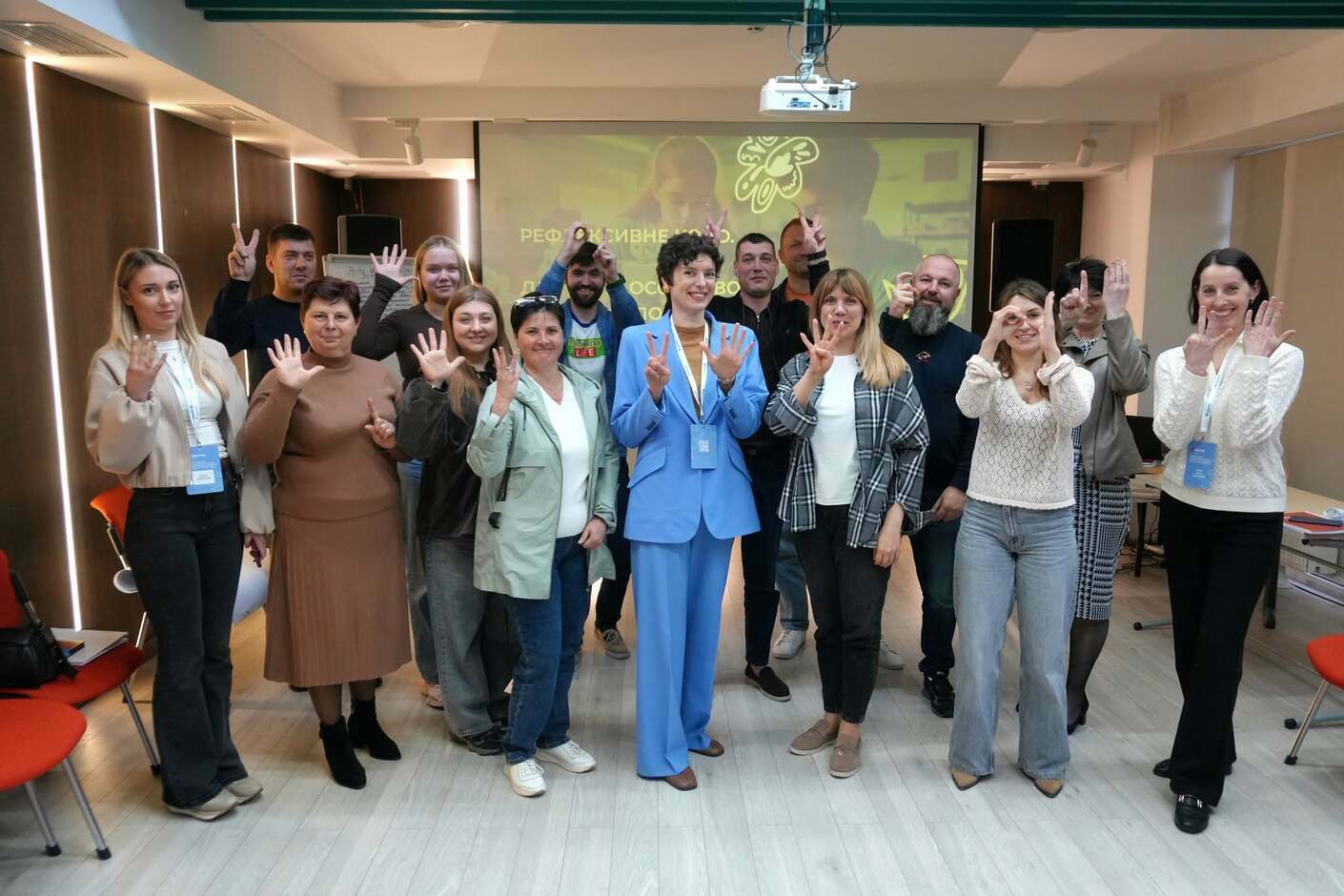
Workshop “From Competition to Synergy: Effective Interaction and Conflict Management in Communities”. Kyiv, 2–3 April 2026.
Lublin: From Cooperation to Major Projects
Almost immediately afterwards, on 14–17 April 2026, the delegation travelled to Lublin, Poland.
While Lviv helped participants understand how agglomeration-based cooperation can work in the Ukrainian institutional environment, Lublin demonstrated the next level — what such cooperation can deliver from the perspective of development and European investment.
The programme extended far beyond the issue of agglomerations. Participants explored Lublin’s strategic planning, business engagement, cooperation with universities, management of EU funds, implementation of large-scale infrastructure projects, water infrastructure, industrial areas and integrated transport.
A separate part of the programme focused on the Lublin Metropolitan Area and the mechanism of Integrated Territorial Investments (ITI). Participants saw how a city and surrounding municipalities — gminas — can jointly plan development and attract European funding for projects whose impact extends far beyond the boundaries of a single administrative unit.
This shifted the emphasis of the discussion. The agglomeration began to be seen not as another structure or another memorandum, but as a potential instrument for preparing major inter-municipal projects and for future integration into EU regional policy mechanisms.
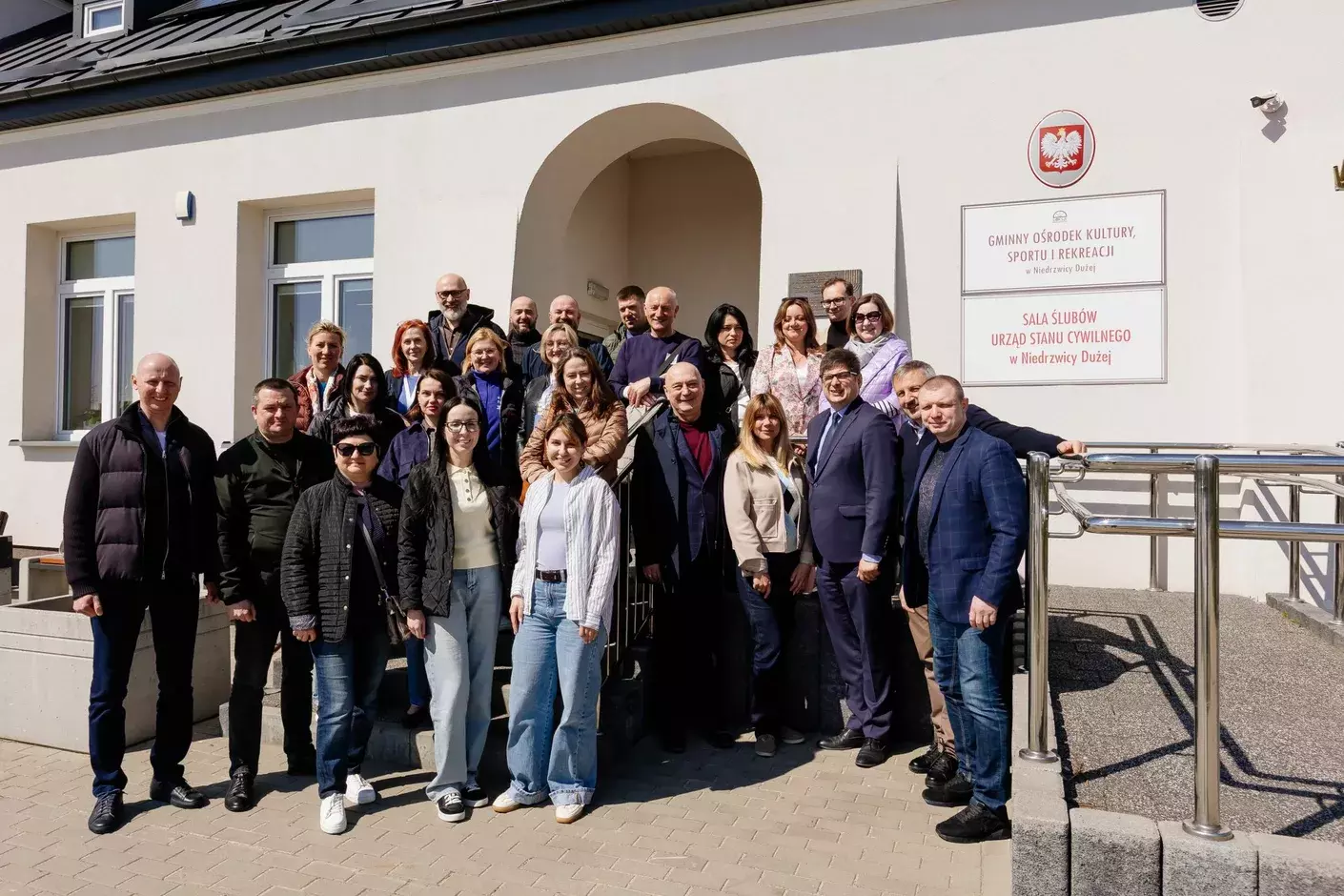
Photo 6. Study visit of the Kryvyi Rih Raion delegation to Lublin, 14–17 April 2026.
1 May 2026: The First Formalisation
The accumulated work produced its first political outcome.
On 1 May 2026, a Memorandum was signed, formally establishing the first composition of the Kryvyi Rih Agglomeration: Kryvyi Rih, Apostolove, Sofiivka and Lozuvatka communities. The Dnipropetrovsk Oblast Military Administration, the Kryvyi Rih Raion Council, the Kryvyi Rih City Development Institute and the KRYTSIA: Support for Recovery of Kryvyi Rih Raion Project also joined the process.
This marked the first formalisation of the agglomeration initiative. At the same time, the emergence of a core consisting of four communities immediately raised the next question: what should the future format of the agglomeration be, and who should participate in shaping it?
The establishment of the first formal core significantly increased the interest of the other communities in the Raion. This raised an issue that could either help the agglomeration grow or, conversely, create long-term mistrust: how could it be expanded without making new communities feel that they were simply being invited to join a structure that had already been designed?
From Joining to Shaping It Together
After 1 May 2026, it became clear that the next stage could not simply be reduced to the question of whom to “add” to the already established agglomeration.
To prevent the process from being perceived as a closed format in which an already defined group of participants decided whom to invite next, the broadest possible dialogue was needed.
The Project team proposed taking the discussion to a broader — effectively national — level: bringing around one table Members of Parliament of Ukraine, representatives of the relevant ministry, the Dnipropetrovsk Oblast Military Administration, Kryvyi Rih, the communities of the Raion, the Raion authorities and the expert community.
The objective was not merely to discuss the composition of the agglomeration, but once again to align understanding of the fundamental issues: what a modern agglomeration is, why it is created, what principles it should be built upon, and how the communities should cooperate with one another.
This format had another important function: to give the process greater visibility, professional validation and broader legitimacy. When the essence of an agglomeration and the principles of its development are discussed jointly by communities, the city, the oblast, the national level and independent experts, there is considerably less room for oversimplified political interpretations of the process itself.
The fundamental principle was simple: if the communities could reach a common vision, this should not mean mechanically adding new participants to a ready-made structure. It should mean jointly shaping a new and broader format for the Kryvyi Rih Agglomeration.
Ahead of such a gathering, experts Myroslav Kosheliuk, an expert in local and regional development, and Maryna Saienko, a certified trainer in effective communication and mediation, proposed conducting a preliminary diagnostic assessment of the communities’ positions and perceptions. The aim was to make the future event as focused as possible and to enable participants to move from general discussion towards decisions.
With the participation of Myroslav Kosheliuk, Maryna Saienko and Iryna Lebeda, a Project representative, a survey and interviews were conducted with representatives of the communities of Kryvyi Rih Raion.
The results showed a very high level of potential support for the agglomeration: 78.6% of respondents directly supported the initiative, while a further share remained undecided. At the same time, the assessment revealed an important risk: a significant number of communities reacted negatively to the fact that the first Memorandum had been signed without their participation.
This became an important management signal. The subsequent approach was adjusted so that, rather than explaining the benefits of an already completed structure to the other communities, everyone would be brought back to the same table to jointly shape its broader format.
The concept for the next stage established three principles: equality of communities, professional mediation and co-creation of solutions. New participants needed to feel not that they were being “added”, but that they were full co-creators of the agglomeration. Even the Roadmap was not to be presented as a finished document — it was to be developed directly by the representatives of the communities themselves.
This may be one of the most important elements of the entire methodology.
August 2026: Bringing Everyone Around One Table
On 11–12 August 2026, a two-day workshop entitled “The Future of the Kryvyi Rih Agglomeration and Mechanisms for Integrating Communities” was held in Kyiv.
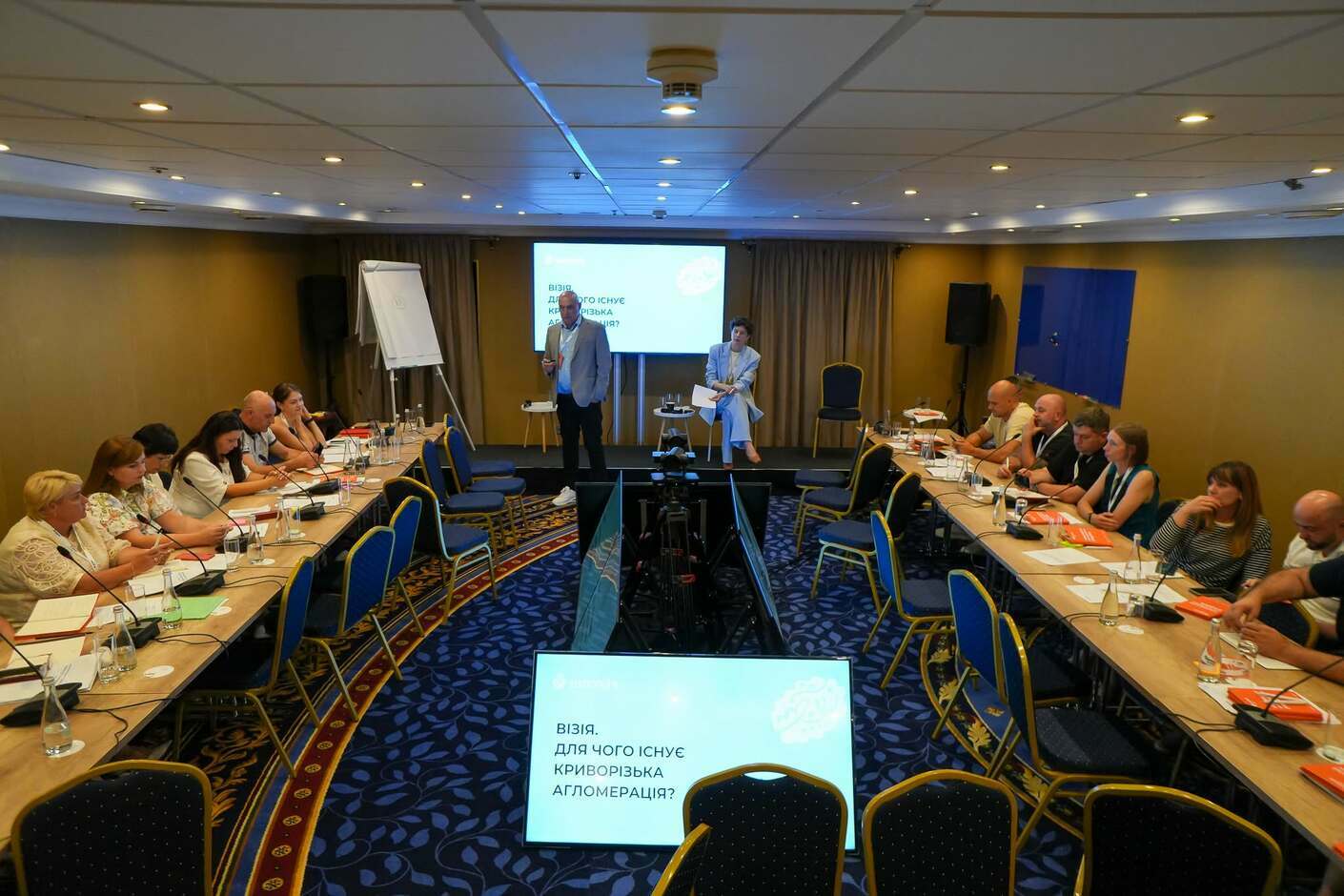
Photo 7. Workshop “The Future of the Kryvyi Rih Agglomeration and Mechanisms for Integrating Communities”. Kyiv, 11–12 August 2026.

Photo 8. Working discussion during the workshop “The Future of the Kryvyi Rih Agglomeration and Mechanisms for Integrating Communities”. Kyiv, 11–12 August 2026.
In terms of the composition of participants, this was no longer simply a training event. Around one table were representatives of practically all the communities of the Raion, Kryvyi Rih, the Kryvyi Rih Raion authorities, the Dnipropetrovsk Oblast Military Administration, the relevant ministry, Members of Parliament of Ukraine, experts and representatives of the Lviv Agglomeration.
The event was moderated by Myroslav Kosheliuk and Maryna Saienko. Roman Kizyma and Iryna Telehii, representatives of the Association of Local Self-Government Bodies “Lviv Agglomeration”, shared practical experience from the development of the Lviv Agglomeration.
This created several levels of dialogue at once. Representatives of the national authorities discussed agglomeration development policy and the prospects for regulatory frameworks. The Lviv Agglomeration shared the experience of an already functioning model. Kryvyi Rih presented its vision. However, most of the two days was devoted specifically to joint work by the communities.
Participants developed principles of interaction, discussed decision-making rules and mechanisms for ensuring trust and transparency, and — most importantly — moved from general discussion towards joint projects.
The diagnostic assessment conducted ahead of the workshop had already demonstrated a significant overlap of interests. Among the most pressing common issues identified by the communities were water supply, waste management, transport connectivity, energy resilience, economic development and investment attraction.
At the same time, opportunities for cooperation were emerging in education, healthcare, services for veterans and social support.
As a result, 14 of the 15 communities of the Raion expressed their readiness to jointly shape a broad format for the Kryvyi Rih Agglomeration.
By August 2026, this readiness was no longer the result of an information campaign, but rather the outcome of several months of joint learning, discussions, study visits and work on the communities’ own interests.
3 September 2026: From Four to Fourteen
The final step of this stage was the signing of a new Memorandum in Kryvyi Rih on 3 September 2026.
Fourteen territorial communities of the Raion became part of the Kryvyi Rih Agglomeration. Thus, less than nine months after the first conceptual discussion, and only four months after the establishment of the initial core of four communities, the agglomeration had expanded to cover practically the entire Raion.
During the event, Matthias Morgner, Deputy Team Leader of the KRYTSIA: Support for Recovery of Kryvyi Rih Raion Project, emphasised that the signing had been preceded by numerous meetings and extensive joint work, and that an agglomeration begins with trust and a willingness to move forward together.
And this perhaps summarises the entire process better than anything else.
The Memorandum was not the beginning of cooperation; it formalised the cooperation that had already been gradually built beforehand.

Participants following the signing of the Memorandum of Cooperation on the Formation and Development of the Kryvyi Rih Agglomeration. Kryvyi Rih, 3 September 2026.
What Can Be Learned from the Kryvyi Rih Experience
Looking back at the entire process, it becomes clear that the activities were not simply a series of separate training sessions and study visits.
First, the communities were given a common language so that everyone had the same understanding of what an agglomeration is.
Then they saw a Ukrainian example in Lviv and had an opportunity to ask difficult questions directly to communities already working in such a format.
The next step was not strategic planning, but work on trust, conflict and a culture of partnership.
In Lublin, participants saw the European perspective — that inter-municipal cooperation can be linked to strategic planning, integrated investments and large-scale infrastructure projects.
After the first formalisation, the process was not mechanically scaled up. First, a diagnostic assessment of the communities’ positions was carried out, which revealed not only support, but also mistrust and concerns. The discussion was then deliberately broadened to the national level so that all key stakeholders could develop a shared understanding and common rules of the game.
Only after this were participants brought together to jointly design the future model, with decisions not imposed from above, but developed by the communities themselves.
If we attempt to describe this sequence as a methodology, it looks as follows: knowledge → practical experience → trust → common interests → first formalisation → diagnostic assessment → broadening the dialogue to the national level → co-creation → new joint formalisation.
An international technical assistance project can be extremely useful in such a process, but its role is not to make decisions on behalf of the communities. It can initiate the process, act as a neutral facilitator, provide expertise and convene a space in which the communities themselves arrive at a decision to cooperate.
This is precisely the role that the KRYTSIA Project consistently played in Kryvyi Rih Raion — in partnership with Kryvyi Rih, the communities of the Raion, oblast and Raion authorities, the Kryvyi Rih City Development Institute, Ukrainian and international experts, and representatives of the Lviv Agglomeration.
The Memorandum Is Not the Finish Line
On 3 September 2026, only the first stage came to an end.
The considerably more difficult part lies ahead: turning the political agreement of 14 communities into a permanent and functioning development mechanism.
The immediate next steps include establishing permanent coordination mechanisms between the communities, synchronising strategic planning and developing a joint portfolio of investment and infrastructure projects to be promoted at national and international levels.
Water, energy resilience, transport, waste management and economic development are no longer abstract topics for discussion. For Kryvyi Rih Raion, they are shared challenges and may therefore become the first real tests of the agglomeration’s capacity.
Ultimately, the success of the Kryvyi Rih Agglomeration will not be determined by the number of signatures on the Memorandum.
It will be determined by how many problems that the communities could not solve individually they will be able to solve together.
Matthias Morgner — Deputy Team Leader, KRYTSIA: Support for Recovery of Kryvyi Rih Raion Project, LuxDev — Luxembourg Development Cooperation Agency.
Andrii Nahornyi — Governance, MSME and Energy Coordinator, KRYTSIA: Support for Recovery of Kryvyi Rih Raion Project, LuxDev — Luxembourg Development Cooperation Agency.
Tags:
agglomeration regional development
Source:
Проєкт «КРИЦЯ» - Підтримка відновлення Криворізького району
08 October 2026
Відновлення медицини починається в громадах: чому реабілітація має стати частиною місцевої політики
Відновлення медицини починається в громадах:...
Реабілітація, доступна медична допомога та стійка медична інфраструктура дедалі більше визначатимуть спроможність...
08 October 2026
Простір, де дитину чують: досвід Миколаєва у підтримці родин дітей з аутизмом
Простір, де дитину чують: досвід Миколаєва у...
Портал «Децентралізація» продовжує серію матеріалів про рішення громад, які роблять публічні простори та послуги...
08 October 2026
Мінфін: за 9 місяців 2026 року до загального фонду місцевих бюджетів надійшло 441,3 млрд гривень
Мінфін: за 9 місяців 2026 року до загального...
Протягом 9 місяців 2026 року до загального фонду місцевих бюджетів надійшло 441,3 млрд грн, що на 67,2 млрд грн...
08 October 2026
21 жовтня – онлайн-лекція «Як продуктивно взаємодіяти з медіа»
21 жовтня – онлайн-лекція «Як продуктивно...
21 жовтня 2026 року о 15.00 відбудеться безоплатна онлайн-лекція «Як продуктивно взаємодіяти з медіа» для...