Data, agencies, and people: What transforms regional policy into action in communities
Regional policy will not work without data, digital tools, and teams capable of turning strategies into specific decisions for communities. This is particularly important for small territories, where a lack of experts and resources often prevents even available opportunities from being used.
This topic was addressed during the “Decentralisation 2026: Legislative Agenda” forum by Serhii Hunko, Coordinator for Regional Digitalisation of EGAP Programme, and Yelyzaveta Savchuk, Director of the Vinnytsia Regional Development Agency.
Data is the basis for decisions, not merely an addition to them
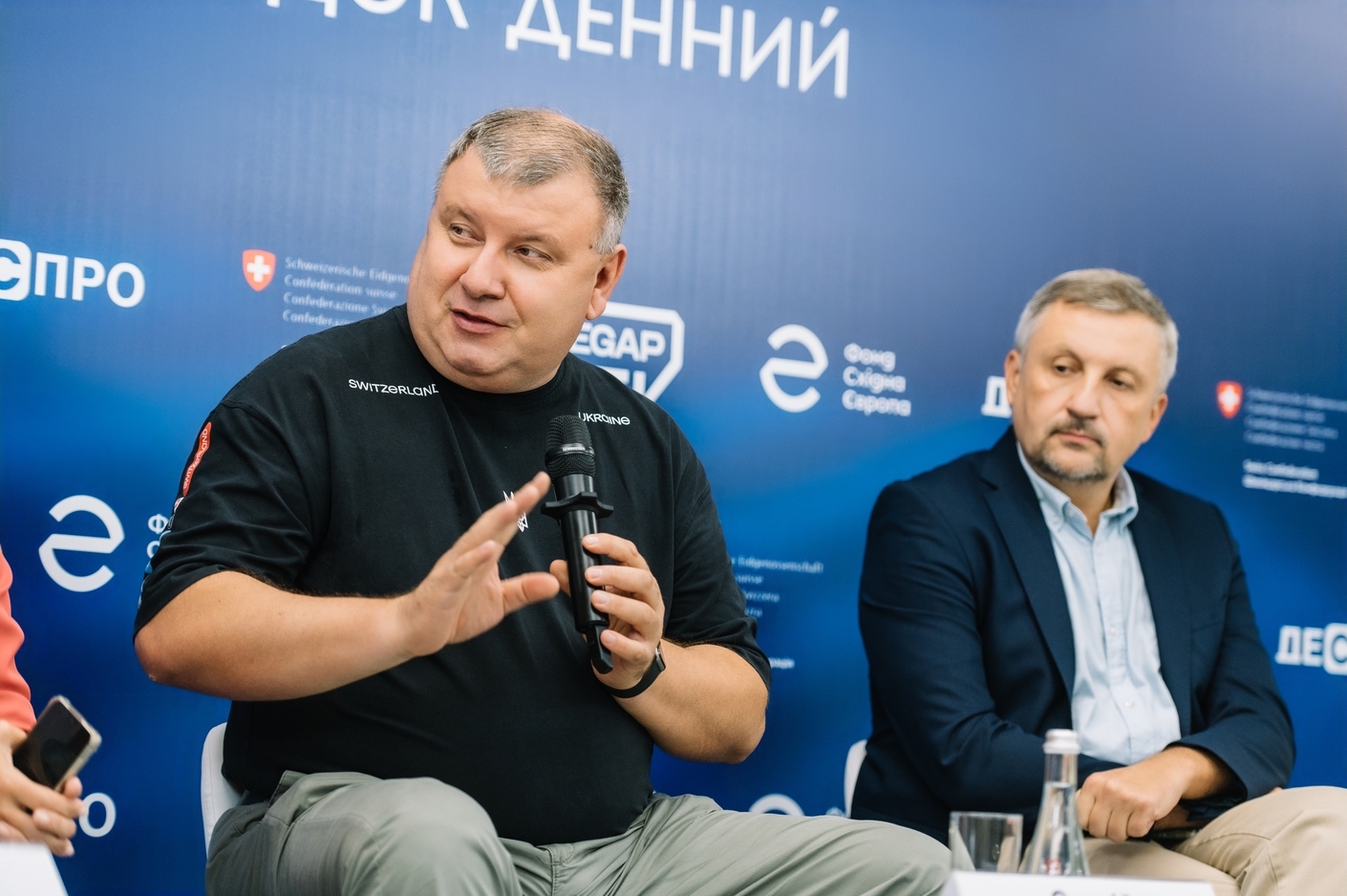
Serhii Hunko argues that any policy, management system or decision-making process must be data-driven. EGAP programme supports projects focused on the collection and organisation of data in electronic format, as well as the development of statistics, digital tools, and solutions.
He provided an example of the KOMS platform, created on the initiative of the Committee of the Verkhovna Rada of Ukraine. It aims to facilitate dialogue between the Parliament and community leaders, as well as to test legislative proposals against the practice of local self-government. The platform is currently supported by a team from the NGO DESPRO, which uses it to conduct surveys and research into the views of community leaders.
‘Local governments have to be heard as much as possible and have to be involved in the process, including legislative processes. It is unlikely that anyone will be able to do anything beneficial for local governments without the involvement of local governments themselves.’
The regional component of EGAP Programme, says Serhii Hunko, operates in nine regions and covers 86 pilot communities. Most of them are small. The gap between large cities and small communities is particularly evident there – in terms of resources, opportunities, and access to specialists.
‘A huge problem for small communities, which may not be so noticeable in cities, is human capital – skilled professionals who are nowhere to be found, nowhere to be trained, and who cannot be paid.’
In his view, digital tools help communities organise their work faster and make it more efficient. However, simply purchasing or developing a service is not enough to implement them. Political will is needed within the community – an understanding on the part of the community leader and their team of the practical benefits a specific solution brings.
‘If you show the community leader examples, best practice, and the real benefits of a particular tool, then the community begins to change. If you secure political will within the community, the situation begins to change radically.’
At the same time, Serhii Hunko cautioned against excessive regulation of digitalisation. He does not believe that every digital solution requires separate legislative provisions: sometimes excessive regulation can hinder practical work. Instead, what is important is a systematic approach, strategic planning for the development of regions and communities, and the use of digital solutions in this work.
Regional Development Agency: From consultancy to project management
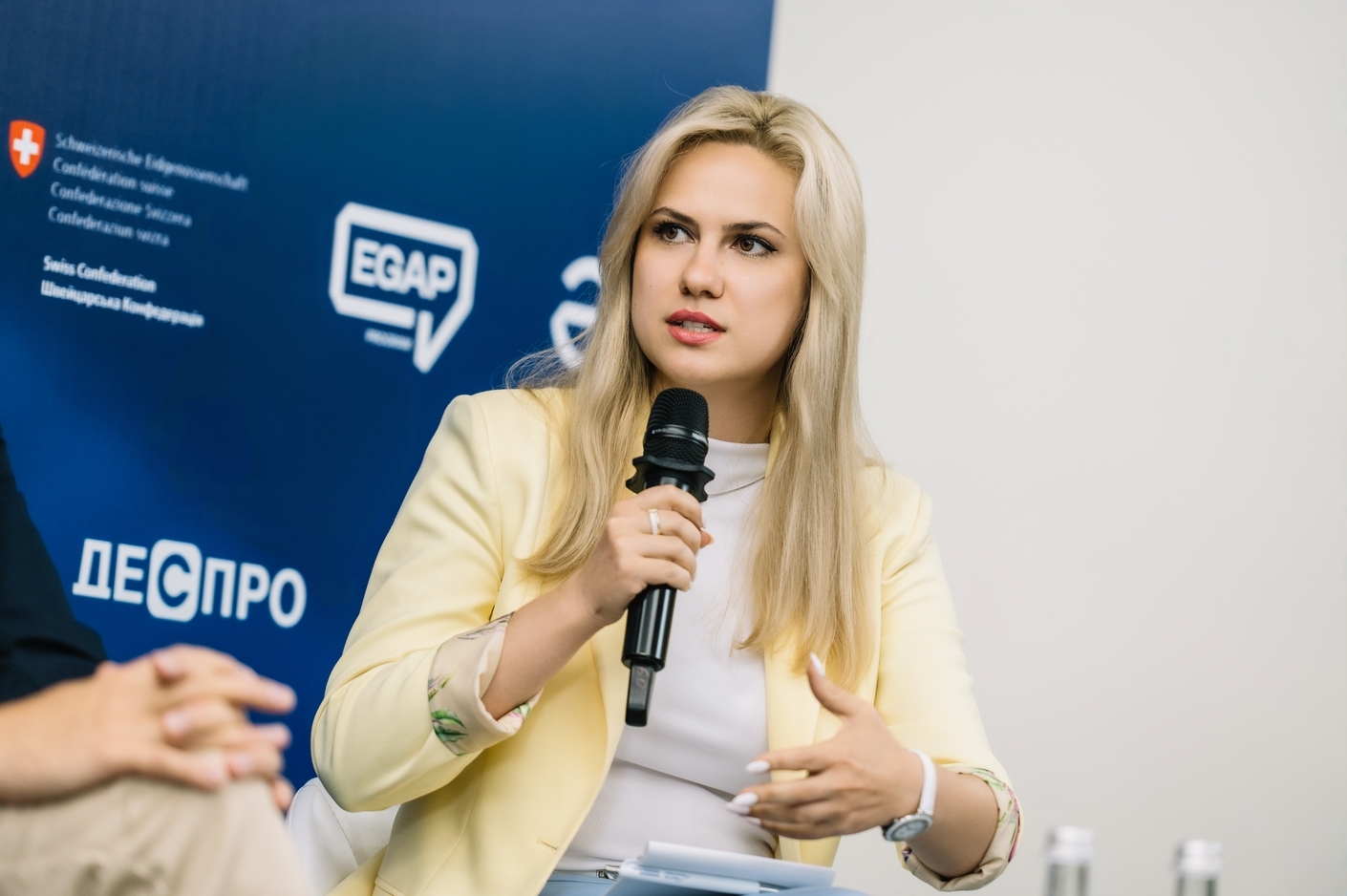
Yelyzaveta Savchuk remarked that over the past two years, the Vinnytsia Regional Development Agency has significantly strengthened its expertise. Whilst previously its team was not yet able to fully support communities in preparing strategic documents or municipal energy plans, such work is now an integral part of its capabilities.
This has been facilitated, in particular, by support from Switzerland and UCORD project. Thanks to EGAP Programme, the agency also helps communities to draw up digitalisation programmes, develop digital services, and use mobile solutions to bring administrative services closer to the public.
‘We are needed as an institution to help, consult, and provide information support.’
The director explained that the agency also gains experience in managing infrastructure projects. This helps to build teams that understand the needs of communities on the ground, are able to work with international partners, and can explain to them the practical challenges involved in implementing projects.
Working with European programmes has become a separate area of focus. The Vinnytsia Regional Development Agency is the national contact point for URBACT programme. The agency is ready to consult communities that plan to apply for international programmes, as for many of them even the first step – preparing the application form – remains challenging.
‘We want these programmes to come to Ukraine as much as possible, so that communities learn to work with this funding and so that they are not afraid.’
Yelyzaveta Savchuk stressed that financial stability is of fundamental importance for agencies. Only under such conditions can they build and retain professional teams, develop their expertise, and take on more complex tasks.
She also underscored that agencies should not compete with business clubs or chambers of commerce and industry. Their role is to bring stakeholders together around the needs of companies and the region, to help businesses enter foreign markets, and to jointly seek solutions.
The participants in the discussion agreed that, whilst legislative changes are important, they will not, on their own, ensure the development of regions. To achieve this, communities and regions need quality data, digital tools, trained specialists, robust institutions, and a willingness to put new opportunities into practice.
Read more about the general legislative agenda, outlined during the forum by representatives of the Parliament, the Government, and international partners, in the article “Delineation of powers, community resources and rules for frontline territories: Legislative agenda of decentralisation”.
Read more about the findings of a survey of community leaders on legislative priorities in the article “Remuneration, personal income tax, and legitimacy of councils: What community leaders named as legislative priorities”.
Read more about the staffing capacity of communities, administrative services, and the legislation on administrative fees in the article “Administrative Service Centres start with people: What communities need for quality administrative services”.
Read more about the powers of local councils, military administrations and special rules for frontline territories in the article “How to retain the legitimacy of local councils during wartime and regulate the functioning of frontline communities”.
Read more about the involvement of local government associations in law-making and their proposals for strengthening the resource base of communities in the article “Local government associations: Draft laws to be developed with communities, and resources to remain locally”.
Read more about Anatolii Tkachuk’s approaches to reforming the system of planning and financing regional development in the article “Four steps to effective regional policy: Anatolii Tkachuk’s approaches”.
Read more about Ukraine’s preparations for the EU cohesion policy in the article “EU Cohesion Policy: Ukraine needs not only laws, but a system of governance and partnership”.

Source:
Портал "Децентралізація"

21 September 2026
Держава і місцеве самоврядування: від взаємодії до спільної відповідальності за розвиток України
Держава і місцеве самоврядування: від взаємодії...
Стаття присвячена розвитку партнерства між державною владою та місцевим самоврядуванням у підготовці й реалізації...
21 September 2026
Не після перемоги. Міжнародна співпраця прифронтових громад
Не після перемоги. Міжнародна співпраця...
Коли за кілька десятків кілометрів тривають бойові дії, думати про міжнародні партнерства здається майже недоречним....
21 September 2026
European RDA Trends that Made Them Successful
European RDA Trends that Made Them Successful
Across Europe, Regional Development Agencies (RDAs) are now redefining what it means to drive regional growth. They...
20 September 2026
Oleksandr Korniienko: The Carpathian Initiative...
The Carpathian Integration Initiative is intended to provide communities and regions not only with a new...