Renovation of senses: How Savran transformed a former russian headquarters into an innovation hub for young people
Formerly, the building, constructed in 1854 on the territory of the Pivnichnyi Vocational College in Savran, Odesa region, housed a russian headquarters with a casemate, and later served as a command post. During the World War II, it was home to the Romanian police and a torture chamber with a gloomy basement.
For many years, this building scared off passers-by: a collapsed roof, damp and cracked walls, the smell of neglect and a gruesome history. It was impossible to legally remove it from the register. To restore it, huge sums of money were needed.
Today, it is home to a modern greenhouse with parrots, 3D printers, VR headsets, and computer-controlled machines. This is the story of how the vocational college, in partnership with the DECIDE Project, did more than just repair the walls; the college overcame the hostile architecture and created a space for those who will rebuild the country.
‘The Savranskyi Career Guidance Hub is the tenth hub we have opened in Ukraine. It is in fact a career education “laboratory” where young people can try their hand at blue-collar trades in a practical environment. Ukraine is currently at war; there is a lot of destruction, and we realise that rebuilding the country is not a task for a single generation. The Savranskyi Hub offers a wide range of options: from culinary professions to woodcarving, and every teenager can try their hand at these trades. We want tens, or perhaps even hundreds of thousands, of children in Ukraine to try their hand at different professions and be able to make a conscious choice. We want them to build their future here, in their own country and in their own communities. To this end, we are working with communities, schools, businesses, and the authorities,’ explains Valentyna Poltorak, DECIDE Project Manager.
The beginning and the challenges faced
When the team became involved in DECIDE: VET, an initiative aimed to create a career guidance hub, no one fully realised just how challenging the task would be.
‘In order to save money, create a space that meets the expectations of the students and the college team, and, most importantly, gain real-world work experience, we decided to renovate the building by ourselves. Future carpenters repaired the roof, future tilers laid the tiles, future welders reinforced the walls and built the welded trusses for the greenhouse, whilst future woodworkers took charge of all the woodwork. Of course, everything was done together with the vocational training instructors,’ says Yaroslava Zhyrun, director of the Pivnichnyi Vocational College.
A year and a half of daily hard work and constant challenges. The walls were so damp that the bricks literally crumbled in our hands. We had to reinforce the building and re-plaster it just to keep it standing.
‘Despite everything, the students had a unique opportunity: they not only studied, but also created with their own hands an environment in which they wanted to spend their time. When you build something for yourself, the result becomes ten times more valuable. We experienced no opposition or negativity whatsoever – on the contrary, both teachers and students worked with incredible enthusiasm. They saw how their work was transforming a ruin into a work of art. We are sincerely grateful to DECIDE Project for this incentive. This example has proven that if there are people around you who are ready to support your idea and invest in it financially, you can create truly amazing things,’ says Yaroslava Zhyrun.
The total budget for the project was UAH 6.33 million. Of this, UAH 4.1 million was provided by DECIDE Project, UAH 1.08 million by the Odesa Regional State Administration, and a further UAH 1.15 million was provided from the special fund of the Pivnichnyi Centre for Vocational Education. Within the scope of the project, a 370 m² building was renovated: the façade was insulated, the roof was replaced, new utility networks were installed, and a fire safety system and barrier-free access were fitted.
‘If we had done this by hiring a contractor, I doubt we would have managed to keep the cost under UAH 100 million. No one would simply have taken on the job of renovating it,’ says the director.
Six spaces under one roof: from virtual reality to craftsmanship
Today, the Savranskyi DECIDE Hub consists of six unique facilities. These are well-developed ecosystems where students and visitors to the hub can take a journey from an idea to a finished product:
1. Woodworking and IT technologies. This is a space which the team internally refers to as the “workshop”. But behind this simple name is a real technological centre.
‘Our first facility is the heart of the technologies of the hub. Here we have accumulated equipment that operates on the basis of numerical control software. Basically, here we show children the future of the industry: programmes are launched directly from a computer, driving the machines. In our case, we focus on woodworking, but the operating principle is identical to that of machines that cut metal or operate in welding shops. This is a universal approach that unlocks the door to any modern technical industry,’ explains Vladyslav Merzliak, a vocational training instructor and IT teacher.
In addition to the machines, the workshop is equipped with a 3D printer, giving teenagers the opportunity to see how three-dimensional parts are created piece by piece.
‘For many children, this technology seems extremely complicated and out of reach. But we start up the equipment together, offer guidance, and try it out in practice. When a child sees the process from the inside, their fear of technology disappears. If you start to look into it, you realise that you can master these machines quite quickly. We want them to feel that modern manufacture is interesting, prestigious, and entirely within their capabilities,’ adds Vladyslav.
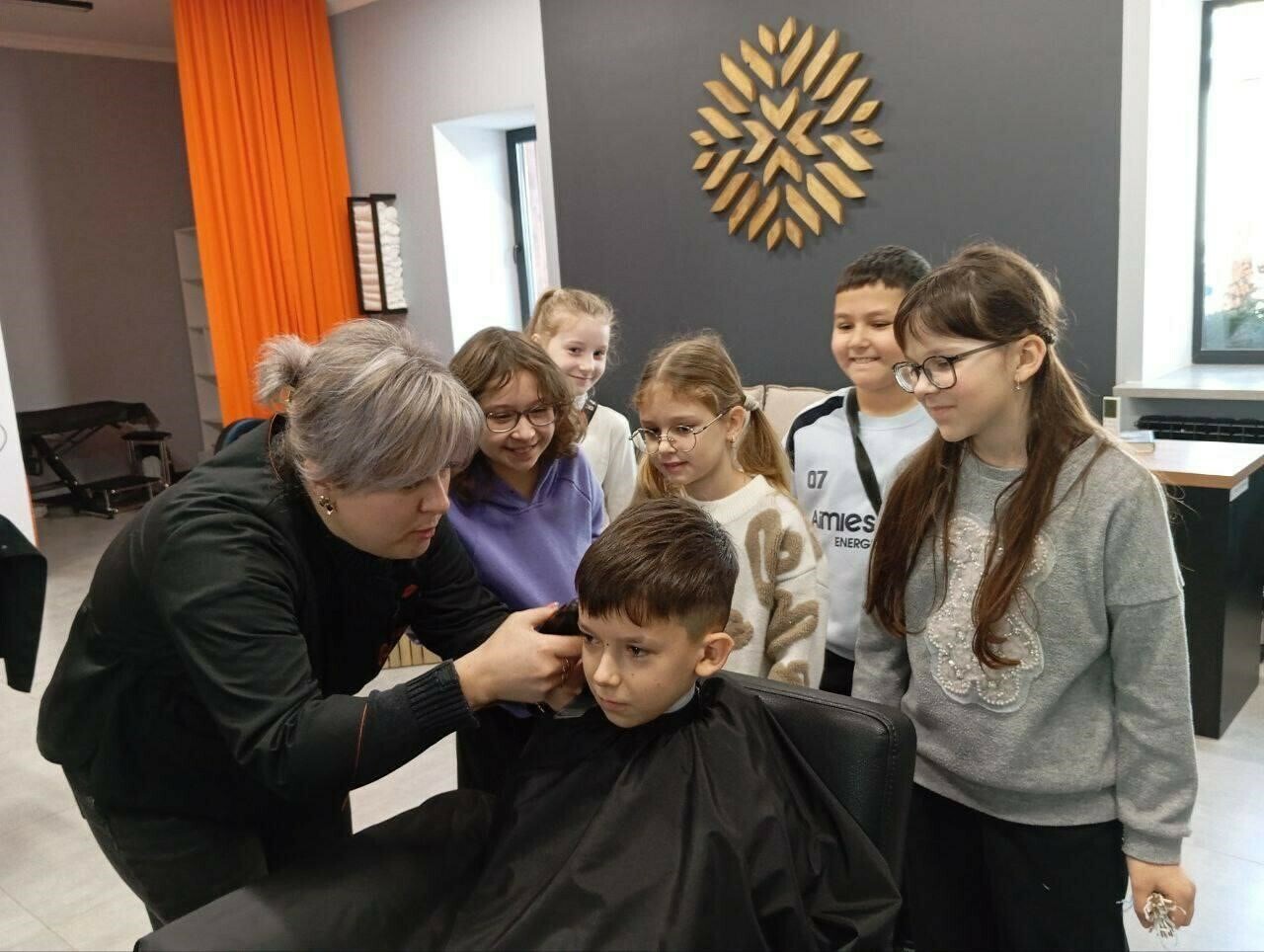
2. Beauty workshop: manicure and hairdressing. Two workstations, equipped to the latest standards. For the college, this is not only about training, but also about fostering a culture of personal care.

‘We want our children to get used to a high standard of living. For example, we have installed a professional shampoo chair, the only one of its kind in Savran. We teach them self-respect: so that both girls and boys understand that they deserve the best service and should be able to provide it to others,’ says Yaroslava.
3. The workshop for tailors and pattern-makers. Here, modern embroidery machines are used, with a focus on environmental friendliness. Students sew garments from linen and even a unique fabric made from nettles.
‘This place is not just a workshop, but an attempt to promote Ukrainian traditions and embroidery. We have already achieved our first successes: we have set up a mini-showroom at the hub and produced two batches of 20 sets of costumes each for clients in Germany. We also produced uniforms for a local school with large embroidered “Red Fox” logos. And, of course, we fully supply our own students – chefs, welders, and carpenters – with professional clothing. This is a living example of how a craft is transformed into a product in demand,’ says the director.
4. Kitchen-café – a space where students can make their own pizza or pastries during career guidance sessions and then taste them right there.
‘When we were planning this workshop, I remembered my own childhood. I recall how we were taken on a school trip to a bakery: we were shown the processes, and then treated to some fresh bread. It was delicious, but it never made me want to become a baker or a pastry chef. Because real career guidance comes not from watching, but from doing. We want to get children involved from as early as nursery school – so that they can knead the dough themselves, feel it, and then calmly enjoy the result of their work. This is how a love for the profession is born,’ comments Yaroslava Zhyrun.

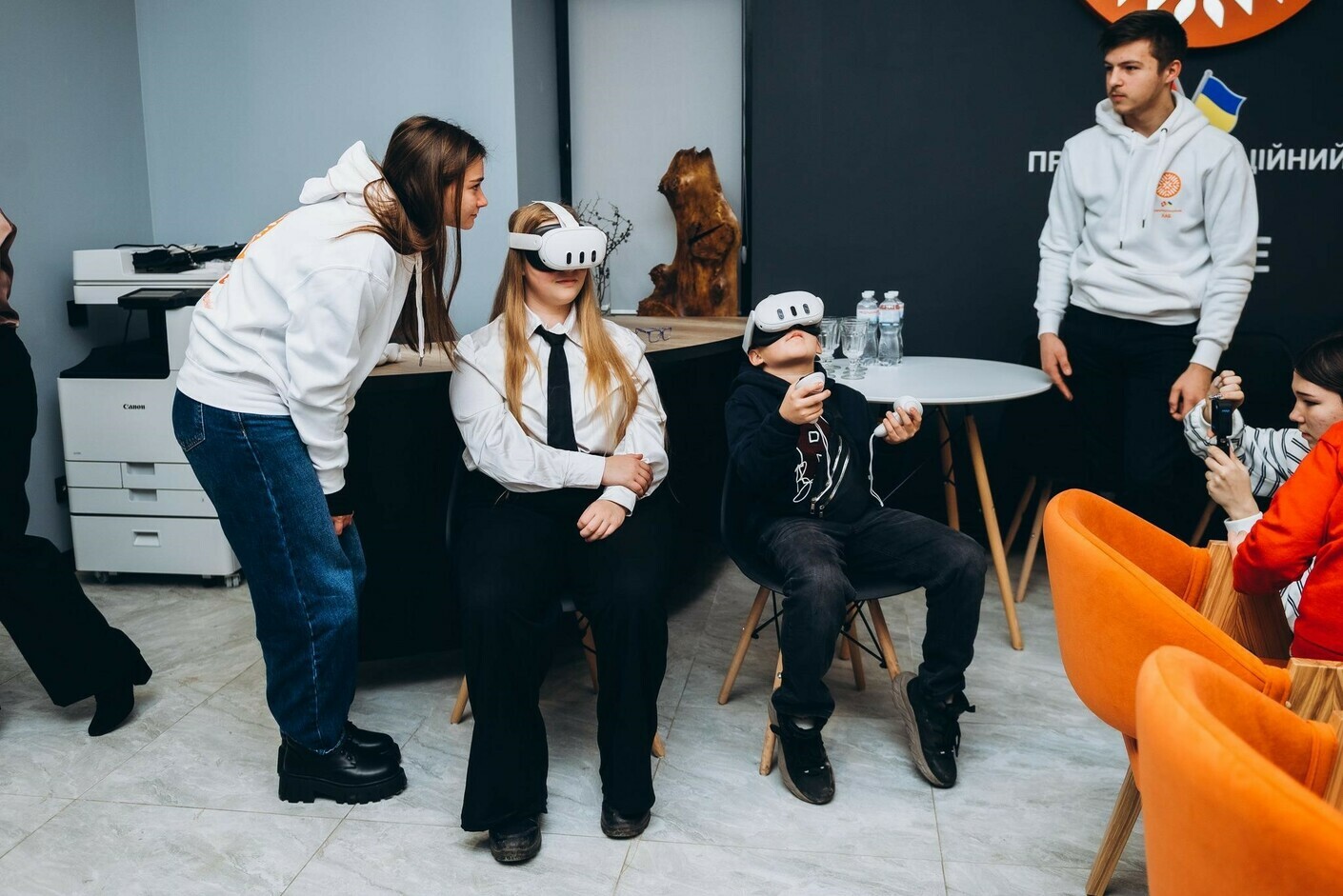
5. Training room and VR zone. This is a space for future travel agents and administrators. Using VR headsets, teenagers can ‘visit’ any spot in the world without leaving the hub, which is super important for the development of spatial imagination and knowledge of tourist attractions.
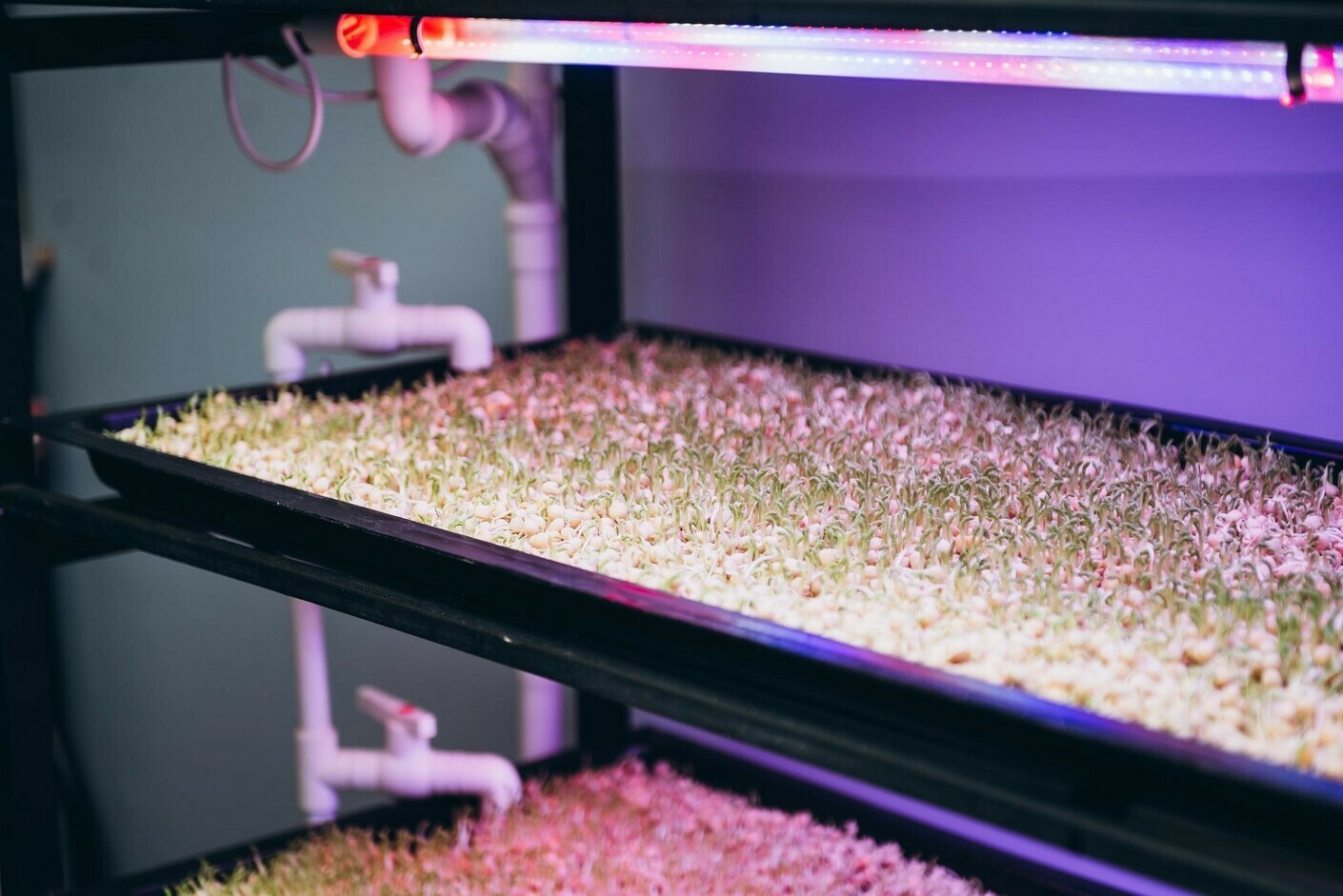
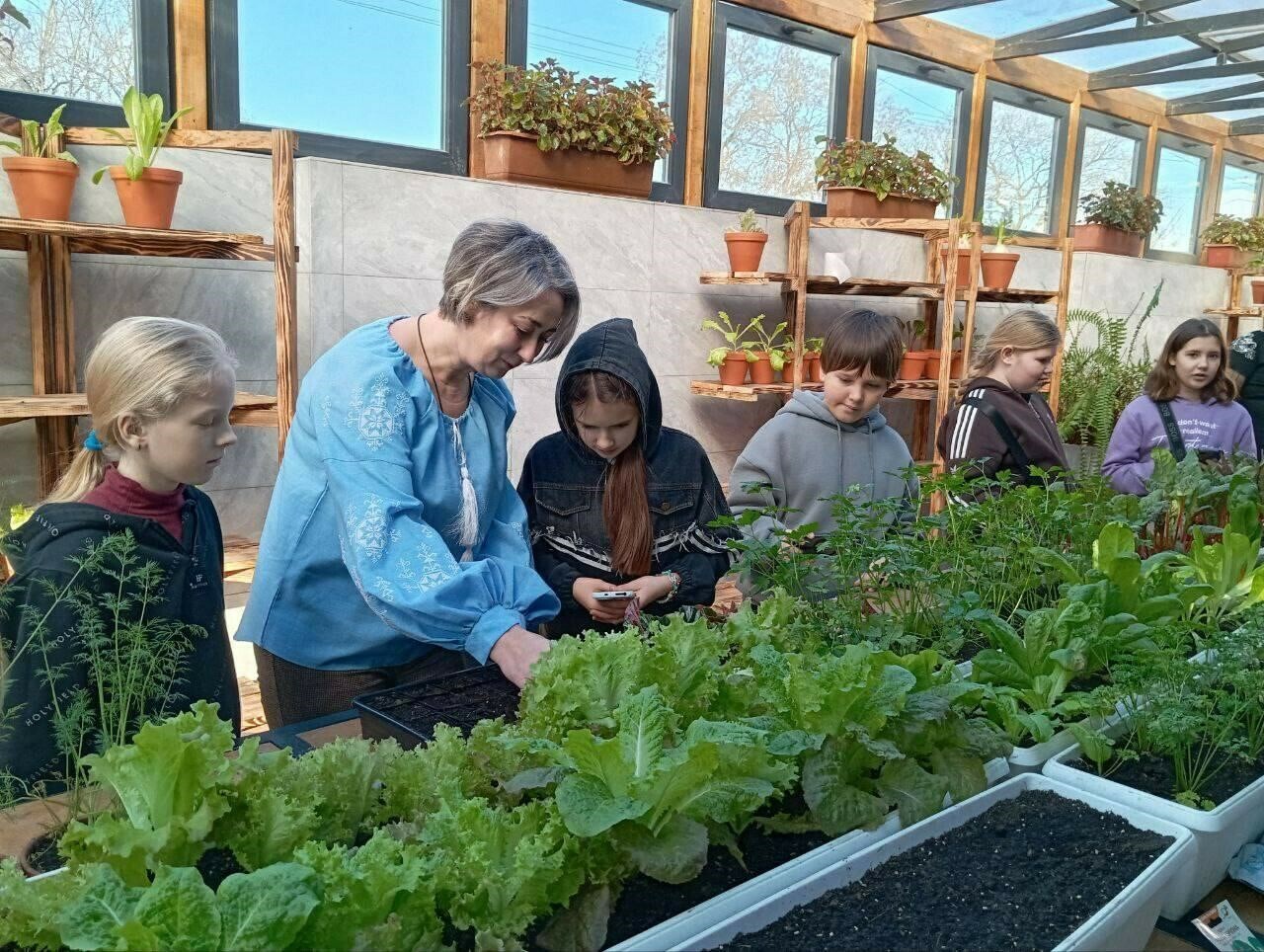
6. Hydroponic greenhouse. Here, under grow lights, fresh spinach, rocket, and cucumbers are grown for the college canteen, whilst parrots create a cosy atmosphere. The entrance to the greenhouse leads directly into the very same historic cellar, which now serves as a reliable bomb shelter.
Breaking stereotypes: a profession as an asset
The doors of the hub are open every day, and the college team is ready to be as flexible as possible – even welcoming visitors at the weekend. However, during the first few months of work, they realised that a standard tour was not enough. When 30 children are rushed through all the workshops at once, they become overwhelmed with emotions and do not have time to grasp the essence of the profession.
‘We want to develop a schedule so that children not only rush through the workshops just to tick them off a list, but immerse themselves in one profession for a whole day. For example, today the beauty station is open – and you spend the whole day in that profession. We already have requests from schools to hold biology lessons in our greenhouse, as we have powerful microscopes that enable students to really study how a plant grows. We want the children to feel at home here, to get used to the space. We need to start with the nursery: children come in, have a look around, and make a blanket for their pet themselves. This is how an interest in work develops from an early age,’ says Yaroslava Zhyrun.
A separate challenge for the hub is overcoming the psychological barrier. In rural areas, this level of infrastructure development is unusual, and this can sometimes even scare off potential students.
‘We need to understand that breaking down stereotypes is difficult. When I arrived in the city 20 years ago, I was afraid to go into an expensive shop because everything there was too nice and ‘not for me’. In our community, there is no other place where everything is as well-designed as it is at the hub. Children come in, have a look, and we want them to feel like regular visitors, not just casual passers-by. We already hold vocational lessons at the hub and plan to expand our cooperation to include biology, vocational training, and other subjects,’ says Oleksandr Lebedenko, a history teacher.
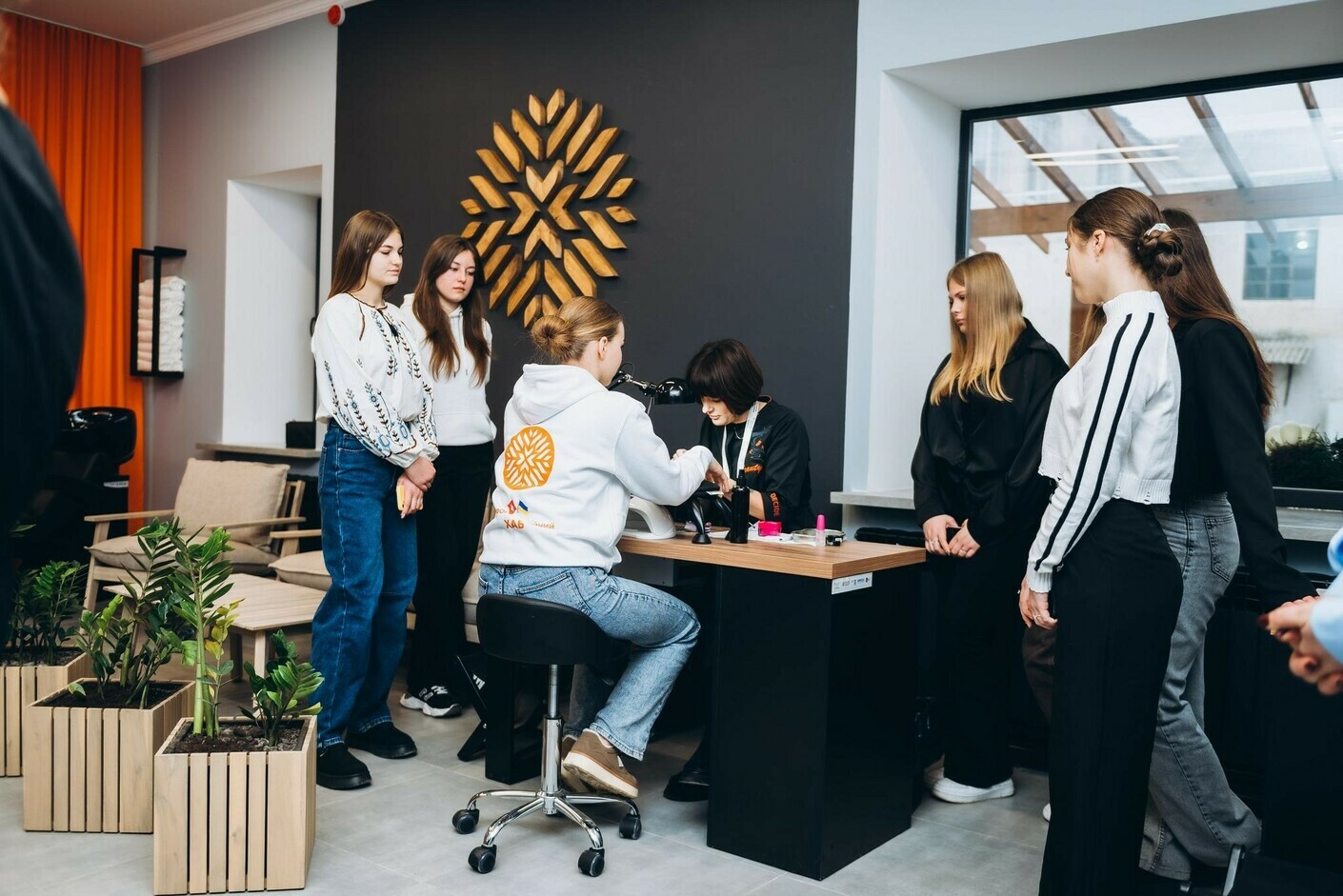
The teacher is convinced that modern vocational education is primarily about independence:
‘We have managed to implement European standards: nothing unnecessary, completely barrier-free. Vocational education is often perceived as something to be feared, but we have to prove that success in life is not just about a diploma that gives you nothing. You can have a profession and earn five times more than people with a university degree,’ says Oleksandr.
Another challenge is the hidden competition with schools. Amid the reform of specialised secondary education, schools are trying to keep pupils in Grades 10–11, often discouraging them from enrolling in vocational schools. But the hub has already become a powerful “soft power” tool. The team builds on its image: every child should leave the hub with something they can take home. For example, schoolchildren are invited to bring their own T-shirts, onto which the hub will embroider a logo or print a slogan free of charge.
In general, the vocational college emphasises that the hub has been created not only to provide career guidance in blue-collar professions, but also to introduce students to the world of professions in general. Therefore, the hub is beneficial for schools in general – not just for those students who plan to study there.
The team has many plans: from engaging neighbouring communities to organising meetings with successful employers. Because one thing is when a teacher talks about salaries, and quite another is when a businessman comes along and says, ‘I’ve built my business on this profession, and if you master it, I’ll give you a job and decent wages.’
A bridge between education and business: the challenges of real cooperation
The involvement of employers in the Savranskyi Hub remains a complex matter. Despite the availability of modern facilities, the business sector is still approaching the educational institution with caution.
‘Let’s be honest: at the moment, there is no long queue of business partners. However, I am convinced that businesses will soon come to us. This will happen when they sharply feel the shortage of workers. The reality is that men are being called up for military service, and it is young people under 25, graduating from vocational colleges, who will become the resource on which the economy will depend,’ explains Yaroslava Zhyrun.
Oleksandr adds, ‘Today, micro-business is a powerful force. If you have mastered the trade of a woodworker or understand hydroponics, you can set up your own business in the village. This is about independence: you no longer need to go away to find work; you can earn a living for yourself and your family right here.’
Despite all the difficulties, with the support of DECIDE, students now have the opportunity to see real production from the inside.
‘We cannot say that there is no cooperation at all. With the help of DECIDE, the community has organised excursions for local children to a large sewing factory, a farm, a horse farm, and a tourist attraction. It is important for children to see the scale of things. I believe we will establish cooperation with employers; it just takes time,’ concludes the director of the college.
“Oh, it’s our little bird.” What can be achieved in Savran and how
How can we know that the hub is really working and benefiting the community? For Yaroslava Zhyrun, the answer to this question consists of three clear components: overcoming stereotypes, attracting young people, and financial sustainability.
‘Our main task is to finally break the outdated stereotype about vocational schools. The hub is the ideal tool for this, as it clearly demonstrates the modernity of vocational education. We aim to promote blue-collar professions so that young people consciously choose to study at a vocational college,’ notes Yaroslava Zhyrun.
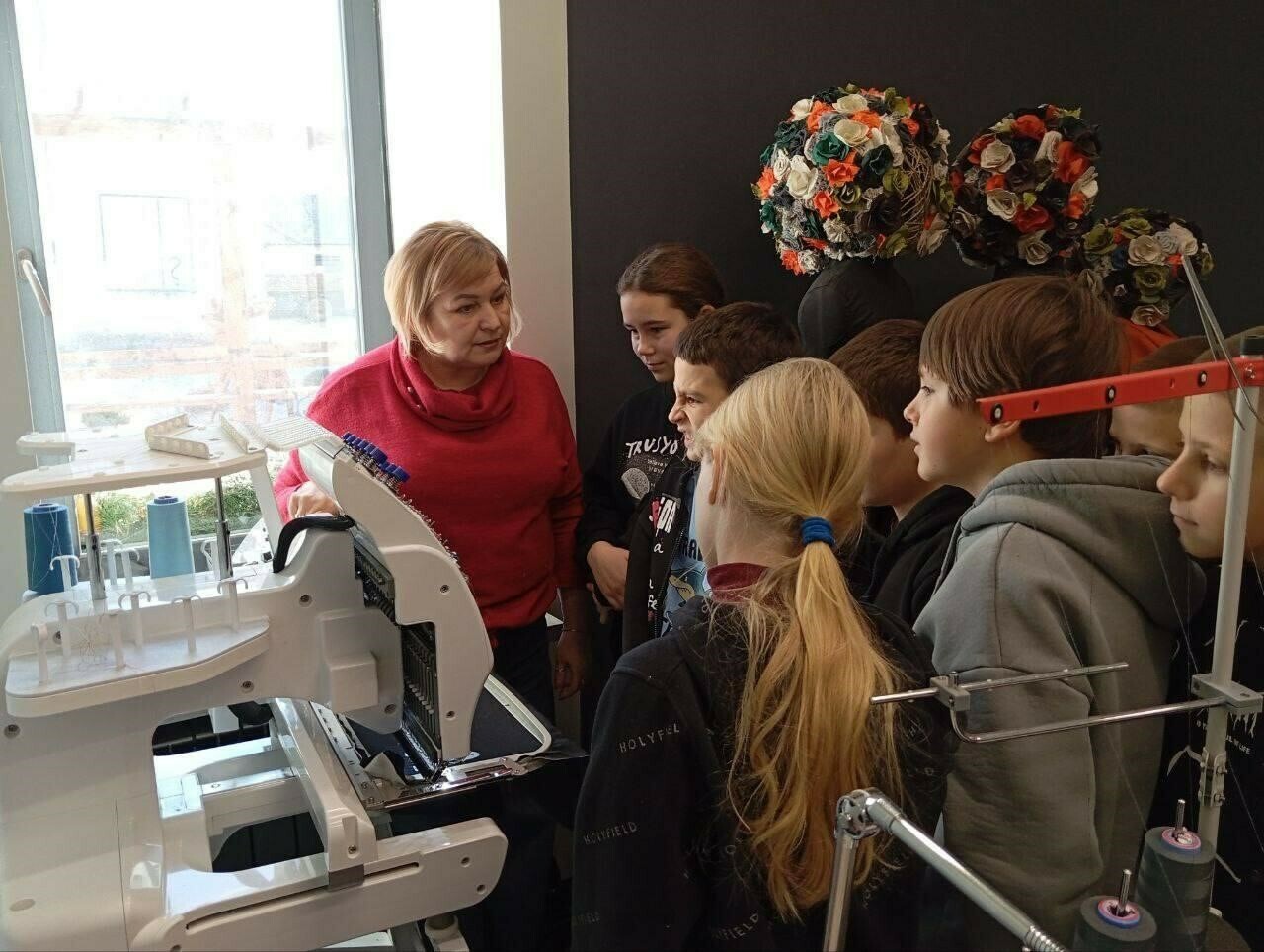
One of the most vivid examples of how the hub is attracting young people is the case of the branded rucksacks. Right in front of the schoolchildren, the master craftsmen set the programme, and in just nine minutes the embroidery machine creates the logo of the establishment – a little bird.
‘We sewed rucksacks and bags for changing shoes for schoolchildren, embroidering our logo on them. Now half the school is carrying these rucksacks with our little bird on them! Of course, schools sometimes get annoyed and are reluctant to let the children come to us, but the fact remains: teenagers are getting used to our brand. For them, this is becoming the norm: “Oh, it’s a bird, it’s ours, it’s cool.” So, through small details, we are fostering loyalty among future prospective students,’ says the director.
As a wrap-up, the team of the Savranskyi Hub has identified three key objectives for the future:
- Complete victory over stereotypes: to transform the vocational college into a prestigious place of learning in the public eye.
- High-quality enrolment: to attract as many motivated students as possible who see their future in the profession.
- Financial self-sufficiency: to develop the hub as a profitable entity capable of generating income to meet its own needs and support the development of the community.
The Savranskyi Hub has proven that when ruins are turned into modern spaces and a gloomy past gives way to innovation, the whole community benefits. After all, it is here, amidst 3D printers and greenhouses, that the future of Ukrainian restoration is shaped today.
Mariia Buleiko (Markovska)
15 June 2026
MES of Ukraine and Polaris Programme presented...
On 10 June, the Polaris Programme ‘Supporting Multi-Level Governance in Ukraine’, in cooperation with the Ministry of...
12 June 2026
Фінансування проєктів відновлення: де і як громадам шукати ресурси
Фінансування проєктів відновлення: де і як...
Відновлення українських громад — це передусім про здатність ефективно управляти ресурсами. За оцінками RDNA 5...
11 June 2026
Education of the future begins in communities:...
The success of the reform of specialised senior secondary education will depend on its implementation at the local...
11 June 2026
DECIDE Analytical Study: What Solutions from...
On 10 June, the Ukrainian Crisis Media Centre hosted a presentation of an analytical study of the experience of...