A Municipal Development Strategy That Works: How to Build the Foundation for Implementation from the Very First Step
A Municipal Development Strategy is valuable not because of how many pages it has, but because it can be implemented in practice. That’s why implementation needs to be considered from the very beginning of strategy development – by building the necessary delivery mechanisms into the document, rather than postponing them until “later”, after the strategy is approved.
When the focus is only on drafting the text, strategies often remain declarative. Goals may sound inspiring – but do they reflect residents’ real needs? Target indicators may be ambitious – but are they backed by realistic ways to achieve them? A more effective approach is to view every step of strategic planning through a practical lens: How will these goals be achieved? Who will deliver the planned actions? And with what resources.
A strategy working group is not a formality – it is a coalition committed to implementation
From the very first step of strategic planning – setting up a working group – it is important to avoid a disconnect between those who write the strategy and those who will implement it. If only representatives of the local self-government or a narrow circle of experts are involved, there is a high risk the document will remain purely formal. Instead, the working group should be formed not simply as a drafting body, but as a coalition of people who will drive change and track results.
That is why it is essential to include not only those who are formally responsible for certain sectors, but also those who are genuinely invested in the community’s development: people who live there and use health services, their families, parents whose children study in local schools, entrepreneurs whose businesses depend on local conditions, and residents who care about specific initiatives – whether it is cleaning and improving a local pond, restoring a historical landmark, or establishing a youth theatre. The key question is: who can become a real, active member of the working group, not just a nominal participant? In some communities, these may be agricultural businesses interested in retaining workers in small settlements; in others – CSOs or groups of teachers who, together with young people, have experience delivering grant projects; elsewhere – veteran communities interested in developing adaptive sports. If such people are identified and engaged early, it becomes easier to test ideas, build a shared vision, and lay the groundwork for long-term cooperation.

Strategic session on health care and social protection in RFA partner Krasnopillia community
Of course, the circle of stakeholders – and therefore the composition of the working group – will differ from one community to another, depending on local context and development priorities.
For example, Kozelets community in Chernihiv region began developing its strategy with support from the Recovery for All (RFA) project. At the working group formation stage, the community created a stakeholder map, which helped it approach working group membership intentionally. Active building inter-municipal partnerships and prioritising cooperation with neighbouring communities made it clear that these partners should also participate in shaping the strategy and defining shared priorities. As a result, in addition to traditional members (business, CSOs, local council representatives, municipal administration, and municipal enterprises), the working group included representatives from neighbouring communities – Oster city council and Kipti village council. The foundations for this cooperation existed even earlier. In early 2022, an initiative was launched to create a joint tourism project “Places of Cossack Glory” which envisioned a tourist route developed by several communities in Chernihiv region, including Kozelets and Oster. The full-scale war paused the initiative. However, cooperation between communities continues in other practical areas. For example, residents of Oster community receive health services from facilities and specialists in Kozelets community, creating a strong basis for further partnership in the health sector.
A quality needs assessment: why it matters to hear those who are usually not heard
The more accurately a community identifies residents’ real needs during the needs assessment phase, the more evidence-based its project pipeline will be – and the higher the likelihood that projects will be implemented successfully. In practice, however, needs assessments often reflect the views of a limited group – officials or the most active residents – while many people remain outside the process.
These are often groups that participate less in public consultations or have fewer opportunities to be heard: older persons, youth, persons with disabilities, veterans and their families, residents of remote settlements, internally displaced persons, and others. Their needs frequently remain “invisible” in strategic documents, which later creates a gap between planned actions and real community expectations.
Ignoring these groups has practical consequences: projects may fail to gain support, may not solve key problems, or may not achieve the expected effect. By contrast, considering diverse perspectives not only improves the accuracy of needs identification, but also helps shape more viable and socially accepted solutions.
One effective approach is to conduct in-depth sectoral needs assessments in priority areas, followed by public and expert discussions of findings by sector. This helps validate whether problems were identified correctly and whether proposed solutions match real needs. Communities can use a mix of engagement formats – focus groups, surveys, in-depth interviews, and outreach meetings in remote settlements – to reach those who do not usually participate in formal consultations or strategy sessions.
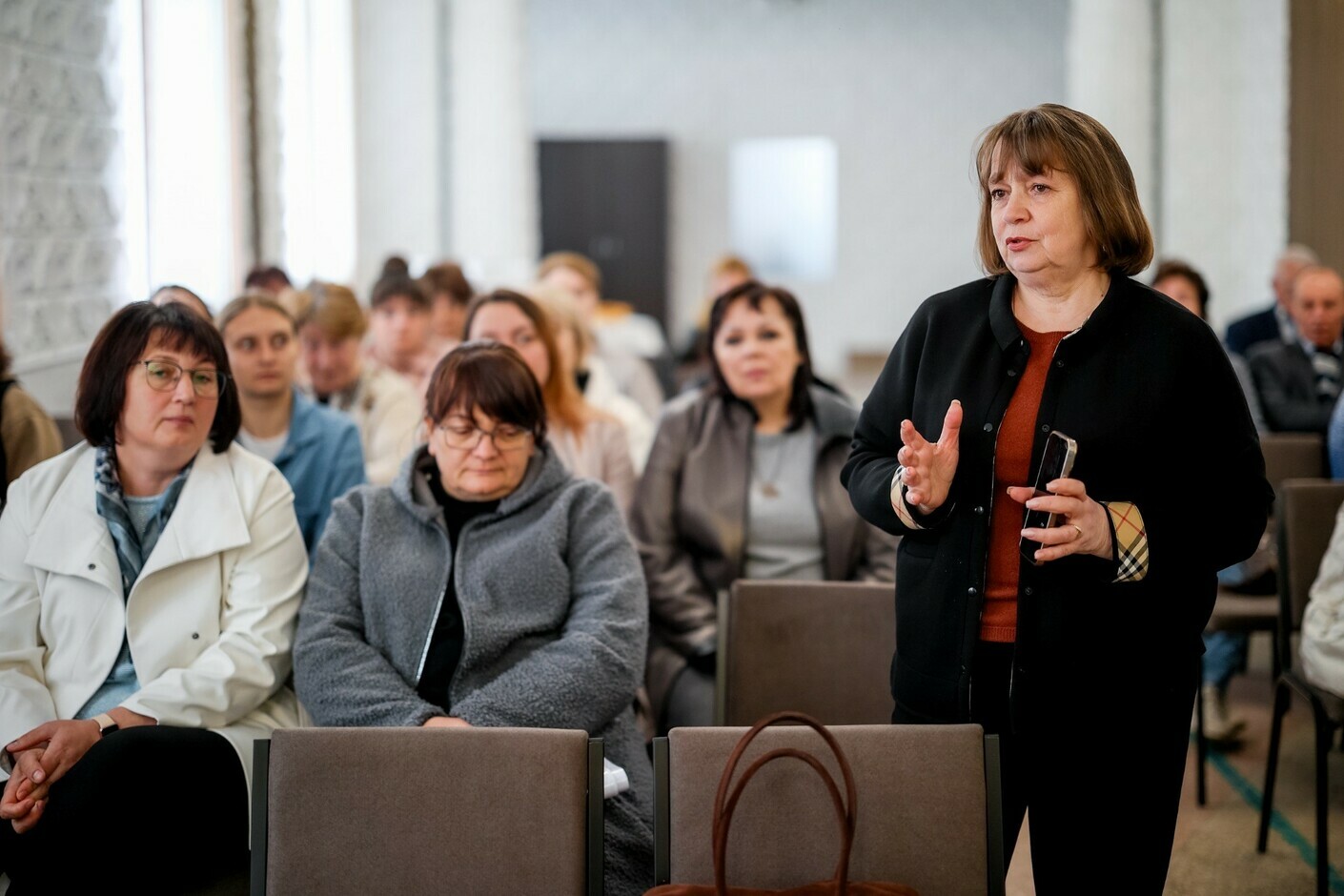
Strategic session on local economic development in RFA partner Krasnopillia community
How to make strategy goals and objectives realistic
Findings from the needs assessment should form the basis for setting development goals. In strategic planning, goals are not simply a list of activities – they describe the changes a community aims to achieve for residents. A well-formulated goal answers not “what the community wants to do”, but “what should change as a result of implementing the strategy”. For example, a river and historical landmarks may suggest tourism potential, but that alone is not enough to automatically set “tourism development” as a key economic goal. First, the needs assessment should clarify what the real issue or opportunity is: Is it a lack of leisure spaces for residents? Neglected public areas? A need for new income sources for small businesses? Low visibility of the community? Underuse of cultural heritage? Depending on the diagnosis, the goal should be framed not as an abstract “tourism development”, but as a specific change for residents, the local economy, or spatial development.
The next step in strategy development is not simply listing objectives, but prioritising them and translating them into practical decisions. How can a community build an objective system that has a real chance of being implemented? Several key steps matter.
1. Objectives must come from real needs – not from generic wording that “looks good” in a strategy. For example, a municipal government may propose creating a veteran hub. But if the needs assessment shows that the main request from veterans is access to adaptive sports, implementing an unrelated initiative will not only fail to deliver impact – it may reduce engagement and undermine trust in strategic decisions.
Where needs or potential are confirmed – for instance, water quality/access issues in certain settlements, shortages of nurses/doctors, or limited access to preschool education for children in remote areas – objectives become more concrete and much more implementable.
2. Test each objective through the lens of implementation. A quick realism check is to answer:
- Can this objective be delivered through a concrete set of projects or steps?
- Is there an institution/actor in the community (municipal administration, municipal enterprise, business, CSO) with the mandate and capacity to deliver it?
- What funding sources could support this initiative?
- Does it require cooperation with other communities, business, donors, or sector institutions?
In communities where these questions are asked early, some ideas are screened out during strategy development – and that is normal.
3. Prioritisation means choosing what not to do. The hardest part is not writing goals and objectives – it is choosing between them. In most communities, needs far exceed resources. If a strategy tries to include everything, it becomes unrealistic by default.
Prioritisation is not a formal ranking exercise; it is a leadership decision: what is done first, what is postponed, and what is consciously not pursued during this strategic period.
Practice shows resistance often emerges here, because every idea has supporters. But without prioritisation, a strategy becomes a list of intentions without focus.
4. Align with higher-level priorities. Even well-formulated and prioritised goals may fail if they fall outside the financing system.
That is why it is important to understand:
- which areas are supported at the national level;
- which priorities exist at the regional level;
- what funding can realistically be mobilised (public investments, international programmes, donors).
For example, when national priorities emphasise energy efficiency or safety infrastructure, a community that integrates these directions into its strategy is far more likely to attract support.
Monitoring indicators as a management tool – not just reporting
Developing a monitoring indicator system is often treated as a technical step – filling in a table. In reality, it is one of the core elements that determines whether a community can assess genuine progress toward results. Indicators should not exist “for the sake of indicators.” They should be designed so measurement answers the key question: Is the strategy delivering the changes the community identified as priorities?
Several principles are important.
Firstly, indicators must be measurable and based on accessible data sources. If the community cannot obtain the data (through official statistics, administrative data, or surveys), the indicator will not work in a monitoring system.
Secondly, targets must be realistic. Inflated or arbitrarily set targets create an illusion of ambition, but prevent objective assessment of progress.
Thirdly, indicators must reflect change, not only activity. It is not enough to count the number of completed projects; communities need to understand whether access to services has improved, how residents perceive changes, and whether quality of life has shifted.
This requires a different approach to monitoring overall. The purpose is not simply to record whether targets were met, but to understand why results occurred – and to use that insight for management decisions, including adjusting the strategy when needed.
The Recovery for All (RFA) project provides systematic support to communities on recovery and development planning, including the preparation of strategic documents and accompaniment during implementation. In 2025, 14 communities – including communities in Kharkiv and Donetsk regions – approved their strategies and began implementing them. Early 2026 is a midpoint when communities can conduct a first assessment of change based on monitoring results. At the same time, implementation experience in frontline communities shows that – even when security factors were considered during strategy development and indicators were set accordingly – some targets may still not be reached. This is not necessarily a planning error or an indicator problem, but often the objective needs to reallocate resources when the security situation worsens and hostilities move closer.
Missing an indicator does not always mean a mistake. It can be driven by external conditions (economic shifts, security challenges) that force a change in priorities. Likewise, formally meeting a target does not always mean real change occurred.
In Sofiivka community in Dnipropetrovsk region, early 2026 monitoring showed that residents rated changes in social protection relatively low, despite substantial steps taken by the community. A deeper analysis – including resident surveys – identified a key issue: ineffective communication between the municipal administration and residents. The community actively promoted the opening of an Invincibility Centre – an accessible, barrier-free space for psychosocial and social support – as a major achievement through its website and social media. However, the announcement alone did not create a sense of real change for residents. People were less interested in the fact that the Centre existed than in its practical value: what services are available, what they cost, what documents are needed, how the Centre operates, and how it can help in everyday life. Recognising this through monitoring allowed the community to adjust its approach – from promoting the opening itself to explaining specific services and practical benefits for residents.
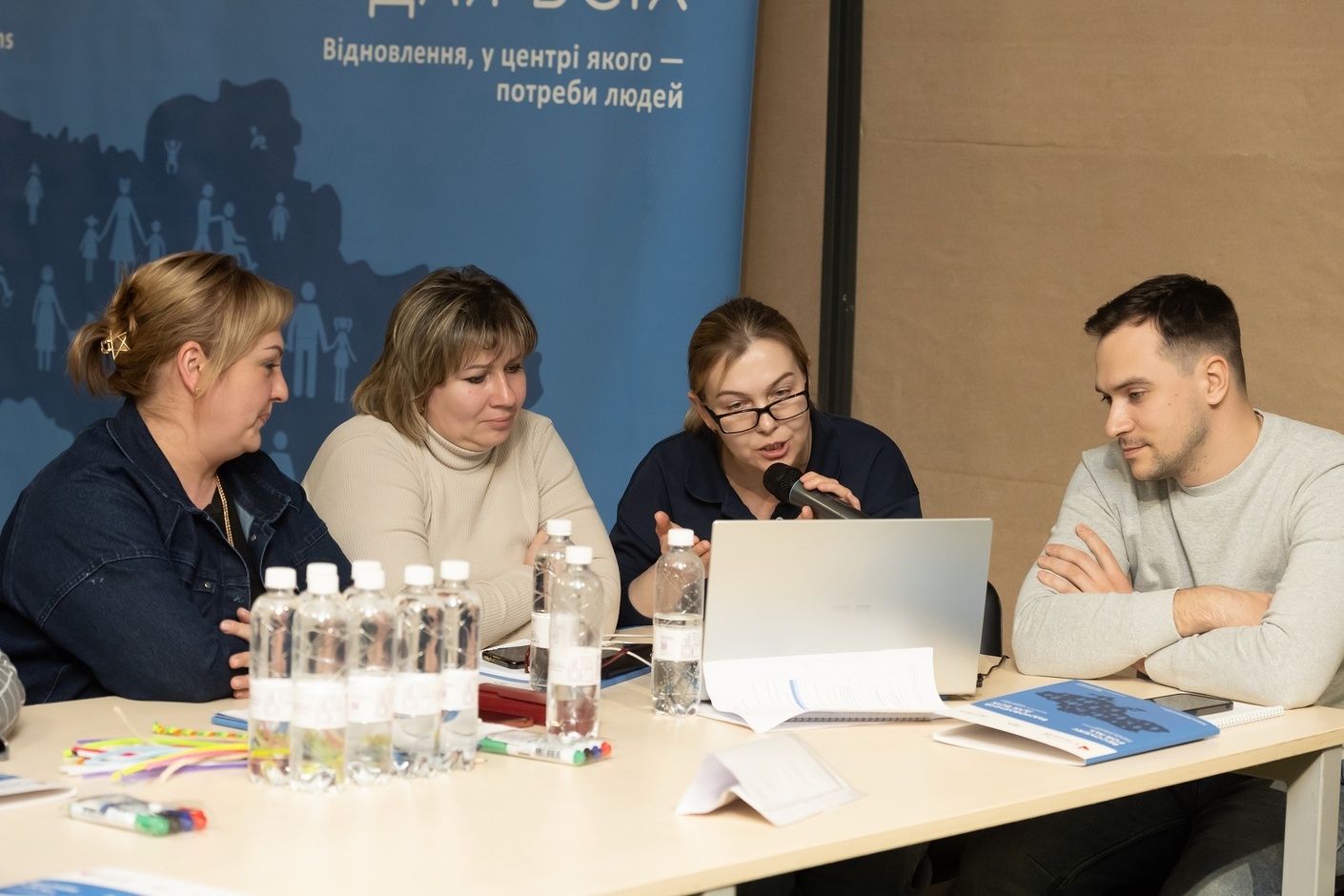
Representatives of Sofiivka community during the project management training organised by RFA for partner communities
In the end, a strategy’s fate is determined not during implementation, but much earlier – during its development. The quality of decisions made at that stage determines whether a strategy becomes a tool for change or remains a document “for the shelf”.
For reference:
The international technical assistance project Recovery for All (RFA) is funded by the Government of Canada and implemented by Alinea International.
12 October 2026
Ukraine and EC discuss implementation of Ukraine Facility Plan and support for communities
Ukraine and EC discuss implementation of...
In Brussels, Vitalii Bezgin, Minister for Communities, Territories and Internally Displaced Persons, met with Gert...
12 October 2026
Regions and cities provide more than half of...
In 2025, cities and regions accounted for 51% of public investment in the European Union. However, the funding gap...
12 October 2026
Не чекати нового закону України «Про службу в...
Грай Марина, кандидат наук з державного управління, старша експертка проєкту Повернення ветеранів і...
12 October 2026
European Week of Regions and Cities 2026 starts...
The European Week of Regions and Cities 2026 has opened in Brussels. Representatives of Ukrainian communities from...