Fatal loans, or How a community protects its entrepreneurs
From the editing team
We are publishing this article because it addresses a topic that cannot be measured by statistics: trust. People’s trust in the state and in the rules by which it operates.
When entrepreneurs who have been the backbone of their communities lose everything because of the war, yet their financial obligations are not considered in any way, this is no longer just a private matter. It is a question of how well communities can recover. For this reason, it is so important who takes their side and how solutions are sought.
Patriotic entrepreneurs from the occupied territories who obtained loans before the full-scale war are now often unable to repay them because they have lost everything. Yet the legislature is in no hurry to amend the regulations requiring loan repayment, under which no force majeure circumstances have occurred in our country over the past five years. Under such conditions, communities may well become drivers of change and defenders of their entrepreneurs.
By Dmytro Syniak
In early February 2026, Iryna Lypka, Head of Molochansk Military Administration – who had previously spent several months in russian captivity – signed an unusual document. It was a letter of recommendation for the farming company Ahrobrama, which had leased over 1,500 hectares from the community at the outbreak of the war. According to this document, the company had no debts and was ’actively involved in community life, contributed to the development of the area and supported local initiatives’.
The letter of recommendation was to be provided on request, but in fact it was to be presented in court, where a hearing was due to take place in the near future. The subject of the lawsuit was a loan of UAH 3 million taken out from Oschadbank a few days before the New Year of 2022 by the owners of Ahrobrama, Tetiana Sydorenkova and her sons, Andrii and Dmytro. Now the bank requested repayment. What appeared, at first glance, to be a perfectly fair demand turned out to be a complex problem and an intriguing story. A story of self-sacrifice and love for the country, but also a story of indifference and hypocrisy.
A debt trap for the Sidorenkovs family
Tetyana Sydorenkova – a pleasant middle-aged woman of average height – now lives in Obukhiv. The house where she lives with her adult sons and their families cannot be compared to the one they had in Udarnyk in Molochansk community. There, the Sidorenkovs ran a farm with 10 permanent employees and a wide range of agricultural machinery. The Sidorenkovs themselves worked hard on the farm, hence the name Ahrobrama in Ukrainian was a play on the phrase “brothers and mum”.
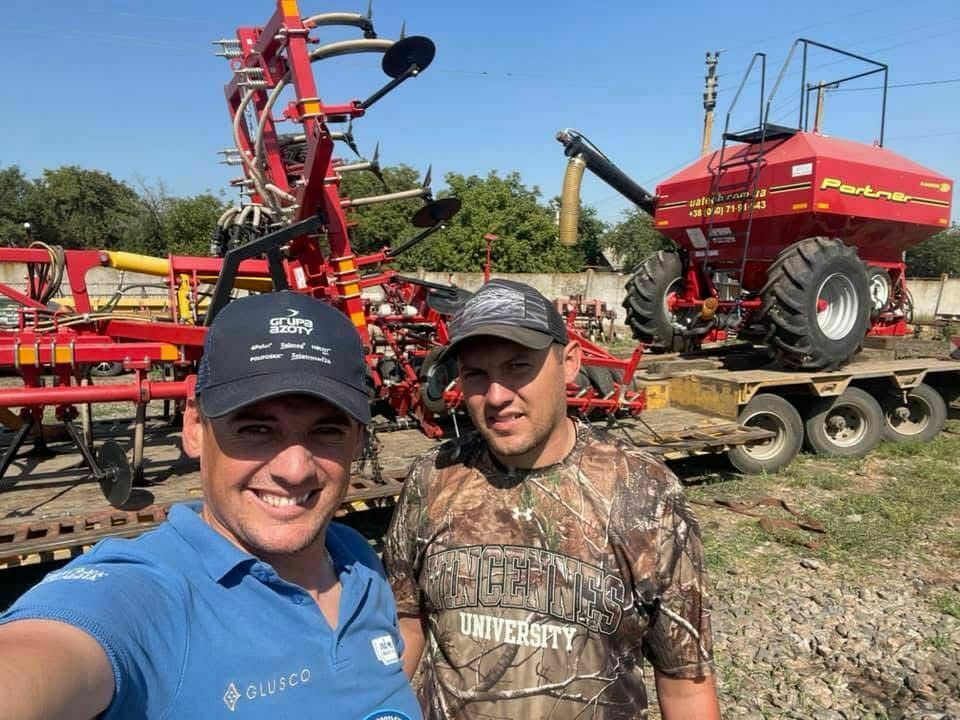
Brothers Andrii (left) and Dmytro Sydorenkov in front of the new agricultural machinery they purchased in 2021 for their business in Molochansk community
Although agricultural companies often take out loans for the sowing season, Tetiana Sydorenkova had always intuitively avoided doing so. And there was no need: on 1 January 2022, there were 300 tonnes of wheat, 150 tonnes of sunflower seeds, 100 tonnes of peas and 80 tonnes of millet stored in the Ahrobrama’s warehouses. However, the managers at Oschadbank proved to be very persuasive. The loan was obtained, and most of the funds were immediately spent on seeds, fuel, spare parts for machinery, fertilisers, and pest control products.
But in the evening of 24 February, russian tanks appeared in Udarnyk. They demanded money from the Sidorenkovs and threatened them. So one night the family simply fled, setting off in two cars on the longest journey of their lives. It covered 9,000 km along the route: Krasnodar Krai – Chechnya – Kabardino-Balkaria – Stavropol Krai – Abkhazia – Georgia – Turkey – Bulgaria – Romania – Ukraine. On the way, the farmers managed to buy an off-road vehicle for the 406th Brigade of the Ukrainian Armed Forces. They were convinced that the war would be over soon and that they would return home soon. They lived in Zaporizhzhia for a while, and later moved in to stay with friends in Obukhiv. And it was there that they received their first call from the bank.
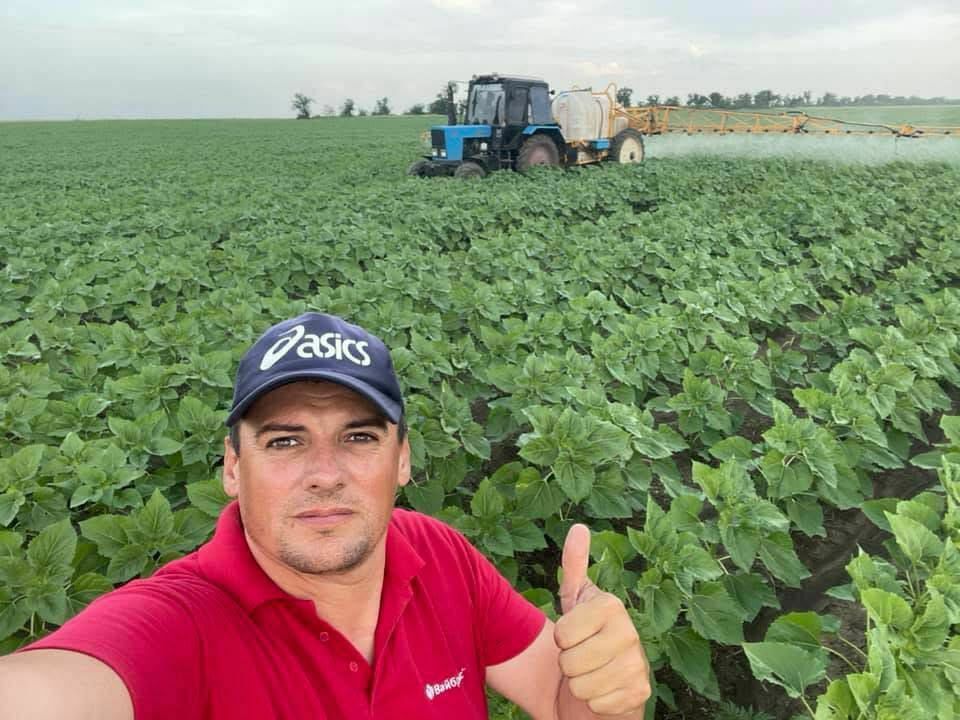
Andrii Sydorenkov, his field and his agricultural machinery
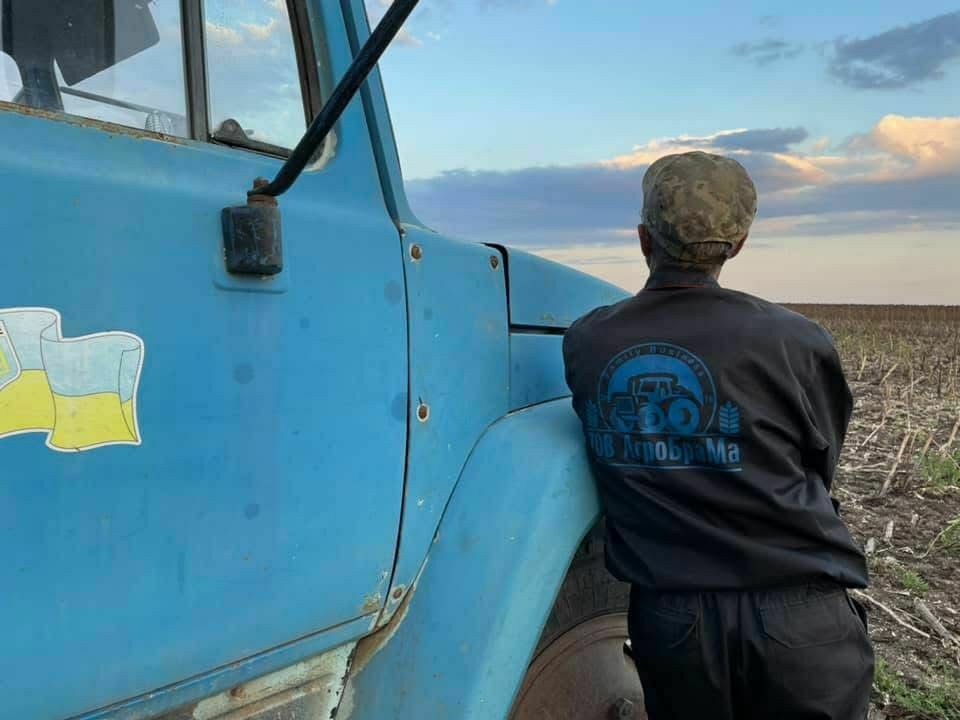
The Sidorenkovs always displayed Ukrainian emblems on their agricultural machinery. It was important to them
‘I was absolutely shocked when they told me that my loan was without collateral, so I had to repay it in full, and that the clause on force majeure did not apply in this case,’ says Tetiana.
The Sidorenkovs have never remained indifferent or aloof from the life of Molochansk community: they delivered drinking water to Udarnyk, helped fund the regional festival ‘Silver Kupala Dew 2021’, and donated grain and sunflower seeds when shop shelves were emptied in the early days of the occupation… Therefore, Iryna Lypka was convinced that she had to help the entrepreneurs, just as they had once helped her. Indeed, the statements of local authorities that they would support businesses should not be empty words. She appealed everywhere she could: to the Polohy District Administration, to the Chamber of Commerce and Industry, to journalists…
But the court remained unimpressed. It issued court orders for the recovery of a joint and several debt from the Sidorenkovs amounting to UAH 2.9 million in principal, interest and fees, which would automatically result in the seizure of their accounts and assets.
‘Most of our farmers have stayed in the occupied territory, and now they pay taxes to the russian state and laugh at people like the Sidorenkovs,’ says Iryna Lypka angrily. ‘And the ones who have benefited the most are those who had loans from Ukrainian banks, because now it seems they do not have to pay them back. I am deeply offended that the state could treat responsible, experienced, patriotic people in this way – people who sacrificed everything just to live in free Ukraine! Everything they owned in the occupied territory has been looted and taken away; there is even a criminal case on this.’
Now the Sidorenkovs are obliged to pay the bank money from all their income for the rest of their lives until they have repaid UAH 3 million, including fines, interest, and penalties. And until they have done so, they cannot cross the border, take out a mortgage, or receive assistance under the E-Recovery programme.
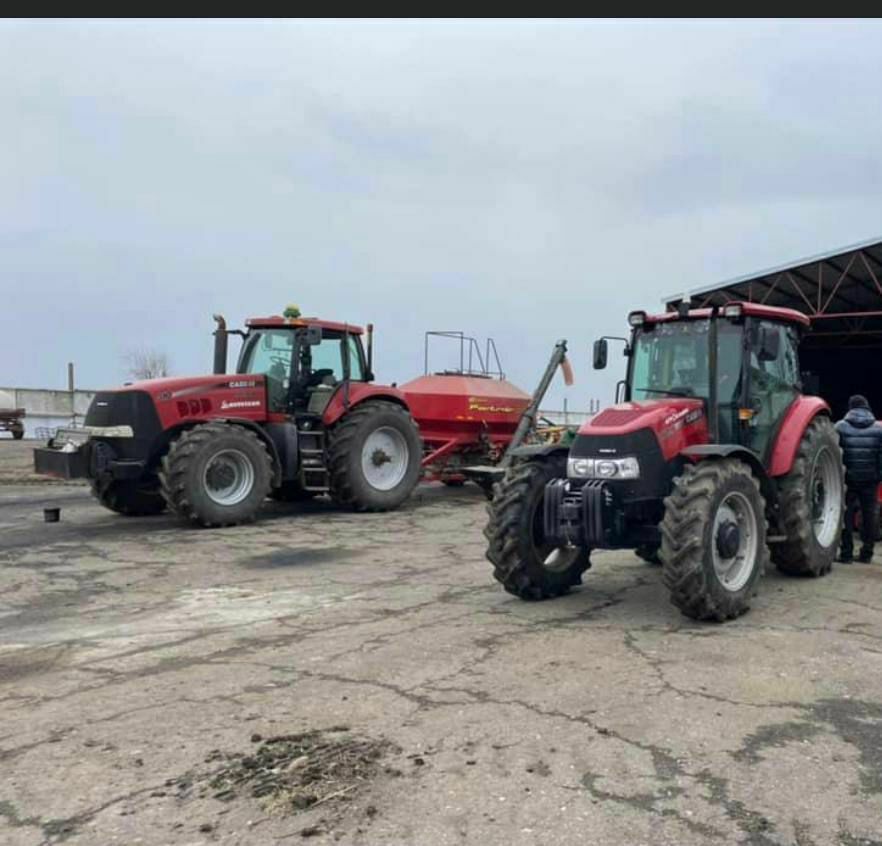
The Sidorenkovs’ tractors, which were seized by the occupiers. These two machines alone could have covered the largest part of the loan
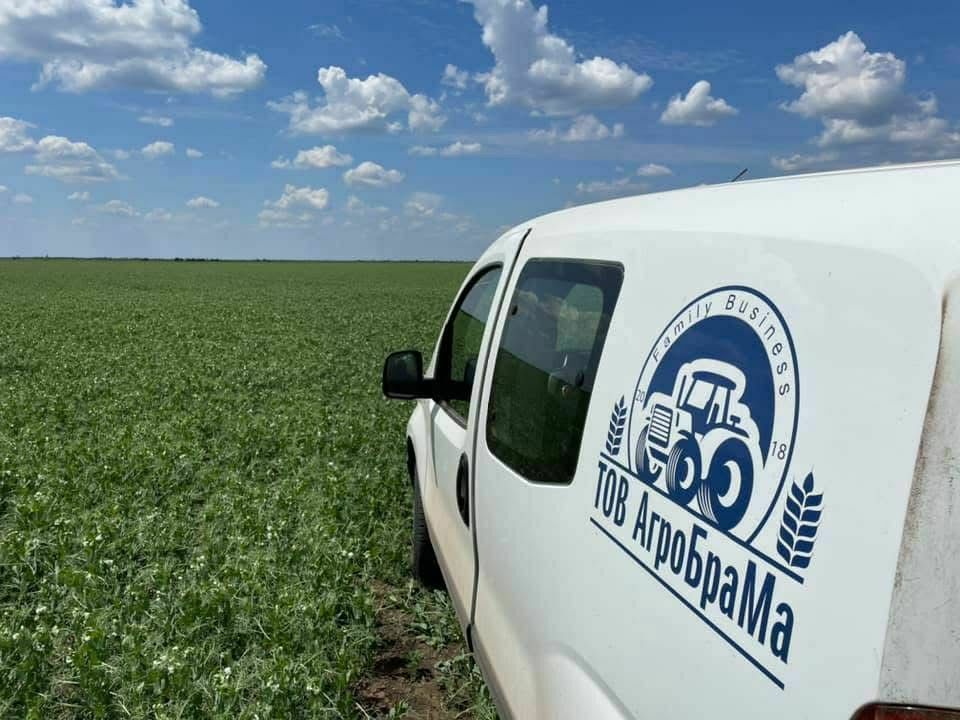
One of Ahrobrama’s agricultural vehicles that remained in the occupied territory
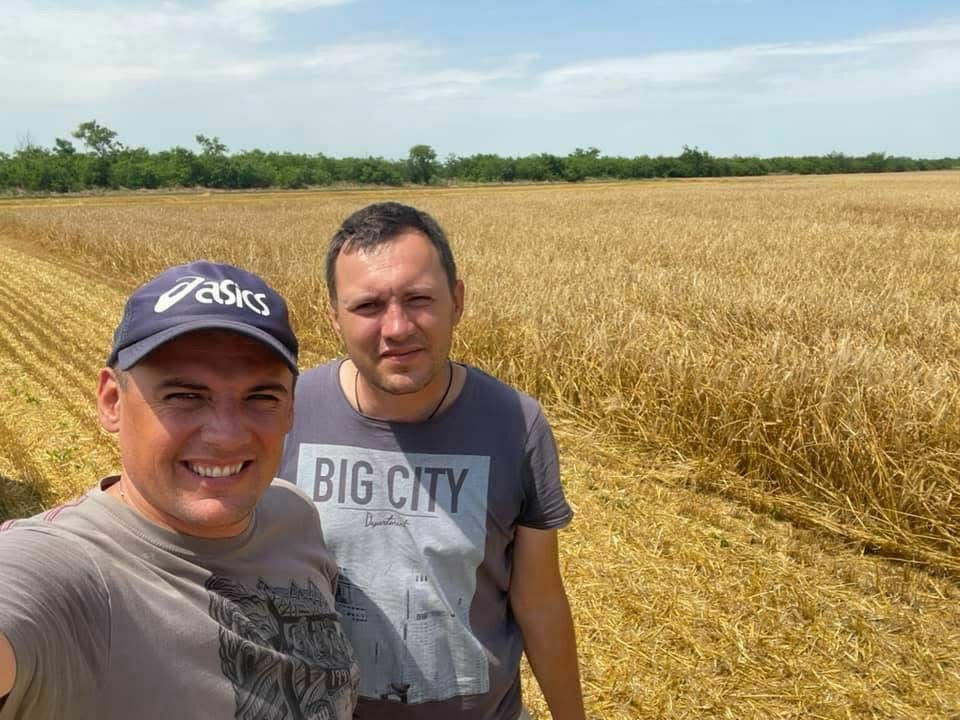
The Sidorenkov brothers are harvesting their final crop in autumn 2021
More than half of entrepreneurs from the occupied territories are unable to repay their loans
Viacheslav Akulov from Melitopol faced a similar problem. In autumn 2021, he took out a loan of USD 107,000 from PrivatBank to purchase equipment for his company Uspikh Plus 2012, which at that time employed more than 50 people. Akulov paid a third of the cost of the equipment himself. Uspikh Plus was successfully manufacturing plasma cutting machines and also repairing agricultural machinery.
The day after the occupation of Melitopol, the occupiers drove Akulov out of his workshops, and he set off for Uzhhorod with his family. He continued to make loan repayments for several months, as he thought the war would end any day soon. But the money ran out sooner.
‘I consulted with lawyers, and they told me that taking the bank to court was a waste of time,’ says Viacheslav Akulov. ‘So I tried to take the insurance company to court, as all my equipment was insured. But that also came to nothing.’ In July 2024, the court finally decided that I had to repay the loan in full. I have several friends in Melitopol who also took out loans to rent business premises, to open a tailor’s shop, and so on. Well, they were not even summoned to court; they were simply sent the court decisions. I think there are thousands of people like me.
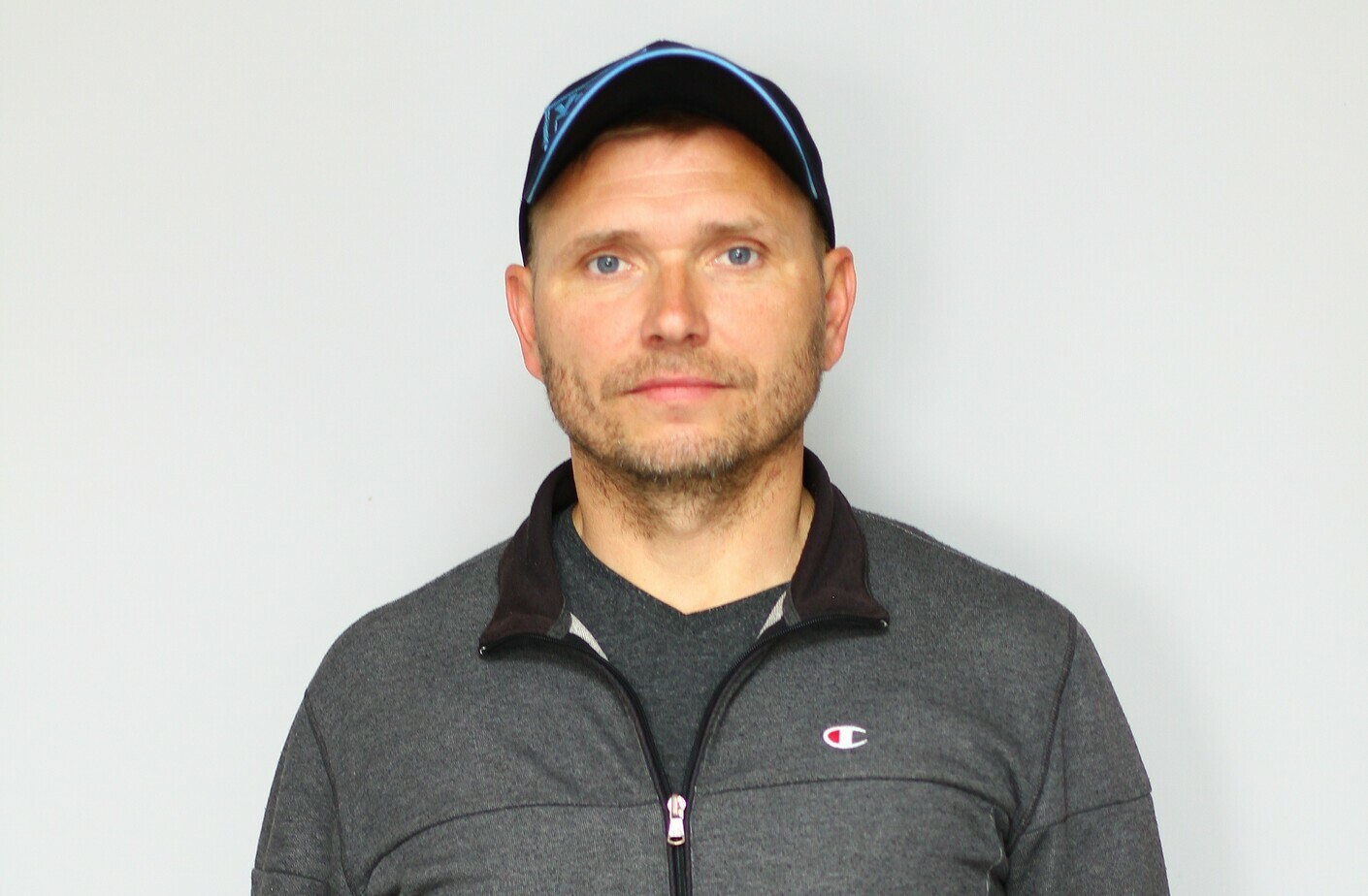
Viacheslav Akulov, a businessman from Melitopol who lost everything due to the war, which legally does not exist
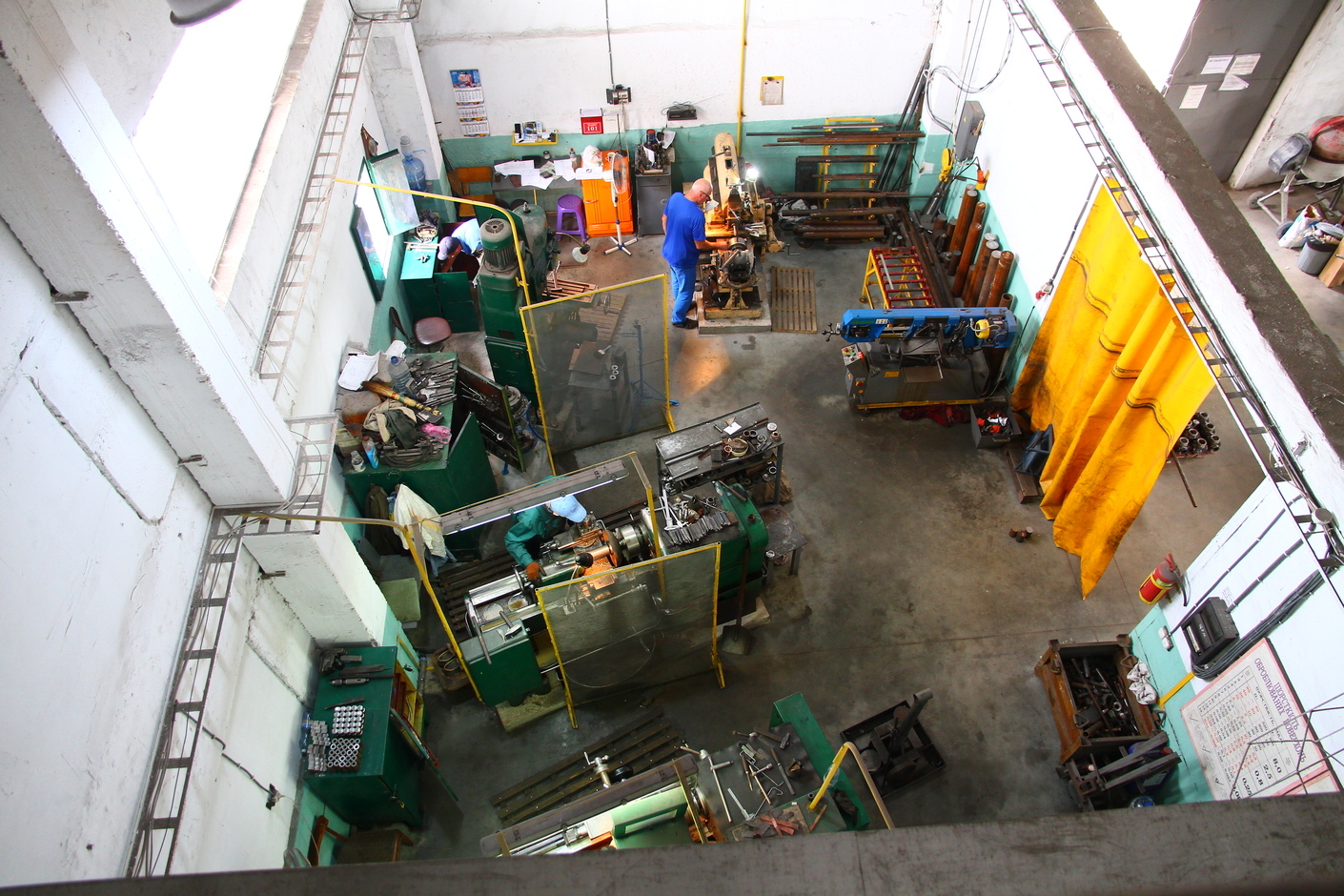
In Viacheslav Akulov’s workshop. Melitopol, 2021
According to Viacheslav, the worst part of this whole story is not the debt itself, but the effective deprivation of the right to work: all of Akulov’s accounts have been frozen, and as soon as he receives any funds, the bank seizes them immediately.
In an appeal to the President with a request to change this situation, the All-Ukrainian Agrarian Council cited data from a survey conducted among 57 agricultural enterprises in Ukraine. According to the survey, last year the total loan portfolio of the surveyed businesses amounted to UAH 494.5 million. Of this, UAH 362.6 million was accounted for by businesses in the temporarily occupied territories, and a further UAH 131.9 million by businesses in the zone of active hostilities. In other words, only 38% of those surveyed were able to repay their bank loans in full.
‘Unfortunately, the state often treats entrepreneurs who have left the occupied territories extremely unfairly,’ says Pavlo Koval, Director General of the Ukrainian Agrarian Confederation. ‘People who were forced to leave everything they had built up over many years of hard work are not only forced to pay off loans taken out in peacetime. In some cases, they are even charged for water and electricity in places where neither has been available for a long time. However, we should be aware that in a legal state, such issues can only be resolved in one way – in court.’
New laws that have changed little
However, the courts can only issue decisions based on legislation which, according to Pavlo Koval, has not changed significantly during the war. For instance, it still lacks clear provisions on residents of the occupied territories and companies that operated there previously and continue to do so now. This means that in many cases, companies operating under occupation and paying taxes to the russian budget are treated equally under the law with companies that have relocated to territory controlled by the Ukrainian government. Likewise, companies that have re-registered in territory free from occupation do not have any preferential treatment.
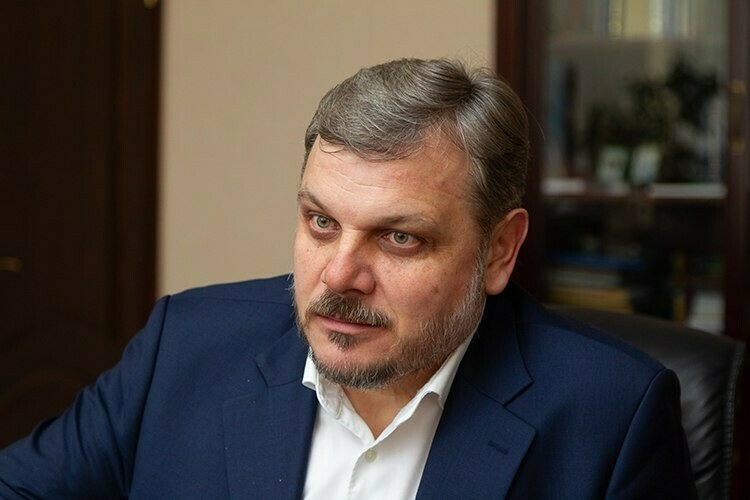
Pavlo Koval, Director General of the Ukrainian Agrarian Confederation
‘The courts are not satisfied with the very fact that the owner of the company has left the occupied territory; they usually demand some evidence that the company’s property has been destroyed or requisitioned by the russians,’ explains Pavlo Koval. ‘And then there is the position of the banks, which, due to a requirement from the National Bank, must sharply increase their authorised capital, and are now looking for sources to do so.’
Yet it would be wrong to say that the state did absolutely nothing to improve the situation. In the first months of the full-scale invasion, it announced a repayment holiday for businesses. A further step was the passing of a law last year that effectively introduced a moratorium on loan repayments for businesses affected by the war. However, this law does not propose writing off loans, but provides for a “suspension of loan repayments – for the duration of martial law and for one year after its termination” for some businesses whose assets remain in the occupied territory or in the zone of hostilities.
In August 2025, the President also signed a law on amendments to the Civil Code of Ukraine, allowing certain entrepreneurs from frontline or occupied territories to defer loan repayments until 2027. These entrepreneurs also gained the opportunity to refinance their debt and benefit from preferential interest rates of around 3%. The government has also extended state portfolio guarantees for banks so that they can continue to lend to farmers who have lost their collateral due to the war.
However, these changes did not apply to the Sidorenkovs and Akulov.
‘Clause 23 of the Law of Ukraine on Amendments to the Civil Code, which came into force in August 2025, regulates the relations between banks and borrowers under loan agreements secured by a mortgage or pledge,’ comments lawyer and insolvency practitioner Vitalii Kyrychok on this situation. ‘If there is no such security, everything remains as it was. In other words, banks have the right to recover such loans in the usual manner. And both their staff and the judges simply shrug their shoulders, “Well, you can see for yourselves, such is the law.” Meanwhile, the stark injustice of this situation remains, as it were, behind the scenes. They simply turn a blind eye to it.’
Decentralisation asked PrivatBank and Oschadbank to comment on this situation. On 6 February 2026, after receiving our enquiry, the press office for PrivatBank wrote: ‘We will investigate this matter! Thank you!’ However, no response was ever received to this or several other enquiries. The press office of Oschadbank went a step further. ‘Unfortunately, for certain reasons, we will refrain from commenting. Thank you for your understanding,’ they wrote to us. However, the press office did not wish to clarify these reasons, doing nothing to help us understand the situation.
However, we really fail to understand why banks are demanding money from people who do not have it, having lost their assets in the occupied territory, and are thus helping entrepreneurs to remain under occupation. Do they really not realise what they are doing? Or perhaps the banks simply do not have the money?
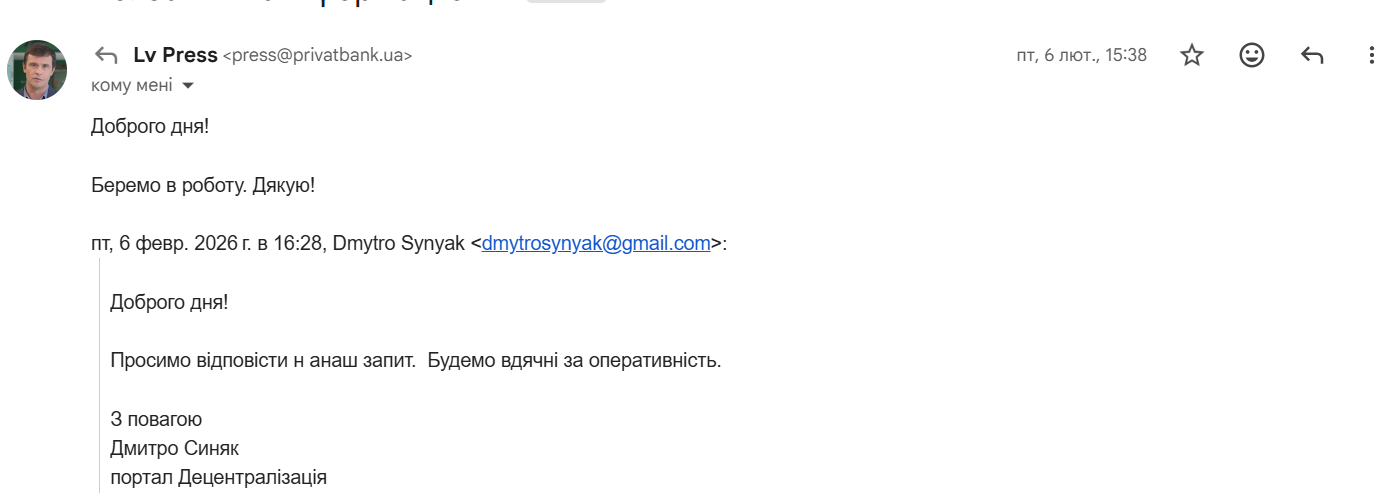
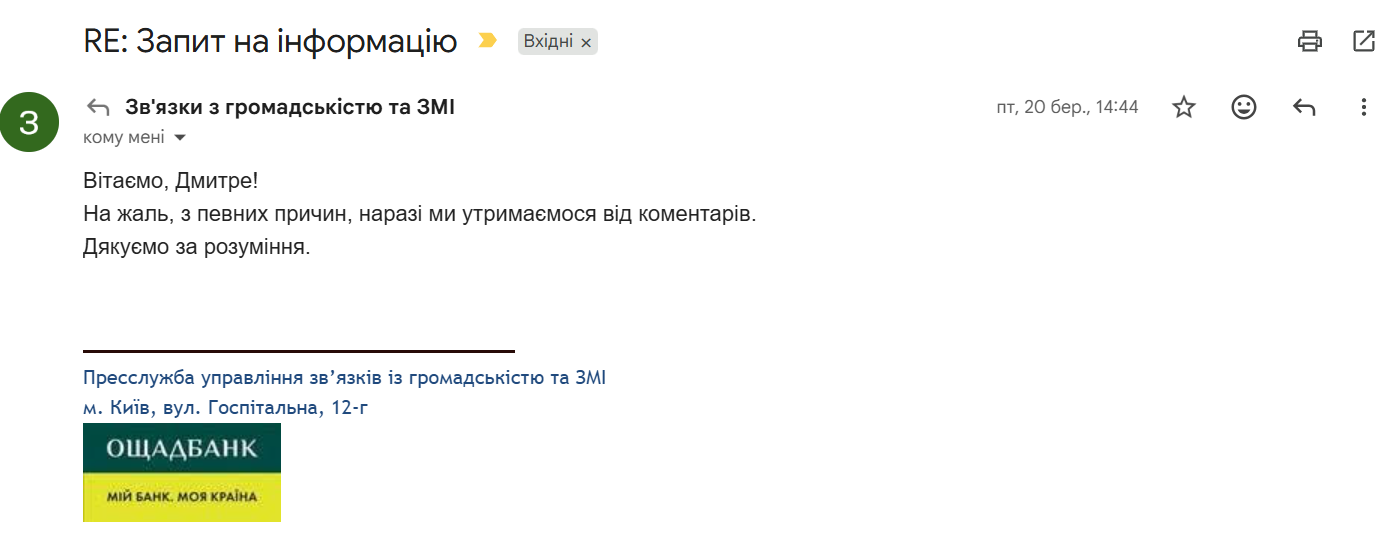 Responses of banks to the requests of Decentralisation
But no, last year Oschadbank reported a doubling of its profits, which amounted to UAH 16.1 billion. And the net profit of PrivatBank for 2025 amounted to UAH 29.1 billion. So the banks have the financial capacity to make certain concessions to entrepreneurs and not demand too much of them. What they do lack, however, is a pro-business stance on this issue.
Another oddity of Ukrainian legislation is that, under it, nothing has occurred on Ukrainian territory from 2022 to the present day that could be described as force majeure. As there were no direct legislative provisions defining such circumstances, the Supreme Court of Ukraine established a precedent whereby the force majeure clause in loan agreements concluded before 2022 should not apply.
‘Only communities can restore justice…’
Vitalii Kyrychko’s clients approached Yuliia Yatsyk, the MP for the constituency, directly, but received nothing but words of support and sympathy. Decentralisation also sent enquiries to MPs Pavlo Pavlish, Oleksandr Haid, and Danylo Hetmantsev. Neither Andrii Dykun, Head of the All-Ukrainian Agrarian Council, nor Oleksii Sobolev, Minister of Economy, Environment and Agriculture of Ukraine, nor Roman Korinets, Deputy Head of the Committee of Agribusiness Entrepreneurs at the Ukrainian Chamber of Commerce and Industry, responded to our enquiries.
The National Bank of Ukraine, the Ministry of Finance, and the Ministry of Economy, Environment and Agriculture could all have put forward specific legislative initiatives to save these people and reward their patriotism. However, they are not doing so.
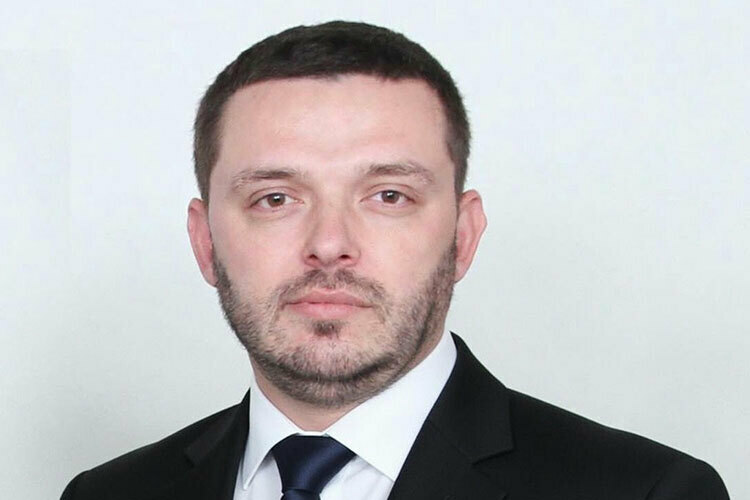
Vitalii Kyrychok, a lawyer and arbitration administrator
‘The lobby of financial institutions in the Verkhovna Rada is extremely powerful; few can oppose it,’ continues Vitalii Kyrychok. ‘In practice, it is virtually impossible even to bring certain legislative proposals before the relevant committee. Meanwhile, many good entrepreneurs and those who have stood as guarantors for them are effectively being ruined as a result of this situation. There are hundreds of their cases in the register of court decisions for Zaporizhzhia region alone. And each one represents the ruined fate of at least one family. After all, such families are obliged to hand over even the cars they used to flee the occupied territories to settle their debts.’
Who, then, can change this situation and restore justice? Iryna Lypka says that only the communities can, and she promises to ‘bring the matter to a successful conclusion’. However, as head of the military administration, Ms Lypka can no longer approach “all institutions” as freely as she could when she was community leader.
‘I believe it is my personal and professional duty to help the people on whom the community relied,’ says Iryna Lypka. ‘They were, and remain, the most valuable human capital not only for our people, but for the entire state. These people must become the backbone of the government once our lands have been liberated. That is why they must not, under any circumstances, feel that they have made the wrong choice.’
Ms Lypka plans to write to community associations, colleagues, the Government, and Parliament. And she is looking for people who share her views. She has seen time and again how, under pressure from ordinary people, the seemingly unchanging positions of the authorities have shifted. And the impossible has become possible.
P.S. After the article had already been published, the Verkhovna Rada Committee on Legal Policy, having considered our enquiry “within the scope of its authority”, informed us that it had brought its contents to the attention of the Members of the Verkhovna Rada who are members of the Committee on Legal Policy. “We hereby inform you that on 27 March 2025, the Verkhovna Rada of Ukraine adopted Law of Ukraine No. 4340-IX ‘On Amendments to the Section “Final and Transitional Provisions” of the Civil Code of Ukraine on the Specifics of Lending and Financial Leasing during the Period of Martial Law’,” the reply stated. The reply made no mention of the fact that the law does not apply to thousands of entrepreneurs. According to the reply, everything is going well in our country. At least, for the banks.
22 June 2026
Моніторинг громад – травень 2026
Моніторинг громад – травень 2026
Як змінюється стан справ у територіальних громадах? Як на їхню спроможність впливають безпекові умови в регіонах та...
22 June 2026
Олексій Рябикін: Наступний етап реформи...
У Львові відбулася зустріч у «страсбурзькому форматі», присвячена ролі районних рад у сучасній системі місцевого...
22 June 2026
Естетика як стратегія: як профтех в...
«Я передумала, я не буду тут вчитися!» – ці слова, супроводжувані істерикою, директорка...
22 June 2026
Кроки громад на шляху євроінтеграції: чому стратегічне планування стає необхідністю
Кроки громад на шляху євроінтеграції: чому...
Європейська інтеграція України дедалі більше переходить із площини державної політики у практичну роботу громад. Саме...