‘Is this really my school?’ How Gymnasium No. 13 in Chernihiv was repaired by joint efforts after Russian shelling
In March 2022, Gymnasium No. 13 in Chernihiv was damaged by russian shelling.
‘The school had broken windows and a damaged roof and walls. However, compared to other educational institutions in the area, this building was relatively intact. Schools No. 18 and No. 21, which are located in the same neighbourhood, were completely destroyed. It is here that students from Grades 1–9, as well as technical and teaching staff, from those schools moved to,’ begins Inna Levchenko, principal of Gymnasium No. 13.
As a result, a completely new team was formed that could only work online at that time. After all, there were not even any windows here in September 2022.
‘In winter, when teachers came to the gymnasium to fill out documents, it was so cold in the rooms that they had to wear gloves,’ says Inna Levchenko.
In 2024, the Swiss-Ukrainian DECIDE Project, a long-standing partner of Chernihiv, began renovating Gymnasium No. 13, as well as the kitchen unit, and arranging a bomb shelter.
‘Gymnasium No. 13 is one of 27 buildings that were damaged in 2022. However, we are delighted that its restoration was carried out in partnership with the Swiss-Ukrainian DECIDE Project, as they are a powerful team whose work truly embodies the “build back better” principle. During the renovation, the team did more than simply repair the damage; they completely changed the layout of the space to create more areas for collaborative work and recreation. In the classrooms, there are mobile desks for group work and laboratories for conducting experiments and working on projects. In the corridors, there are zones for relaxation, creativity, reading and communication, as well as a school café. Thanks to this collaboration, the renovated gymnasium looks fantastic,’ says Vasyl Bilohura, Head of the Education Department of the City of Chernihiv.
More than UAH 64 million was allocated for the renovation and equipment of the gymnasium, with support from the DECIDE Project. The local council also allocated another UAH 10 million for improvements to the surrounding area.
‘We have done more than just repair and paint the walls. Our goal was to create a comfortable space for the children and teachers. We also wanted to equip the gymnasium with modern, NUS-compliant equipment. This is a partnership project. To achieve this, we collaborated with Chernihiv’s education department and the school team. Together, we chose the equipment, design and layout of each area. Our idea was to engage all interested parties in the renovation and make them active participants in the process. And we succeeded!’ says Valentina Poltorak, Swiss-Ukrainian DECIDE Project Manager.
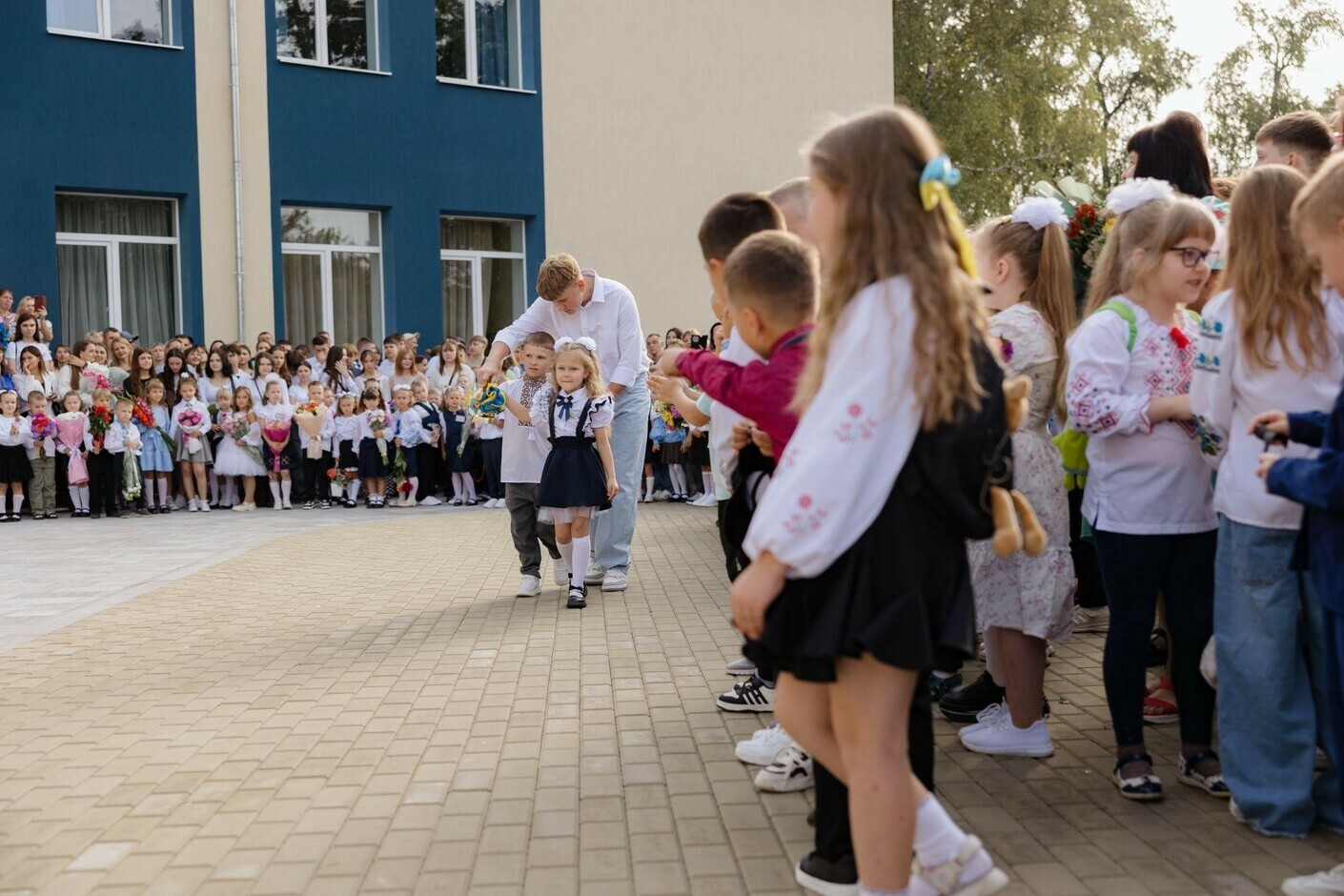
Starting the academic year in the gymnasium in 2025
‘Our aim is to ensure that children do not miss out on their education during air raid alerts, which unfortunately occur quite frequently in this region. Seeing the smiles on the faces of the children who came to this school on 1 September makes me feel that we are on the right track. I am pleased to acknowledge the participation of the Swiss people in rebuilding this school and in supporting Ukraine’s education sector,’ said Felix Baumann, Ambassador Extraordinary and Plenipotentiary of the Swiss Confederation to Ukraine.
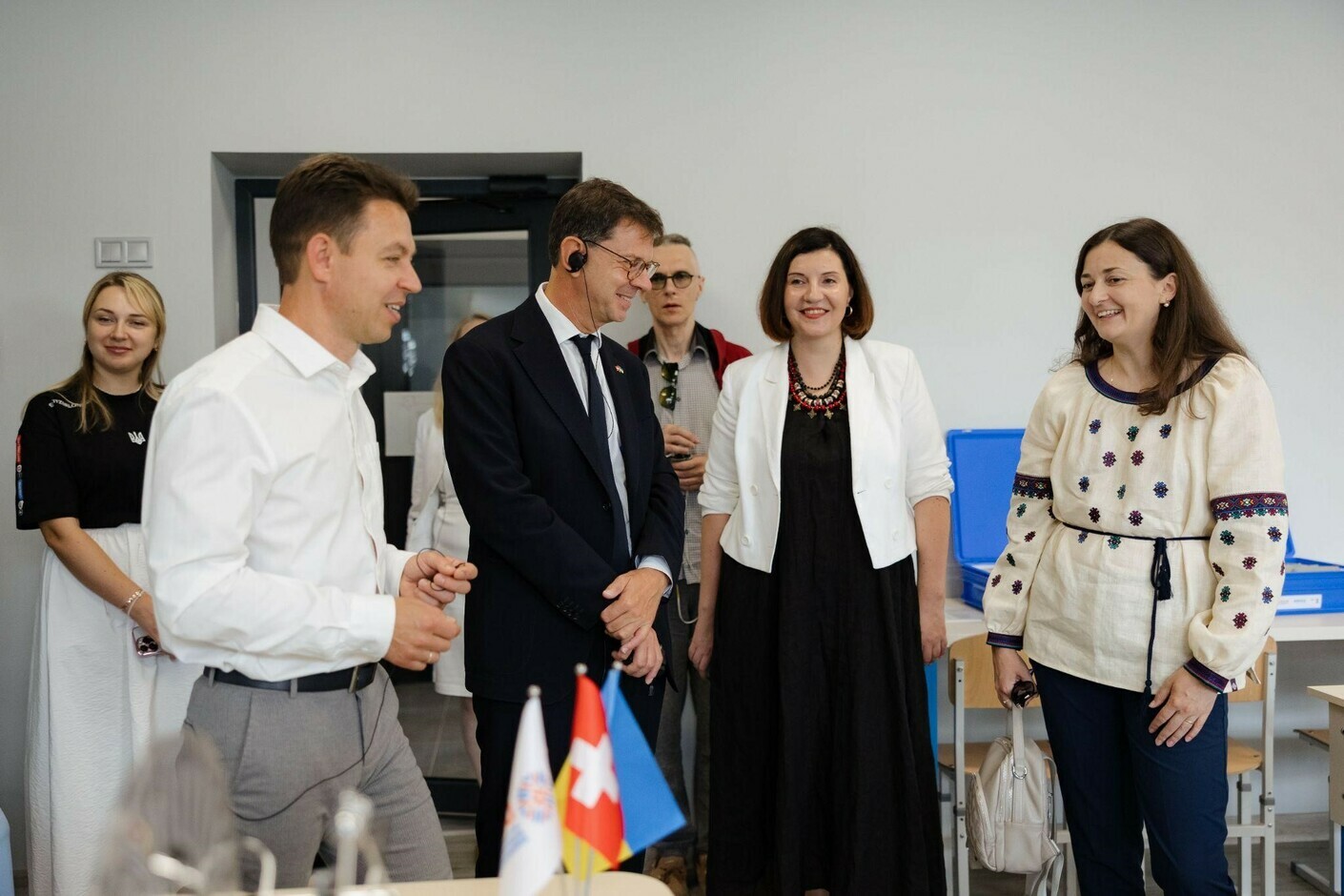
Felix Baumann, Ambassador of the Swiss Confederation, Ilona Postemska, Senior Programme Coordinator at the Embassy of the Swiss Confederation, Valentyna Poltorak, Swiss-Ukrainian DECIDE Project Manager, Vasyl Bilohura, Head of the Education Department of the Chernihiv City Council
Seven projects have been implemented in Chernihiv as part of the DECIDE: VIDBUDOVA initiative to renovate schools: five bomb shelters were built, the kitchen unit was renovated, and Gymnasium No. 13 was reconstructed. Three of these projects were completed at Gymnasium No. 13.
Read on to find out how Gymnasium No. 13 has changed and what the students and teachers think about it. The articles to follow will cover the renovation and equipping of the bomb shelter and the school kitchen unit.
How everything happened, what challenges were encountered, and what plans were made
The preparatory work took almost a year. We recruited a large team of specialists to ensure that the premises were well thought out from technological and visual perspectives.
Only after this thorough preparation did the actual renovation work begin, which lasted for over a year. In total, more than 800 students sat down at their desks after more than two years of hard work.
‘Under the terms of the grant agreement, the Education Department received a grant and guaranteed that it would be used in accordance with the agreed estimates. I believe that we have successfully completed this task. We conducted public procurement of the necessary goods and repair work, collaborated with the Project team to identify requirements, and monitored progress and repair quality. In fact, the management team was involved in every stage of the project’s implementation, from planning to submitting the final reports. We are sincerely glad that we succeeded,’ says Vasyl Bilohura.
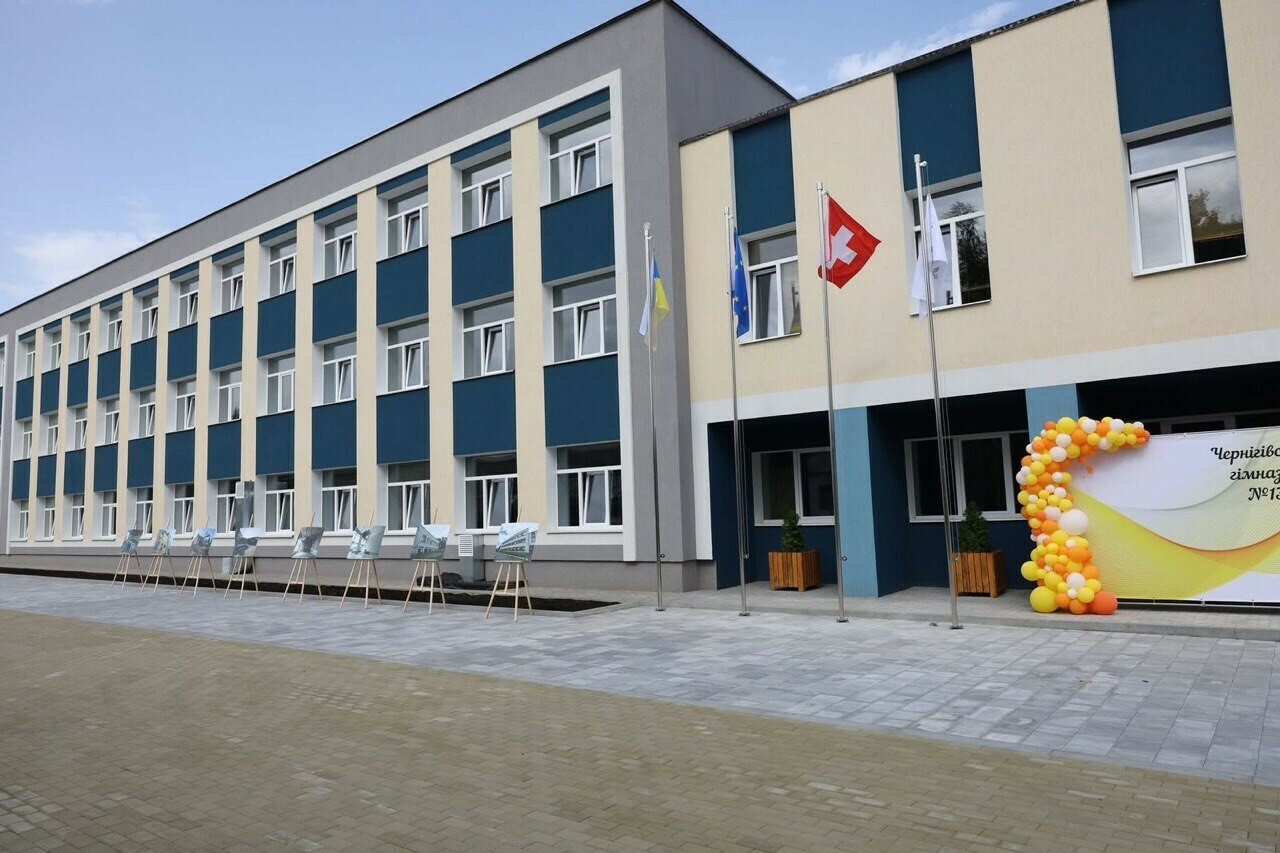
Facade of Gymnasium No. 13
The main challenge during the renovation was the frequent power outages, which made the work of the builders more difficult. Despite these difficulties, the team did their utmost to finish the work on time and provide comfortable learning conditions.
‘DECIDE Project experts provided more than just help – they personally supervised every stage, controlling every detail: from the colour of the walls to the placement of furniture. If anything was in doubt, they worked together to find the best solution. They consulted with teachers to select the necessary equipment for each classroom. This approach ensured that the new classrooms and laboratories were filled not with random items, but with modern, useful, functional equipment that would really help with the educational process,’ says Inna Levchenko.
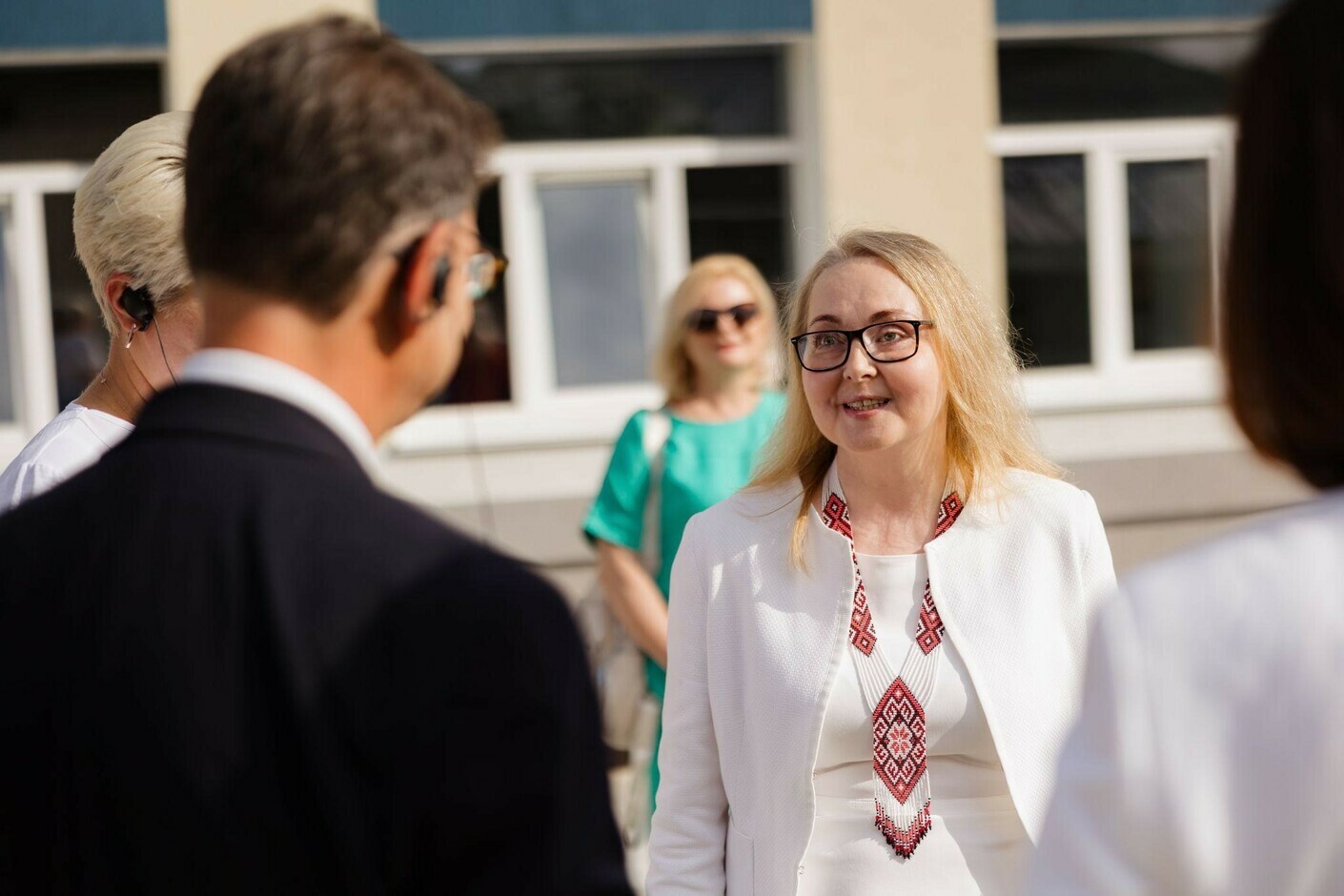
Inna Levchenko
Everyone contributed to renovating and equipping the school to the best of their ability. The result is widely acknowledged to be solely due to the coordinated efforts of the DECIDE team, the education department, and the school staff.
‘As part of the project, we renovated the interior of the building where students in Grades 5–9 study. The old building, which houses the primary school, also requires such high-quality improvements. We hope that we will be able to carry out similar work in this part of the building in the future. The community of Chernihiv has also contributed to improving the local area. Of course, there are still many plans and much work to be done. Even before the full-scale invasion, we started a project to build a sports ground using participatory budgeting, and this also needs to be completed. We also dream of turning a greenhouse into a real laboratory and creating relaxation areas for children. 'We sincerely believe in victory,’ says Vasyl Bilohura.
What the gymnasium looks like now
The building was insulated, particularly the roof, and new water and electricity systems were installed. The gymnasium now comprises 16 modern laboratories and classrooms, all equipped with the latest multimedia equipment and teaching materials, including:
- chemistry and physics laboratories;
- biology classroom with a Climatron;
- two computer classrooms;
- domestic and creative skills classroom;
- engineering and practical technology workshop;
- STEM laboratory with robotics;
- art workshop;
- geography, history, Ukrainian language, mathematics, foreign literature, interdisciplinary, and English language classrooms;
- gym;
- assembly hall;
- recreation zones on each floor.
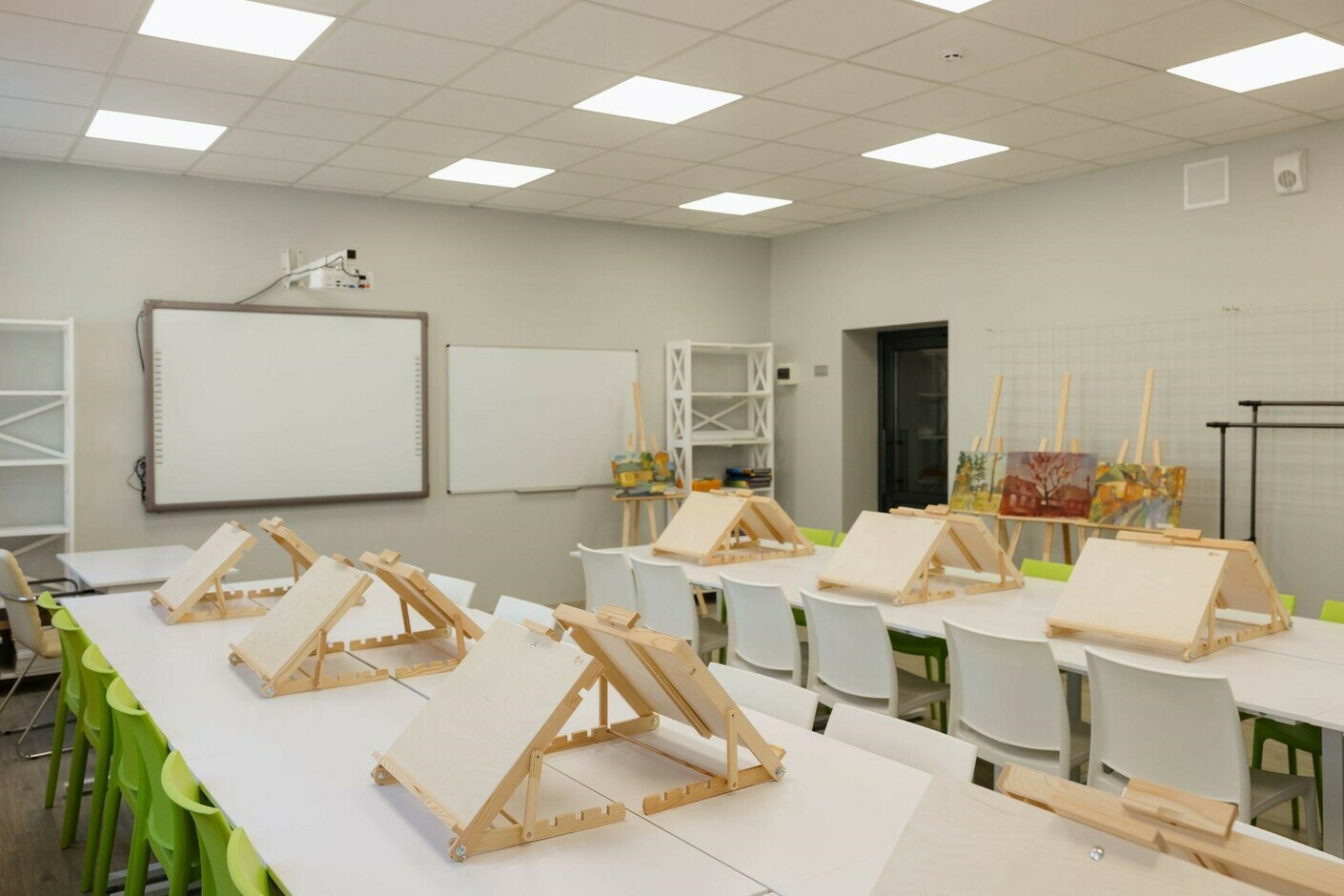
Art workshop
‘All classrooms for grades 5–9 are equipped with the latest technology. This includes computers and additional equipment. For example, in biology lessons, children can use digital microscopes which transmit images to a screen. This means they no longer have to peer into the microscope, and it facilitates independent work and documenting research. And this equipment is available at every desk,’ says Inna Levchenko.
In technology classes, students have the opportunity to work with new sewing and training machines in the modern vocational training room. The training kitchen is equipped with an electric stove, extractor hood, microwave oven, food processor and various utensils. These resources allow students to develop life skills in an environment that closely resembles real life.
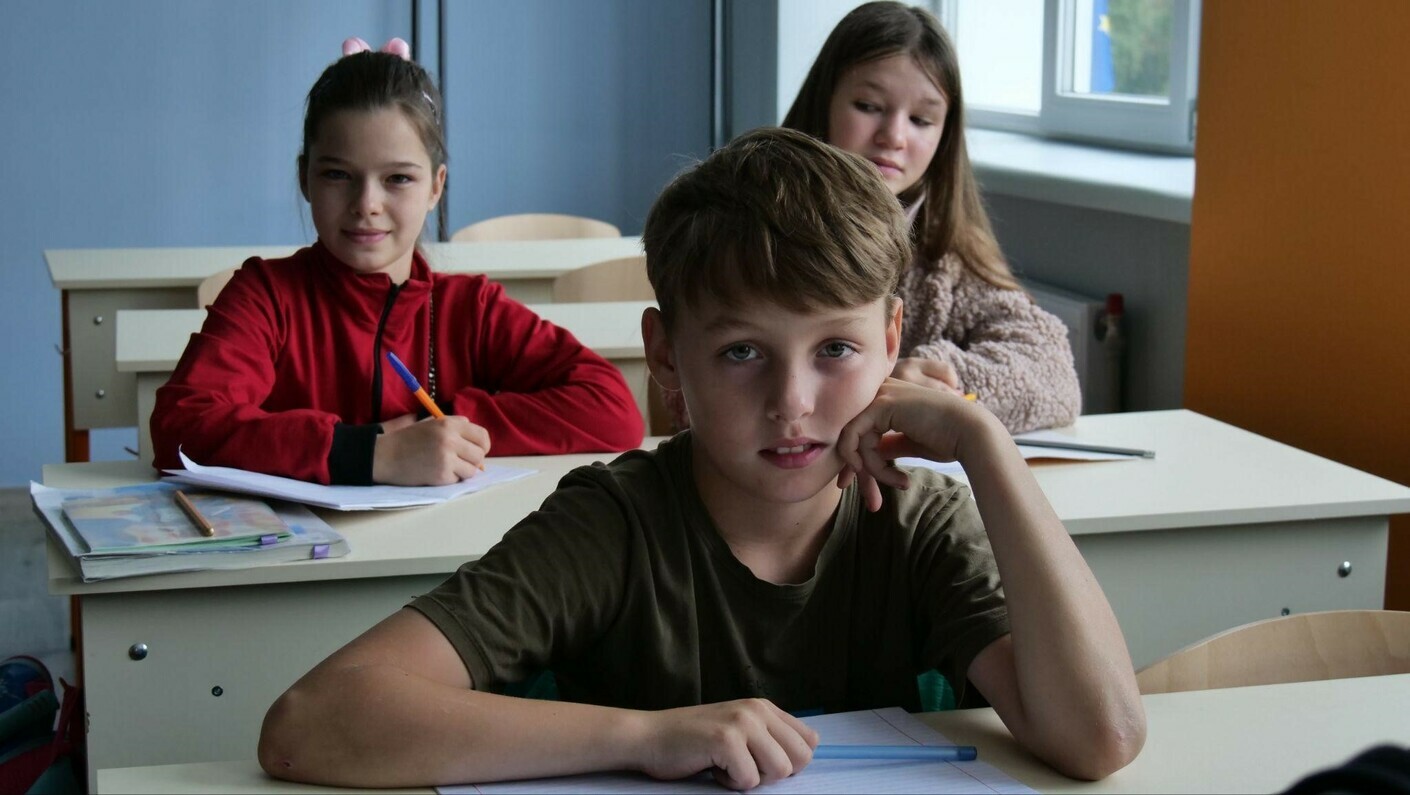
During the lesson
During chemistry lessons, students can conduct experiments in a safe environment using fume cupboards, educational kits for modelling molecules and acids, and laboratory equipment.
The school also has a STEM workshop equipped with modern computer technology, including an interactive whiteboard, a 3D printer and robotics kits. This space integrates knowledge from subjects such as computer science, mathematics, physics, biology and vocational training to foster practical skills and critical thinking.
The STEM workshop can be used to teach robotics classes with programmable robots, computer science classes focusing on algorithmisation and programming, and biology and physics lessons with demonstrations of experiments and process modelling. It can also be used for vocational training classes, including 3D modelling and 3D printing. Students actively use their own smartphones to participate in interactive tasks and programme robots via an interactive whiteboard.
‘Every element of the school’s design has been carefully considered, with comfort, functionality and safety in mind. New bathrooms have been installed and relaxation zones created, transforming the school into a modern, inclusive and attractive educational environment,’ says Inna Levchenko proudly.
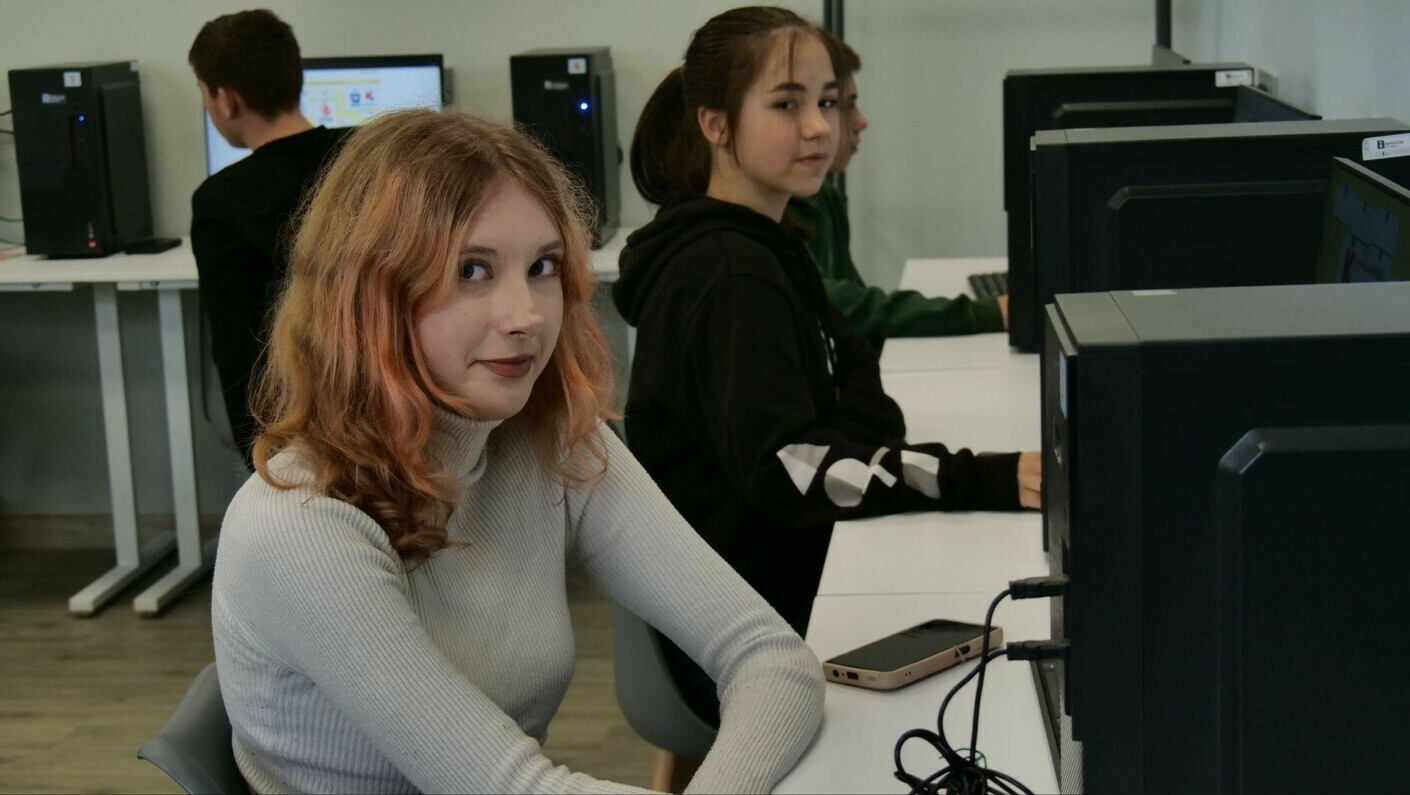
Students in the renovated computer classroom during a lesson
At the same time, a mobile stage was set up in the assembly hall that can easily be moved if necessary. A screen has been installed that can be lowered and raised automatically. There is also a recreation area and a dressing room, so that all the stage costumes, which were previously stored in the teachers’ office, now have their own dedicated space.
‘This can no longer be considered reconstruction. Reconstruction means getting back pretty much the same conditions you lost. In this case, however, the school has changed beyond recognition. We have not just got a nice school; we have got modern, comfortable and safe conditions for the educational process. The academic year has already begun, and new students are still arriving and expressing their desire to study here,’ says Inna Levchenko.
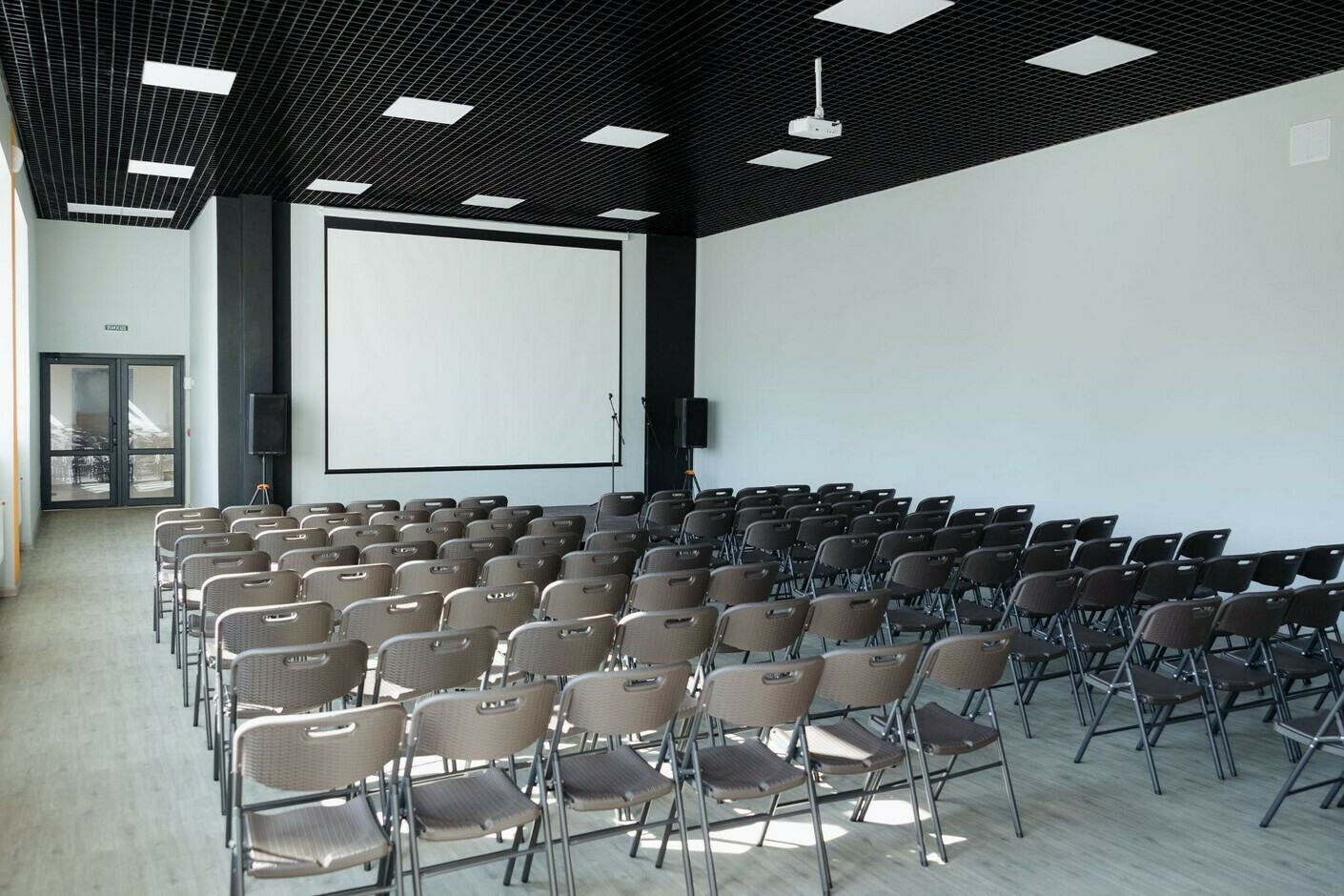
The assembly hall
The sports hall has been refurbished to include modern linoleum flooring and professional basketball backboards, as well as all the other necessary equipment for a wide range of sports activities.
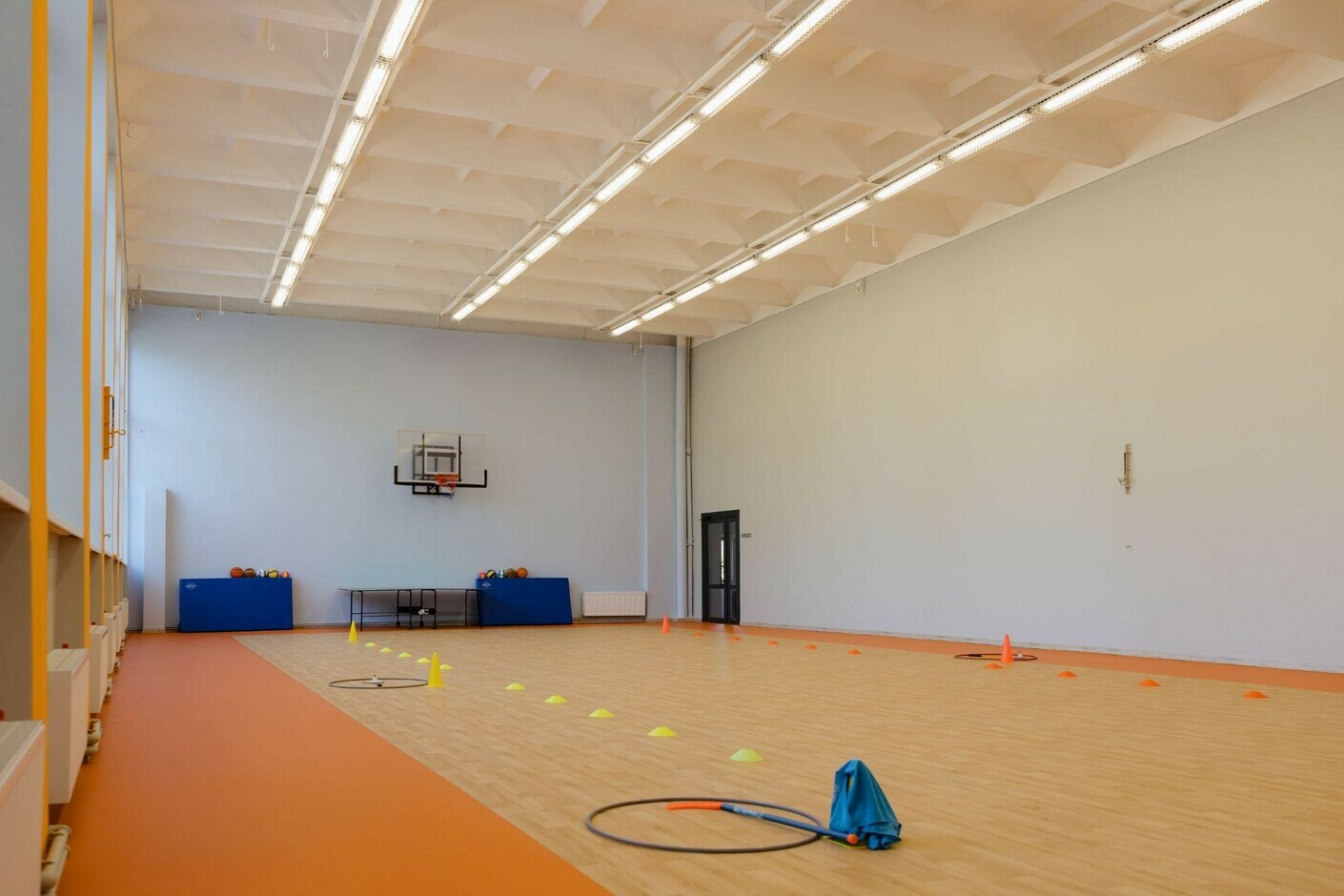
The gym
‘The project was large-scale and involved more than just external changes to the building’s façade. Gymnasium No. 13 is a good example that we will use to guide our future work. We have already held a meeting with heads of other educational institutions at the school, and we are ready to share the results of this high-quality renovation with our colleagues,’ says Vasyl Bilohura.
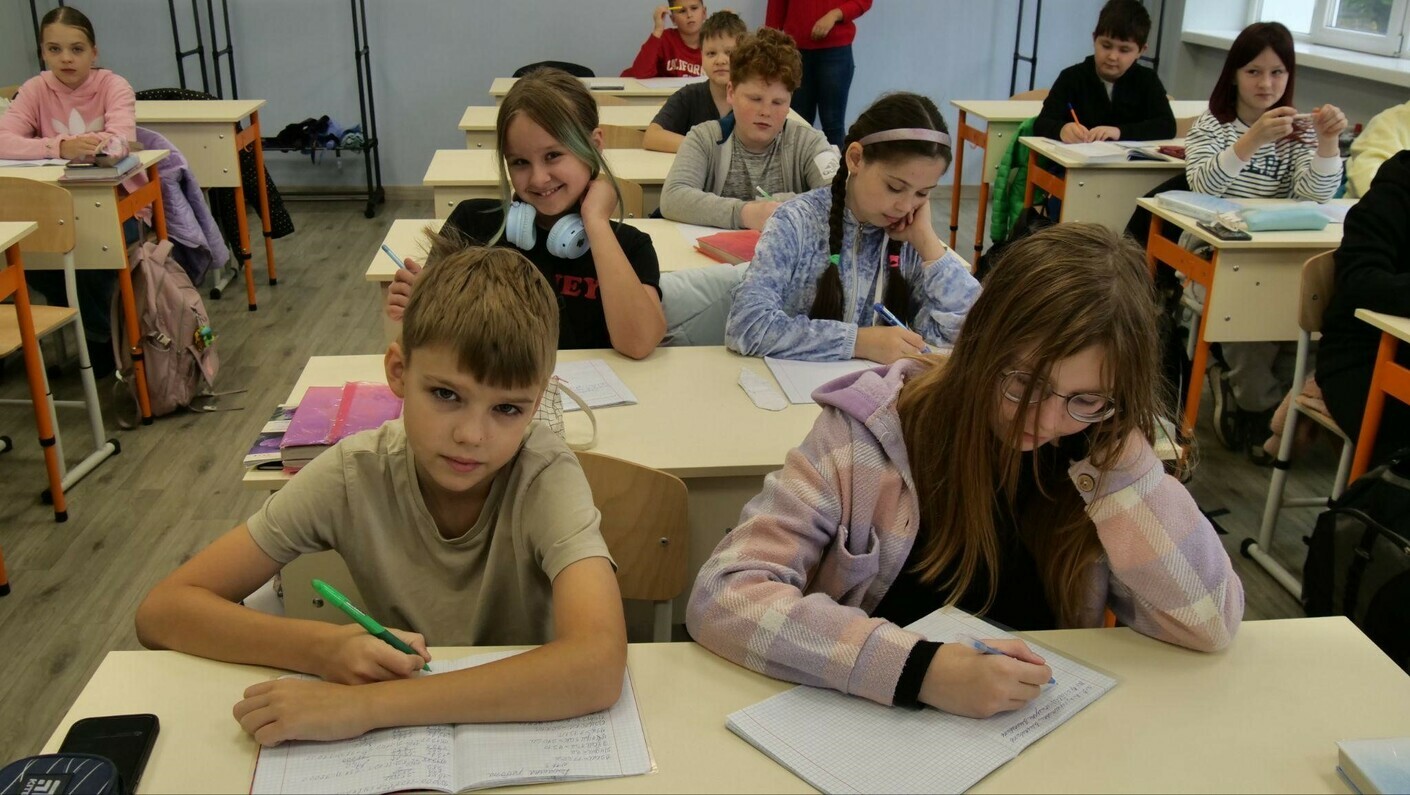
During the lesson
What children and teachers say
‘When I first came to the school after the renovation, I thought, “Is this really my school?” Everything was bright and clean with harmonious colours, and there was a very nice recreation area. The gym has a variety of pleasant-to-touch balls. The new desks and chairs are incredible,’ says Daria Davyskyba, a Grade 5 student.
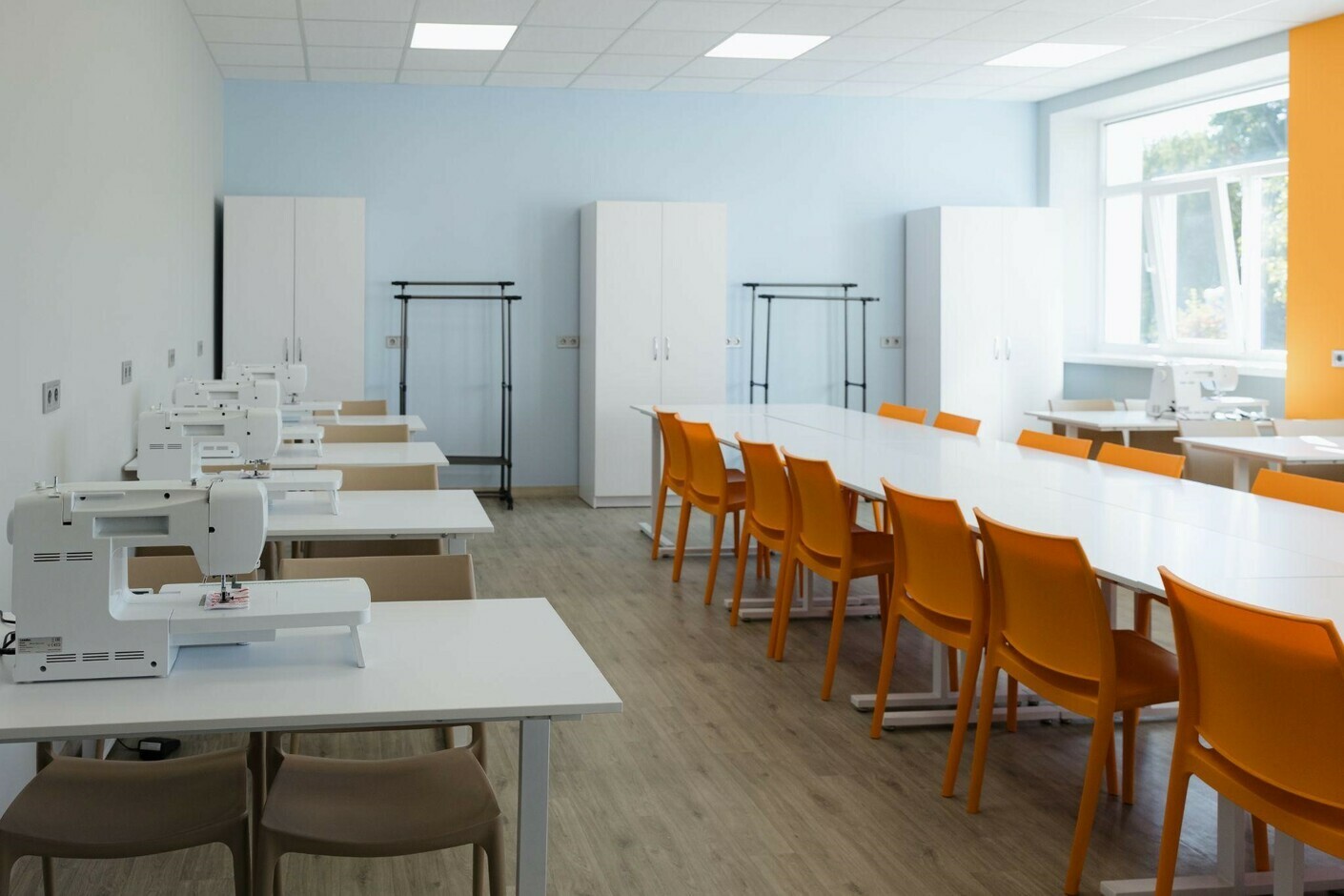
Domestic and creative skills classroom
The new chemistry and biology classrooms are particularly popular with students. In particular, the biology classroom has a Climatron, which is a special piece of equipment that allows various climatic conditions to be recreated artificially. This enables students to observe the growth and development of plants in real time.
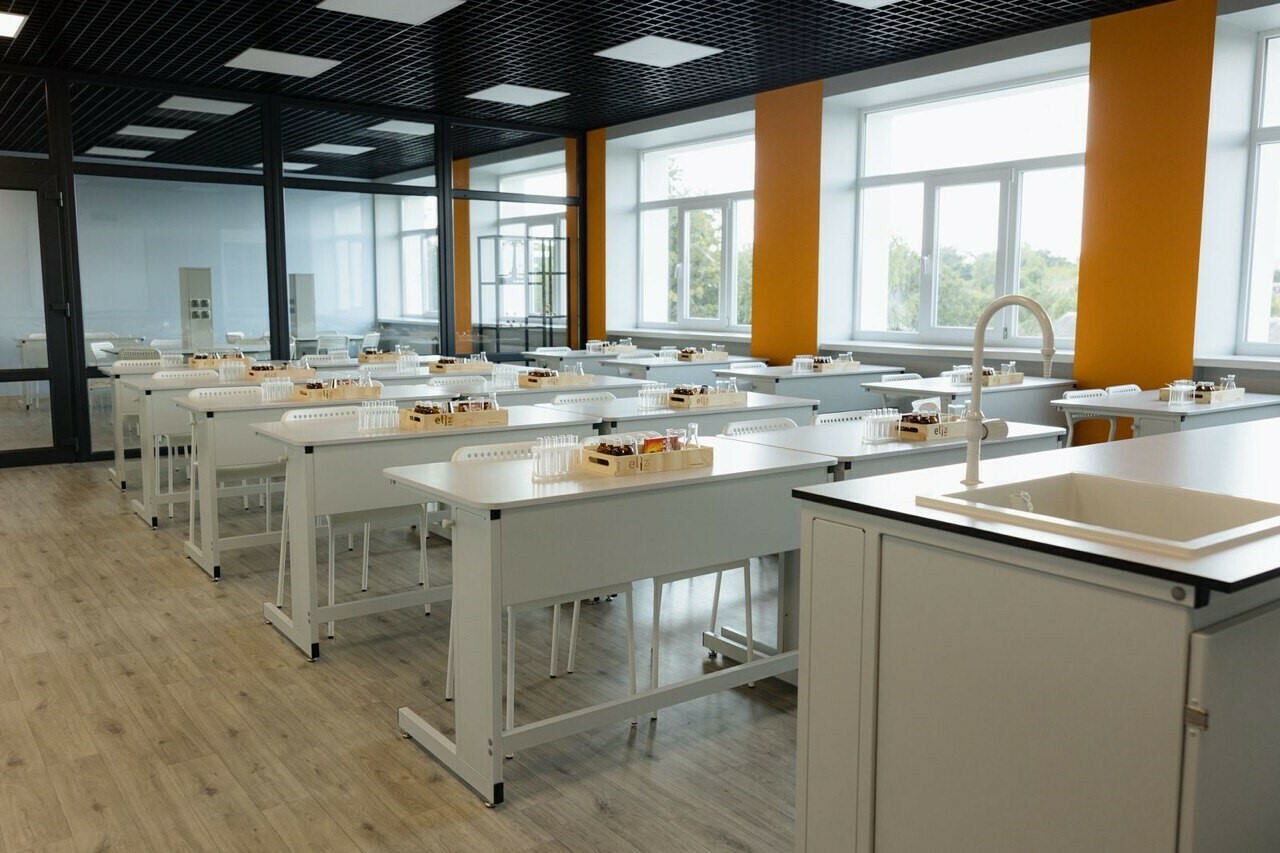
Chemistry classroom
‘In the biology classroom, in one corner of the Climatron, there are pots containing soil and seeds, as well as various research tools – everything we need for our research work. I also like the new human skeleton and the mannequin for practising artificial respiration. In the art room, there is an exhibition of some really cool drawings on the walls. The atmosphere is inspiring,’ says Veronika Tarhonska, a Grade 5 student.
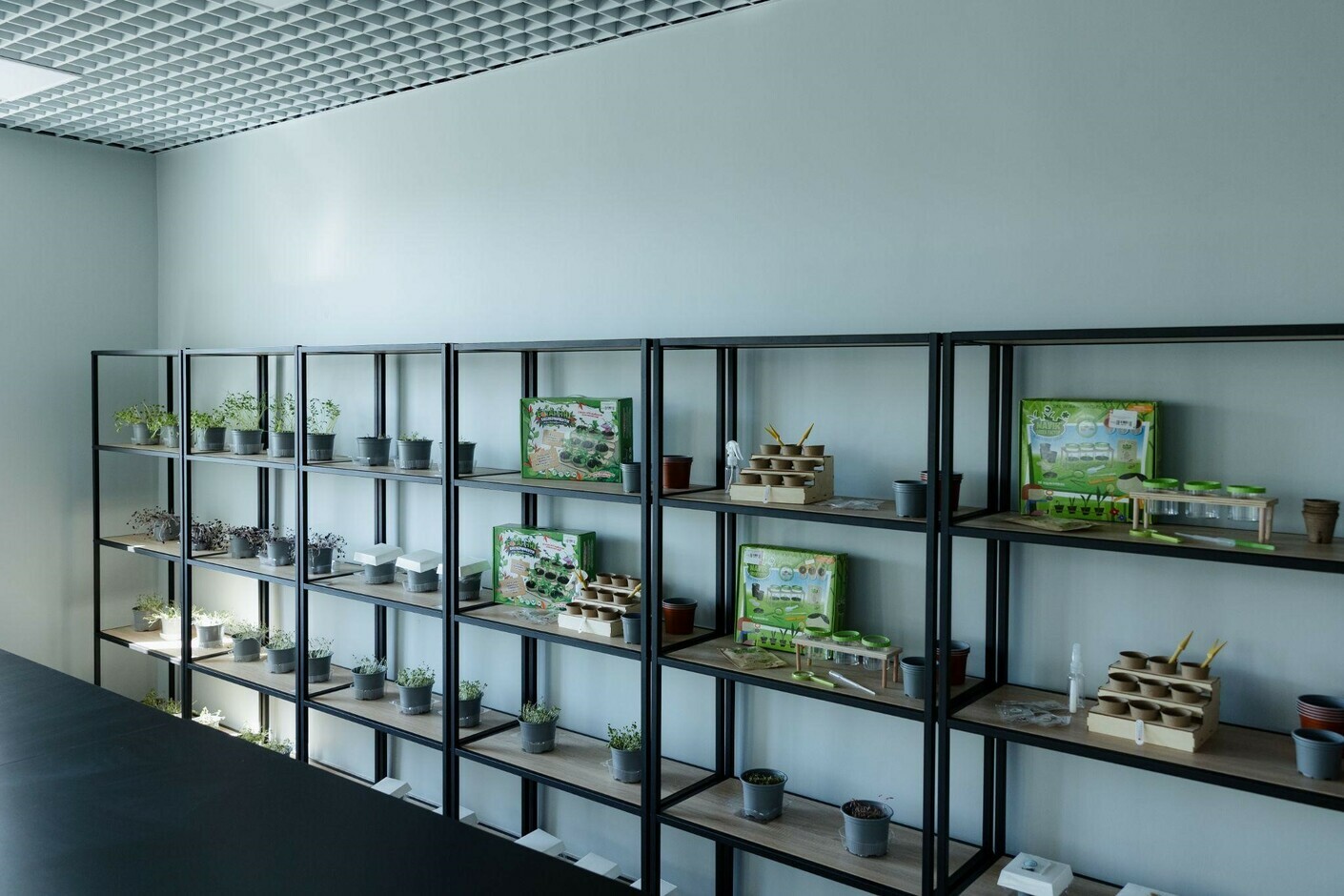
Climatron
Grade 9 student Yehor Barsuk says that the school has definitely become more modern:
‘My first impression was incredible. The colours are so pleasing to the eye that I don’t ever want to leave the school.’
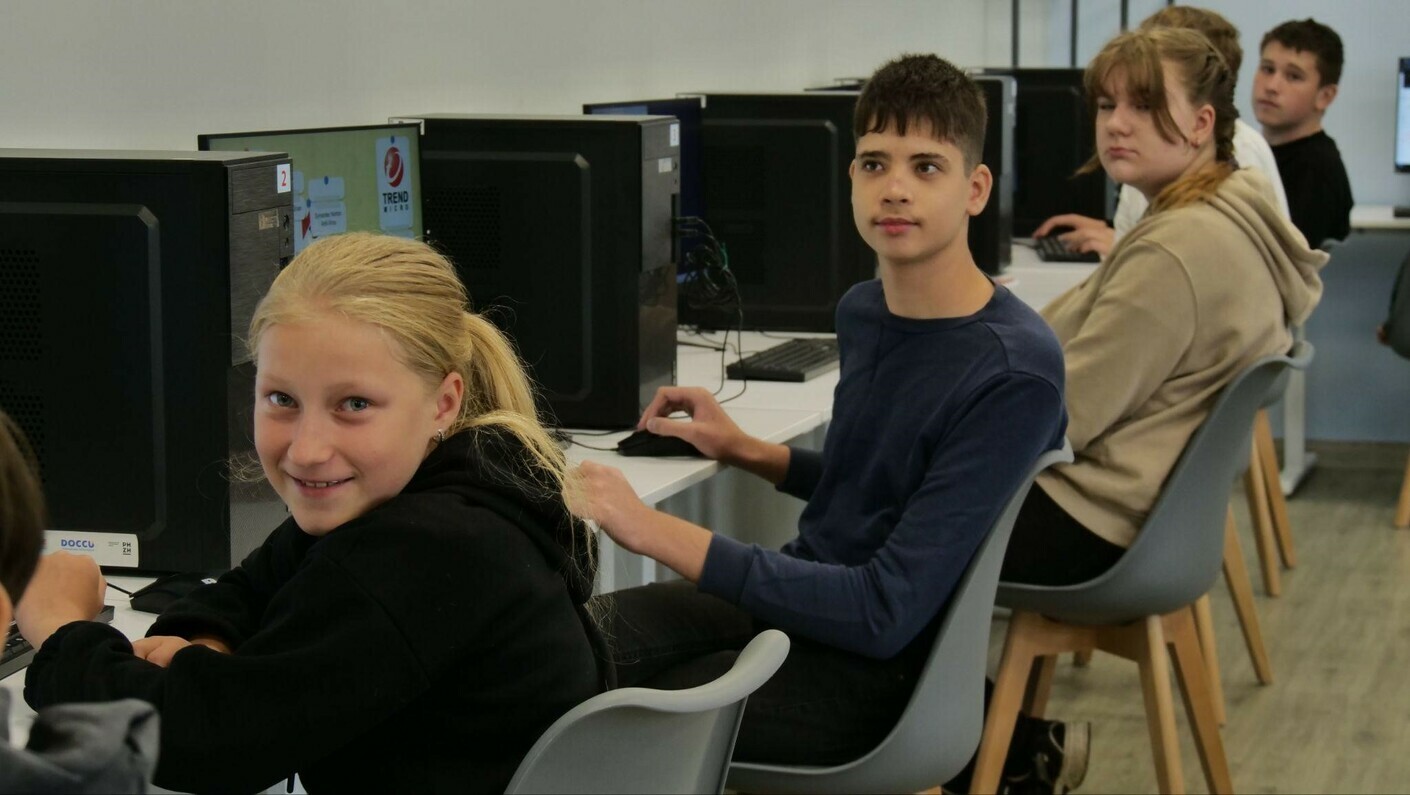
Students in the renovated computer classroom during a lesson
In addition, the modern hygiene rooms impress everyone. Schoolchildren say, ‘It’s just like the ones in big shopping centres.’ The schoolchildren also had time to enjoy the hall and recreation zones:
‘New furniture has been installed in the hall, making it a more comfortable place to relax during breaks, read books or do homework,’ says Viktoriia Oliinyk, a student in Grade 9.
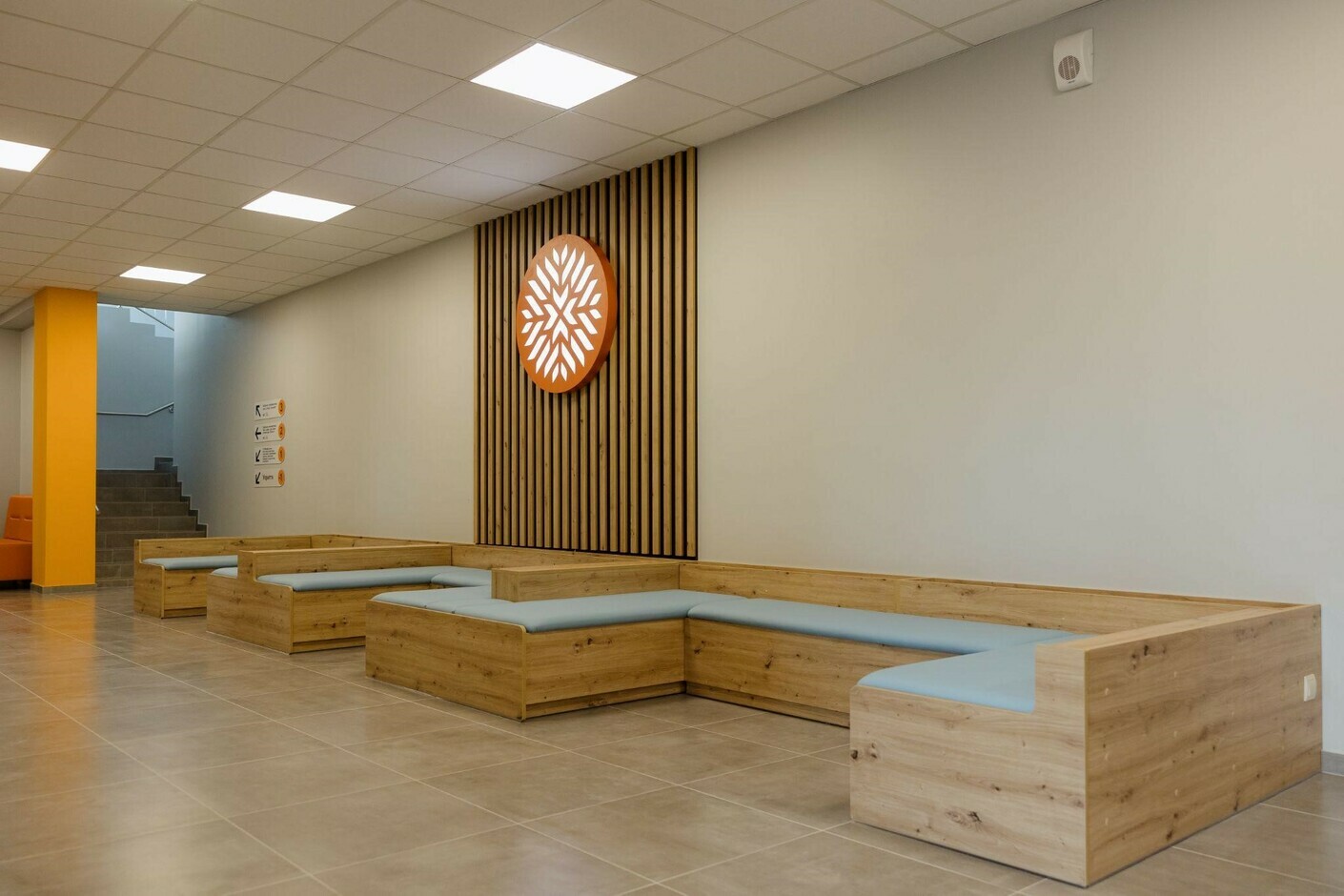
One of the zones for relaxation and communication
The school’s practical psychologist has also noted an improvement in the emotional and psychological state of the children.
‘During the war, children are constantly exposed to various forms of destruction, whether it be in real life or via the internet or television. Unfortunately, many of our students have lost their homes or had them damaged. Therefore, seeing a beautiful picture can make them feel safe and comfortable, surrounded by light, warmth, beauty, and friends. There are many spaces for communication here, which bring students and teachers together,’ says Viktoriia Havrylenko, a practical psychologist.
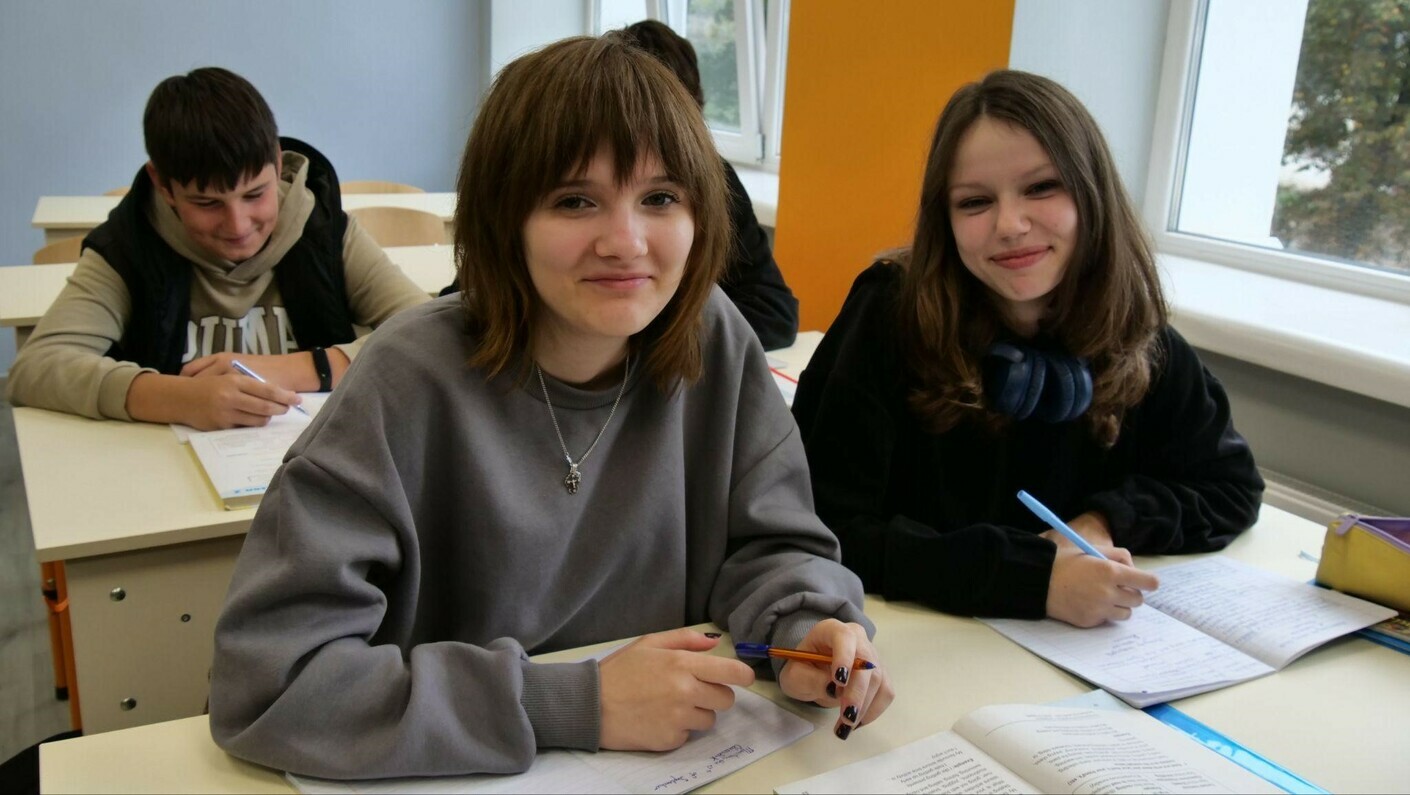
During the lesson
The gymnasium was filled, both visually and meaningfully
‘At DECIDE, we not only wanted to change the interior and exterior of the building, but also ensure that the team worked together democratically using modern approaches. So, we collaborated with the gymnasium team to introduce some of our fundamental training courses here. It is important to understand that this was a newly formed team from several different schools. Therefore, it was important for us to bring them together around a shared vision,’ says Valentyna Poltorak.
Thus, teachers, administrators, parents and senior students collaborated to develop a strategy called ‘School of Effective Democracy’. This reflects their shared ideas about developing the school.
In addition, a course entitled ‘Learning to Live in a Community’ was introduced for pupils in Grades 8 and 9. This project-based course explores life in the community, the role of local self-government, and ways to contribute to community and school development. During the second semester, the children developed their own projects on this topic.
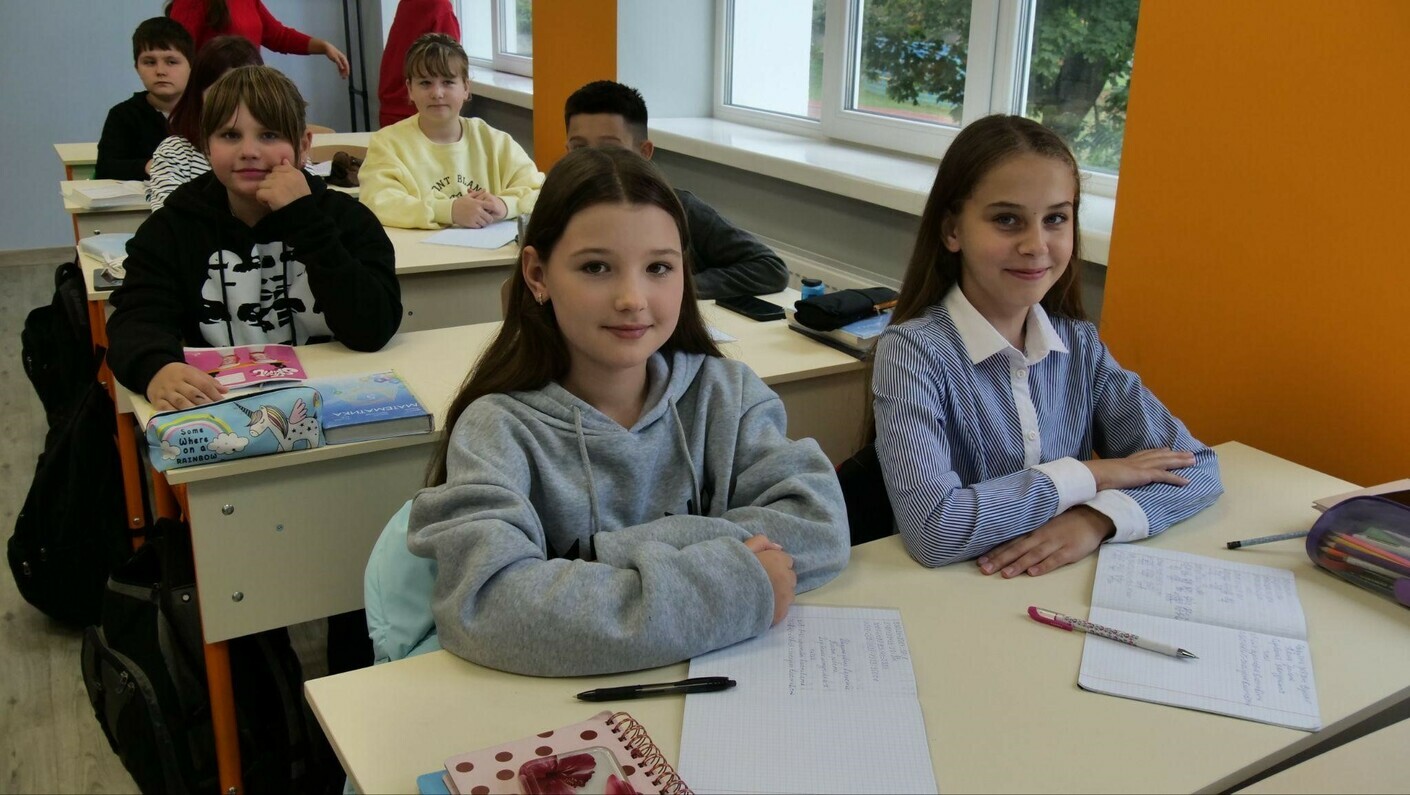
During the lesson
Furthermore, Valentyna Poltorak states that teachers and school psychologists are familiar with the methods employed in the ‘Getting Stronger Together’ course. This course covers psychological support and approaches to democratic education and human rights, with the aim of avoiding conflicts and fostering a positive atmosphere in the classroom and school.
Yes, teachers encourage their students to participate in developing class or school rules, for example. This is democracy in practice, allowing children from different schools to unite, understand each other better, learn without conflict and build relationships in a democratic way.
‘While we were renovating the school, all this time, teachers and students worked online or in a hybrid mode. It was important to us that they felt like one team. These courses became a unifying factor for children, teachers, and the administration. Now, the team has a shared vision for its future development,’ says Valentyna Poltorak.
This year, Gymnasium No. 13 also joined a pilot project on career guidance. After all, it is at this level that children have to decide on their future profession and choose their further educational path: vocational training, a technical college, or university. Chernihiv will host training for career counsellors to help schoolchildren make the right choice.
‘We view restoration as a complex process involving many different actions. It is not just about repairs; it is also about working with people, bringing them together and creating a united community of people who develop the school and are socially active,’ concludes Valentyna Poltorak.
By Mariia Buleiko (Markovska)
13 December 2025
Межа у 300 операцій: як формальний критерій може знищити хірургію в малих громадах
Межа у 300 операцій: як формальний критерій...
Поки країна зосереджена на викликах війни — у сфері охорони здоров’я ухвалюються рішення, наслідки яких можуть стати...
13 December 2025
Уряд затвердив оновлені підходи до реалізації...
Кабінет Міністрів України ухвалив документ «Особливості реалізації Концепції реформування місцевого самоврядування та...
12 December 2025
French experience for Ukrainian communities:...
During their visit to France, members of the Ukrainian Parliamentary Committee on State Administration, Local...
12 December 2025
Коли знання запускають участь: як Здолбунівська...
Авторки: Тетяна Лукеря, Олександра Койдель – Центр демократичної стійкості (Київська школа економіки) Частина...