On Serpneva-2025, the ‘DECIDE: VET’ career guidance pilot project and new opportunities for communities
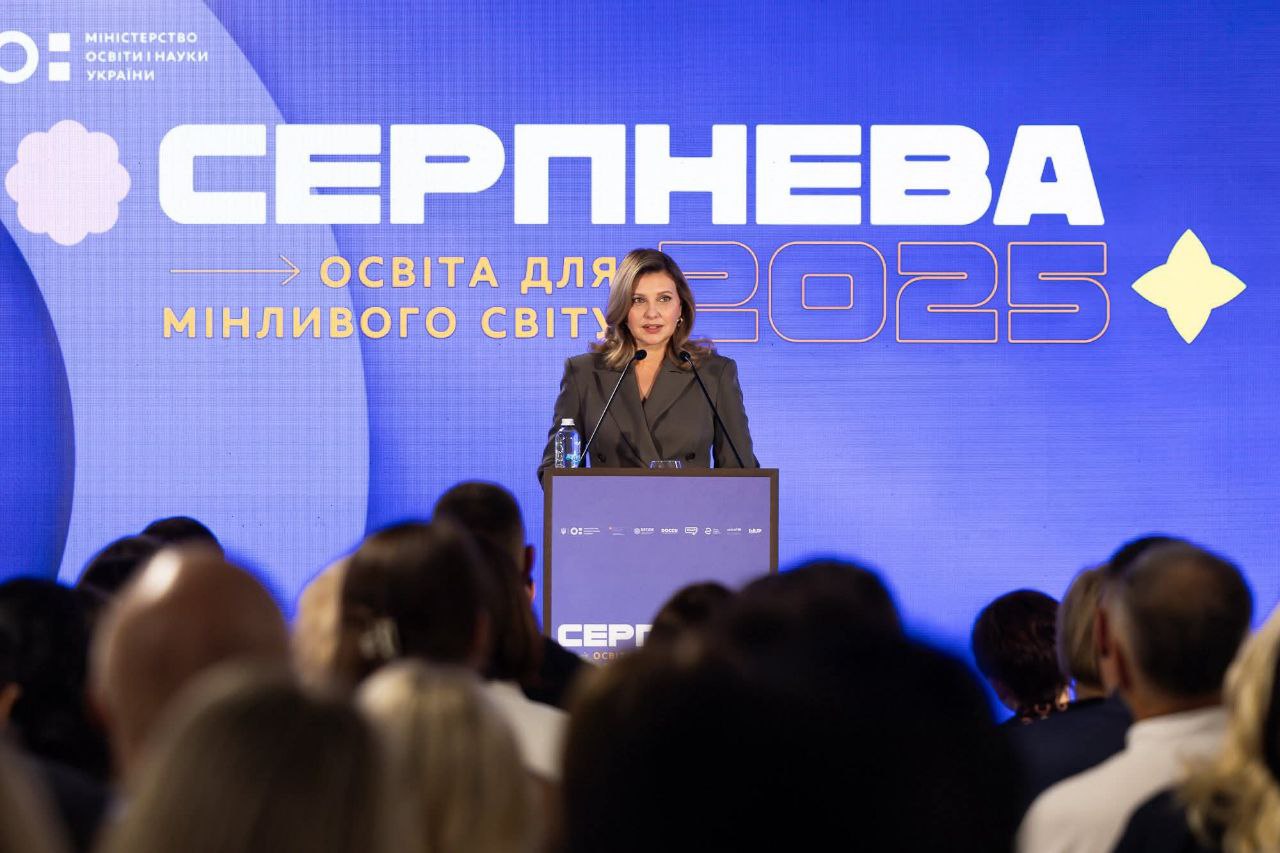
Last week, the annual Serpneva-2025 Conference was held, bringing together over 500 participants and 80 speakers. These included First Lady Olena Zelenska, Prime Minister Yuliia Svyrydenko, the team from the Ministry of Education and Science, educators, and international partners.
For the first time this year, the main topic was the reform of vocational education being designated a national priority.
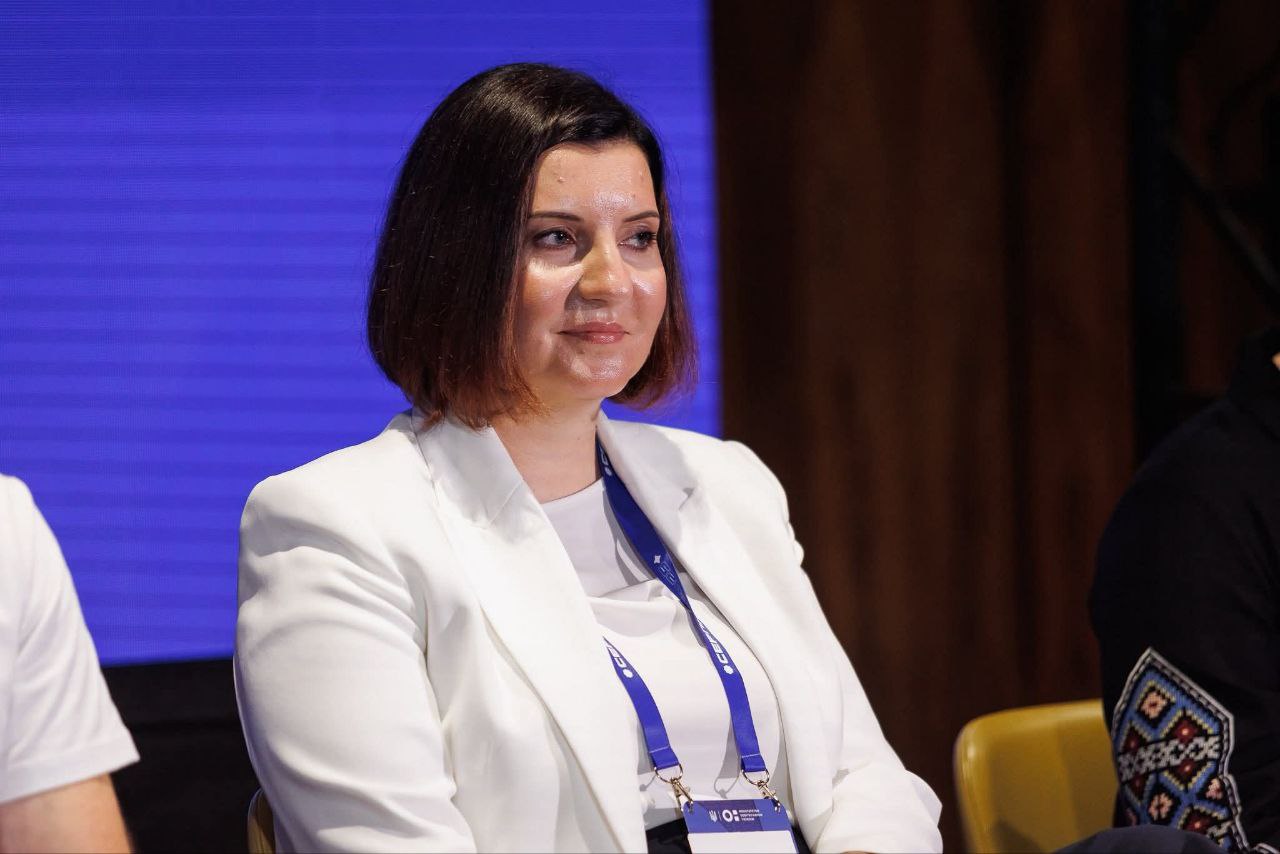
Valentyna Poltorak, manager of the Swiss-Ukrainian Decentralisation for Improved Democratic Education (DECIDE) project, posted about this on Facebook after sharing the results of a joint pilot project with the Ministry of Education and Science, which aimed to develop a career guidance system for students.
‘DECIDE: VET’ pilot project
Valentyna Poltorak said that the initiative to pilot a new approach to career guidance focusing on working-class professions took two years in total – one year to prepare and one year to implement.
‘Everything is possible. The impossible just takes more time,’ she emphasised.
The pilot project was launched in September 2024 in partnership with the Ministry of Education and Science, the Zurich University of Teacher Education, and with the support of the Embassy of Switzerland in Ukraine. Its main idea is to engage not only schools but also communities, regions, and businesses in career guidance.
Why does it work in Switzerland?
Valentyna Poltorak says that the key to success in countries where vocational education is the most popular choice, such as Switzerland, Germany and Austria, is close cooperation between education, government, and business.
‘In Switzerland, 65–70 per cent of students choose a vocational course after completing the 9th grade. This is a kind of social contract where schools and businesses provide opportunities for internships and factory visits, coordinated by local authorities,’ she emphasised.
Pilot regions and communities
Six regions joined the initiative: Chernihiv, Poltava, Odesa, Kyiv, Ivano-Frankivsk, and Lviv.
The pilot project was implemented in nine communities: Chernihiv, Lviv, Ivano-Frankivsk, Kremenchuk, Brovary, Savran, Reshetylivka, Sokal, and Vasylkiv.
Twenty-two schools were selected in the communities, where career advisors were trained using the JOBs course from PH Zürich. During the pilot project:
- over 900 students in grades 8–9 completed the course;
- over 100 tours to enterprises were organised;
- more than 14,500 schoolchildren took part in career guidance events.
‘Children were often not even aware of businesses located just 100 metres from their school. And these are modern production facilities that offer decent wages,’ emphasised Valentyna Poltorak.
The role of regions and vocational schools
In all regions, vocational schools were selected alongside communities, for which career guidance hubs were created. These hubs are places where students can try out different professions, meet businesses and attend masterclasses.
‘In fact, it is both a career centre and a showcase for vocational education,’ explained the DECIDE manager.
Business as an active partner
A total of 110 companies participated in the project. They organised excursions, became hub residents, and held meetings with young people.
‘For me personally, this was the most significant discovery. Now, more than ever, businesses are willing to collaborate with the state and communities when it comes to fighting for young people,’ emphasised Valentyna Poltorak.
She also referred to the Future Index in-depth research by the Olena Zelenska Foundation, the Kyiv School of Economics (KSE), the Peace Innovation Network (PIN) and UNICEF. The study found that one in four children in Ukraine is considering moving abroad, primarily due to a lack of opportunities for development rather than security concerns.
Challenges and key conclusions
Valentyna Poltorak states:
- ‘Career guidance is not a magic bullet, but it is an important practical step towards the country's recovery.’
- ‘There are no simple solutions here. Results will only be achieved through real cooperation between education, business, and government.’
- ‘The most important thing is for young people to plan for their future in Ukraine. This is why schools should showcase the range of career opportunities available within the community, the region and the country.’
Next steps
From September, the project will invite communities across Ukraine to get involved. Plans are in place to provide training for career advisors in schools and career coordinators in local councils.
Over the next two years, more than 400 communities and schools are expected to participate. They will receive:
- access to a grant programme for career guidance activities;
- expert support in cooperation with businesses and vocational schools;
- training from PH Zürich.
‘Today, we are talking about 1.3 million Ukrainian teenagers. Although it is difficult in wartime, we have the power to change the situation step by step,’ concluded Valentyna Poltorak.

Attached images:



Tags:
DECIDE: High School DECIDE: PROFTECH education
Source:
Портал "Децентралізація"

17 September 2026
Місцеві бюджети у проєкті держбюджету-2027: огляд ключових змін
Місцеві бюджети у проєкті держбюджету-2027:...
Від редакції. Проєкт Державного бюджету на 2027 рік визначає ключові параметри фінансів громад на наступний рік....
17 September 2026
How the Kryvyi Rih Agglomeration Was Created:...
On 3 September 2026, in Kryvyi Rih, representatives of 14 of the 15 territorial communities (hromadas) of Kryvyi Rih...
17 September 2026
Безбар’єрний пляж в Одесі: як доступність змінює відпочинок біля моря
Безбар’єрний пляж в Одесі: як доступність...
Портал «Децентралізація» розпочинає серію матеріалів про рішення громад, що роблять публічні простори та послуги...
17 September 2026
Фінанси громад у 2027 році: ключові параметри проєкту Держбюджету (інфографіка)
Фінанси громад у 2027 році: ключові параметри...
Трильйон для місцевих бюджетів і нові умови фінансування громад у 2027 році У проєкті Державного бюджету на 2027...