Education funding and decentralisation: expert’s opinion
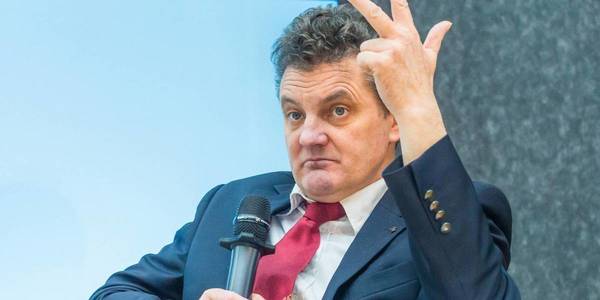
Author: expert Yuriy Hanuschak for ZN.UA
The decentralisation of power is often associated with the implementation of administrative and territorial reform, which currently is in its phase of voluntary amalgamation of territorial communities. However, it is only a small and relatively simple in the intellectual plan part of the reform which envisages a radical change in the nature of relations in power structures. Putting puzzles together on the map of Ukraine is an exciting game which eventually will end successfully after MPs will understand the fact that it is necessary to become just accustomed to the new territorial configuration of power structures.
The secondary education, taking into consideration its social importance and the amount of budget funds being invested in it, is perhaps the most indicative for assessing the success of decentralisation. This social service meets all the conditions for the transfer of powers to local self-government. First of all, consumers (pupils) and providers (educational institutions) are evenly distributed throughout the territory. The authorities in cities of oblast significance, rayons and amalgamated hromadas, which are replacing rayons, are generally able to provide educational services. Of course, there are exceptions when a hromada is established not in accordance with the order of forming capable hromadas set by the government and is too small and weak, but it is the expected lack of voluntary process of territorial communities amalgamation, which will eventually be eliminated at the next stages of the formation of the administrative and territorial system. The infrastructure, i.e. a network of educational institutions, is homogeneous which ensures comparability - an essential component for competition and, accordingly, the development of territorial communities. The order of service provision, that is the educational process, is well-written, and it is possible to establish clear signs of compliance or breach of this process.
Indicators of service quality assessment in the form of external independent evaluation are established. Local self-government bodies are interested in providing educational services, as it is an electorally thankful function. And, at last, funding of this sector is more or less adequate.
The full version is available in Ukrainian – please click HERE

28 April 2026
Local self-government reform: Key trends in the first quarter of 2026
Local self-government reform: Key trends in the...
The Ministry for Development of Communities and Territories of Ukraine has published the Monitoring Report on the...
28 April 2026
Зміна «обсягу» освітньої діяльності ліцеїв: просто про складне з законодавчим підґрунтям
Зміна «обсягу» освітньої діяльності ліцеїв:...
Реформа профільної середньої освіти актуалізує для громад практичні питання: як коректно діяти у випадках припинення...
28 April 2026
Анонс: вебінар «Як «працює» узуфрукт і кому він вигідний?»
Анонс: вебінар «Як «працює» узуфрукт і кому він...
До участі запрошуємо керівників органів управління освітою територіальних громад, керівників закладів освіти та...
27 April 2026
Вебінар EU Local Talks #4: нова логіка...
Представників органів місцевого самоврядування, регіональних органів влади та агенцій регіонального розвитку...