Accessibility as part of post-war reconstruction: Experience of restoring Trostianets Hospital
During the russian occupation, births were delivered in the basement of the Trostianets City Hospital – 21 babies were born there. Once the city was liberated, the restoration of the hospital became one of the community’s priorities. In this article, we explain how Trostianets made healthcare services more accessible during the reconstruction process, and what solutions other communities might consider as early as the design stage of healthcare facilities.
Trostianets community has joined a pilot project for the comprehensive reconstruction of localities affected by the armed aggression of the russian federation. The reconstruction of the hospital was a priority, so within just a few years it was possible to rebuild the outpatient clinic, the inpatient block, the paediatric ward, and the passageway between the outpatient clinic and the inpatient block.
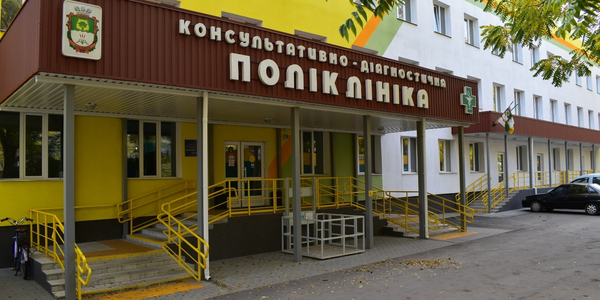
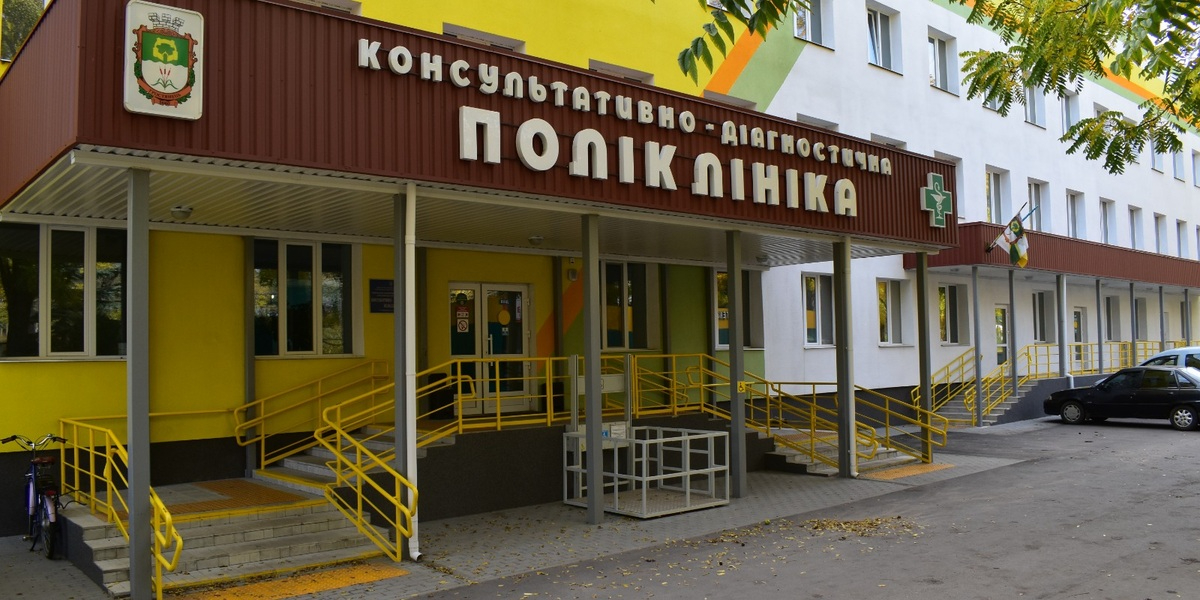
‘Today we can treat people in a renovated, modern building with accessible facilities. For example, the outpatient clinic has seven lifts, as well as ramps. There are no restrictions for people with reduced mobility,’ says Liliia Hontar, Director of the Trostianets Hospital.
Creating an accessible environment for people with diverse needs was a key part of the renovation. The hospital was fitted with ramps, lifts and hoists, as well as tactile paving; the entrances were modernised and the interior layout was redesigned.
‘Our hospital is not just a building, but a place where people receive the care they need. Therefore, the restoration was not simply about bringing back what was there before, but about creating a better environment – one that is safe, energy-efficient, and accessible to everyone. This experience shows that accessibility must be incorporated right from the design stage. That is how post-war restoration should take place,’ says Viktor Nykonenko, Acting Head of the Department of Construction, Urban Planning and Architecture at Trostianets City Council.
The need for accessible medical care is most acute in this border community, which is regularly subjected to russian shelling. The community is also home to older people, people with disabilities, residents with reduced mobility, and around 2,800 internally displaced persons. For many of them, being able to access the care they need close to home is of vital importance.
The hospital also treats wounded military personnel and civilians. To improve its capacity to provide care, there are plans to install a CT scanner here. Another area of development is palliative care: next year, the community plans to build a new ward. The maternity ward also continues to operate. Over the past year, 155 births were delivered there.
The restoration of the hospital is underway. Preparations are currently in progress to open a new inpatient rehabilitation ward, which will complement the existing outpatient services.
‘The hospital is like a litmus test, showing our residents that today the community is working, rebuilding, and making plans,’ sums up Liliia Hontar, Director of the Trostianets Hospital.
Tags:
Область:
Сумська областьГромади:
Тростянецька територіальна громадаSource:
Радниця – Уповноважена Президента України з питань безбар’єрності
23 November 2026
Switzerland helps Ukraine train 10,000 careers counsellors, who will now be in every school!
Switzerland helps Ukraine train 10,000 careers...
The Swiss-Ukrainian DECIDE Project, at the request of the Ministry of Education and Science of Ukraine, is training...
23 November 2026
Децентралізація, фінансова спроможність громад...
20 листопада 2026 року в Брюсселі під час першого засідання Спільного консультативного комітету між Європейським...
23 November 2026
From agreements to investment projects: What URC-2027 should be for communities
From agreements to investment projects: What...
Preparation of Ukrainian communities to use EU cohesion policy instruments, attract investment, develop municipal...
23 November 2026
Пів мільйона гривень за переїзд. Інтерв’ю голови громади
Пів мільйона гривень за переїзд. Інтерв’ю...
Очільник Сосницької міської ради Чернігівської області Андрій Портний про те, як його громада бореться зі зменшенням...