State-of-the-art regional policy instruments
This article delves into tested practices and solutions to operationalise decentralised regional development. It first examines institutional solutions adopted by countries in Europe and beyond for the allocation and coordination of responsibilities across governance levels, fiscal and financial empowerment, and capacity-building. Given Ukraine's specific context of post-socialist transformation, particular attention is paid to the experience of Central and Eastern European countries – Poland, Czechia, Lithuania, and Slovenia – whose reform sequencing and institutional development trajectories during the EU accession process offer the most directly relevant operational benchmarks for Ukraine. Then, it investigates how these solutions could materialise in Ukraine. Finally, it looks at regional policy instruments used in the EU context (especially in Cohesion Policy), and how Ukraine would benefit from the adoption of such instruments.
By Federico Bartalucci
Kyiv, 2026
***
This article was prepared by Federico Bartalucci for the Vienna Institute for International Economic Studies (wiiw) within the project “Support to the Decentralisation Reform in Ukraine”, supported by U-LEAD with Europe. It is derived from the Strategic Paper “Strategic vision of regional development policy: short-term and mid-term recommendations for Ukraine’s alignment with Chapter 22 of the EU acquis”, which aims to support Ukrainian policy-makers in designing and implementing a robust regional development policy in line with EU rules and practices. The article contributes to this objective by outlining a strategic vision for Ukraine’s regional development policy, with particular relevance to Chapter 22: Regional Policy and Coordination of Structural Instruments and future EU Cohesion Policy implementation.
The views expressed in this article are those of the author and do not necessarily reflect the views of wiiw, U-LEAD with Europe, the European Union or its Member States Germany, Denmark, France, Austria, Poland and Slovenia
***
Federico Bartalucci is an economist who holds a degree from the University of Exeter and an MSc in Local Economic Development from the London School of Economics. His work and research have focused on regional development issues ranging from devolution to the study of territorial inequalities and the impact of cluster-based development interventions. As an economic development consultant, Federico Bartalucci has advised several international organisations, including UNCTAD, the World Bank and the Asian Development Bank. His expert assignment with U-LEAD with Europe provides advisory services to the Government of Ukraine in its decentralisation and regional development policy reform.
TABLE OF CONTENTS
1.1.1. Institutional design principles for assigning clear roles and responsibilities. 4
1.1.2. Intergovernmental coordination mechanisms. 5
1.1.3. Regional development agencies. 6
1.1.4. Fiscal and financial empowerment 6
1.1.5. Capacity-building ecosystems. 7
Lessons learnt and relevance for Ukraine’s institutional decentralisation framework. 8
1.2. Proven practices in regional policy instruments. 10
1.2.1. Integrated Territorial Investments (ITIs) 10
1.2.2. Community-Led Local Development (CLLD) 11
1.2.3. Smart specialisation strategies (S3) 11
1.2.4. Cluster policies and regional innovation councils. 12
1.2.5. Performance-based grants. 13
1.2.6. Integrating international practices into Ukraine’s regional development strategy. 13
1.1. Institutional solutions for empowering regions in their development role: lessons from European practice
Effective regional development systems require robust institutional architectures that clearly define competencies, ensure coordination across governmental levels, and provide regions with the capacity to design and implement place-based strategies. In the context of EU accession (Chapter 22), institutional design should be tested against two requirements: (i) a coherent coordination model for regional policy (strategic, programming, implementation and monitoring) and (ii) early alignment with the future Cohesion Policy management and control system (MCS).
U-LEAD recommends that Ukraine adopt a decentralised, place-sensitive coordination model (Scenario 3), with a strengthened line ministry, empowered regions, and ring-fenced, territory-based instruments for subnational investments. European experience offers helpful models for institutional design and intergovernmental coordination that can inform Ukraine's efforts to strengthen its regional development framework while, simultaneously, pursuing EU accession.
This section examines proven institutional solutions from various EU Member States and beyond across several dimensions: institutional design principles that establish clear roles and responsibilities; intergovernmental coordination mechanisms that facilitate collaboration and strategic alignment; regional development agencies that serve as implementation vehicles for territorial development policies; fiscal and financial empowerment through equalisation systems; and capacity-building ecosystems through training academies.
1.1.1. Institutional design principles for assigning clear roles and responsibilities
The foundation of effective regional development lies in clear legal definition of subnational competencies that eliminates ambiguity, reduces intergovernmental conflict, and enables regions to exercise meaningful authority over their development trajectories. France's Territorial Organisation Law (Loi NOTRe) of 2015 provides a comprehensive example, clarifying regional responsibilities for economic development, spatial planning, innovation support, and vocational training whilst consolidating fragmented competencies and reducing overlaps that previously hindered effective action.
The law established regions as the primary level for economic development strategy, eliminating the previous three-tier system (region-department-municipality) that created coordination challenges and diffused accountability, while strengthening regions' capacity to develop comprehensive territorial strategies aligned with national priorities and Cohesion Policy frameworks.
Its State-Region Contracts establish multi-year, co-financed investment agreements that align national and regional priorities in areas such as transport, education, and environmental transition. Adapting a similar contractual approach in Ukraine - through multi-annual regional partnership agreements under a modernised SFRD - would strengthen coordination, predictability, and joint accountability between central and subnational actors.
Poland's self-government reform laws similarly established clear administrative division of competencies among voivodships (regions), powiats (counties), and gminas (municipalities), with regional self-governments receiving explicit authority over regional development strategy, innovation policy, vocational education, and management of EU structural funds. This clarity proved essential for Poland's effective absorption of cohesion funding post-EU accession, as regions could exercise genuine strategic authority rather than merely implementing central directives.
Since 2021, Lithuania consolidated seven intermediate bodies involved in Cohesion Policy implementation down to two (the Central Project Management Agency and the Innovation Agency), moved to outcome-focused monitoring, and mainstreamed Simplified Cost Options to cut administrative burden. These measures have been credited with faster absorption and clearer lines of accountability. These are directly relevant to Ukraine's future cohesion Management and Control System design.
The principle of subsidiarity - delegating tasks to the most effective governmental tier closest to citizens - must be embedded in legal frameworks to ensure that regional development responsibilities match the scale at which problems manifest and solutions can be designed. The European Charter of Local Self-Government, ratified by all Council of Europe members including Ukraine, establishes subsidiarity as a binding principle, requiring that "public responsibilities shall generally be exercised, in preference, by those authorities which are closest to the citizen" and that higher-level assignment should occur only when "the scope or nature of the task" demands it.
Spain's autonomous communities system operationalises subsidiarity through differentiated devolution, allowing regions varying degrees of autonomy over economic development, infrastructure, innovation policy, and fiscal management based on historical arrangements and demonstrated capacity. While this model illustrates how differentiated competency assignments can coexist with national cohesion, its applicability to unitary states requires careful adaptation. For Ukraine, a more relevant approach involves differentiating support mechanisms at the community level – through instruments such as a capacity maturity framework – rather than granting asymmetric powers at the regional level, thereby addressing real capacity disparities without creating politically sensitive precedents.
Italy's 2001 constitutional reform similarly strengthened subsidiarity by expanding regional legislative powers and establishing that functions should be attributed to municipalities unless regional or national scale is necessary for effective exercise, fundamentally rebalancing the Italian territorial governance system.
1.1.2. Intergovernmental coordination mechanisms
Even with clear competency assignment, effective regional development requires structured coordination mechanisms that align strategies across governmental levels, facilitate joint investment planning, and resolve conflicts without undermining subnational autonomy. National-regional coordination councils or committees for strategic investment planning provide institutional platforms for negotiation, priority-setting, and resource alignment between central and regional governments.
Spain's Conferencia Sectorial for regional policy brings together the national Minister of Territorial Policy with regional development ministers quarterly to coordinate implementation of Cohesion Policy, discuss strategic priorities, review performance of regional operational programmes, and address emerging challenges. This creates a regular space for multi-level dialogue that has proven essential for managing Spain's decentralised Cohesion Policy system.
Italy's State-Regions Conference operates similarly, serving as the primary forum for negotiating intergovernmental agreements on competency boundaries, coordinating major infrastructure investments, and aligning regional strategies with national priorities, with legally binding decisions requiring both central government and regional approval. Cooperative federalism thus becomes institutionalised.
Partnership platforms involving line ministries, regional governments, and social partners in co-designing strategies represent more inclusive approaches to coordination that incorporate diverse stakeholder perspectives beyond governmental actors. France's regional development contracts (CPER) exemplify this approach. They establish multi-year partnership agreements between the state and each region that identify joint investment priorities in transport, innovation, higher education, environmental transition, and digital infrastructure, with co-financing commitments from both levels and participation from universities, chambers of commerce, and civil society organisations in strategic planning.
These contracts — typically covering seven-year periods aligned with EU programming cycles — have facilitated over EUR 30 billion in coordinated public investment in the 2015-2020 period. They demonstrate how formalised partnership platforms can align resources and strategies across levels and maintain flexibility for regional adaptation.
Scotland's Community Planning Partnerships provide another model, bringing together local authorities, health boards, police, fire services, social housing providers, and voluntary organisations to develop integrated local outcome improvement plans that coordinate service delivery across traditional organisational boundaries. This is an approach that has strengthened cross-sectoral collaboration and produced more holistic responses to local development challenges.
1.1.3. Regional development agencies
Regional development agencies (RDAs) serve as critical implementation infrastructure, translating regional strategies into concrete action. They also deliver professional capacity for project development, investment attraction, business support, and innovation facilitation. Czechia's regional development agencies, established at the NUTS 3 level following EU accession, function as implementation arms with professional staff skilled in project management, EU funding absorption, technical assistance delivery, and evaluation. They compensate for limited capacity in regional self-government administrations and facilitate the use of structural funds.
These agencies maintain operational autonomy and remain accountable to elected regional councils, combining technical professionalism with democratic oversight. This governance model has proven effective across Central European countries with relatively young regional institutions.
Ireland's regional development agencies provide another instructive example. Organisations like Enterprise Ireland and IDA Ireland operate under clear mandates from national government but with significant operational flexibility to tailor business support, innovation services, and investment attraction strategies to regional economic structures. Their success in attracting foreign direct investment and supporting indigenous enterprise development indicates how professional agencies with clear mandates, adequate resources, and operational autonomy often serve as effective vehicles for translating development strategies into tangible outcomes.
There are clear advantages when regional development agencies integrate business development with innovation support and vocational training coordination. Such an integration provides comprehensive support ecosystems that connect firms to knowledge institutions, facilitates technology transfer, and aligns skills development with emerging labour market needs. This integrated model recognises that effective regional development requires coordinating multiple policy domains — business support, innovation, education, infrastructure — rather than treating them as separate silos, with RDAs serving as coordinating hubs that bring together diverse actors and resources around common development objectives.
The Finnish model has proven particularly effective in supporting less developed and peripheral regions to develop distinctive specialisations in niche manufacturing, bioeconomy, and digital services despite geographic remoteness, demonstrating that professional development agencies can help overcome structural disadvantages through strategic coordination and targeted support.
1.1.4. Fiscal and financial empowerment
Establishing a stable and predictable fiscal framework is fundamental to effective regional governance. Germany's Länderfinanzausgleich — constitutionally mandated under Article 107 — has successfully redistributed financial resources among the sixteen federal states for over seven decades. The system operates through three stages: VAT redistribution to bring weaker states closer to 92 per cent of the federal average; horizontal fiscal transfers between states; and supplementary federal grants to bring poorer states to at least 97.5 per cent of the national average.[1] Approximately EUR 53.5 billion annually is redistributed through this system and other lower-tier schemes in Germany alone – roughly comparable to total annual EU Cohesion Policy allocations (approximately EUR 56 billion per year in 2021–2027), illustrating the scale of Germany’s internal fiscal solidarity. The 2020 reform replaced horizontal transfers with enhanced vertical VAT redistribution, reducing donor-recipient tensions whilst maintaining federal solidarity.
Sweden's municipal equalisation system, introduced in 1993, provides another instructive model with three components: capacity equalisation (compensating for tax base differences); cost equalisation (addressing structural cost variations due to demographics and geography); and capitation aid. This multi-dimensional approach has enabled smaller municipalities to provide comparable service levels, supporting territorial cohesion.
Beyond operating revenues, subnational governments need capital financing for infrastructure. Regulated borrowing access proves equally critical. Successful frameworks include: clear rules limiting borrowing to capital investment; debt limits as ratios to revenues or GDP; “golden rule" prohibitions on current expenditure borrowing; transparent reporting; and compliance consequences.
Germany’s debt brake (Schuldenbremse) limits federal structural deficits to 0.35 per cent of GDP and bans Länder structural deficits entirely, with exceptions for emergencies. Other countries like South Africa employ flexible approaches, requiring treasury approval for borrowing above thresholds and linking capacity to credit ratings. For Ukraine, balancing investment needs with fiscal sustainability will be essential for post-war reconstruction.
1.1.5. Capacity-building ecosystems
Moreover, effective decentralisation requires sustained investment in subnational human capital. South Korea's Local Government Officials Development Institute (LOGODI), established in 1965, trains officials from all 243 local governments with structured curricula from integration training to advanced leadership programmes, whilst coordinating with provincial training centres. Best practices include career-stage aligned training; mandatory participation for promotions; regularly updated curricula reflecting policy priorities; and international partnerships for knowledge exchange.
France's CNFPT, established in 1987, serves 1.9 million territorial civil servants across 34,000 authorities through 13 regional delegations. With an annual budget of approximately EUR 1 billion funded by mandatory local authority contributions, it provides compulsory integration training and continuous professional development across 250+ professional categories. The model creates sector-specific professional identity, facilitating mobility and knowledge transfer and anticipating emerging competency needs.
For Ukraine, the existing National Agency of Ukraine on Civil Service (NAUCS) could provide the institutional basis for systematically addressing capacity gaps stemming from rapid post-2014 decentralisation, ensuring access to professional development across regions and municipalities regardless of their size or fiscal capacity.
Table 1. Institutional setup and framework of regional development across 6 countries in Europe
|
Country |
Institutional Design |
Coordination Mechanisms |
Regional Development Agencies |
Fiscal Equalisation |
Capacity Building |
|
France |
Territorial Organisation Law (Loi NOTRe) 2015 – clarified competencies |
CPER State–Region contracts |
Regional implementation via agencies |
Inter-regional equalisation transfers |
CNFPT – national training centre |
|
Poland |
Clear voivodship–powiat–gmina division |
Voivodship coordination with national ministry |
Regional operational programme units |
Horizontal & vertical equalisation |
EU-funded training + academia partnerships |
|
Spain |
Asymmetric devolution |
Sectoral conferences for cohesion |
Autonomous regional agencies |
Revenue-sharing & grants |
Inter-regional learning programmes |
|
Italy |
Constitutional reform 2001 (subsidiarity) |
State-Regions Conference |
Regional investment agencies |
VAT redistribution + borrowing limits |
National School of Public Administration |
|
Germany |
Federal Länder autonomy |
Joint federal–state committees |
Landesentwicklungsgesellschaften (LEGs) |
Länderfinanzausgleich (EUR 53.5 bn/yr) |
Continuous Länder-level training |
|
Sweden |
Municipal self-rule |
Coordinating councils |
Regional growth partnerships |
Multi-component equalisation |
Continuous local staff training |
Source: Authors elaboration based on national and European sources
Lessons learnt and relevance for Ukraine’s institutional decentralisation framework
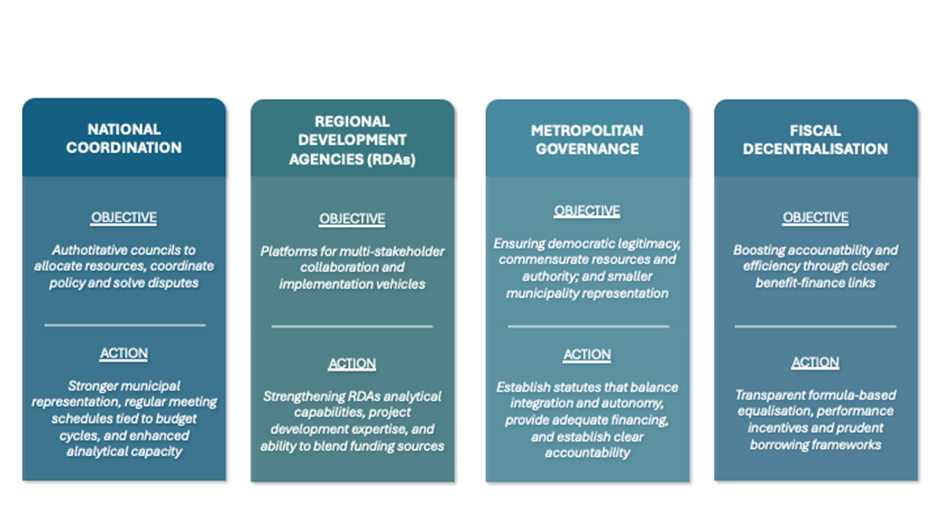
Effective multi-level governance demands robust coordination mechanisms. National Regional Development Councils bring together central government, regional administrations, and municipal associations to guide regional policy, allocate resources, coordinate activities, and resolve disputes. To be effective, councils need genuine authority (typically through resource allocation), regular meetings with prepared agendas, professional secretariats, and transparent procedures.
Ukraine established an Inter-Departmental Coordination Commission for Regional Development, but it has met infrequently and has not fulfilled its coordinating role. More broadly, a persistent "formality gap" characterises many aspects of Ukraine's regional development governance: strategic plans, smart specialisation strategies, and public engagement mechanisms often exist on paper but lack the quality and operational depth to steer actual development. This problem extends even to basic areas such as strategic planning and project management, where formal compliance with procedural requirements frequently substitutes for substantive capacity to design and deliver investment programmes. Revitalisation could raise the Commission from an ad-hoc consultative body to a standing coordination forum with a permanent secretariat, thematic working groups, and decision-tracking. Membership should formally include regional and municipal associations with safeguarded voting rights.
Beyond coordination across different tiers of government, donor coordination is essential to ensure efficient use of funds. Donor coordination remains fragmented across hundreds of bilateral projects. Building on the Donor Coordination Platform established in 2023, Ukraine could institutionalise a "Regional Reconstruction Platform" linking EU Facility funding with multilateral and bilateral donors through a single pipeline of regionally prioritised projects. Such a system would reduce overlap, increase transparency, and enhance alignment with the Ukraine Plan and the SSRD 2021–2027.
Regional development agencies (RDAs) serve as platforms for multi-stakeholder collaboration and implementation vehicles for regional strategies. Effective RDAs perform several functions: strategic intelligence and analysis; project development and implementation management; partnership facilitation; regional marketing; and technical support to businesses and municipalities.
Ukrainian RDAs are envisioned as key implementation bodies under the Law "On the Principles of State Regional Policy." However, they currently lack organisational capacity, technical skills, and resources. It should be noted that in practice, the institutional form – whether an RDA or a project department within a Regional State Administration – matters less than the quality of management and the presence of trained personnel. Capacity levels remain highly variable across regions, and some OSA departments currently outperform their corresponding RDAs. Strengthening their analytical capabilities, project development expertise, and ability to blend funding sources is essential. A complementary measure would be the introduction of a mandatory certification programme for civil servants involved in European integration and regional policy, drawing on models such as Croatia's mandatory state examination system, which ensures a baseline of technical competence regardless of institutional affiliation.
During reconstruction, RDAs could serve as regional project management offices, coordinating municipal efforts, developing bankable proposals, procuring efficiently, and building sustainable local capacity. This is an approach that has been successfully employed in post-disaster contexts in the US and Indonesia. Implementing it would include piloting "global grant"/programme-based envelopes that RDAs administer against agreed results, shifting from project-by-project competitions to territorial programmes and building local ownership.
Metropolitan regions generate a considerable economic output but face coordination challenges across fragmented jurisdictions. Countries have developed various models from consolidated metropolitan governments to lighter coordinating bodies. Key principles include: democratic legitimacy; commensurate resources and authority; clear responsibility delineation; mechanisms ensuring smaller municipality representation; and flexibility for local variation.
For Ukraine's largest cities — Kyiv, Kharkiv, Odesa, Dnipro, Zaporizhzhia, Lviv, and Kryvyi Rih — developing metropolitan governance statutes that balance integration and autonomy, provide adequate financing, and establish clear accountability could support coherent urban development and enhance global competitiveness. Metropolitan statutes may need to include ex-ante territorial impact assessments (TIA) for major investments to ensure metropolitan-wide benefits and reduce negative spillovers.
Beyond metropolitan areas, inter-municipal cooperation represents a critical instrument for strengthening the capacity of smaller and weaker communities. Although Ukraine's legal framework permits cooperation agreements between hromadas, their uptake remains limited – with fewer than one agreement per community on average, many of which are largely formal in nature. Emerging initiatives, such as the "Shoulder to Shoulder" programme connecting stronger and weaker communities, and progress in the Lviv agglomeration on functional area cooperation, demonstrate the potential of structured inter-municipal partnerships. For communities that lack the capacity to independently manage complex development tasks – from strategic planning to project management to public service delivery – the pooling of resources and functions through cooperation agreements offers a pragmatic pathway to participation in regional development, without requiring additional institutional layers.
Fiscal decentralisation enhances allocative efficiency by matching services to local preferences, promotes accountability through closer benefit-finance links, enables innovation, and supports political participation. Ukraine's post-2014 progress — assigning 64 per cent of personal income tax to municipalities and consolidating grants — substantially enhanced local fiscal capacity.
Challenges, however, remain. They include substantial revenue disparities; heavy transfer dependency in rural areas; constrained expenditure autonomy; and underdeveloped borrowing frameworks. Continued decentralisation needs to incorporate transparent formula-based equalisation providing adequate resources while preserving mobilisation incentives; performance incentives rewarding strong management and results; expanded own-source revenues; and prudent borrowing frameworks, as shown by the German case.
For the reconstruction phase, the same principles need adoption when dedicating part of the Ukraine Facility specifically to regions and municipalities. This regional and local window can be managed through an updated SFRD system. Macroeconomic conditions remain fragile, with GDP growth in 2025 at around 2 per cent, and public debt approaching 95 per cent of GDP with a significant share of the budget devoted to defence and social protection. This constrains fiscal space for equalisation transfers and capital investment.
A revised SFRD funding formula should link allocations to both fiscal capacity and reconstruction needs, avoiding ad-hoc grants and ensuring adequate support for weaker hromadas. Stronger regions could receive larger envelopes based on readiness, while weaker hromadas would benefit from reduced or waived co-financing requirements. A dedicated technical assistance line would help local governments prepare solid, investment-ready projects.
The reconstruction context presents both opportunities (necessity of institutional rebuilding, available international financing, political will) and risks (recentralisation pressures, local absorption capacity constraints, security limitations, resource distribution inequities). Dealing with both requires sustained commitment to decentralisation, substantial capacity investment, careful reconstruction financing design that builds local institutions, transparent allocation mechanisms, and continuous monitoring.
Figure 3. Institutional solutions to empower Ukrainian regions in their developmental role
Source: Authors’ elaboration.
1.2. Proven practices in regional policy instruments
1.2.1. Integrated Territorial Investments (ITIs)
Integrated territorial strategies represent a holistic approach to regional development, combining multiple policy objectives and funding streams within a coherent territorial framework. This approach has proven particularly effective in addressing the complex, multidimensional challenges faced by regions in transition. The EU's Integrated Territorial Investments (ITIs) mechanism emerged from the 2014-2020 programming period as an innovative instrument designed to pool funding streams for metropolitan or functional areas facing specific territorial challenges. ITIs enable regions to bundle resources from multiple priority axes of one or more operational programmes, creating synergies between infrastructure development, economic competitiveness, and social inclusion objectives. Metropolitan areas such as Barcelona, Berlin, and Warsaw have successfully utilised ITIs to coordinate urban regeneration with sustainable mobility and digital infrastructure investments.
The effectiveness of ITIs lies in their flexibility and territorial focus. Unlike traditional sectoral funding mechanisms, ITIs allow regions to design context-specific intervention packages that respond to local needs while maintaining alignment with broader European strategic objectives. Evidence from the 2014-2020 period demonstrates that ITIs have facilitated better coordination among different levels of government and improved the coherence of regional development strategies.
Poland's experience with regional operational programmes exemplifies the successful devolution of management authority to the voivodeship (regional) level. Since 2004, Polish regions have progressively assumed greater responsibility for designing and implementing EU-funded programmes, developing substantial administrative capacity in the process. This devolution has enabled regions to tailor interventions to their specific economic structures, innovation ecosystems, and social challenges.
The Polish model demonstrates how regions can effectively manage complex funding portfolios when provided with appropriate technical assistance and accountability frameworks. Key success factors include strong regional strategic planning processes, transparent project selection mechanisms, and the development of regional evaluation cultures. Polish regions have also pioneered innovative approaches to integrating infrastructure investments with soft measures supporting entrepreneurship and human capital development. Rather than concentrating decision-making power at the national level, Ukraine could adopt a phased approach to devolving programme management to oblast authorities, beginning with regions that demonstrate strong administrative capacity and strategic planning capabilities.
1.2.2. Community-Led Local Development (CLLD)
Community-led development has emerged as a critical complement to top-down regional policy, particularly in rural areas and less developed and vulnerable regions where traditional economic development strategies may be less effective. The LEADER programme (Liaison Entre Actions de Développement de l'Économie Rurale) has operated in the EU since 1991, pioneering the community-led approach to rural development. Community-Led Local Development (CLLD), introduced in the 2014-2020 programming period, extends this methodology across multiple funds and policy domains.
These programmes empower local action groups - partnerships combining public, private, and civil society actors - to design and implement their own local development strategies within broader regional and national frameworks. Research consistently demonstrates that community-led approaches generate higher levels of citizen ownership, project sustainability, and social capital formation compared to traditional grant programmes. Local action groups serve as incubators for social innovation, testing novel approaches to employment creation, social inclusion, and environmental sustainability that can subsequently be mainstreamed into broader regional policies.
Ukraine's decentralisation reform, initiated in 2014, created amalgamated territorial communities (hromadas) with significant autonomy over local development priorities and budgets. Evidence from successful hromadas demonstrates the potential for community-led approaches even in contexts of limited resources and ongoing conflict. Communities that have developed strong civic capacity, participatory budgeting mechanisms, and partnerships with diaspora organisations have achieved remarkable results in infrastructure modernisation, service delivery improvement, and economic revitalisation.
The Ukrainian experience suggests that community-led development is not merely a complement to regional policy but potentially a foundation for building resilient, adaptive governance systems. However, realising this potential requires sustained investment in capacity building, transparent financial management systems, and mechanisms for horizontal learning among communities. There is already evidence that capacity building can deliver on this front, as in the case of Trostyanets and Mena, two formally occupied municipalities in northern Ukraine where capacity-building led to multiple projects impacting people’s well-being.
1.2.3. Smart specialisation strategies (S3)
Smart specialisation represents a paradigm shift in regional innovation policy, moving away from imitative, "one-size-fits-all" approaches towards context-sensitive strategies that leverage each region's unique assets and competitive advantages. The Basque Country in Spain exemplifies effective smart specialisation, focusing on advanced manufacturing, energy, and biosciences based on its industrial heritage and research capabilities.
Slovenia has also leveraged smart specialisation to strengthen linkages between its manufacturing sector and emerging digital technologies, creating competitive advantages in smart factories and sustainable mobility. Lithuania has used smart specialisation to focus investment on inclusive innovation, health technologies, and sustainable transport, areas aligned with its scientific strengths and market opportunities.
These cases illustrate how smart specialisation enables regions to make strategic choices about where to concentrate limited innovation resources for maximum impact. The methodology has proven particularly valuable for small and medium-sized regions that cannot compete across the full spectrum of knowledge-intensive sectors.
Smart specialisation offers a framework for Ukraine to move beyond commodity-based development towards higher value-added economic activities. Several Ukrainian oblasts possess distinctive capabilities - from IT services and R&D in Kharkiv and Lviv to agricultural innovation in Vinnytsia and creative industries in Kyiv - that could form the basis for regional smart specialisation strategies. The methodology's emphasis on entrepreneurial discovery and stakeholder dialogue aligns well with Ukraine's evolving innovation ecosystem and could channel reconstruction investments towards sustainable competitive advantages rather than simply rebuilding pre-war economic structures.
However, a critical gap must be acknowledged between the formal adoption of smart specialisation frameworks and their practical impact. In many Ukrainian oblasts, existing smart specialisation strategies either replicate the current economic profile without identifying genuinely transformative pathways, or set overly ambitious targets that lack the instruments and funding to be implemented. Moreover, no dedicated policy instrument currently exists to support smart specialisation development and sectoral growth at the regional level. Closing this implementation gap requires not only improved strategy design through genuine entrepreneurial discovery processes, but also the creation of concrete support mechanisms – such as dedicated innovation funds, technology transfer programmes, and sectoral development grants – that translate strategic priorities into tangible economic outcomes.
1.2.4. Cluster policies and regional innovation councils
Cluster policies have become a cornerstone of regional development strategies globally, based on the insight that geographic concentration of related firms, suppliers, and knowledge institutions creates externalities that enhance collective competitiveness. Effective cluster policies extend beyond merely identifying geographic concentrations of firms to actively building the innovation infrastructure and intermediary organisations that enable knowledge exchange and collective action.
Denmark and Estonia have developed sophisticated cluster facilitation mechanisms, including cluster development agencies and innovation vouchers that subsidise connections between small firms and research institutions. These intermediaries reduce transaction costs, facilitate technology transfer, and help firms access specialised services they could not afford individually.
Regional innovation councils, pioneered in countries such as Sweden and Finland, provide governance structures that bring together universities, firms, and regional governments to coordinate research priorities, infrastructure investments, and skills development. These councils serve as strategic fora where regional actors can identify shared challenges, mobilise collective resources, and negotiate division of labour in innovation activities.
Ukraine's existing industrial clusters in aerospace, information technology, and agricultural machinery provide foundations for cluster-based regional development strategies. However, realising their potential requires significant investment in cluster management organisations, innovation infrastructure, and linkage programmes connecting firms with research institutions. The experience of successful cluster policies suggests that such investments yield high returns in terms of productivity growth, technology adoption, and regional resilience.
1.2.5. Performance-based grants
Traditional grant programmes often focus primarily on input compliance and procedural correctness, with limited attention to actual development outcomes. Performance-based grants represent an alternative approach that links funding to measurable results, creating stronger incentives for efficiency and impact. Poland's EU Cohesion Policy programming incorporates a performance reserve mechanism whereby a portion of regional development funding is withheld and reallocated based on regions' achievement of quantifiable output and result indicators, creating direct incentives for effective implementation. This approach encourages regions to develop robust monitoring systems and evidence-based policy-making capabilities.
Performance-based approaches require careful design to avoid perverse incentives and ensure that measurement focuses on genuine development outcomes rather than easily manipulated proxy indicators. When properly implemented, however, they can transform grant programmes from passive funding mechanisms into active drivers of institutional improvement and policy innovation.
Ukraine has begun experimenting with performance elements in its SFRD, which allocates resources to oblasts based partly on their project preparation quality and co-financing capacity. Expanding and refining this approach could encourage oblasts to strengthen their strategic planning, project management, and monitoring capabilities. However, performance-based systems need careful design to avoid penalising regions that face structural disadvantages or creating incentives for short-term results at the expense of longer-term development goals.
1.2.6. Integrating international practices into Ukraine’s regional development strategy
The adoption of international practices in regional policy instruments offers Ukraine significant opportunities to optimise its reconstruction and development trajectory in the post-war period. Given the enormous scale of reconstruction needs combined with limited fiscal resources, Ukraine needs to maximise the effectiveness of every development investment. The policy instruments outlined above provide proven mechanisms for achieving this efficiency while simultaneously building the institutional foundations for long-term prosperity.
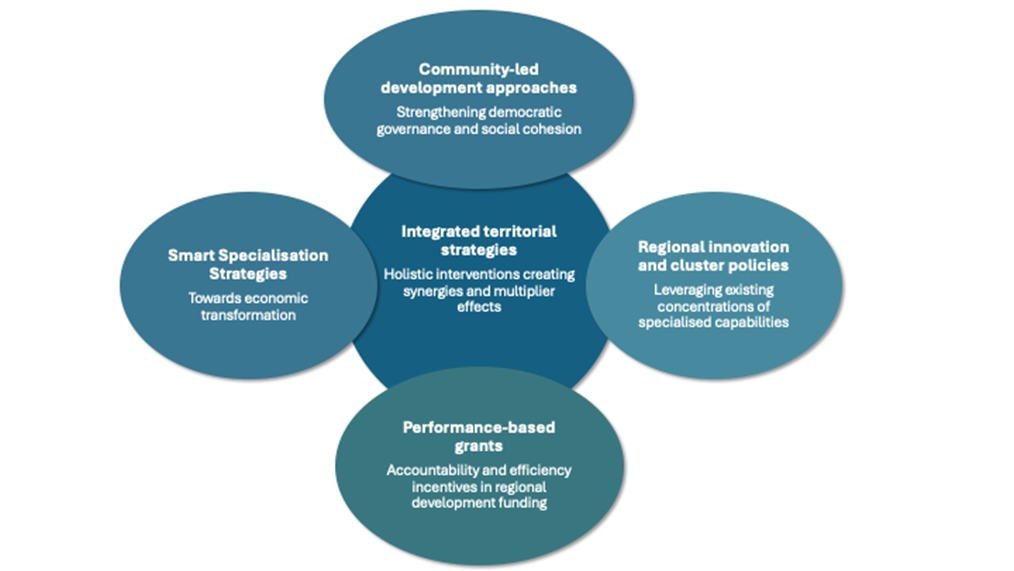
Figure 4. Integrating international practices into a regional development strategy for Ukraine
Source: Authors’ elaboration.
Integrated territorial strategies would enable Ukraine to move beyond fragmented, sectoral approaches to reconstruction towards holistic frameworks that address multiple dimensions of regional development simultaneously. Rather than treating infrastructure, economic development, and social cohesion as separate policy domains, ITI-style approaches would help Ukrainian municipalities and regions design coherent packages of interventions that create synergies and multiplier effects. This is particularly critical given that reconstruction presents a unique opportunity to "build back better" rather than simply restore pre-war conditions.
Community-led development approaches align naturally with Ukraine's successful decentralisation reform and the strong civic capacity demonstrated throughout the war. The experience of Ukrainian hromadas in organising defence, providing services under extreme conditions, and mobilising local resources demonstrates precisely the kind of social capital and collective action capacity that LEADER and CLLD programmes seek to cultivate. Trostyanets and Mena are two examples highlighting that place-based leadership, transparent and accountable governance, and structured dialogue with businesses and civil society can transform peripheral municipalities into local role models despite adverse initial conditions. Hence, scaling up community-led approaches can not only improve development outcomes but also strengthen democratic governance and social cohesion. These are essential elements of post-war stabilisation and European integration.
Smart specialisation strategies offer Ukraine a roadmap for economic transformation beyond its traditional reliance on commodity exports and low-value manufacturing. By systematically identifying and nurturing each region's distinctive capabilities — whether in technology services, creative industries, agricultural innovation, or advanced manufacturing — Ukraine can build diverse, resilient regional economies capable of competing in high-value global markets. The entrepreneurial discovery process central to smart specialisation would also strengthen connections between Ukraine's excellent research institutions and its business sector, addressing a persistent weakness in the national innovation system.
Regional innovation and cluster policies can leverage Ukraine's existing concentrations of specialised capabilities, from IT clusters in Kyiv, Kharkiv, and Lviv to agricultural innovation in central regions and maritime logistics in Odesa. With appropriate policy support — innovation vouchers, cluster management organisations, research infrastructure investments — these embryonic clusters could evolve into internationally competitive ecosystems generating high-quality employment and tax revenues. The cluster approach is particularly relevant for regions seeking to transition away from coal mining and heavy industry dependence.
The war has also catalysed the emergence of new cluster potentials, notably in military technology (miltech) and veteran rehabilitation services, where Ukraine has developed distinctive and internationally relevant expertise. Furthermore, the planned EU-gauge railway connection to Lviv opens significant prospects for a logistics and intermodal transport cluster in western Ukraine, positioning the city as a key gateway for European supply chains.
Performance-based grant mechanisms would introduce accountability and efficiency incentives into Ukraine's regional development funding, encouraging oblasts to strengthen project management capabilities and results orientation. Given concerns about corruption and implementation capacity, performance-based approaches offer a middle path between rigid central control and unconditioned decentralisation, allowing regions autonomy in strategy design whilst maintaining clear accountability for results. The experience of regions competing for performance-based funding also creates beneficial peer learning dynamics.
These instruments address fundamental governance challenges that have long constrained Ukraine's development, such as weak coordination between government levels, limited strategic planning capacity, insufficient accountability for results, and disconnections between policy design and local realities. Beyond the specific benefits of individual instruments, adopting these proven practices collectively would position Ukraine favourably for EU accession negotiations and pre-accession funding access. The European Commission increasingly expects candidate countries to demonstrate capacity for managing Cohesion Policy funds through practices such as smart specialisation strategies, partnership principles, and results-oriented monitoring. Building this capacity now would smooth Ukraine's eventual transition to full participation in EU regional policy frameworks.
The full list of sources used is available for download HERE.
***
Next article of the U-LEAD series: “Capacity building and empowerment of local communities in Ukraine” by Donat Magyari and Janez Šušteršič. It will deal with additional and strengthened capacities that Ukrainian local authorities will need in order to deliver reconstruction effectively and to progressively assume roles compatible with Cohesion Policy rules and instruments.
[1] For a full overview of the German fiscal decentralisation system: https://portal.cor.europa.eu/divisionpowers/Pages/Germany-Fiscal-Powers.aspx


15 September 2026
Профорієнтація обʼєднує. Як евакуйована...
Громада перебуває в зоні активних бойових дій, її жителі повність евакуйовані та розпорошені Україною та світом, а...
15 September 2026
Відкликання депутатів місцевих рад: Комітет підтримав зміни до Виборчого кодексу
Відкликання депутатів місцевих рад: Комітет...
Комітет Верховної Ради з питань організації державної влади, місцевого самоврядування, регіонального розвитку та...
15 September 2026
До 20 вересня молодь з України та Румунії може подати твори для створення муралу
До 20 вересня молодь з України та Румунії може...
Спільний секретаріат Програми Interreg NEXT VI-A Румунія-Україна запрошує молодь віком від 13 до 30 років з...
15 September 2026
Стартував відбір на Резиденцію ідей «Міжнародна комунікація: від протоколу до спільних проєктів»
Стартував відбір на Резиденцію ідей «Міжнародна...
5–7 жовтня у Львові представники громад малих міст працюватимуть над тим, як перетворити міжнародні контакти на сталі...