How public health systems work proactively: water safety as a practical example
From risk analysis to specific solutions. How the public health system helps keep water safe.
When we turn on the tap, we rarely think about what lies behind this simple action. Between the source and the glass in our homes, there is more than just pipelines, pumping stations, and treatment works. There are also laboratory tests, risk analysis, the work of water utilities, decisions by the authorities, coordination between services, and honest information for the public.
The public health system works exactly like this – at national, regional, and local levels. It does not wait for someone to fall ill. Its task is to identify potential hazards ahead of time, weigh the risks, and prevent any adverse effects on people’s health. Water safety is one of the most telling examples of this work: it affects everyone, and the results of the system are most evident when a crisis has not occurred.
In wartime, this logic has become particularly important. The destruction and damage to water supply facilities caused by russian attacks have shown that safe water is not merely a matter of sanitation and public health.
Tetiana Orabina, Deputy Director-General of the Ukrainian Centre for Public Health at the Ministry of Health, puts it this way:
‘The entire process of sustaining life depends on providing the population with safe, quality water in the necessary quantities. Therefore, today we regard safe water as an element of our country’s national security.’
Water, which we have always considered to be constantly available, immediately becomes one of the key resources for community life in the event of an accident. When accidents happen, people start asking: is the water safe, where can we get it, how long will it take to restore supplies, and how can we keep our families safe? The task of the system is to have answers to these questions even before they are asked.
Prevention before illness, rather than treatment after
Public health is not about hospitals, queues to see a GP, or prescriptions once symptoms have appeared. It is a set of organised efforts aimed to preserve and improve the health of the population. It works not with individual patients, but with communities, cities, and regions. Its tools include epidemiological surveillance, laboratory testing, health regulations, legislative standards, information campaigns, and preventive measures.
In the context of water, this means one simple thing: the system must not allow water to become a source of infection. Tetiana Orabina explicitly identifies water as a vehicle for the transmission of many infectious diseases and explains that monitoring its quality and safety is aimed to prevent such cases.
‘Our task – both that of the Centre for Public Health and of the entire system as a whole – is to prevent the spread of any infectious disease where water may act as a vehicle for transmission.’
It is important to remember that a hazard is a potential source of harm, such as an invisible microorganism in water, a chemical contaminant, a sewer breach, a drop in system pressure, or the consequences of an industrial accident. Risk indicates how likely it is that this hazard will cause harm to people, and how serious the consequences might be. To manage risk, specialists take samples, conduct laboratory tests, evaluate the results, make decisions, and monitor their implementation.
Who is responsible for water from source to tap
Water supply is a multi-tiered system. The state provides regulatory management: it determines the parameters that must confirm the quality and safety of the water, and sets rules for the processes of water abstraction, treatment, and supply. This involves not only health authorities – the infrastructure and environmental aspects also have their own requirements and responsible bodies.
At the regional level, regional military administrations and the Centres for Disease Control and Prevention (CDCP) are involved. At the level of communities (cities, settlements, villages), local governments and water supply companies are involved. Tetiana Orabina explains that water utilities manage the entire technical cycle, whilst regional Centres for Disease Control and Prevention perform laboratory monitoring against the parameters set by the state.
‘Water supply companies perform these checks regularly, whilst the Centres for Disease Control and Prevention monitor quality and safety indicators. These include chemical, physico-chemical, and microbiological indicators.’
The division of roles does not imply disunity. On the contrary, water is safe only when institutions act as a single entity. If even one indicator deviates from the norm, a procedure must be triggered: identify the problem, determine who is responsible for what, carry out the necessary measures, and verify the result.
Laboratory testing is just the beginning
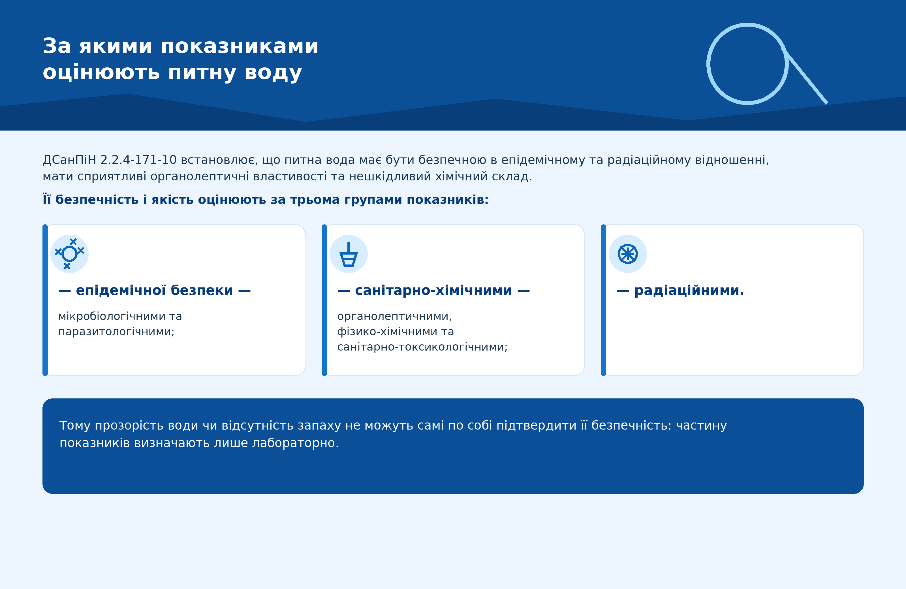
When risks to the safety of the water supply arise in a community, the Centre for Disease Control and Prevention takes samples from centralised and decentralised sources and analyses them. Depending on the situation, the Centre reviews its monitoring plan, updates the sampling points, and increases the frequency of testing. But laboratory testing is only the beginning.
Dmytro Makarov, Director-General of the Mykolaiv Regional Centre for Disease Control and Prevention and Chief Sanitary Doctor of Mykolaiv region, describes risk assessment as a process that combines identifying a hazard, evaluating its likely consequences, analysing morbidity rates, the scale of the problem, its social and economic impact, and the resources available to respond.
‘Risk analysis involves identifying risks to public health and sanitary and epidemiological well-being, which consists of determining the likelihood of adverse consequences for human health and public health and sanitary and epidemiological well-being arising from such risks. It is conducted in order to predict possible adverse consequences, determine the necessary response measures, justify them, communicate the risks, and manage them. During such an analysis, the incidence rate among the population, the scale and severity of the public health problem, its potential economic or social impact, and the availability of resources to address it are analysed. The outcome of this work is the development of a set of preventive measures, the provision of recommendations on containing and eliminating the source of danger, and the adoption of the necessary management decisions at different levels.’
If tests indicate a problem, the Centre for Disease Control and Prevention may recommend restricting water use, selecting alternative sources, carrying out disinfection, and implementing other measures. These decisions must then be put into practice. In crisis situations, coordination is usually led by the local or regional Commission for Technogenic and Environmental Safety and Emergencies or an operational headquarters. They receive the test results, determine the priority actions, the responsible parties and the sources of funding.
Dmytro Makarov emphasises that, for frontline territories, the speed of information exchange is no mere formality. ‘In a frontline region, traditional paper-based bureaucracy is a luxury that can cost human lives,’ he warns.
Water safety plan: How communities can prepare in advance
The state sets the rules, but each community has its own water sources, networks, technical capabilities, and risks. It is therefore important for communities to assess their own risks in advance and have a water safety plan in place. This plan should address practical questions: what to do in the event of damage to the water supply or a prolonged power outage, how to ensure the population has access to water, who is responsible for communication, and which procedures to activate.
‘Each community develops its own water safety plan. And this plan contains the elements that ensure preparedness for any critical situation that may arise directly in that community,’ explains Tetiana Orabina, Deputy Director-General of the Centre for Public Health of Ukraine at the Ministry of Health.
Dmytro Makarov recommends that communities regularly assess their water supply sources and sanitary protection zones, the technical condition of treatment plants and water supply systems, adhere to operating procedures, develop technical regulations and operational programmes for production control, test the water from the point of abstraction to the point of consumption, and keep people informed about its quality in a timely manner.
‘This work has to be systematic and done on a regular basis.’
Ukraine already has experience of large-scale water crises caused by war. Mykolaiv and Kherson regions have faced challenges that differ in nature but are equally serious: damage to water supply systems, prolonged disruptions to water supply, risks of water contamination, and the need to restore systems whilst under constant threat. Their experience is important not merely as the story of two regions. It demonstrates how the principles discussed by experts work in practice: early risk analysis, a prepared water safety plan, continuous laboratory monitoring, coordination between services, resource reserves, and honest communication with the public. These solutions can be useful to other communities that are preparing in advance for potential disruptions or are already responding to a water crisis.
Mykolaiv region: How Centre for Disease Control and Prevention manages risks during a prolonged water crisis
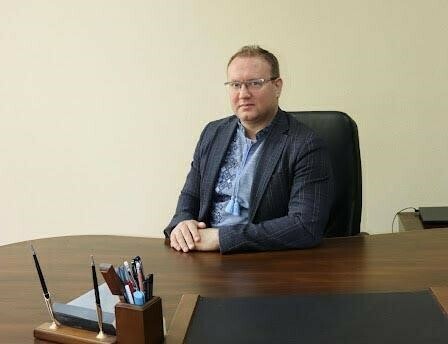
Dmytro Makarov, Director-General of the Mykolaiv Regional Centre for Disease Control and Prevention and Chief Sanitary Doctor of Mykolaiv region
For Mykolaiv region, water safety is a particularly pressing issue. After russian troops blew up the Dnipro water pipeline in 2022, Mykolaiv was virtually left without a centralised supply of drinking water. For over three years, the city relied on salty industrial water, which was damaging the underground pipework. Even after the launch of a new water pipeline from the Southern Bug and new water treatment facilities, the old pipes continue to erode, and frontline risks persist in the region.
Therefore, since the introduction of martial law, the Mykolaiv Regional Centre for Disease Control and Prevention has focused on preventing, detecting, and responding to public health emergencies, as well as on identifying potential chemical, biological, and radiological risks. The war complicates people's access to safe water due to destruction, power cuts, resource shortages, displacement of the population, and labour shortages.
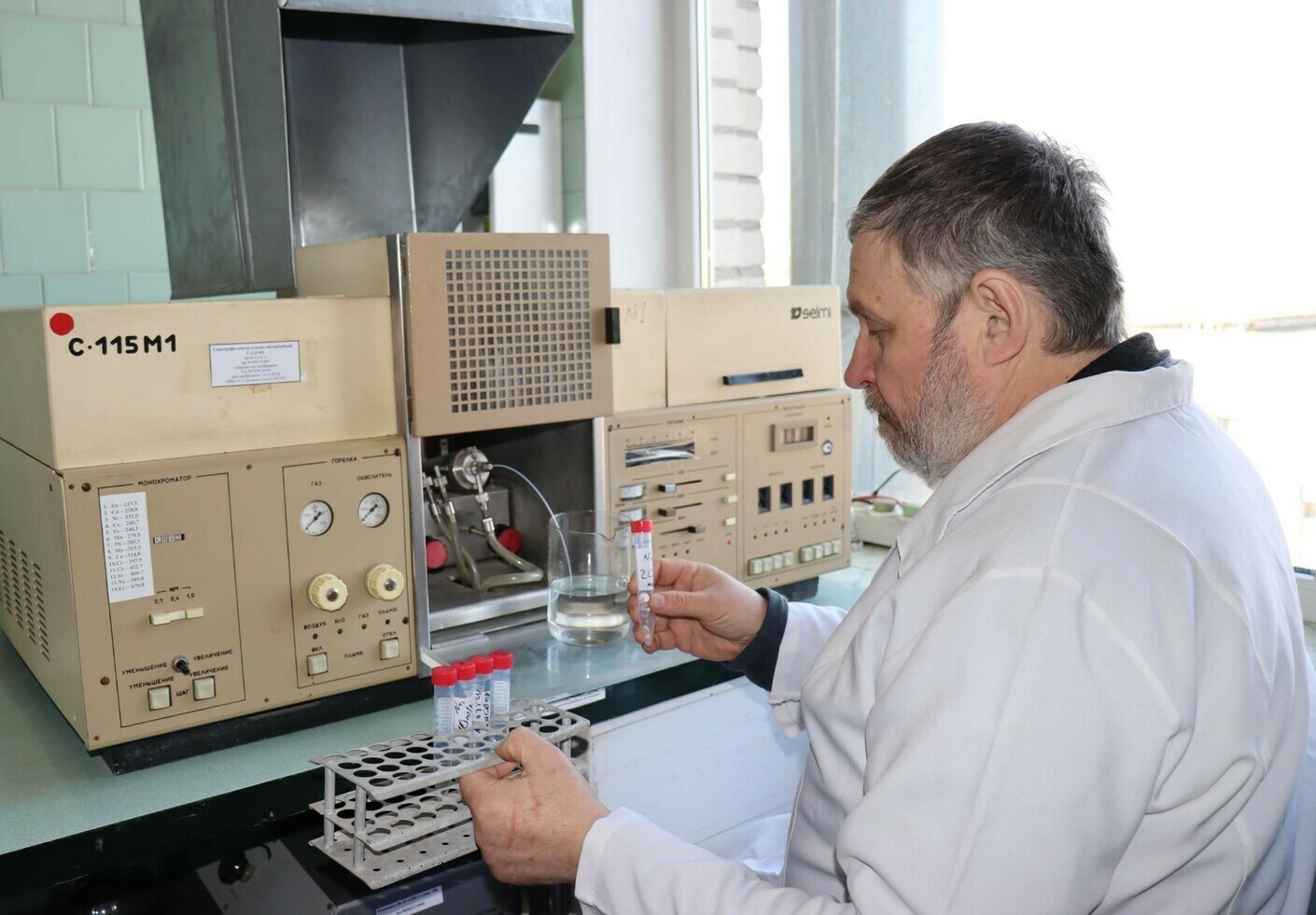
Laboratory testing of a water sample at the Mykolaiv Regional Centre for Disease Control and Prevention
‘In such circumstances, the role of the public health system is greatly enhanced, acting as a kind of safeguard against the negative impact of military factors on the health of the population. The public health system in Mykolaiv region has truly been put to the test in terms of its resilience, adaptability, and effectiveness. Responding to these challenges provides the impetus to mobilise efforts and ensure the coordinated work of all relevant authorities and services, thereby maintaining a controlled epidemiological situation in the region and preventing the emergence of outbreaks and waterborne infectious diseases.’
Besides testing, the Centre also fulfils a communication role: it explains to people how to minimise risks in their daily lives. Information materials are published on the Centre’s website, community media platforms, social media, and in the press. When working in communities, leaflets and memos are distributed on the prevention of intestinal infections and cholera, water disinfection at home, and water use in emergencies.
Dmytro Makarov warns communities and residents specifically against two dangerous practices: concealing water problems and the careless use of water of unguaranteed quality. The first deprives people of the time needed to respond safely. The second is particularly risky in areas where shortages force people to rely on wells and boreholes, as groundwater levels can also fluctuate.
‘The most dangerous mistake could be attempting to conceal an accident or a deterioration in water test results from the public. People could collect water, consume it, and contract an infection during that time.’
At the same time, the problem is not limited to the actions of the authorities and businesses. The Chief Sanitary Doctor of Mykolaiv region also draws attention to how residents themselves collect and store water. Using dirty containers, storing water for long periods in the sun or in a warm room, and consuming it without following the recommendations for a specific source create additional risks. These details also highlight shared responsibility: the system can supply and monitor water up to the point of consumption, but safe use does not end the moment it is collected.
Dmytro Makarov summarises why it is important to involve public health specialists before the situation escalates:
‘If public health specialists are involved right from the outset, it is possible to prevent the outbreak of widespread infectious and non-infectious diseases linked to water consumption.’
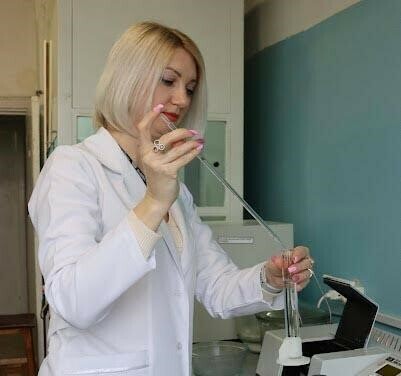
Testing water quality parameters at the Mykolaiv Regional Centre for Disease Control and Prevention
Kherson: How the water utility restores networks without putting people at risk
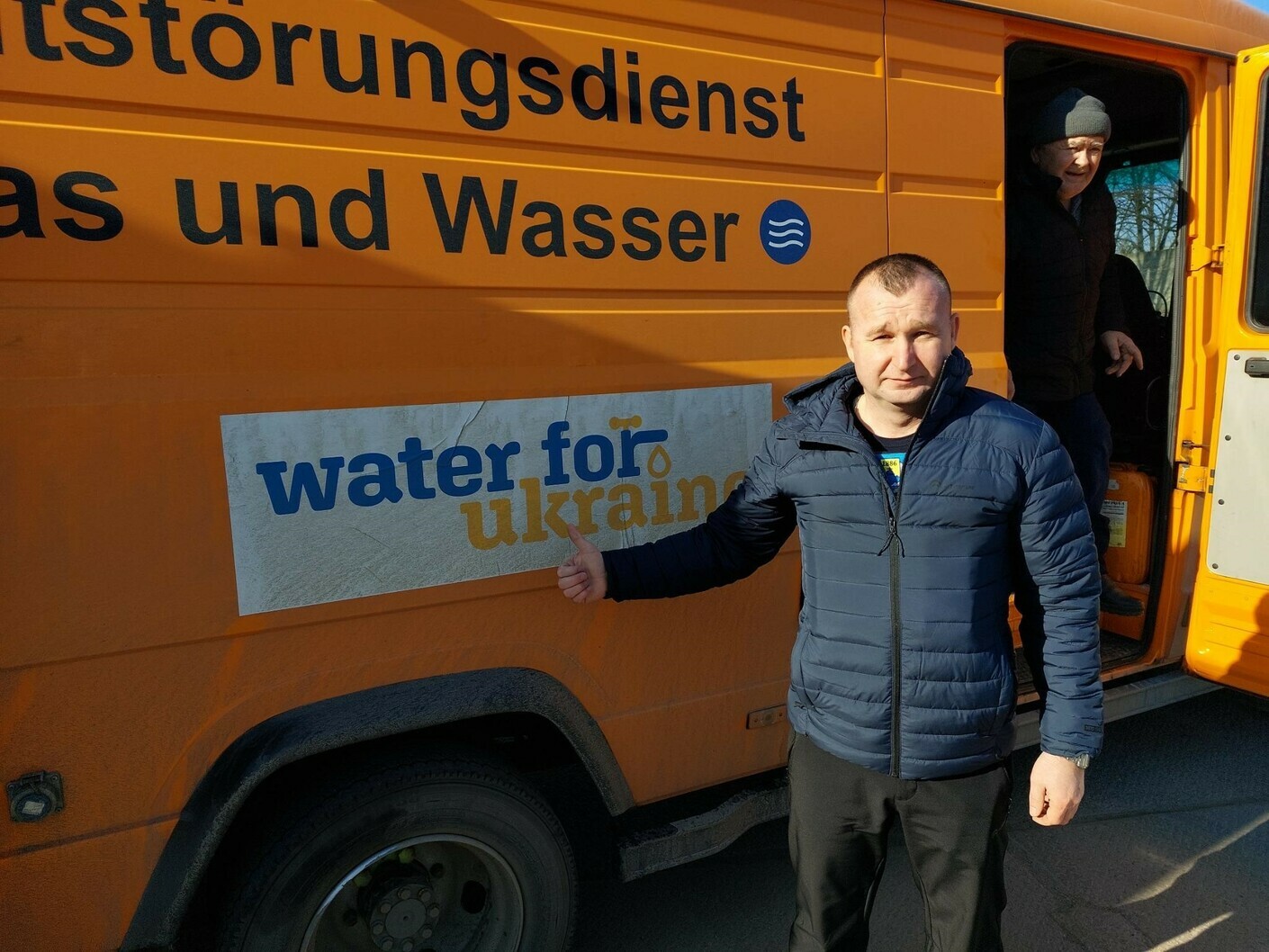
Oleksii Savchenko, Director of the Municipal Utility Company Khersonvodokanal
The work of the municipal utility company Khersonvodokanal has a different, yet no less complex, set of challenges: its immediate proximity to the front line along the Dnipro River, constant artillery strikes, attacks by FPV drones on emergency repair teams, and the consequences of the destruction of the Kakhovka Hydroelectric Power Station. Under these conditions, repairing the water supply system becomes a task that requires not only professional expertise but also constant consideration of security risks.
The company’s director, Oleksii Savchenko, explains: following shelling, pressure in the system can drop, creating a risk of groundwater being sucked back in and causing further damage to the pipes. After repairs, the network must not simply be restarted, but must be flushed and disinfected.
‘We have to strike a balance: we need to supply water to people as quickly as possible, but we cannot supply water that has not been tested or disinfected. Moreover, constant power outages affect the stable operation of water supply pumping stations, which in turn disrupts the hydraulic regime and, consequently, the consistency of water quality. Similar risks arise in the sewerage networks as well.’
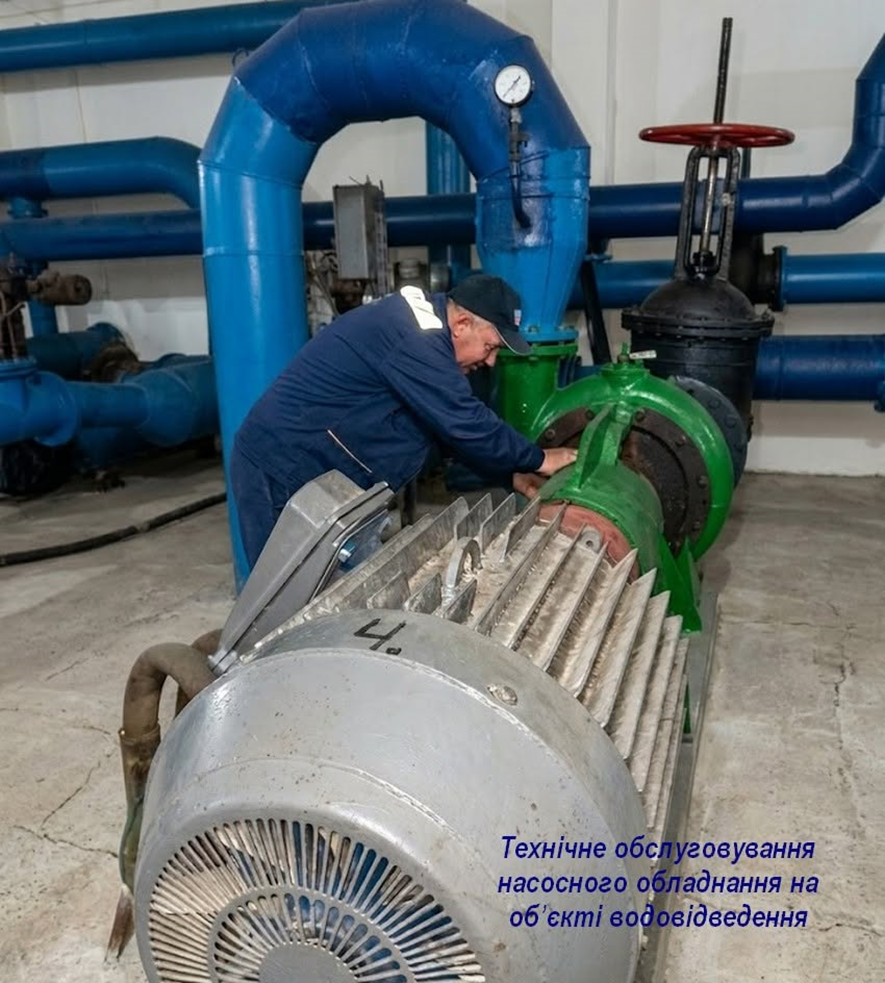
Maintenance of pumping equipment for the drainage system in Kherson
After the destruction of Kakhovka Hydroelectric Power Station: How Kherson kept its water supply system running
In the first few weeks after the Kakhovka hydroelectric power station was blown up, Oleksii Savchenko explains, the area around Kherson was an environmental disaster zone: the Korabel neighbourhood was completely flooded, as were the riverside areas of the Dniprovskyi and Tsentralnyi districts; petrol stations and cesspits were submerged, and there were thousands of tonnes of rubbish in the water. The risk of an outbreak of intestinal infections rose significantly.
According to the director, water utility employees worked waist-deep in dirty water, under the threat of shelling and infection, maintaining and sealing the water supply system, activating backup networks, and pumping water out of the machine rooms at the water and sewerage pumping stations. The initial test results from the affected areas, which showed no abnormalities, marked the moment when it became clear to the team that the system had survived.
‘Pipes, valves, pumps – these are merely tools. Our real job is to supply the city with drinking water and to collect and treat wastewater. If drinking water flows from the tap, then the city is alive.’
The cooperation between Khersonvodokanal and the Centre for Disease Control and Prevention is regular. The Centre tests the treated wastewater for the company to assess microbiological parameters following complete biological treatment. This helps to evaluate its epidemiological safety, monitor the effectiveness of disinfection prior to discharge into water bodies, and prevent the spread of infections.
Every month, the chemical and bacteriological laboratory responsible for drinking water quality control at the water utility company conducts parallel sampling of drinking water in partnership with the Centre for Disease Control and Prevention and compares the results. Every week, the laboratory reports to the State Service of Ukraine for Food Safety and Consumer Protection on the number of samples taken. According to Oleksii Savchenko, despite all the challenges, the quality of drinking water in Kherson has been maintained without any deviations from the standards.
For emergency situations that could affect water quality, provisions are in place for the delivery of water in tankers, the distribution of bottled water, the disinfection of pipelines and reservoirs, the use of water treatment plants, the commissioning of reserve or new boreholes, and the replacement of damaged sections of the network.
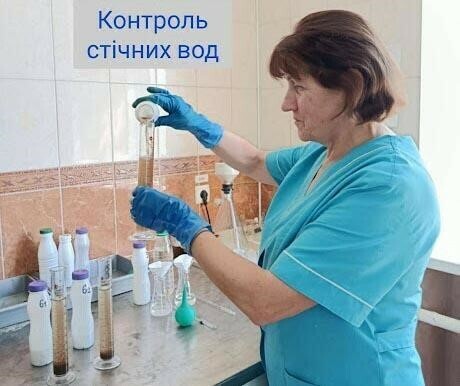
Laboratory testing of wastewater in Kherson
What makes the water utility company more resilient
The full-scale war has forced Khersonvodokanal to enhance water quality control. Even after the destruction of its laboratory building, the company received a modular complex equipped with apparatus adapted to modern laboratory testing requirements. The focus is now on prompt sampling after emergency repairs, stricter monitoring of residual disinfectant levels, continuous monitoring of microbiological and sanitary-chemical parameters, rapid response to deviations, and maintaining a reserve stock of reagents.
Oleksii Savchenko also lists the solutions that make the system more resilient: backup power supply – diesel generators, solar power stations and storage units; monitoring of pressure, flow rates and water levels; physical protection of critical nodes; safety protocols in the event of air raid alerts; network zoning; modern pipe materials and trenchless repair technologies.
‘Looped (ring) water supply networks provide the ability to switch consumers to another section of the network and minimise the number of homes left without water during repairs.’
The resilience of a water supply system cannot be reduced to a single generator or backup power source. It depends on stocks of energy and chemicals, monitoring of the network’s condition, the ability to localise a fault, alternative water supply routes, the equipment available to repair teams, and the mandatory flushing, disinfection, and monitoring of the network after restoration. In a frontline city, there is another critical factor to consider: the emergency repair team needs to reach the site of the damage safely and in good time.
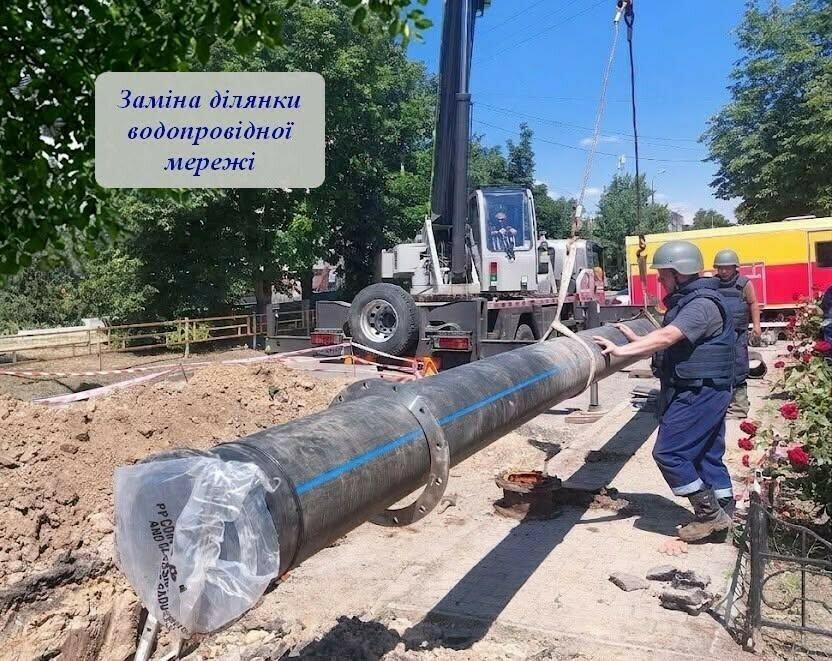
Replacement of a damaged section of the water supply system in Kherson
Wells and boreholes: hidden risks
Families who use private wells or boreholes should bear in mind that water from such sources does not undergo the treatment process or the ongoing monitoring provided by the water utility. It is impossible to determine whether it is safe based solely on its clarity, smell, or taste. Decisions about water use and treatment methods should be based on laboratory test results and expert recommendations.
Tetiana Orabina draws particular attention to the risks for families with children under one year old. Water from private sources may contain nitrates, which cannot be detected by humans without laboratory testing. Using such water to prepare infant formula is particularly dangerous. Regional Centre for Disease Control and Prevention test water from decentralised sources and inform communities and the public about any risks identified.
‘I would recommend basing your decisions on laboratory test results in any case,’ emphasises Tetiana Orabina.
Proper installation of the water source is also crucial. Dmytro Makarov points out that wells have to be situated no closer than 20 metres from toilets, cesspits, sewage facilities and networks, livestock pens, and other potential sources of soil and groundwater contamination.
When the system fails to function properly
The existence of laboratories, standards, and plans does not in itself guarantee safety. The system breaks down if the laboratory fails to transmit data on time, the water utility fails to implement the necessary measures, the authorities delay taking action, or the public does not receive accurate information. Then a controlled risk once again becomes a threat.
The best indication that public health measures have worked well often goes unnoticed: there are no epidemic complications or mass poisonings, the burden on the healthcare system is reduced, and people have access to safe water and verified information.
Safe water is not a guarantee. It is the result of the ongoing efforts of the state, centres for disease control and prevention, local governments, water utility companies, emergency services, and the residents themselves. Prevention rarely makes headlines. Yet it keeps crises from turning into disasters.
Where to find proven action plans
Communities and families need clear and proven action plans to prepare for possible disruptions to the water supply.
Therefore, Eleos-Ukraine NGO, in cooperation with the Ukrainian Centre for Public Health, is running a communication campaign “Safety Scenarios: Safe Water = Safe Life”.
The campaign has developed ten safety scenarios for situations that communities and families may face: water supply cuts, damage to water networks following shelling, prolonged power cuts, concerns about water safety, the use of wells and boreholes, building up a home supply of drinking water, and other risks.
The scenarios explain where to find reliable information, how to choose a safe source of water, and what actions to avoid. They are available on the website of the Ukrainian Centre for Public Health: https://phc.org.ua/kontrol-zakhvoryuvan/inshi-infekciyni-zakhvoryuvannya/bezpeka-vodi
Photographs courtesy of the Mykolaiv Regional Centre for Disease Control and Prevention of the Ministry of Health of Ukraine and the Khersonvodokanal Municipal Enterprise.
This material was produced with the generous support of the American people through funding from the US Department of State. The contents are the sole responsibility of the EpiC project and do not necessarily reflect the views of the US Department of State.
EpiC is a global cooperation agreement (7200AA19CA00002) led by FHI 360 in partnership with key partners: Right to Care, Palladium International and Population Services International (PSI).
21 August 2026
Анонс: вебінар «Шкільне харчування в громаді: від юридичного рішення до безпечної логістики»
Анонс: вебінар «Шкільне харчування в громаді:...
До участі запрошуємо керівників органів управління освітою, керівників закладів освіти та всіх, хто відповідає за...
21 August 2026
Vitalii Bezgin: Government approves draft law...
The Government approved a draft law that will regulate the status of employees of military administrations in...
20 August 2026
«Серпнева-2026». Проєкт DECIDE традиційно виступив партнером головної події року в освіті
«Серпнева-2026». Проєкт DECIDE традиційно...
18 серпня у Києві відбулася щорічна освітня конференція «Серпнева–2026», яка цьогоріч пройшла під гаслом «Освіта —...
20 August 2026
Ключові зміни в організації інклюзивного навчання у 2026/2027 н. р. за новим Порядком
Ключові зміни в організації інклюзивного...
ключові зміни у складанні індивідуальної програми розвитку (ІПР) та інших документів; особливості організації...