Krasnosilka community became the first rural community in Ukraine to be shortlisted for Zero Waste City programme
In 2025, Krasnosilka community in Odesa region began converting bio-waste into fertiliser and encouraging residents to separate organic waste for collection. This initiative has now gained a European dimension: the community has become a candidate for the Zero Waste Cities programme – the first rural community in Ukraine to achieve this status.
In Ukraine, Lutsk and Khmelnytskyi already hold this status. Maryna Arkhirii, Head of Krasnosilka community, announced the participation of the community in the programme.
‘As we studied the Zero Waste philosophy and the approaches used by this programme, we realised that it aligned closely with our own values. We are proud that Krasnosilka community is the first rural community in Ukraine to set out on this path. Whilst the programme has placed much trust in us, we understand that this also comes with a sense of responsibility. Any path, even a difficult one, is the right one if the direction is correct. Perhaps we will not move as quickly or as successfully as we would like, but we are already on this path,’ said Maryna Arkhirii.
According to Zero Waste Alliance Ukraine, Krasnosilka community has been developing initiatives to prevent and reduce waste in Odesa region for several years now. In particular, in 2025, they began converting bio-waste into fertiliser. This project is part of the local strategy to improve bio-waste management. The local residents are also involved in the separate collection of organic waste: they can receive eco-friendly fertilisers and free compost bins for grass, leaves, and branches.
Participation in the Zero Waste City programme, implemented in Ukraine by Zero Waste Alliance Ukraine, continues the journey of the community towards an effective waste management system.
The programme involves undergoing certification and obtaining the eponymous status, which is recognised within the EU. This status certifies that the community adjusts its waste management system so that waste is gradually reduced and new waste is not generated at all. It is a lengthy process with many requirements, which demands significant effort from the local government and political will.
Svitlana Karytun, Coordinator of Zero Waste City programme in Ukraine, commented:
‘Our Zero Waste Cities family has a new member – Krasnosilka community in Odesa region has joined Lutsk and Khmelnytskyi. They already have plenty of plans, inspiration, and motivation to implement great, large-scale projects in waste management. We now have three communities doing great work, and we hope they will inspire other communities to improve their waste management systems. Ukraine should strive to ensure it has no waste problem, and people should understand that preventing waste generation is one of the most important tasks for protecting the environment.’
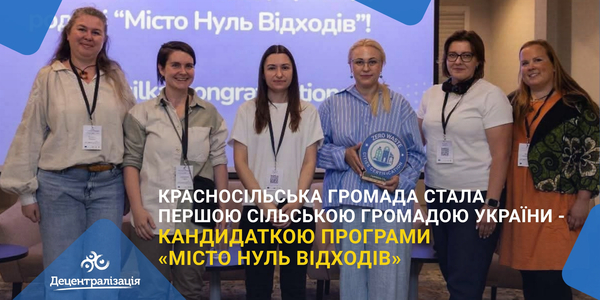
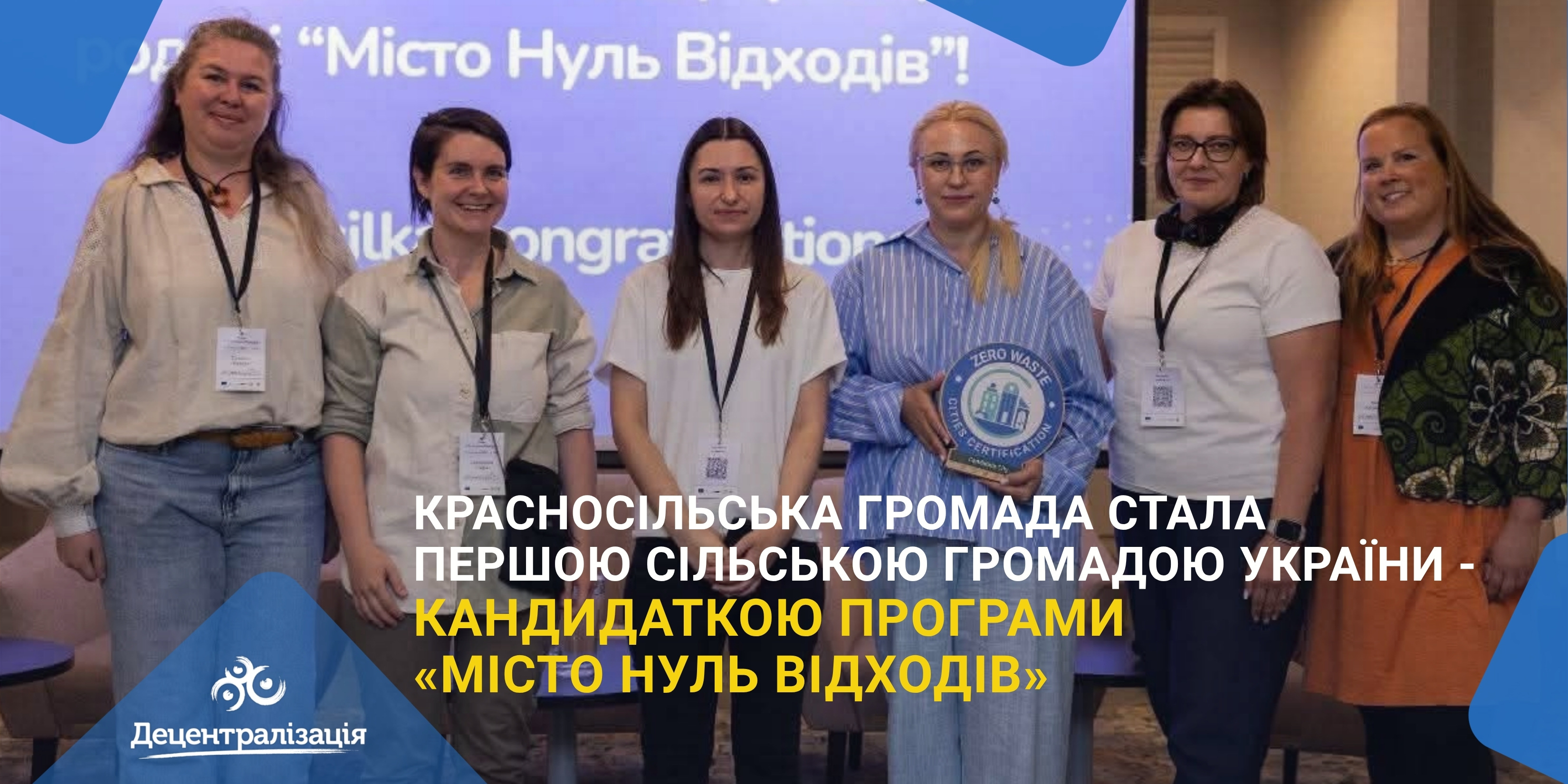
During the forum, Kaisa Karjalainen, Director of the Mission Zero Academy and a representative of the programme’s co-initiator, congratulated Krasnosilka community and awarded it a symbolic statuette.
‘We are delighted to welcome Krasnosilka community to the European Zero Waste Cities network. I believe this participation is extremely important for Ukraine, as it truly demonstrates that change is possible. And for us, it is proof that, despite the extremely challenging circumstances you find yourselves in, the work continues, things are improving, and you have a tremendous determination to bring about positive change. Therefore, I am very happy to have been able to bring this statuette to Lviv. I hope that next time we will be able to present it to another Ukrainian community. My colleagues and I are already discussing what further resources, research, and expertise we can provide you with. Naturally, we cooperate with Zero Waste Alliance Ukraine, as they understand the local context, the legal framework, the language, and other nuances. For our part, we are always happy to share our expertise and support you on your journey towards Zero Waste,’ said Kaisa Karjalainen.
The experience of Krasnosilka community shows that modern waste management is not just for large cities. What matters is a coherent plan, the community’s willingness to change its daily practices, and partnerships with experts. Such solutions – from managing organic waste to preventing waste generation – are the starting point for cleaner, safer, and more responsible communities.
15 October 2026
Правовий режим майна закладів освіти...
правовий статус майна комунальних закладів освіти та повноваження засновника і керівника закладу; які...
15 October 2026
«Я цінний для своєї громади й держави». Як у...
У Зимнівській громаді на Волині профорієнтація перестала бути формальністю. Тут не просто розповідають про...
15 October 2026
У Балті відбудеться регіональний форум «Доброчесність у громаді: від принципів до практичних дій»
У Балті відбудеться регіональний форум...
Як зробити доброчесність частиною щоденної роботи місцевого самоврядування? Які практики вже працюють у громадах і як...
15 October 2026
Що для підлітків важливіше – почути про...
Саме про це говорили під час молодіжної діалогової платформи на Національному форумі «Майбутнє, яке обираємо ми!»,...