Plans of Parliamentary Committee, Position of Ministry for Development, and Ten-Year Strategy – Key takeaways from CPLR conference on decentralisation
Kyiv hosted a final conference entitled ‘Local Self-Government and Territorial Organisation of Power in Ukraine on the Path to the European Union’, organised by the Centre for Policy and Legal Reform within the framework of the U-LEAD with Europe Programme.
The event served as a platform for coordinating positions on further steps in decentralisation reform – in the context of martial law and Ukraine’s commitments on the path to EU membership. Key points were raised by representatives of the relevant parliamentary committee and the Ministry for Development – the very bodies whose decisions shape the regulatory framework for the functioning of communities.
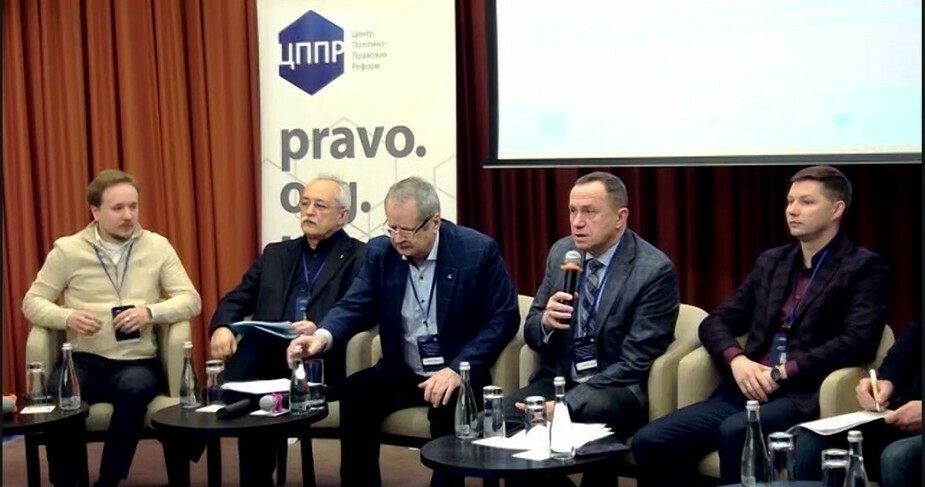
Ihor Koliushko, Head of the Board of the Centre for Policy and Legal Reform, in his opening remarks, emphasised that despite numerous discussions, the reform remains incomplete. In his opinion, Ukraine lacks a strategic vision. ‘European integration is not just about fulfilling a few points of the Ukraine Facility or roadmaps. The scope of tasks is much broader. We lack an understanding of the strategy for the next 5–10 years, because the steps we take today depend on how we see it,’ he said. At the same time, the main focus of the discussion was on specific legislative decisions.
Parliament: A year of difficult compromises
Olena Shuliak, Chair of the Verkhovna Rada Committee on Organisation of State Power, Local Self-Government, Regional Development and Urban Planning, outlined the list of priorities that the Parliament will work on.
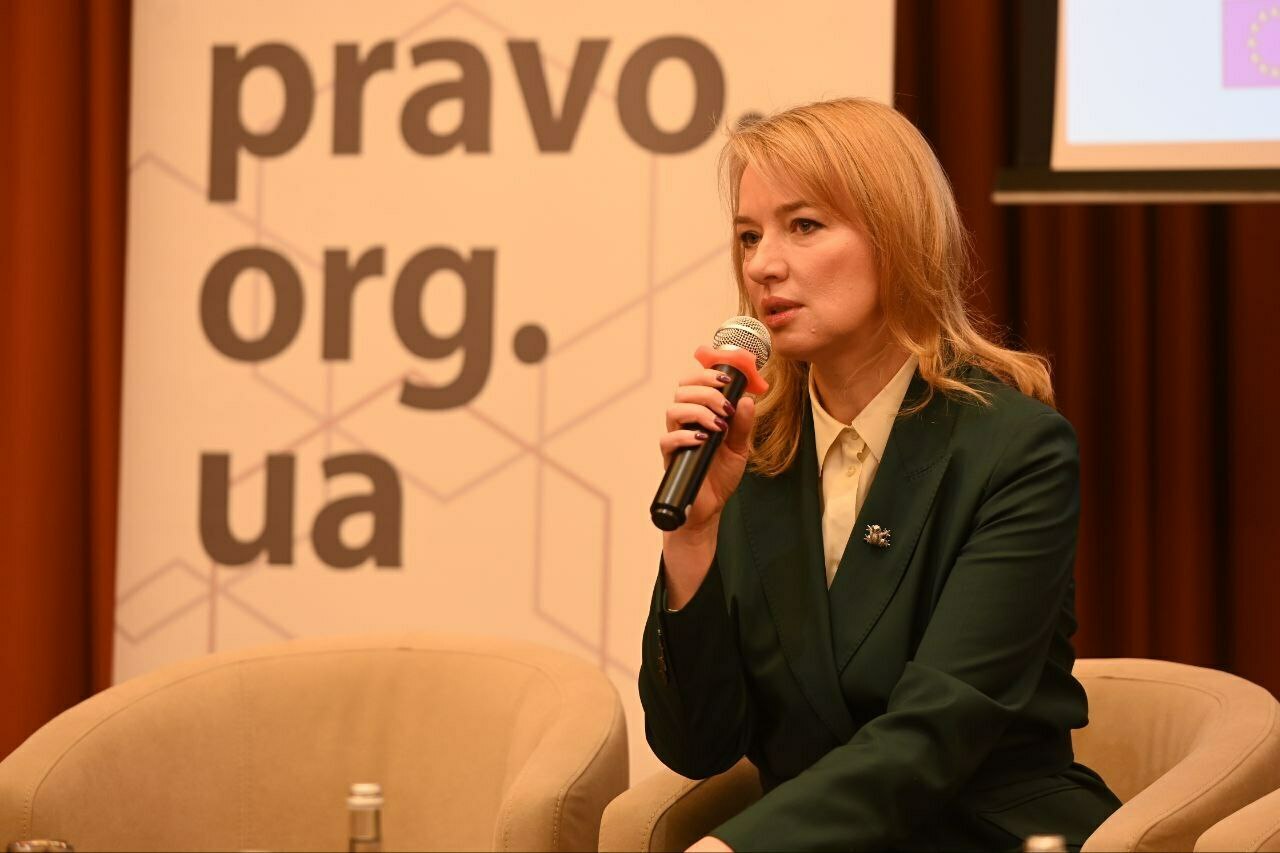
In her words, the key task is to legislatively delineate the powers between local governments and executive authorities. The corresponding government Draft Law No. 14412 has already been registered in the Verkhovna Rada.
‘We understand that not all local government associations, experts, or parliamentarians like this document. Even within the executive authorities, there are different opinions. But this is a matter of compromise and a decision that we need to find,’ said Olena Shuliak.
According to Ms Shuliak, after the first reading, extensive work will begin on the sectoral delineation of powers with the involvement of other parliamentary committees – on education, health care, ecology and other areas directly affected by the redistribution of functions. This is not only about fulfilling the indicator within the Ukraine Facility, but also about forming a sustainable management model.
Olena Shuliak also focused on the law on the supervision of the legality of local government decisions, which was adopted last year. She noted that the document was a compromise.
‘This may be the first decision. We hope that it will be followed by a second, third, and subsequent steps to make the system as effective as possible, primarily for the benefit of community residents,’ she said.
Among the draft laws that remain on the agenda is No. 6319, which aims to strengthen the tools for residents' participation in local self-government. The document is ready for its second reading, but has not yet found sufficient support in the parliament.
‘We all remember that we are implementing decentralisation reforms for residents so that they receive high-quality services. This law will allow citizens to be more involved in decision-making,’ emphasised Olena Shuliak, calling on experts to advocate for it.
She also mentioned the progress of the draft law on administrative fees, which is important for local governments and administrative service centres. The document has passed its first reading and has been considered by working groups.
Another area is the legislative regulation of municipal statistics. According to Olena Shuliak, the basic framework has already been developed and agreed upon.
‘Without high-quality legislation in municipal statistics, we will not be able to monitor the implementation of community development strategies and other planning documents,’ she emphasised.
Discussions are also ongoing regarding the administration of local taxes within the framework of the National Revenue Strategy, as well as further decentralisation of resources.
As for the Municipal Code, Olena Shuliak stated that the current Parliament will not adopt it. However, there are plans to develop and widely discuss the concept of the document in 2026.
‘The community as a legal entity under public law should be at the centre. Ideally, the professional community would come up with a shared vision,’ she said.
Ministry: From concept to specifics
Oleksii Riabykin, Deputy Minister for Development of Communities and Territories of Ukraine, emphasised that the Ministry is working on a plan to implement updated approaches to reforming local self-government and territorial organisation of power. In his words, this work has a clear deadline: ‘It is important that we are currently working together to create an implementation plan with a deadline in April.’
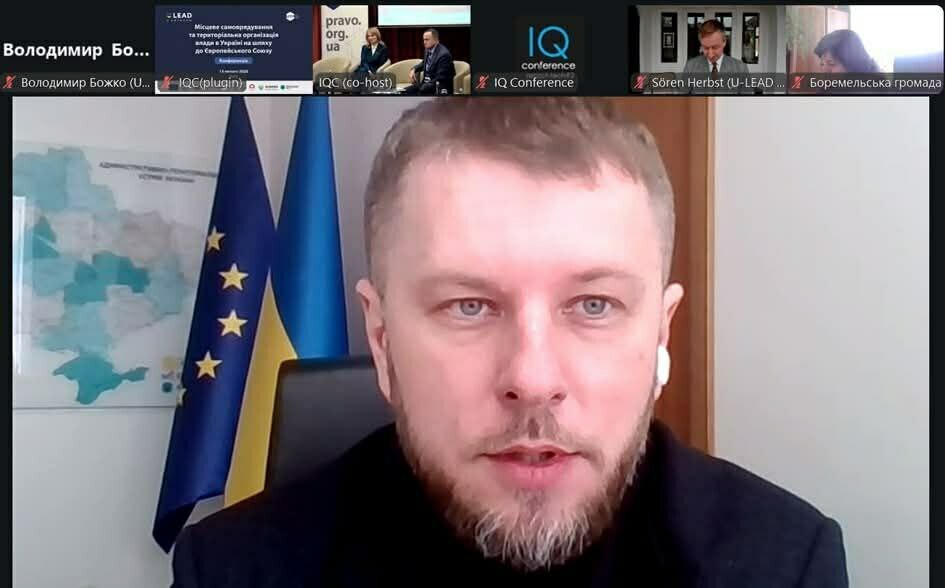
This involves moving from conceptual developments to a specific document with clear steps for implementation.
‘It is important that we prepare a high-quality document that progresses from fundamental, philosophical, and substantive issues to specific steps that we must take together in the future,’ said Oleksii Riabykin.
He confirmed the Government’s support for the draft law on the delineation of powers and stressed the importance of a high-quality framework that would make the powers of different levels of government clearly defined and unambiguous.
A separate emphasis is placed on the real capacity of communities.
‘The capacity of communities is a very specific thing. It is the ability to provide people with quality services,’ emphasised the Deputy Minister. In wartime, the issue of capacity is directly linked to the resilience of territories. He cited the heat supply sector as an example. According to Oleksii Riabykin, recent years have shown the vulnerability of large generation systems, so it is necessary to build parallel mechanisms that minimise risks in the event of damage to critical infrastructure. ‘We cannot abandon large heat generation facilities, but we must create parallel systems that minimise the consequences of their failure,’ he said.
Thus, the Government considers the reform of local self-government and territorial organisation of power not only as a European integration commitment, but also as a tool for increasing the resilience of the state and communities in wartime.
What this means for communities
Most of these decisions are still being finalised. Therefore, communities, their associations and experts now have the opportunity to influence the content of future regulations.
The reform of local self-government continues – both in the context of war and European integration. The quality of current decisions will determine not only the fulfilment of international obligations, but also the capacity, resilience, and accountability of communities to their residents.
Source:
Портал "Децентралізація"
17 April 2026
Нові знання — нові стандарти: Як навчання фахівців Ізюма змінює якість медпослуг у громаді
Нові знання — нові стандарти: Як навчання...
Начальник відділу охорони здоров’я апарату виконавчого комітету Ізюмської міської ради Тетяна...
17 April 2026
«Цей ветеранський простір – про підтримку, повагу і впевненість, що ти не залишився сам»
«Цей ветеранський простір – про підтримку,...
«Розвиток соціальних ініціатив в громадах, з акцентом на ветеранську спільноту – один з тих актуальних викликів,...
17 April 2026
Досвід Білопілля: як комунікація рятує життя на прикордонні та будує партнерства через кордони
Досвід Білопілля: як комунікація рятує життя на...
Це приклад того, як налагодити зв’язок із людьми навіть у найскладніших умовах, використовуючи наявні або доступні...
17 April 2026
Бюджетна декларація 2027–2029: чому громади пропонують змінити правила гри
Бюджетна декларація 2027–2029: чому громади...
Бюджетна декларація на 2027–2029 роки ще не ухвалена – і саме тому громади намагаються долучитися до її...