Almost 60% of Ukrainians are convinced that decentralisation is necessary, - survey results
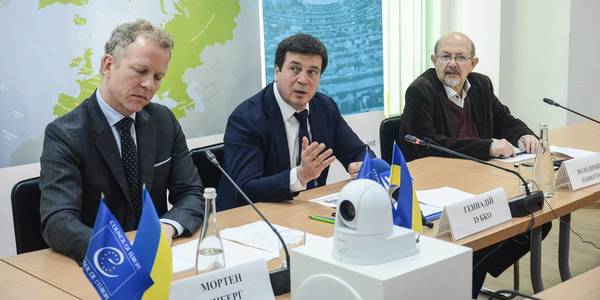
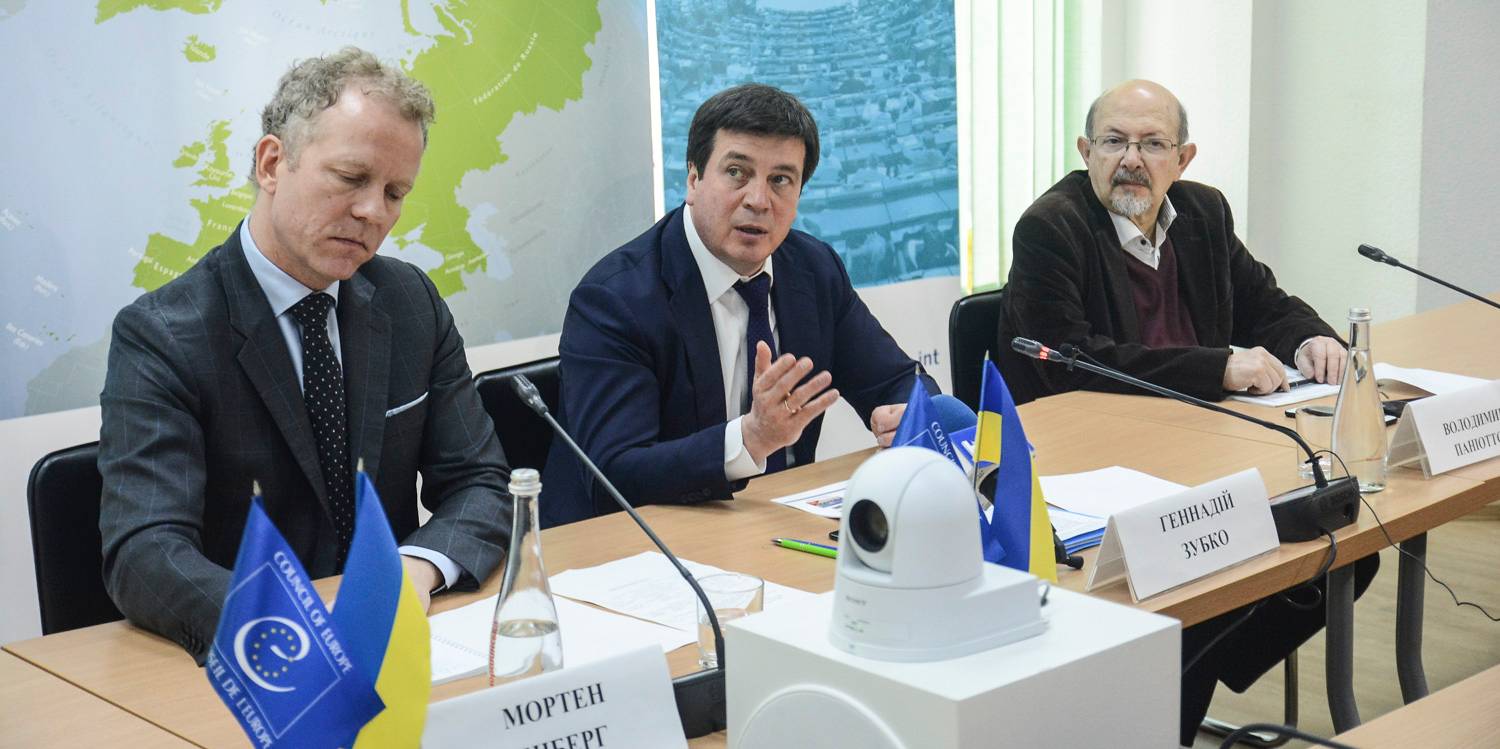
The state can report on decentralisation indicators, including the number of hromadas or areas covered by AHs, hundreds of new hub schools or kindergartens, kilometres of roads. However, our first priority is assessment of opinions of Ukrainian citizens, whom the reform is aimed at, emphasised Hennadii Zubko, Vice Prime Minister – Minister of Regional Development, Construction, Housing and Communal Services of Ukraine, during the presentation of the results of the all-Ukrainian sociological study “Decentralisation and local self-government reform among the population of Ukraine and the amalgamated hromadas”.
Sociological study (all over Ukraine and all over amalgamated hromadas) was conducted by the Kyiv International Institute of Sociology (KIIS) commissioned by the Council of Europe Programme “Decentralisation and Territorial Consolidation in Ukraine” in cooperation with the CoE experts and MinRegion.
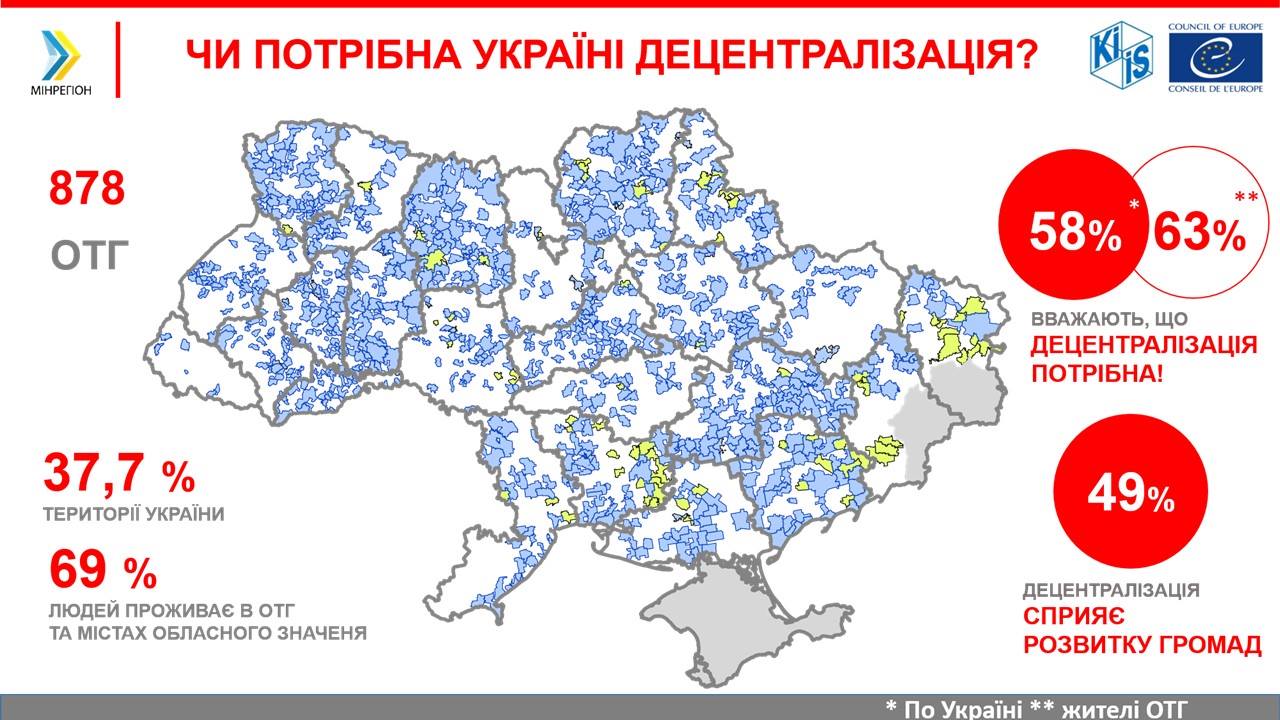
“In 2015, we began amalgamation, transferred powers and resources to the ground. Hromadas, cities and villages began to live in a different administrative system. Today we have the answer to the question: 58% of Ukrainians - and 63% of AH residents – are convinced that the decentralisation reform is needed. Almost half of Ukrainians (49%) believe that decentralisation contributes to hromada development. And this is true: decentralisation sews the country, AHs become points of growth, and the success of each hromada is the element of the overall success of Ukraine,” said Hennadii Zubko.
Most people – 43% understand the reform as a transfer of powers and resources to local self-government bodies. But simply transferring resources to the ground is not an end in itself! It is very important that these funds be converted into quality of life for people.
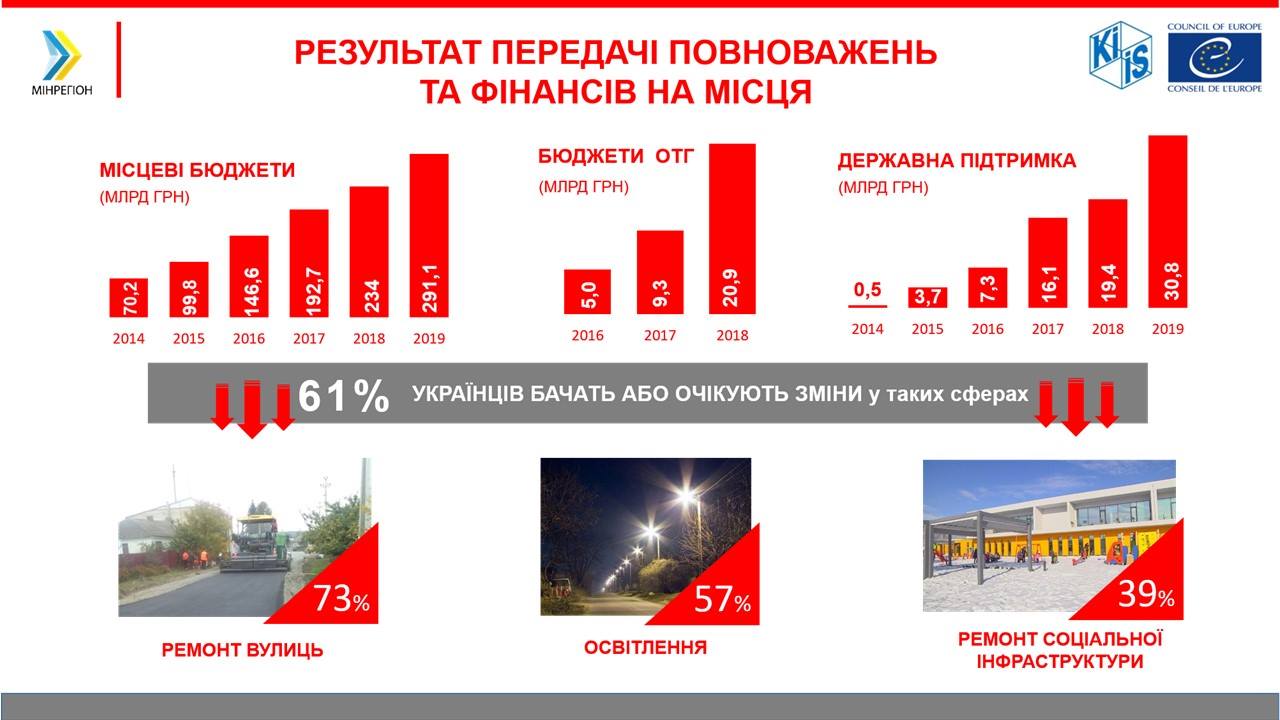
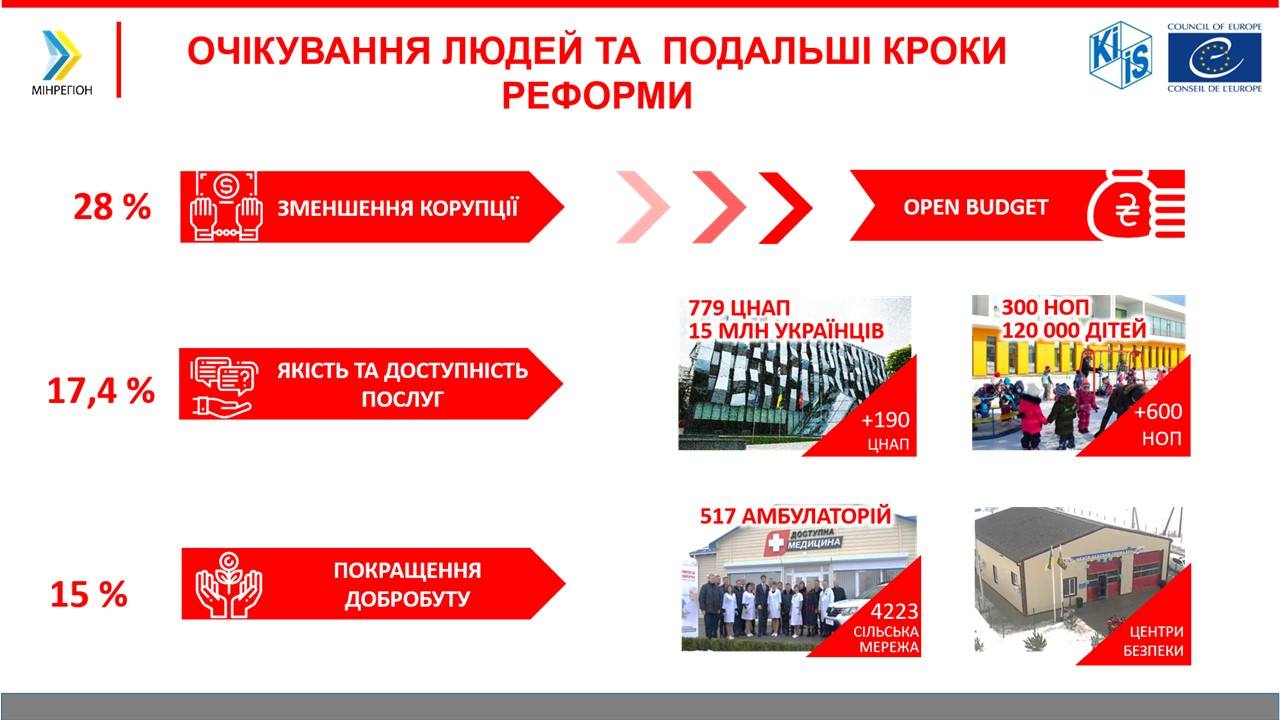
“If in 2015 only 19% noted certain improvements in their settlements as a result of the local budget increase, then in 2018, 39.5% see real change. Plus, another 22% of those who have heard the changes happen. That is, by the end of 2018, 61.5% of Ukrainians either experienced or are expecting improvement,” the official said.
In his turn, Мårten Ehnberg, Head of Office of the Council of Europe in Ukraine, emphasised that communication with the population, development of local self-government and decentralisation of power are the key to success of any democratic reform.
“Today, there is a close cooperation between local self-government and associations in terms of use of the EU recommendations and standards on law-making and self-governing hromadas’ capacity. The Council of Europe believes that Ukraine has made significant progress in the decentralisation process, but there is still a lot of work ahead to bring decentralisation legislation in line with the European standards. The success largely depends on how people perceive the reform. We conduct a sociological survey each year, which allows us to study trends, and to adjust the policy of reform,” he stressed.
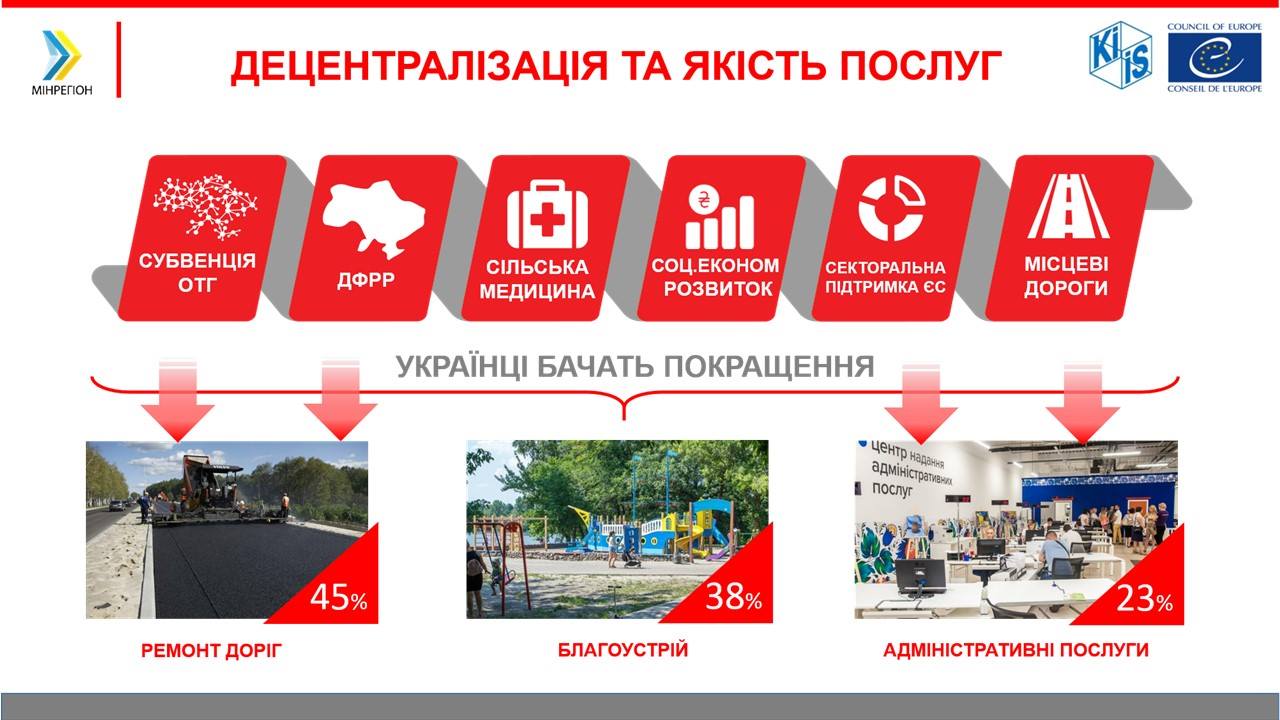
The most noticeable improvement of the situation admitted by 73% of those who noticed or heard about certain positive changes in their settlements is repair of street and yard coverage. Quite a lot of respondents noted positive changes in illumination (57%), repair of budget premises (39%), and arrangement of social infrastructure (38%).
The most expected results of the reform include improvement of the quality and accessibility of services: 49% of Ukrainian citizens felt improvement in hromadas’ well-being, and 47% experienced corruption decline. In general, 45% of Ukrainians see improvement provided by the decentralisation reform in the field of repair and maintenance of roads, 38% - in landscaping, 23% - in administrative service delivery.
So far, the situation related healthcare sector is most critically perceived. Only 10% are experiencing improvement regarding the primary level. To fundamentally change the situation, the rural healthcare development programme, initiated by the President, is being currently implemented.
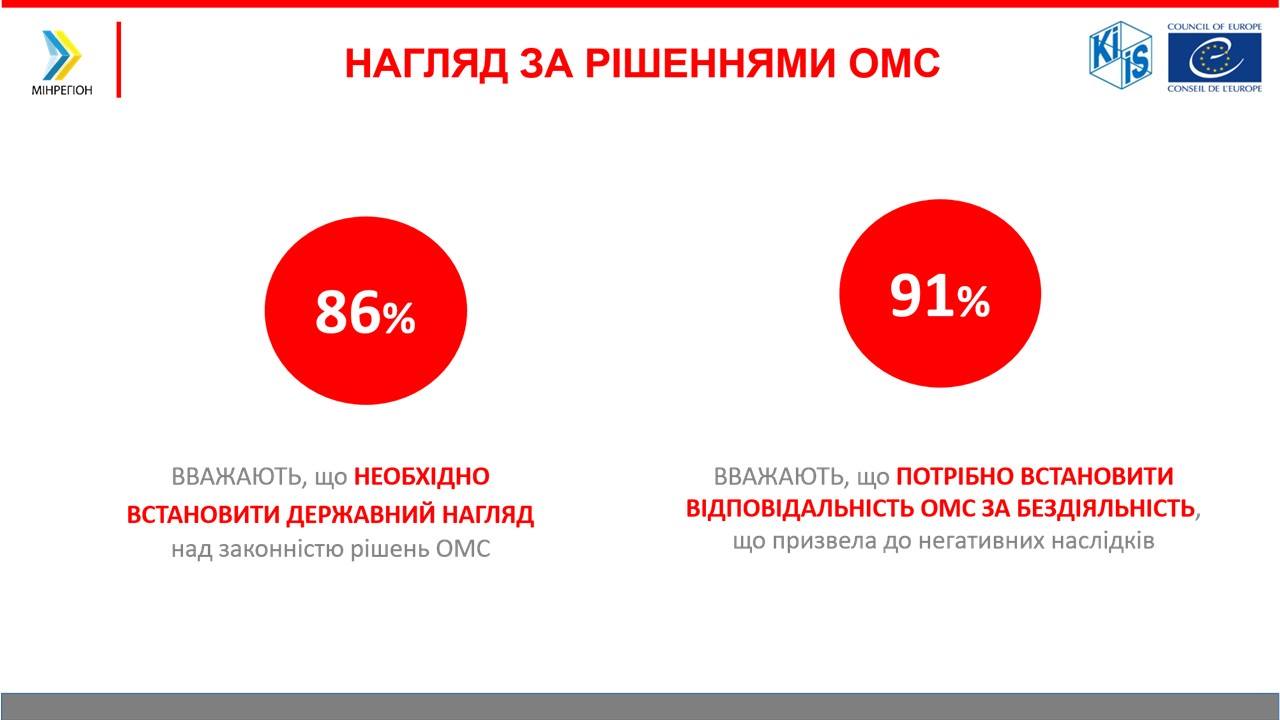
Sociology absolutely proves that people want their local self-government bodies to be held responsible for violating their rights. Thus, 91% of respondents believe that it is necessary to establish responsibility of local self-government bodies for inaction, in the form of early termination of powers. 42% say that a referendum is to be held, 17% place responsibility up on the court and local state administration / prefect, 4% called the Verkhovna Rada, and only 3% - the President.
Attached images:
Tags:
H.Zubko research Council of Europe
Source:
Прес-служба Віце-прем’єр-міністра України
01 October 2026
Будівельний бізнес запрошують долучитися до формування Каталогу пропозицій будпродукції
Будівельний бізнес запрошують долучитися до...
Мінрегіон запрошує виробників, постачальників, торговельні мережі, імпортерів та інших продавців будівельної...
01 October 2026
Як молодь впливає на стійкість України і її громад
Як молодь впливає на стійкість України і її громад
Оприлюднення проєкту Державного бюджету на 2027 рік стало для мене приводом знову подивитися на те, як держава...
01 October 2026
Комітет ВРУ підтримав за основу законопроєкт...
Комітет Верховної Ради України з питань організації державної влади, місцевого самоврядування, регіонального розвитку...
01 October 2026
Місто, яке неможливо зупинити. Чому великим...
У ніч на 5 серпня 2026 року Київ і область втратили частину своєї логістики буквально за кілька годин....